8 Days in Switzerland: Lausanne, Bern, (Art) Basel, Lucerne, Zermatt
“It was so lovely, Heidi stood with tears pouring down her cheeks, and thanked God for letting her come home to it again.”
After reading Heidi in elementary school, I told my mom that we should move to the Swiss Alps, where I would read to her on our porch swing and breathe incredibly crisp mountain air. Each year and every season, Switzerland topped my wishlist: Lucerne or Lugano in the summer! The Glacier Express in the winter! We always ended up picking a different destination. Last Christmas, we spontaneously took a day trip from Munich to St. Gallen for New Year’s Eve. St. Gallen was a winter wonderland, but admittedly, it did not quite match the sun-kissed alpine vision I’d been nursing over the years.
As my plane descended into Geneva, we flew through a landscape that made me tear up instantly: majestic, snow-capped mountains stood tall over layers of forested, green hills, with an impossibly aquamarine river zig-zagging below and wispy clouds drifting in between. This aerial scene somehow looked small and infinite at the same time. I was overwhelmed with gratitude and genuine awe. I had just finished reading Gilead during the flight, and one line felt immediately relevant: “But it's your existence I love you for, mainly. Existence seems to me now the most remarkable thing that could ever be imagined.” That moment set the tone for the whole trip.
Lausanne
Our first home base was Lausanne, a 50-minute train ride from Geneva’s airport, chosen for its proximity to the UNESCO World Heritage-listed Lavaux wine region. I landed around 10am and made my way to Hotel Angleterre to drop off my bags. This process was a testimony to the excellence of Swiss transit. Starting from the airport, to Lausanne’s train station attached to its metro, which shuttled me from Lausanne’s busy center to lakefront Ouchy, I found my way around with ease. We’d opted to purchase the 8-day Swiss Travel Pass, which covers unlimited travel by train, bus, and boat and admission to various museums (note there’s a discount for travelers under age 25). The Travel Pass gave us total peace of mind for all of our logistics and made it possible to be flexible with our plans each day, so if you’re planning to do lots of day trips or hop between cities when you travel to Switzerland, I would recommend it.
Day 1: Lausanne and Lavaux
I started my solo time in Lausanne with a walk along Lac Léman. I wish I could say this was a pleasant stroll — it looks so serene in my photos — but I spent much of it swatting away clouds of gnats and envying the many people splashing around in the sparkling waters. I wandered around one of Lausanne’s city parks, Parc du Denantou, as well as the Olympic Museum’s park. I was struck by how active Swiss childhood seemed: in both places, there were large groups of kids running around and racing each other, soaking up the sun. Not a phone in sight! Afterwards, I headed to my usual travel haunts: an art museum (the Musée cantonal des Beaux-Arts offers free admission for visitors 26 years old and younger) and a cathedral (the Lausanne Cathedral is perched on a hill in their Old Town).
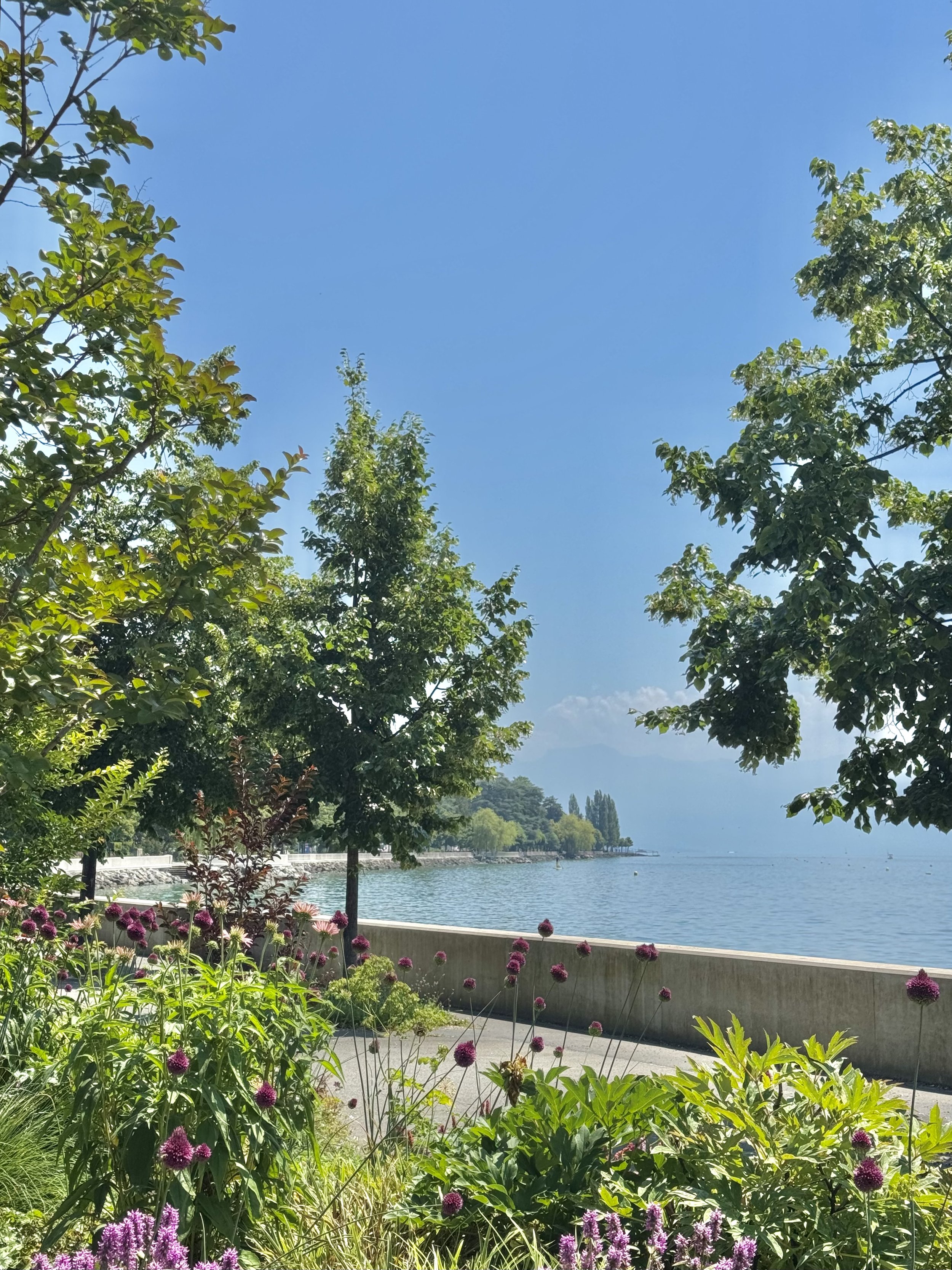
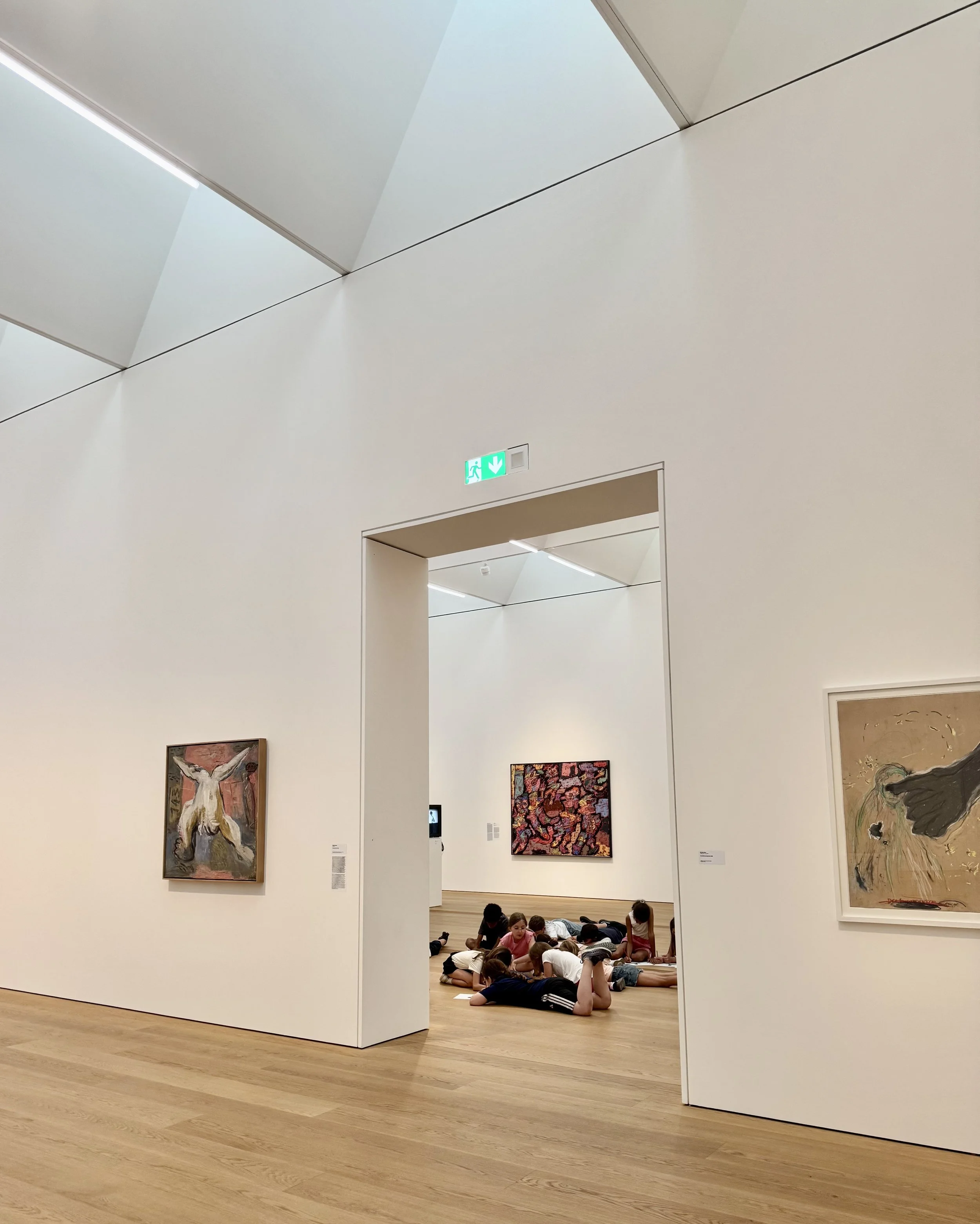
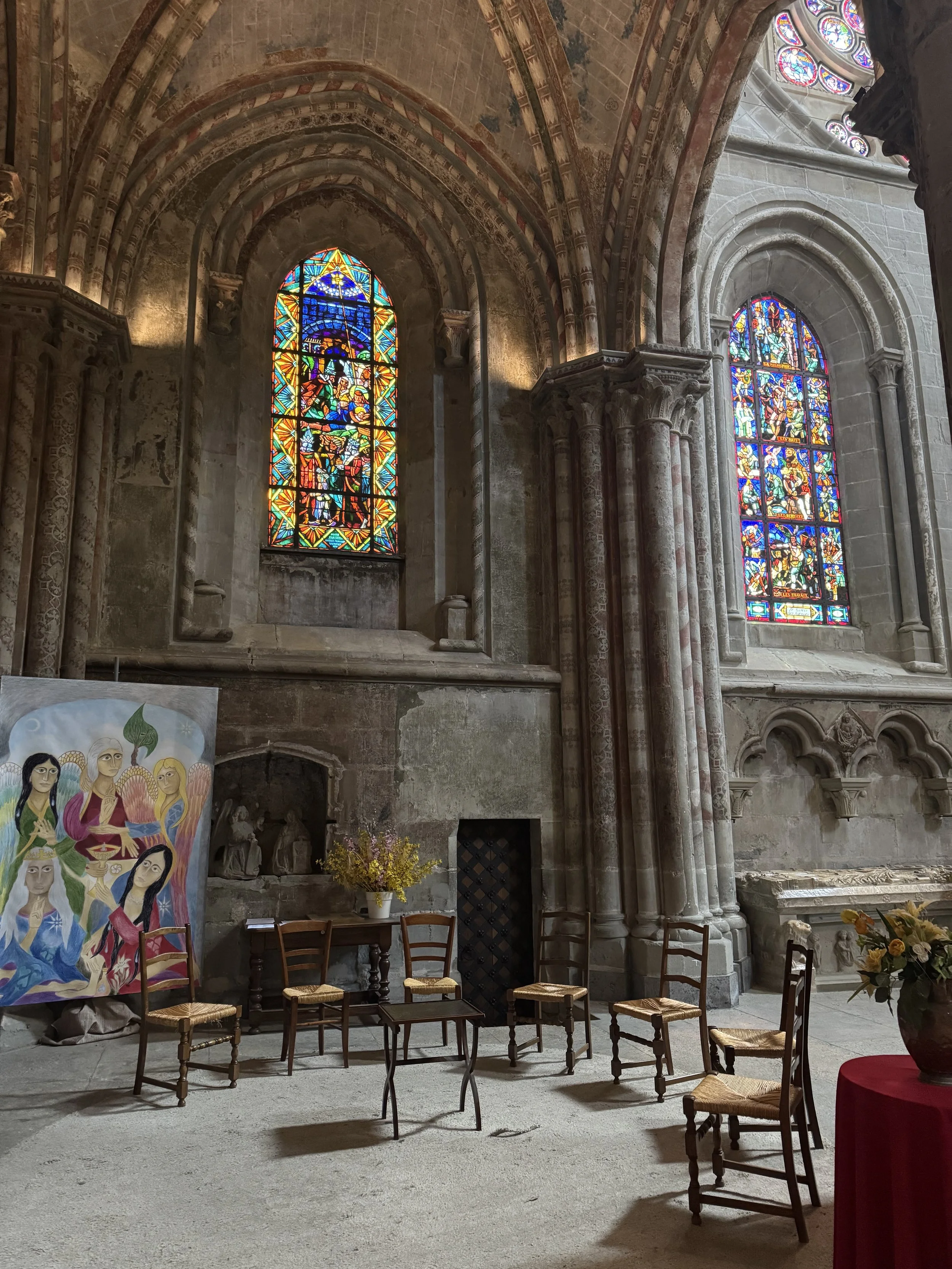
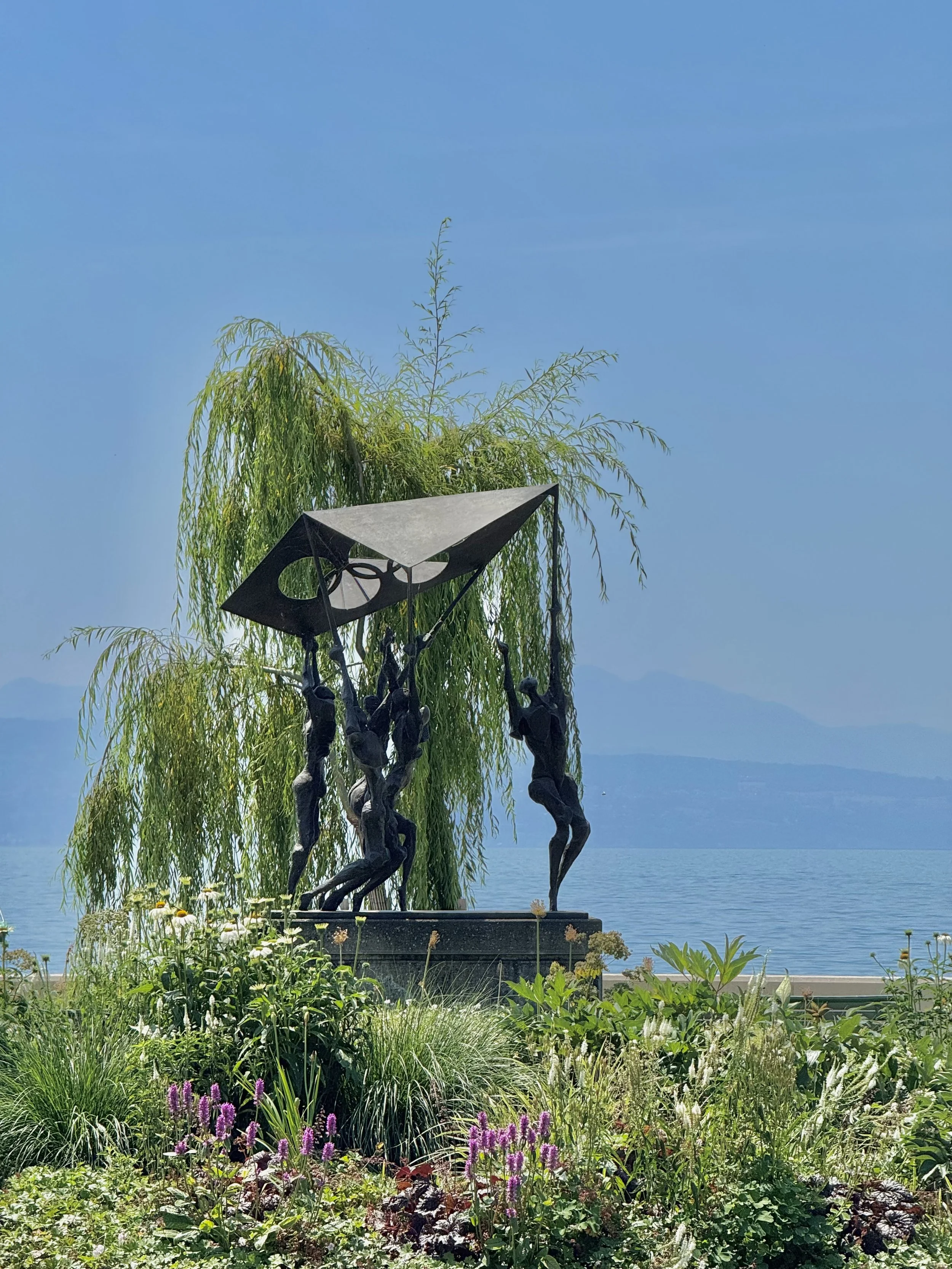
Then, I headed back to the train station to reunite with my mom, who had been robbed of her suitcase by British Airways (never to be returned, though we kept hoping and checking the status of her lost bag claim throughout the trip!). Since she no longer had bags to drop off at our hotel, we hopped right back on the train, transferring at Vevey to Chexbres, one of the Lavaux wine-growing villages. The Lavaux region has grown wine since the 11th century and predominantly produces white wine made from Chasselas grapes, but the relatively small stretch of land actually consists of several sub-regions with different terroirs. For example, the Dézaley area, closest to Lausanne, is very steep and features soils that mix clay, limestone, and gravel. It’s known for complex, mineral wines with aging potential. By contrast, Chexbres sits above the St-Saphorin region, which has lighter, gravelly soils that in turn produce fresh, crisp Chasselas.
As we walked down the quiet road from the train station, we were stunned by the town’s terraced vineyards, cascading down the hills toward Lac Léman. An undeniable bonus of enjoying wine is that vineyards tend to be beautiful places to visit — and it’s fun to learn how the qualities of vineyards that contribute to their aesthetic appeal (like steep slopes) actually also influence the flavor and character of the wine that’s produced. The lake isn’t just a dreamy backdrop! The Lavaux region’s microclimate is shaped by its “three suns”: the mixture of direct sunlight, sunlight mirrored from the lake’s surface, and the heat reflected off of the stone terraces, which keeps the grapes warm even at night and allows them to ripen evenly on all sides.
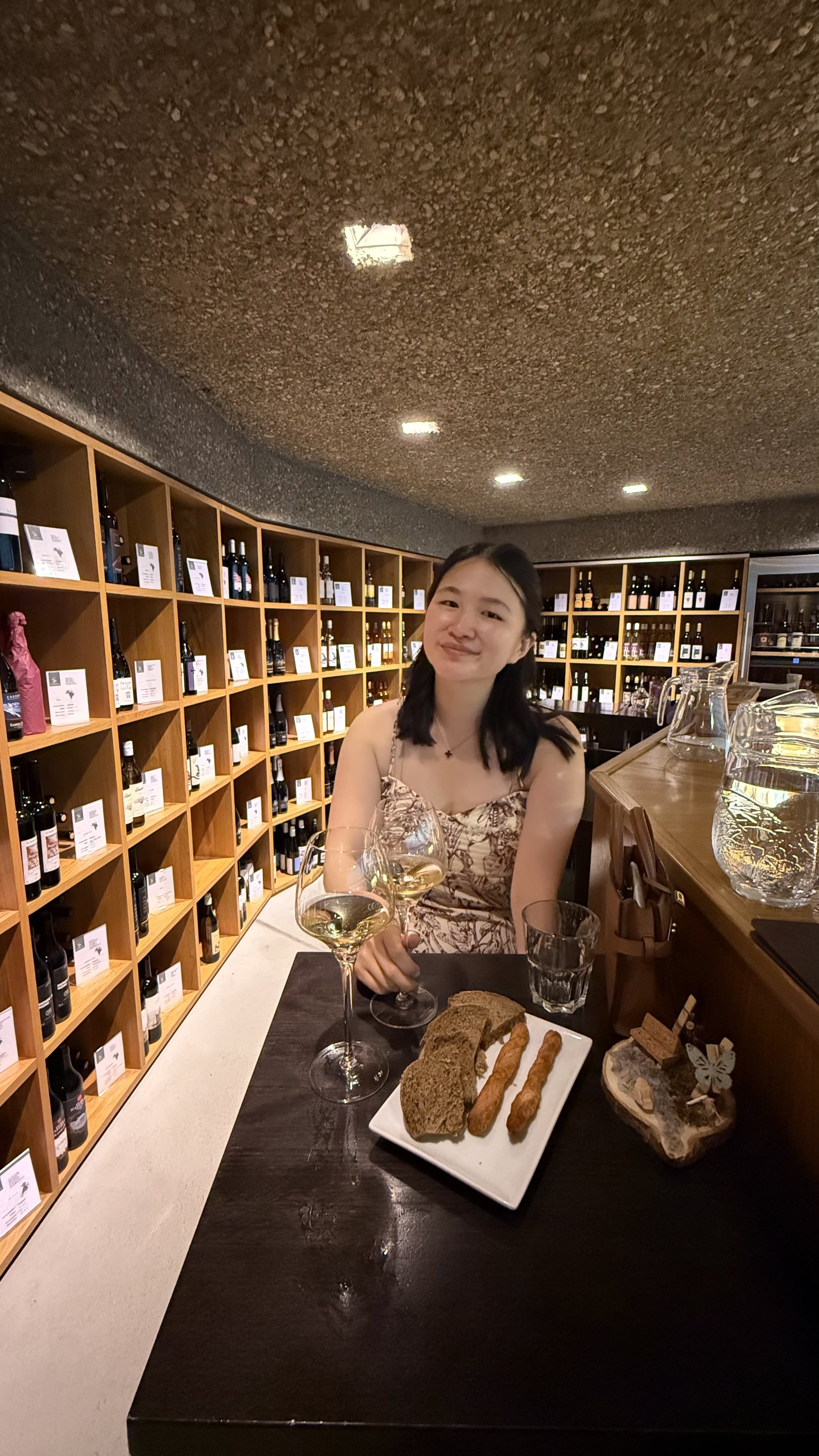
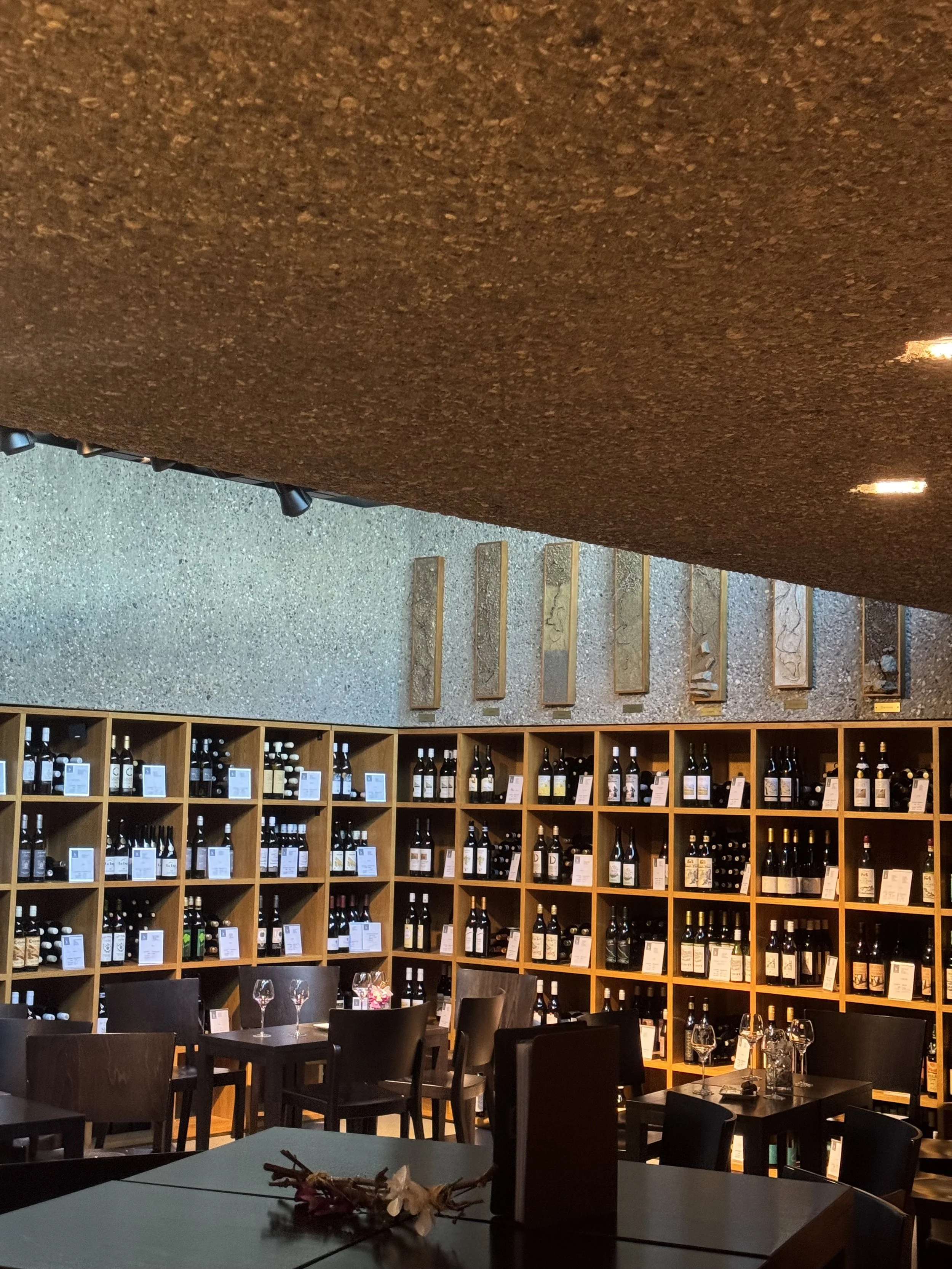
We made our way down curving roads to Rivaz’s Vinorama for a mini tasting. I particularly enjoyed Domaine Bernard Gorjat’s Savagnin Rose — not to be confused with rosé — a fragrant white wine that really tasted like rose petals. Over the past few years, I’ve come to genuinely appreciate wine — not in the sense of having particularly refined taste or a serious, sommelier-level vocabulary, but I have graduated from my preference for wines that taste like fruit juice (goodbye, college nights sweetened with Barefoot Fruitscato) and have a better idea of which wines I’m likely to enjoy. Sampling wine from different regions has become a new area for exploration and indulgence that I look forward to when I travel. Since Lavaux’s production is relatively tiny and few Swiss wines are exported at all, I guess I’ll have to come back to revisit my beloved rose wine.
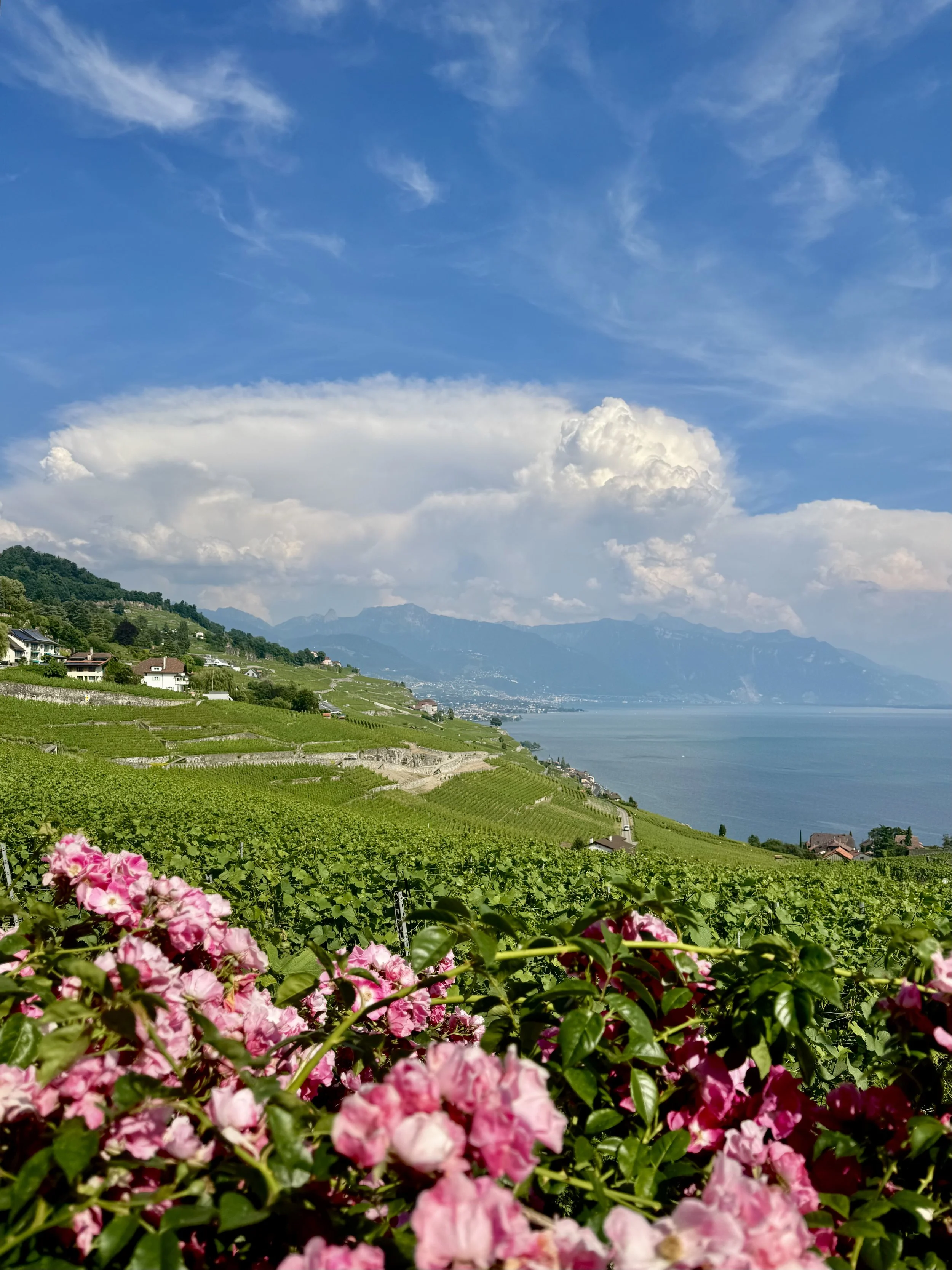
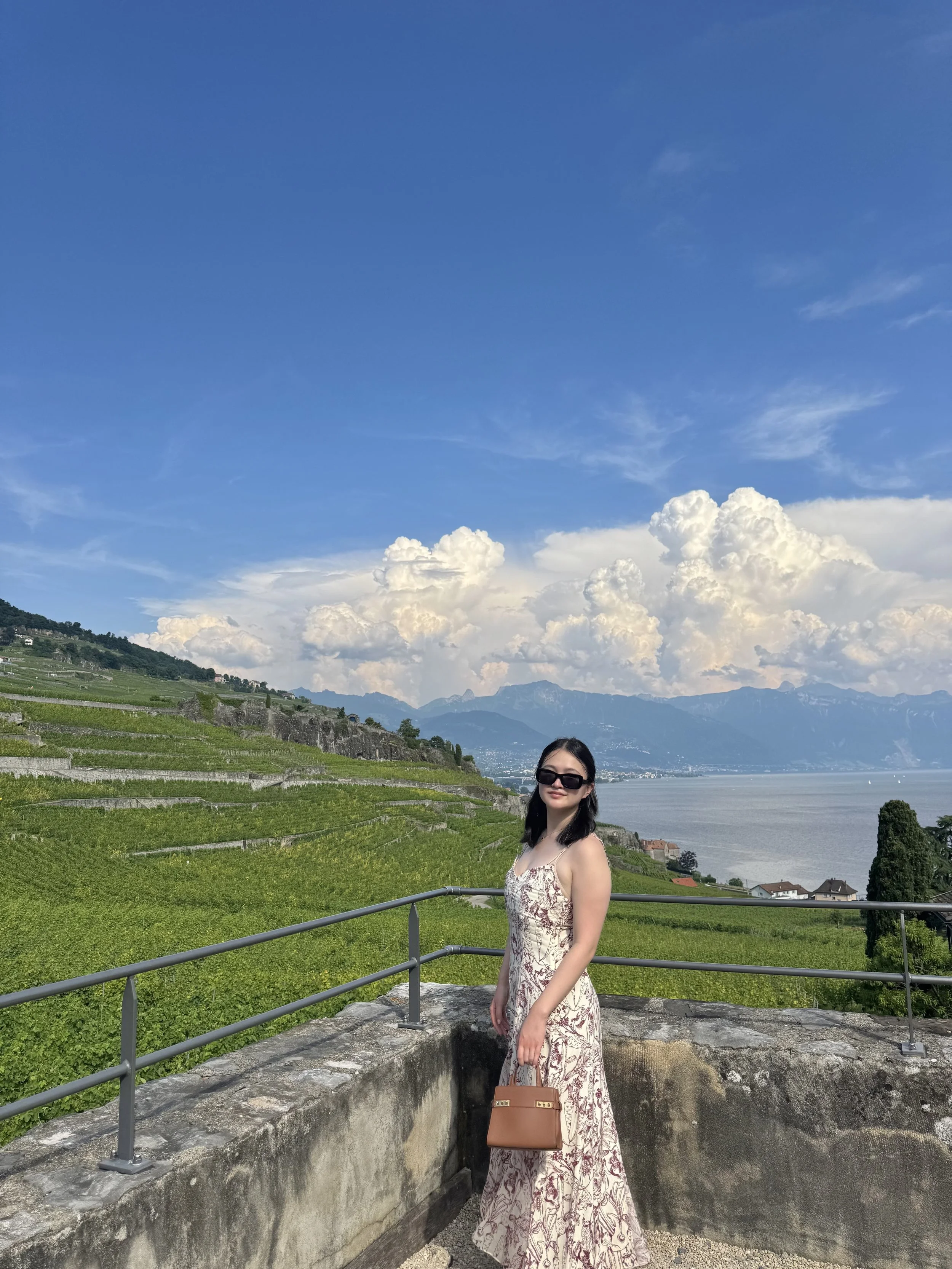
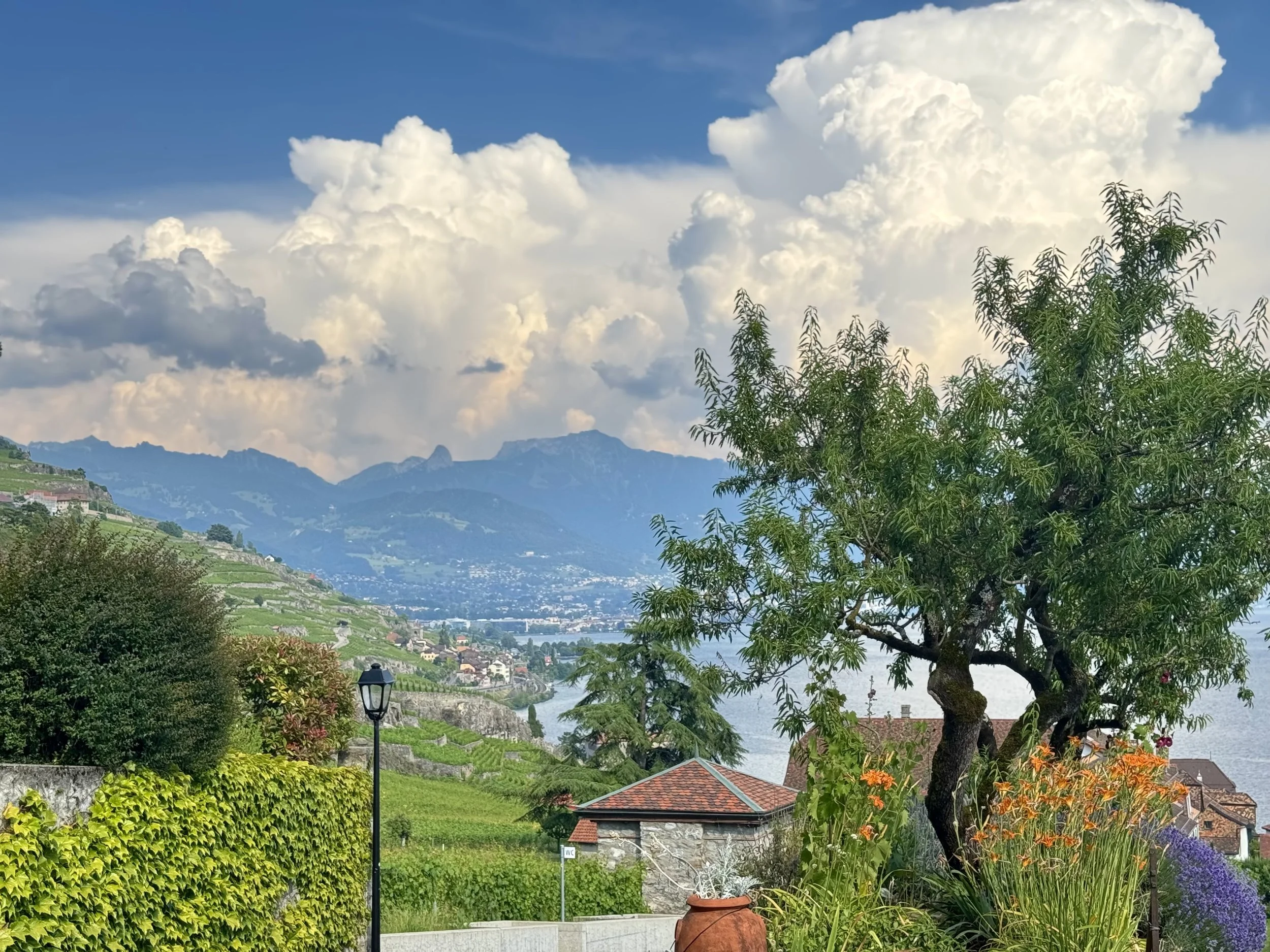
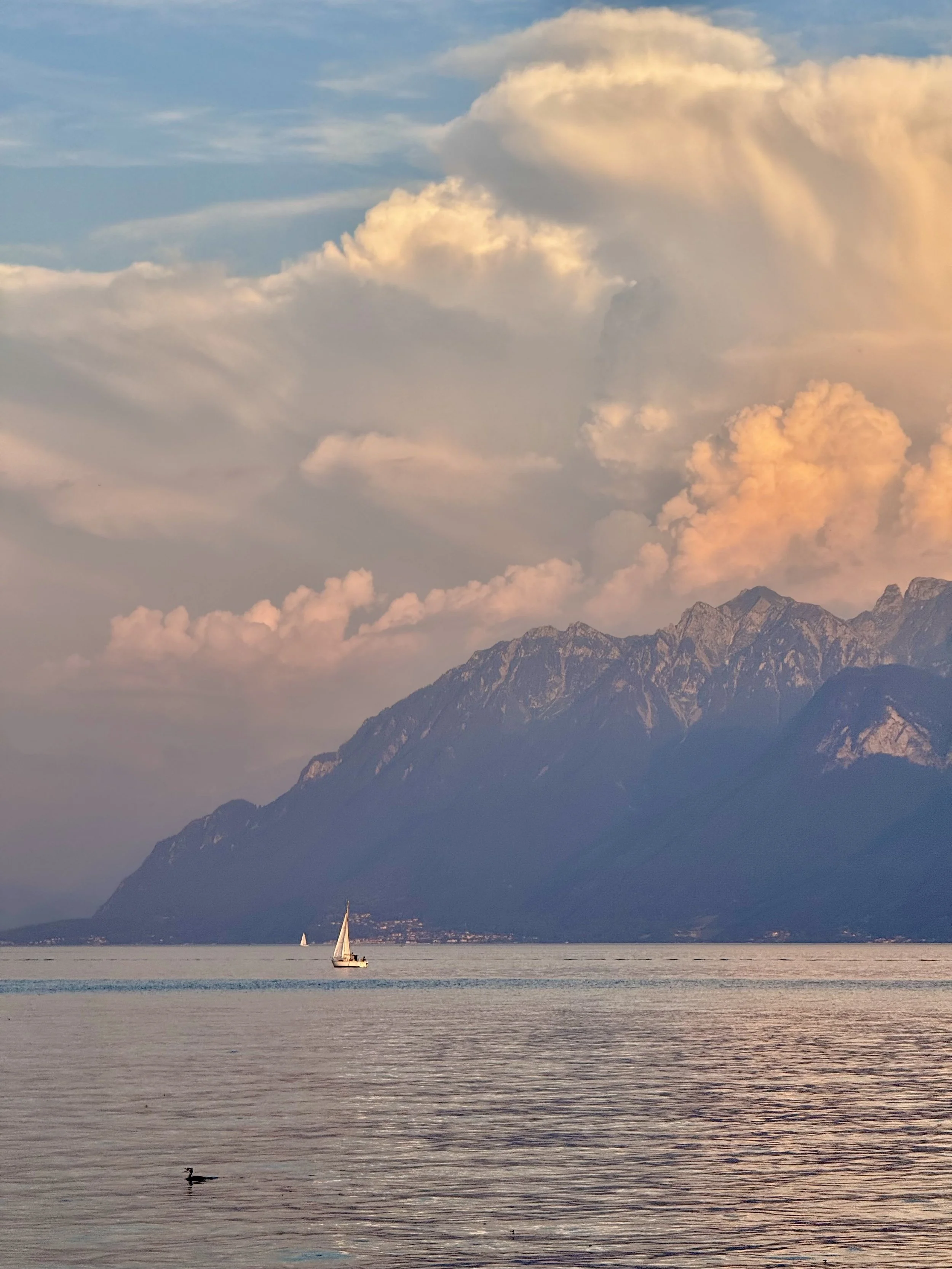
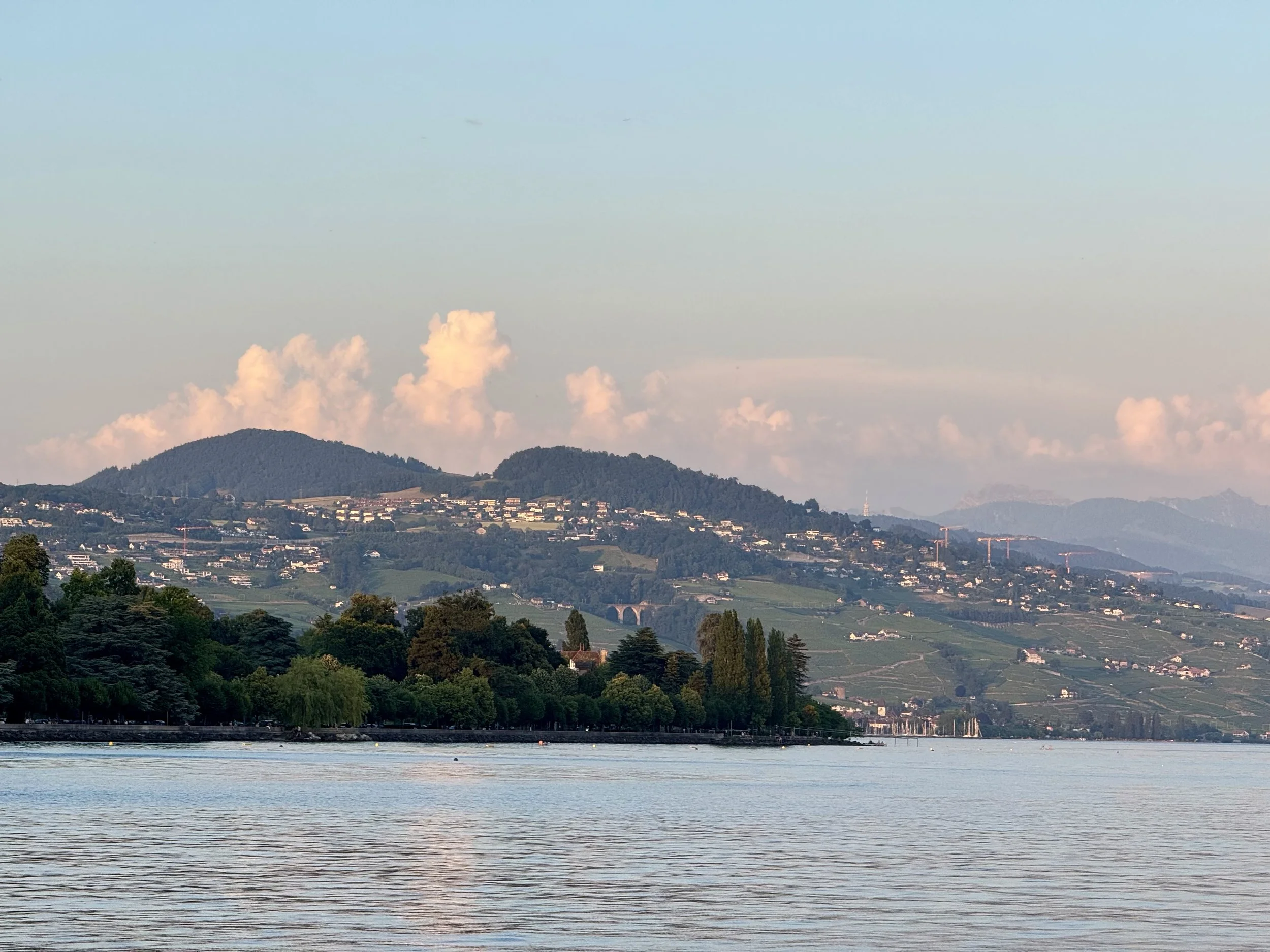
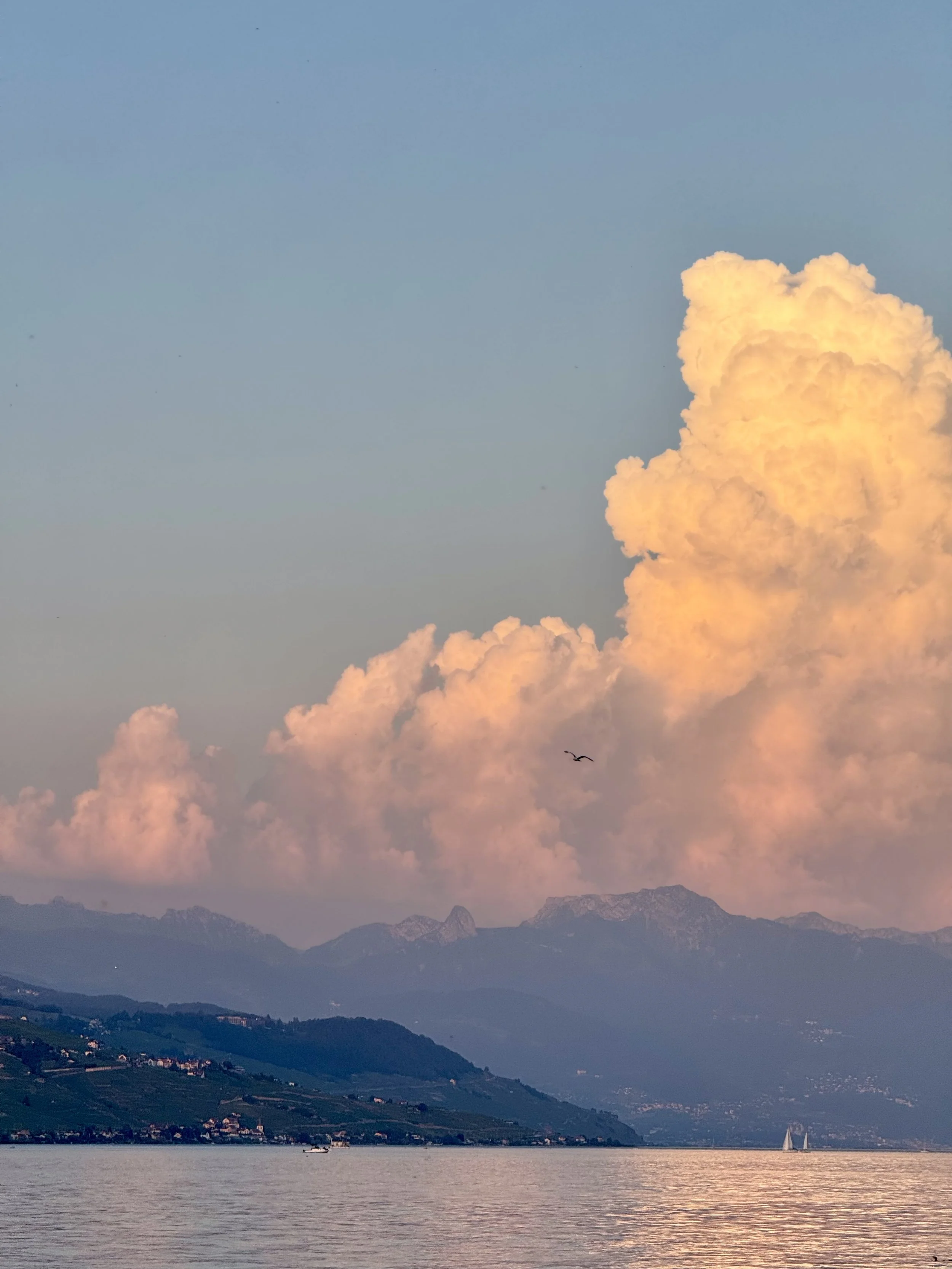
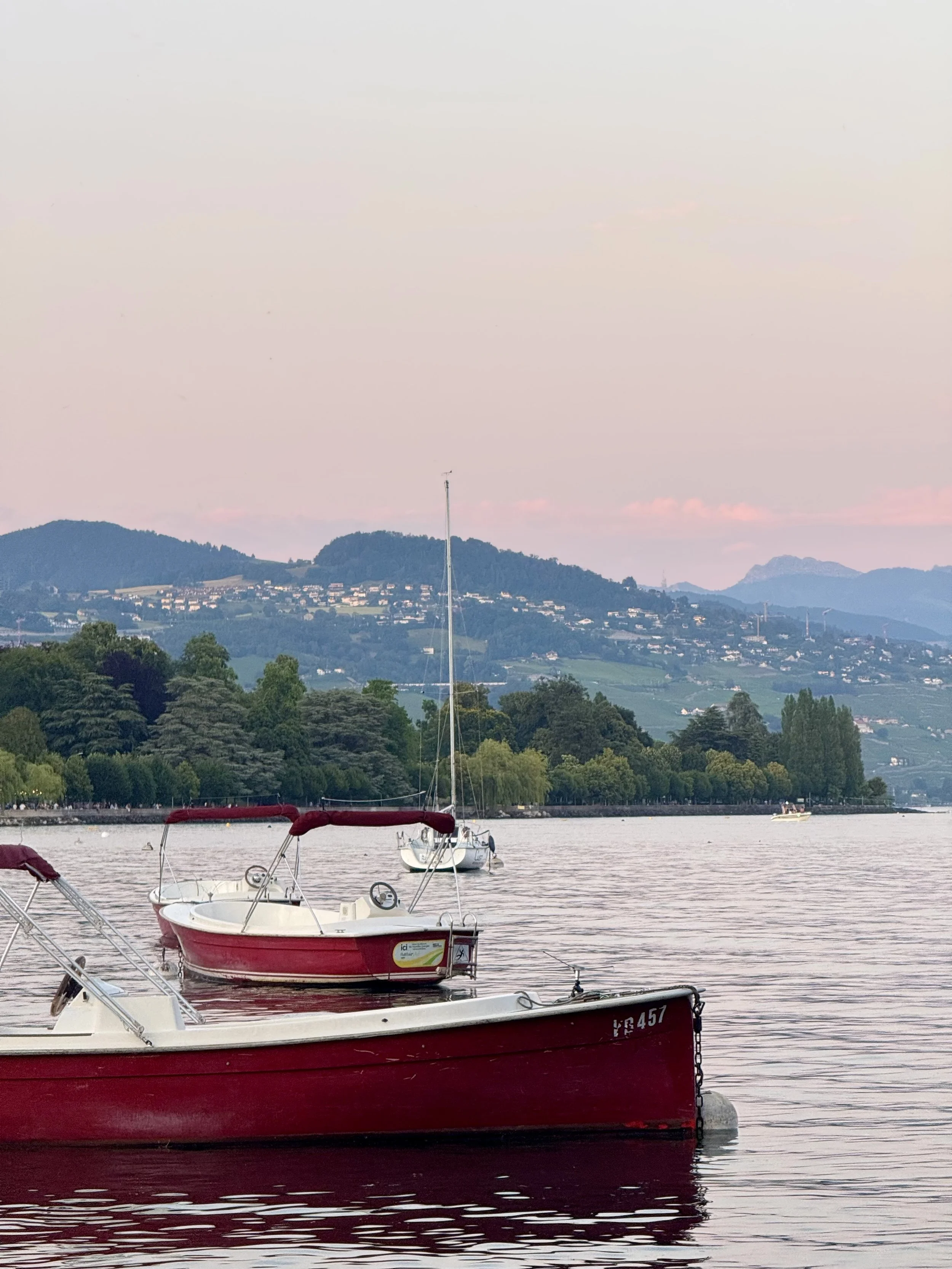
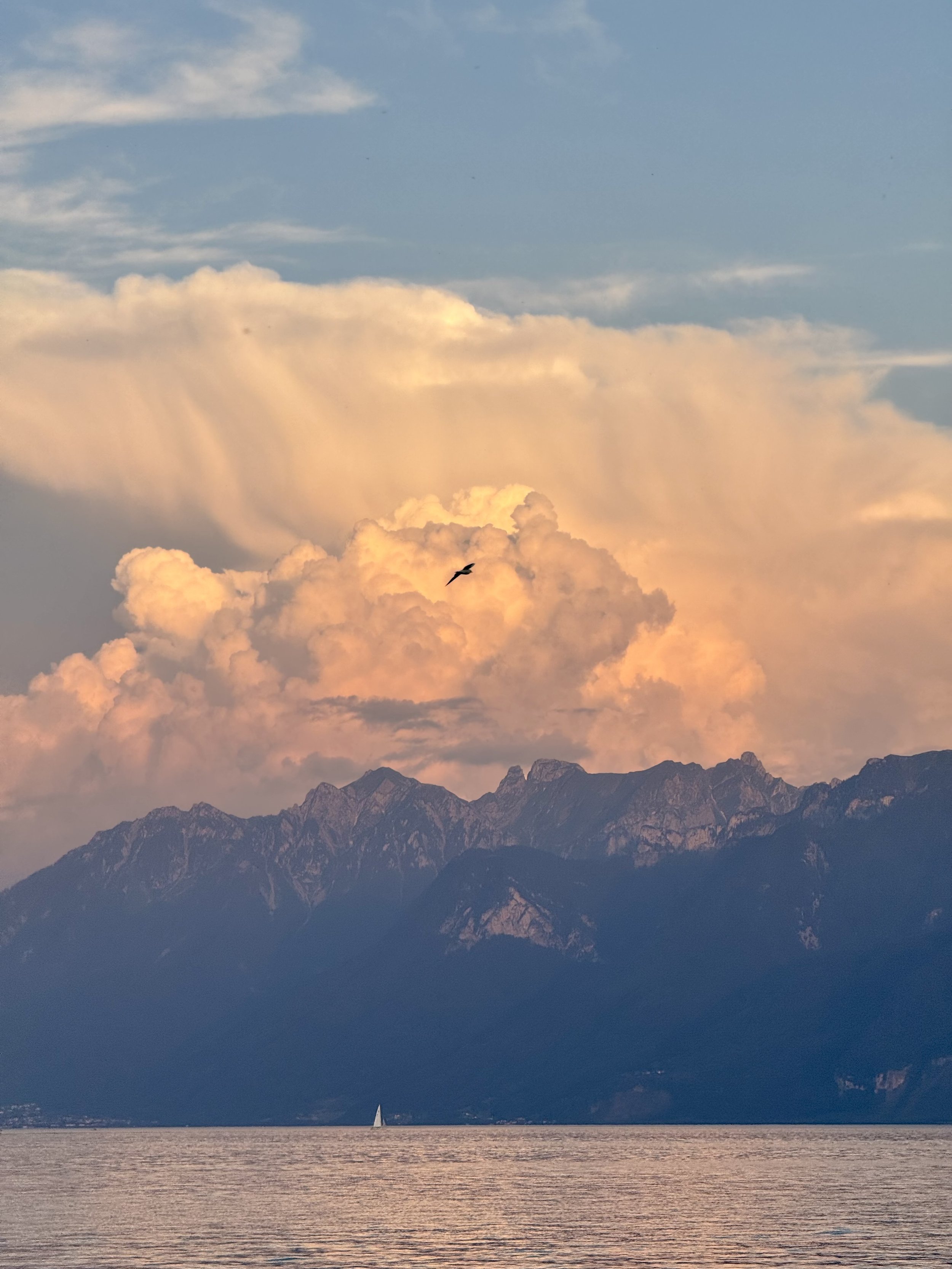
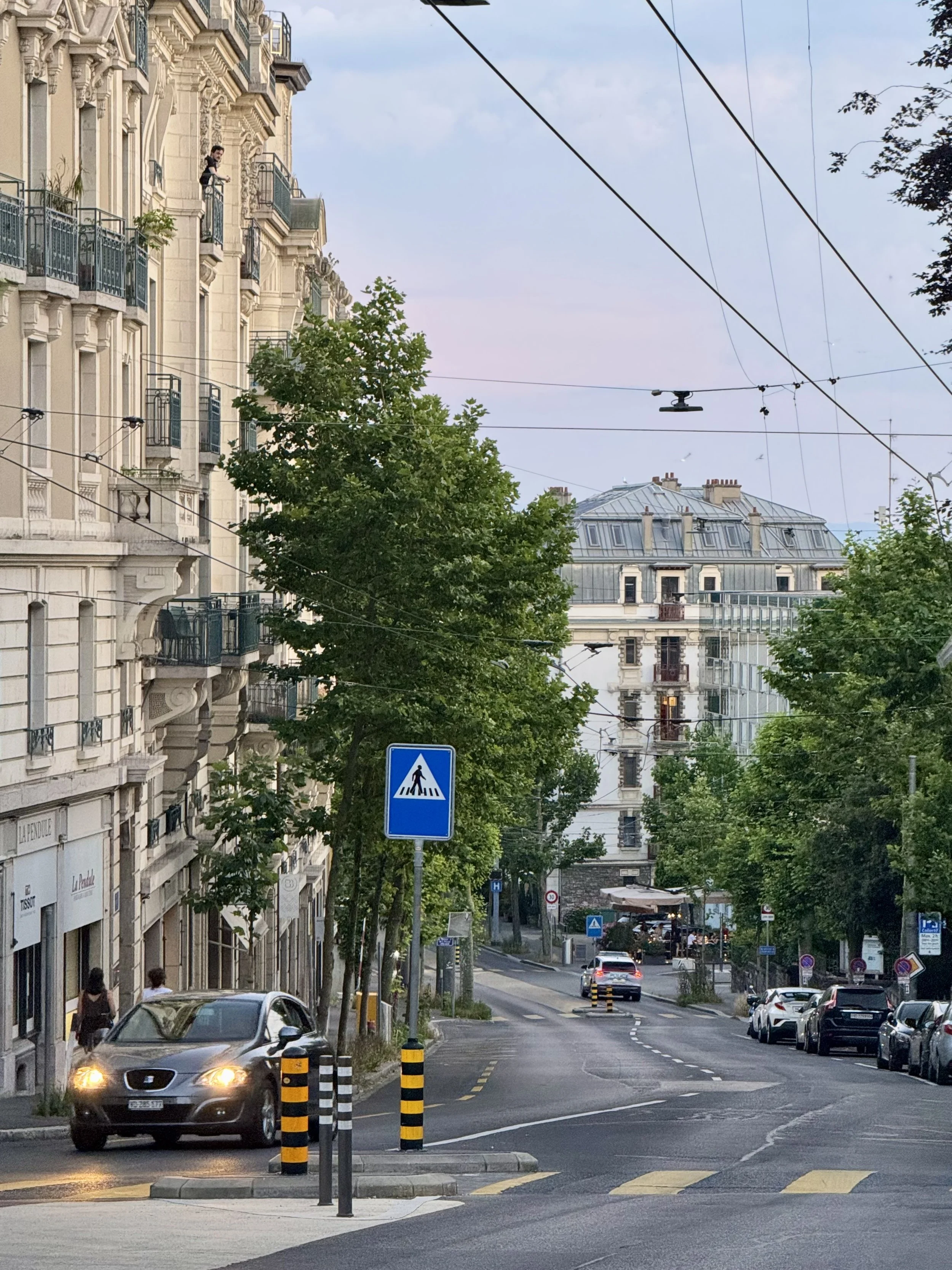
After our tasting, we caught the train back to Lausanne and watched the sunset by the lake. It felt like we’d stepped into an Impressionist painting. The afternoon’s bright blue sky now faded into softer pinks and purples, and this swath of pastels was reflected in the rippling water. The golden hour light illuminated vineyards across the lake. Clouds both fluffy and wispy hung, unmoving, in the sky. Little white boats bobbed alongside little white swans. The scene was filled with charming details.
Day 2: Montreux and Evian-les-Bains
The next morning, we took the train to Montreux, where we grabbed coffee at Sleepy Bear Coffee before walking along the manicured lakefront promenade all the way to Château de Chillon. The château was originally a fortress and later a prison, immortalized in Lord Byron’s The Prisoner of Chillon. I’ve included my favorite passage below. The narrator looks out at the unchanged world outside, upon mountains, gushing rivers, and windswept trees, all embodying an aliveness and hope he feels that he’s irreversibly lost (“So much a long communion tends / To make us what we are:—even I / Regain'd my freedom with a sigh”). His glimpse of freedom sharpens the pain of his continued imprisonment, filling him with renewed longing. He laments: “yet my glance, too much opprest, / Had almost need of such a rest.” The line is tragic, but read optimistically, one could conclude that even in the bleakest circumstances, the existence of beauty and goodness matters — and even when it’s absent, to know it exists is a kind of respite.
-
“And the whole earth would henceforth be
A wider prison unto me:
No child, no sire, no kin had I,
No partner in my misery;
I thought of this, and I was glad,
For thought of them had made me mad;
But I was curious to ascend
To my barr'd windows, and to bend
Once more, upon the mountains high,
The quiet of a loving eye.
I saw them—and they were the same,
They were not changed like me in frame;
I saw their thousand years of snow
On high—their wide long lake below,
And the blue Rhone in fullest flow;
I heard the torrents leap and gush
O'er channell'd rock and broken bush;
I saw the white-wall'd distant town,
And whiter sails go skimming down;
And then there was a little isle,
Which in my very face did smile,
The only one in view;
A small green isle, it seem'd no more,
Scarce broader than my dungeon floor,
But in it there were three tall trees,
And o'er it blew the mountain breeze,
And by it there were waters flowing,
And on it there were young flowers growing,
Of gentle breath and hue.
The fish swam by the castle wall,
And they seem'd joyous each and all;
The eagle rode the rising blast,
Methought he never flew so fast
As then to me he seem'd to fly;
And then new tears came in my eye,
And I felt troubled—and would fain
I had not left my recent chain;
And when I did descend again,
The darkness of my dim abode
Fell on me as a heavy load;
It was as is a new-dug grave,
Closing o'er one we sought to save,—
And yet my glance, too much opprest,
Had almost need of such a rest.”
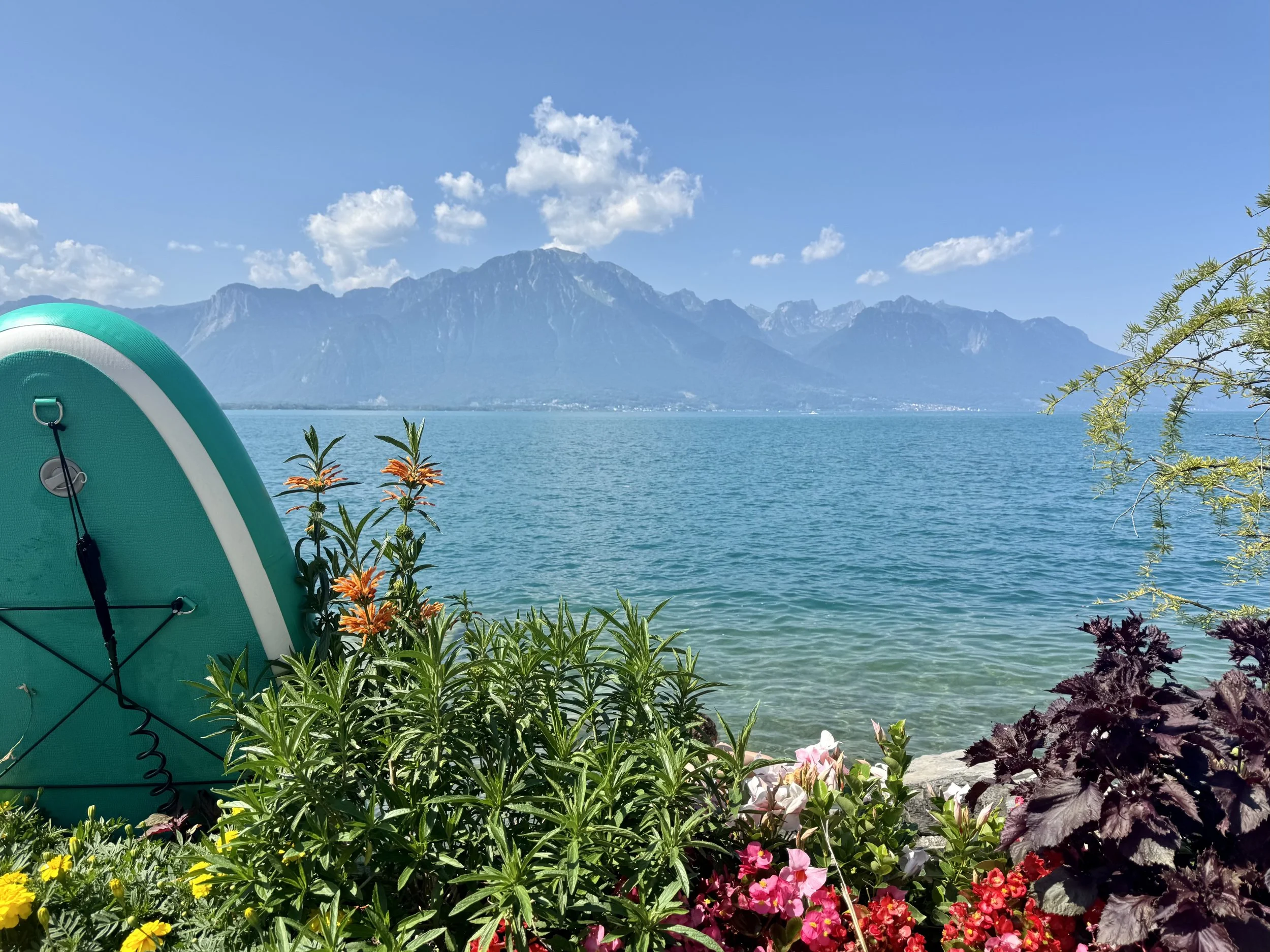
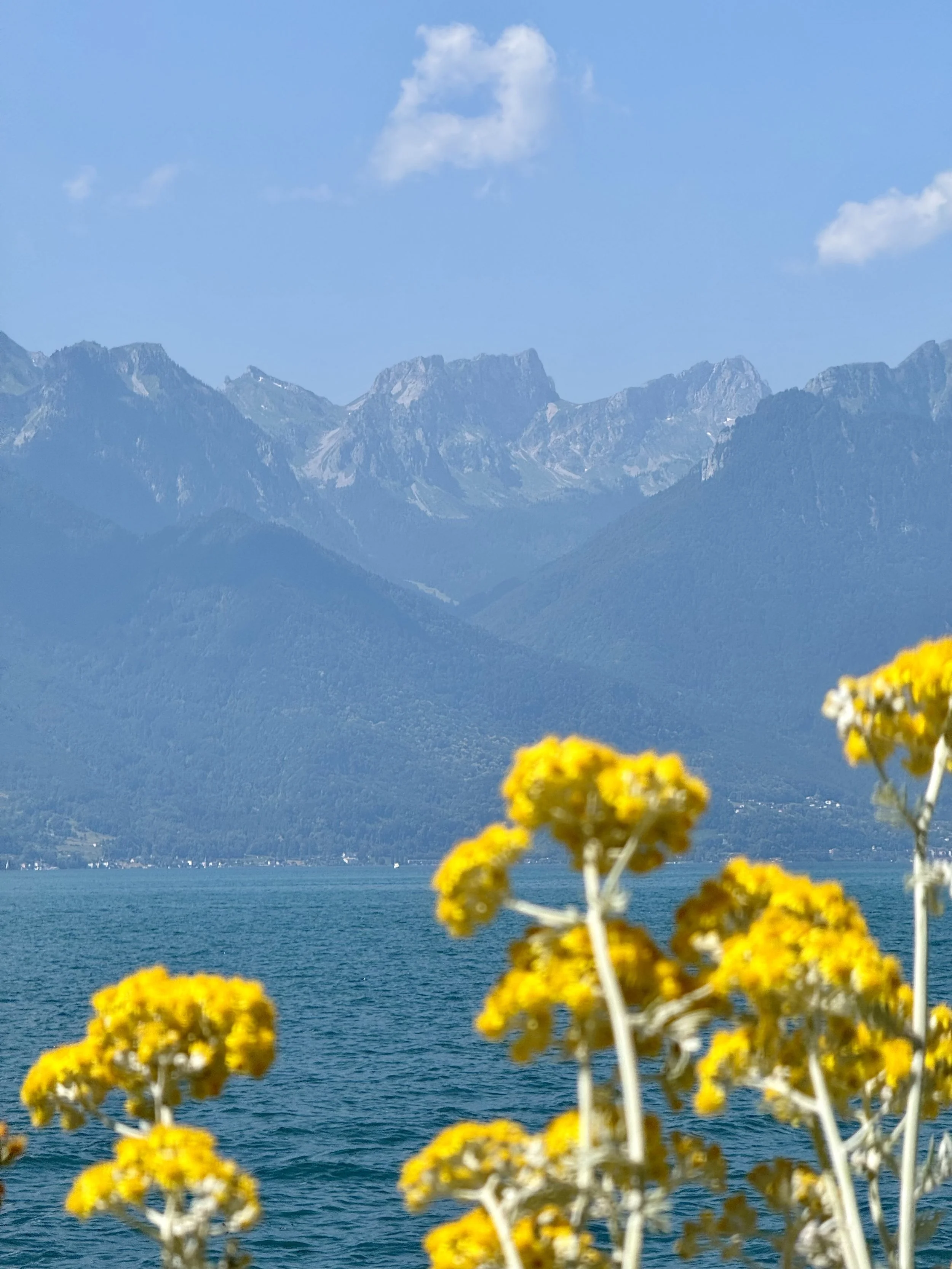
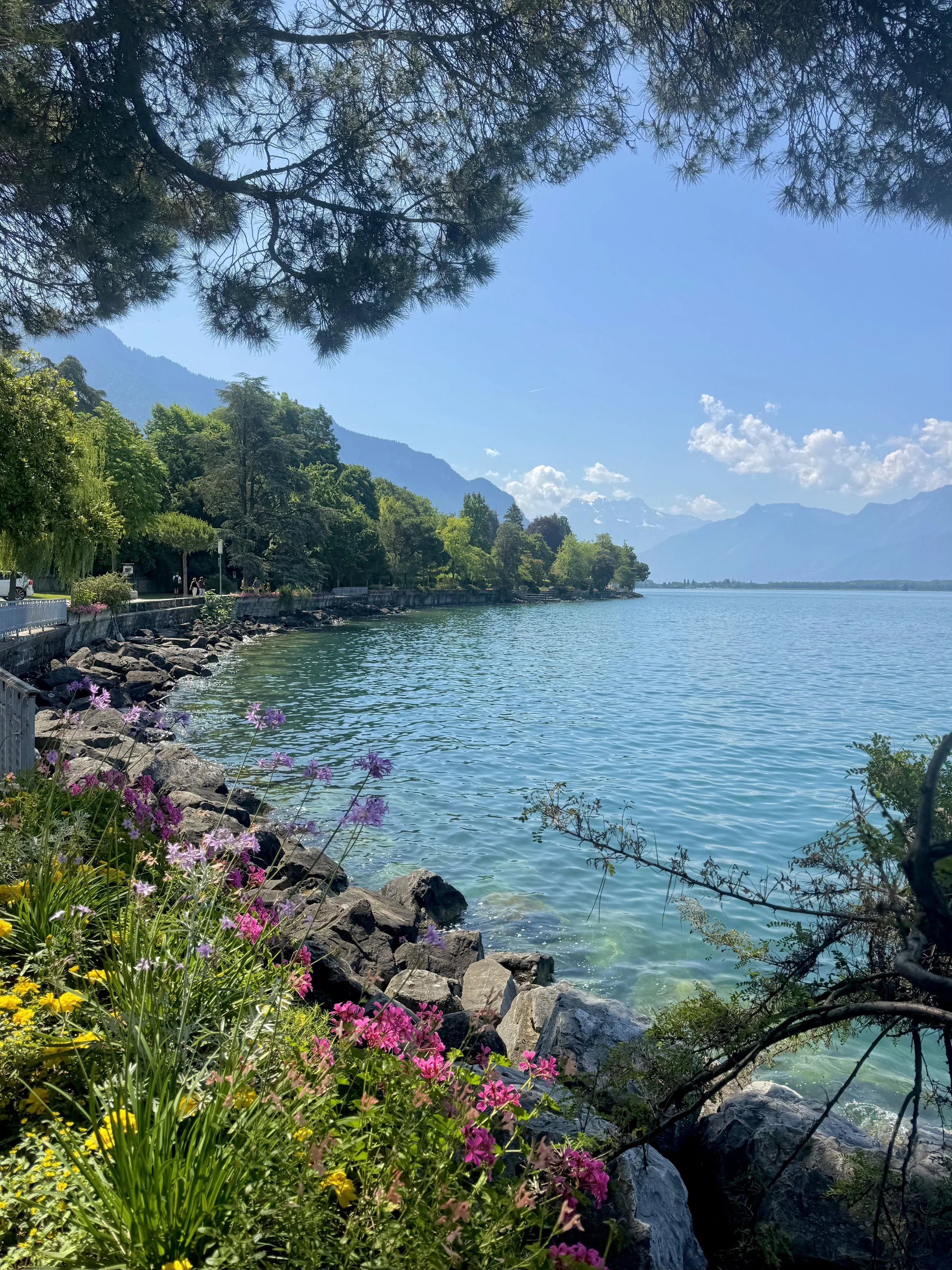
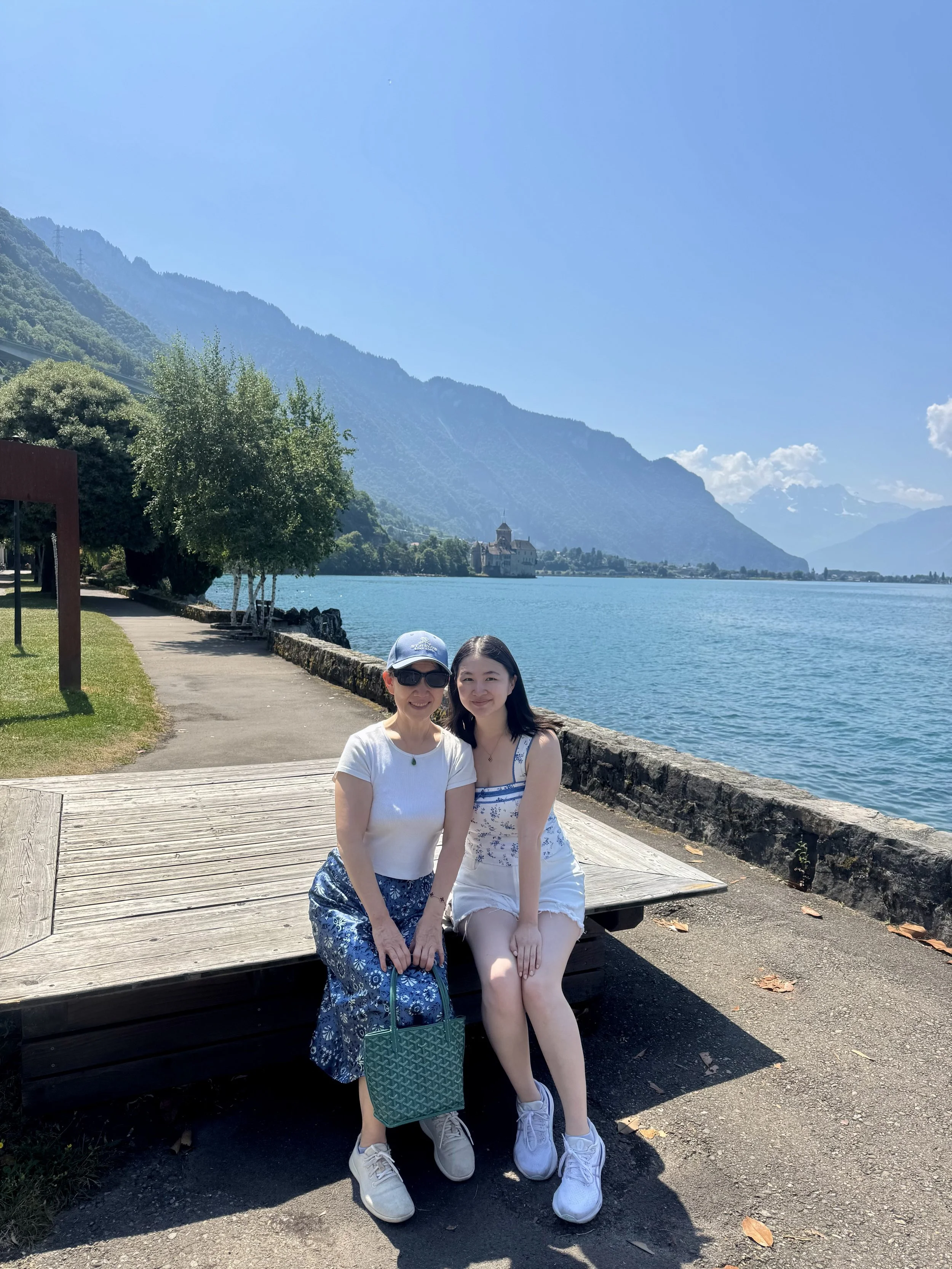
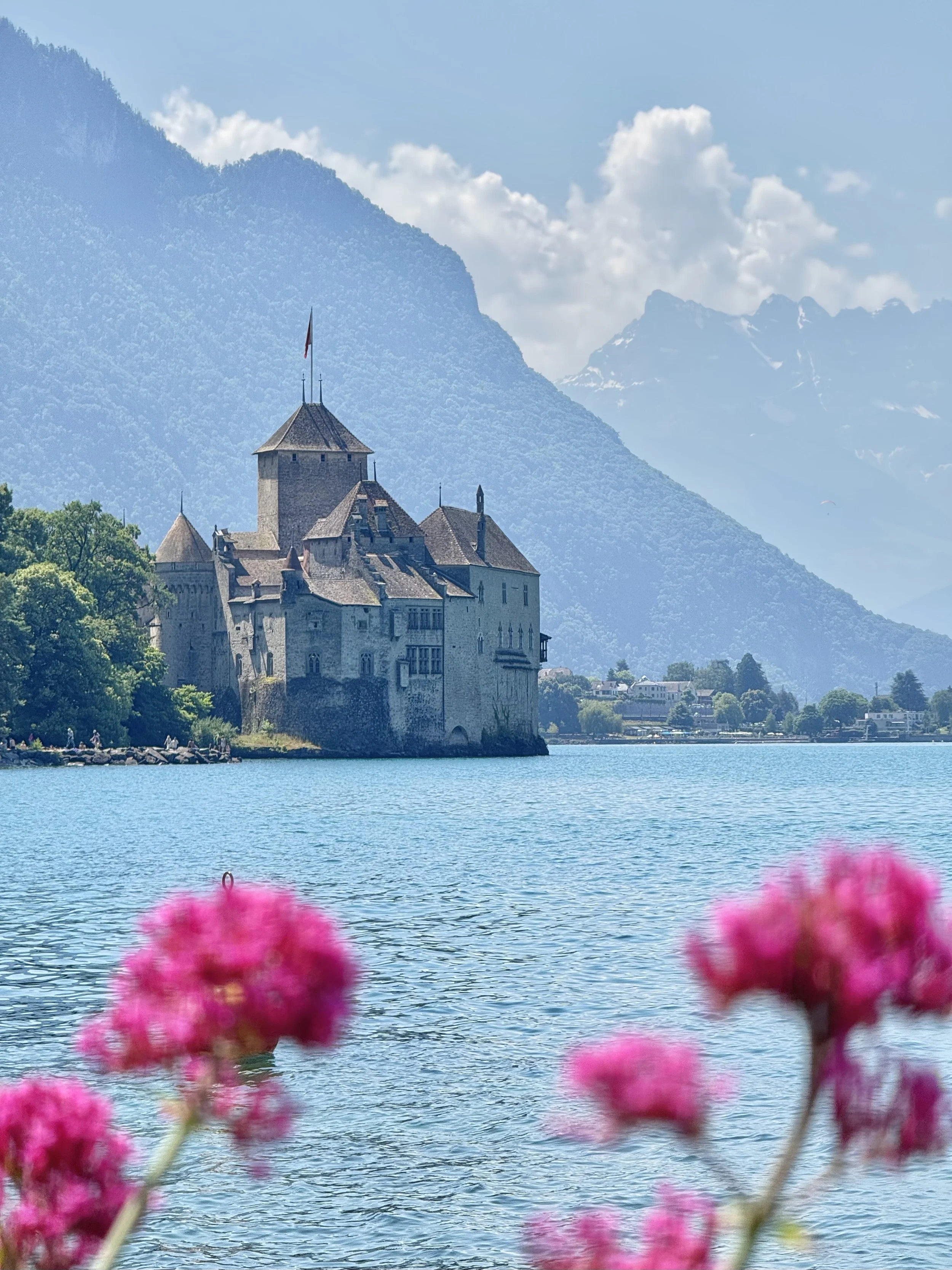
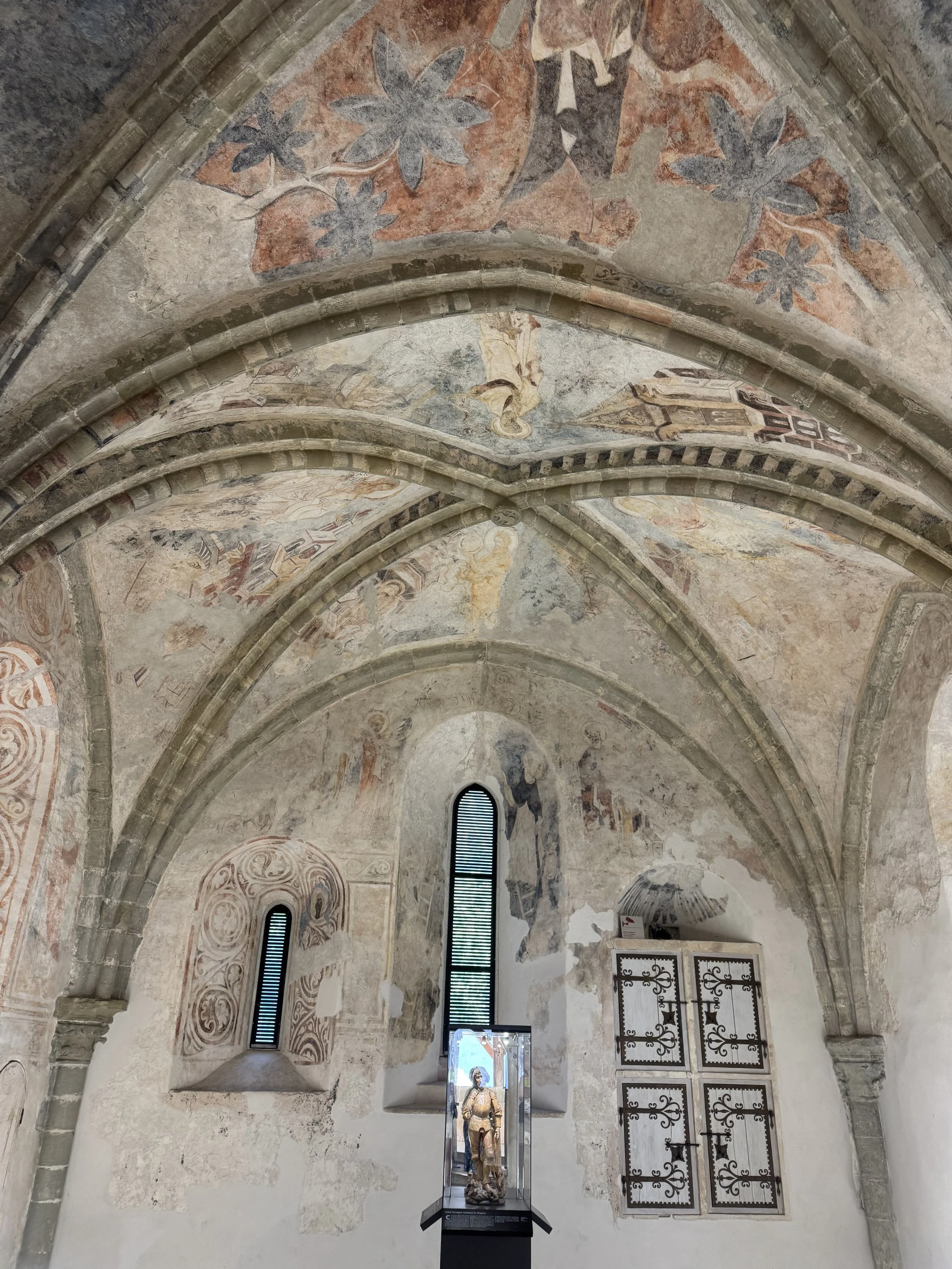
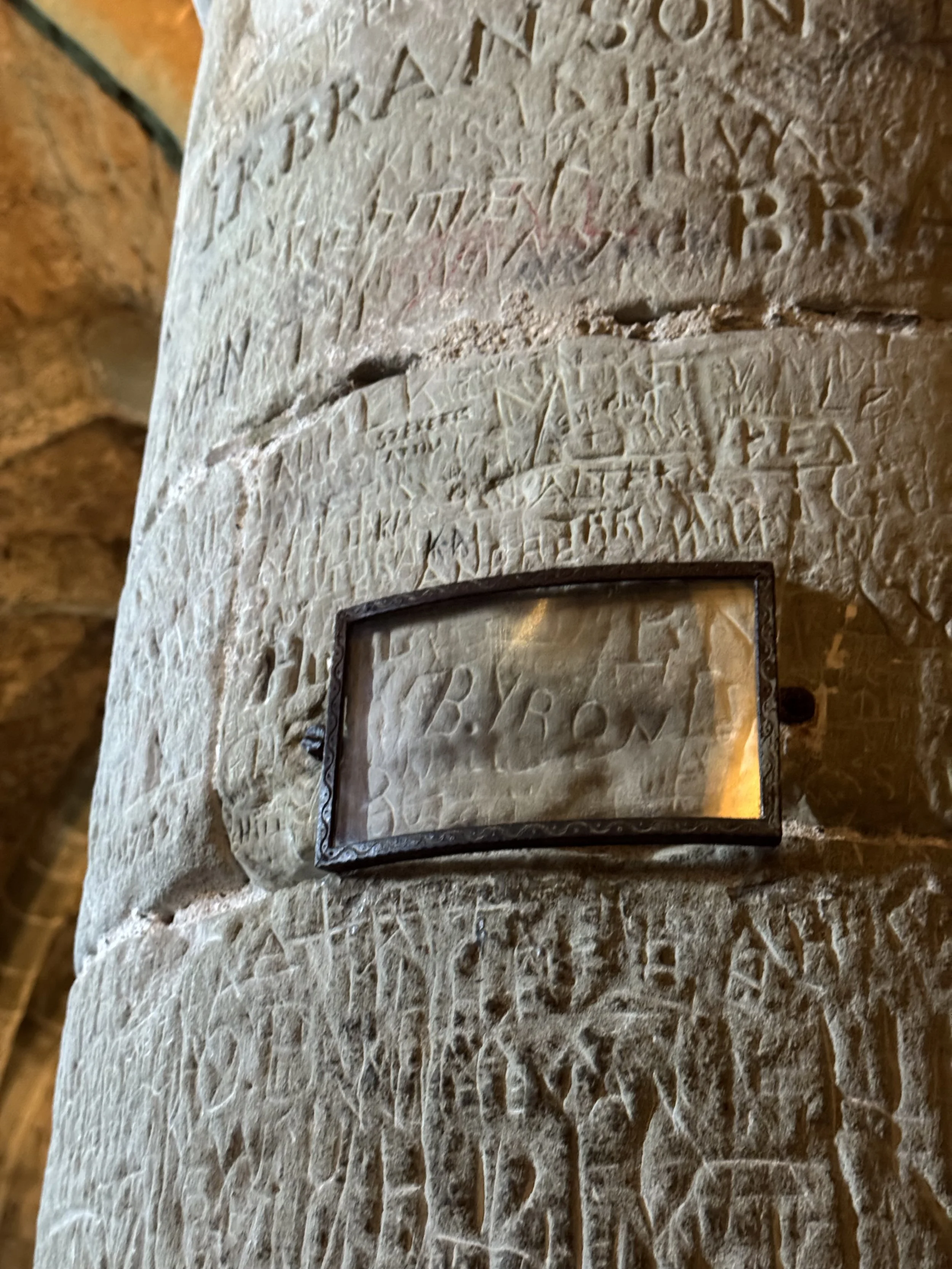
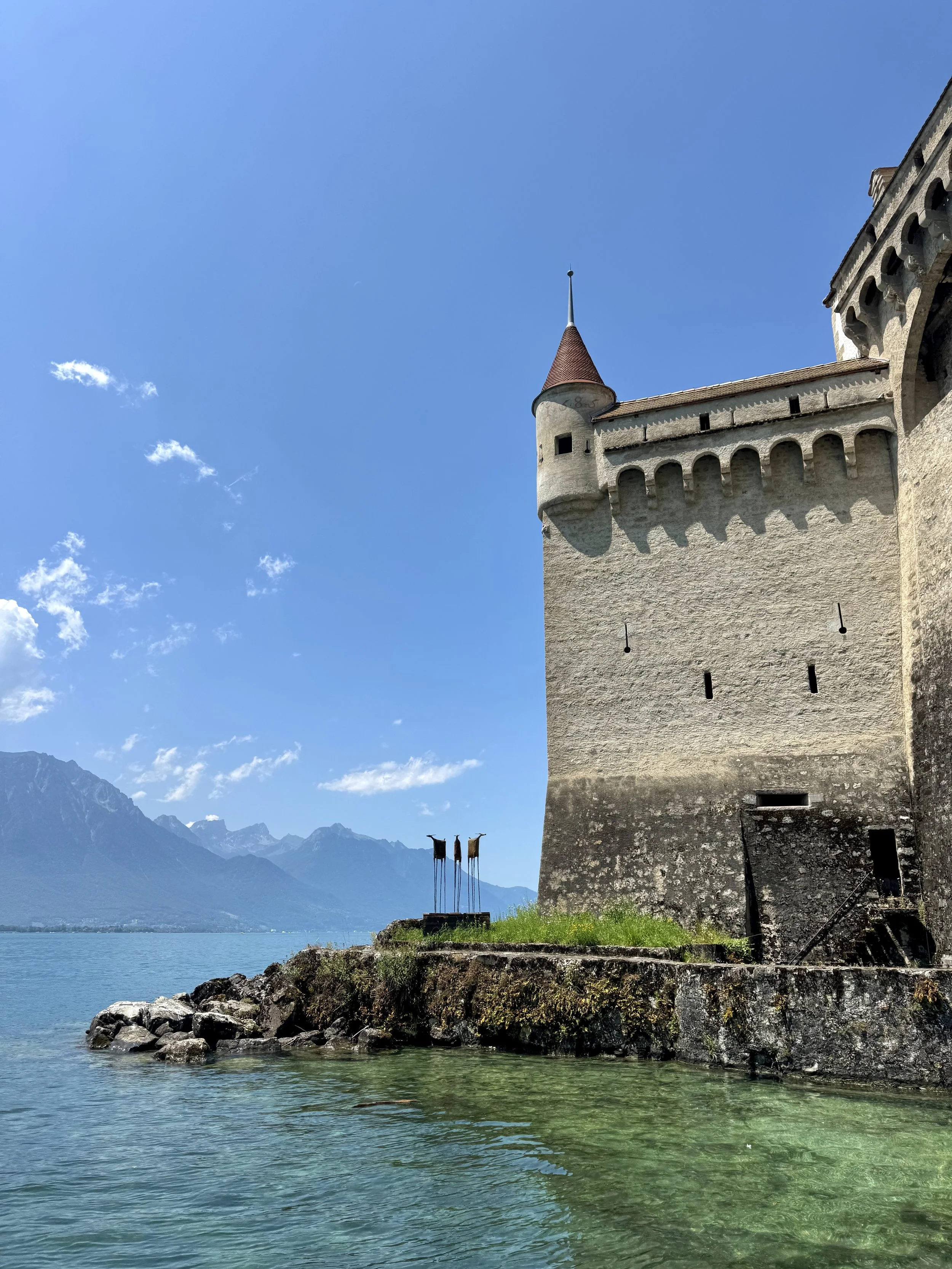
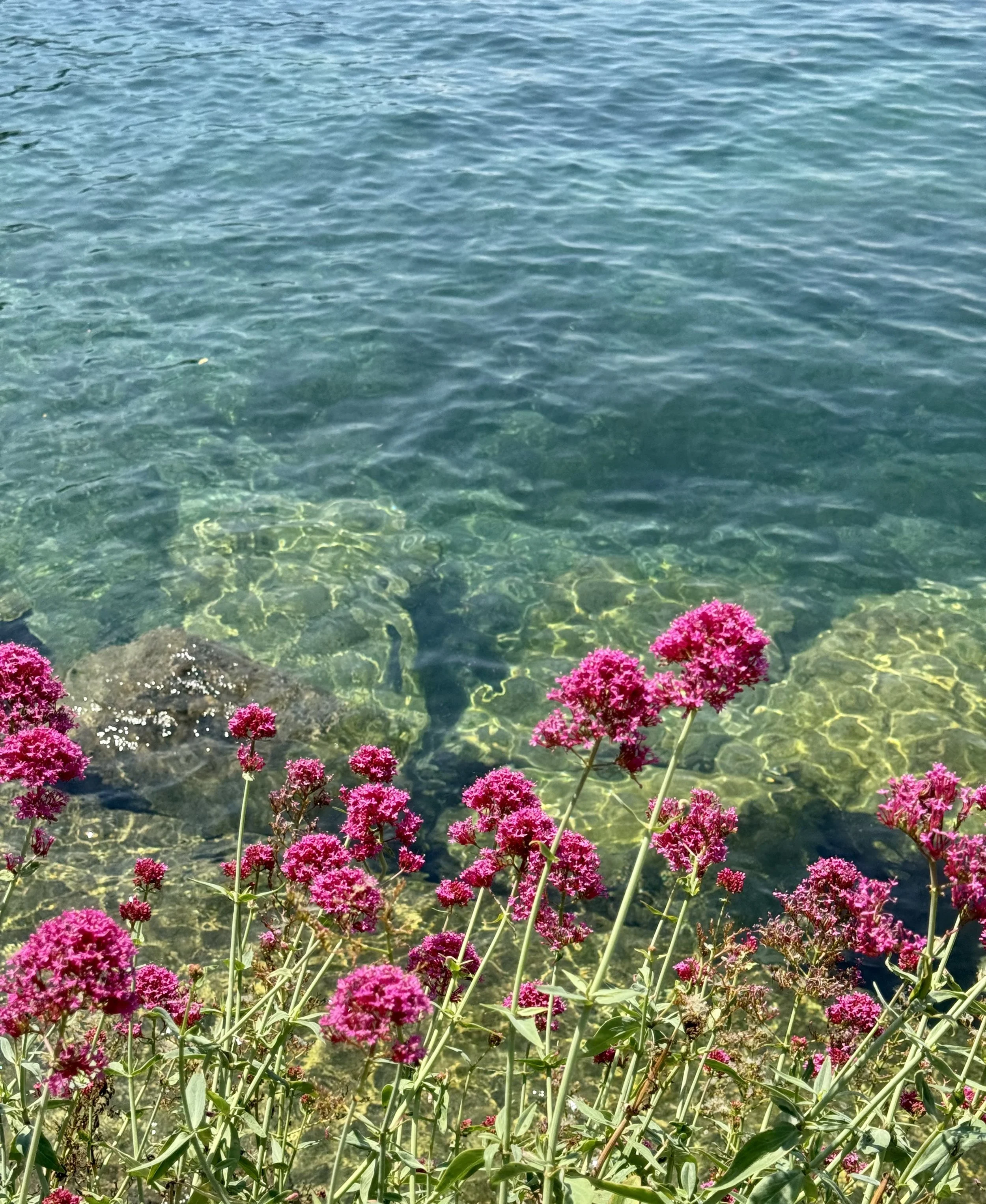
I believe that beauty is a worthy end in itself, and luckily, it’s abundant. In my view, a life spent unmoved by gorgeous sunsets or the pleasant geometries found both in nature and cityscapes feels devoid of something essential. It reflects not discernment but willful detachment from the world. After all, pursuit of beauty is really an exercise in looking. Seeing more of something tends to render it more beautiful to me, and this practice need not be reserved for special occasions or destinations. Since I started making travel videos, I’ve paid more attention to the details of each place I visit, including in my day-to-day: unexpected patterns, shapes created by shadows and light, the way a scene changes both up close and from afar. Looking for beauty is generally rewarded with the delight of finding something beautiful.
Some sillier iterations of this sentiment:

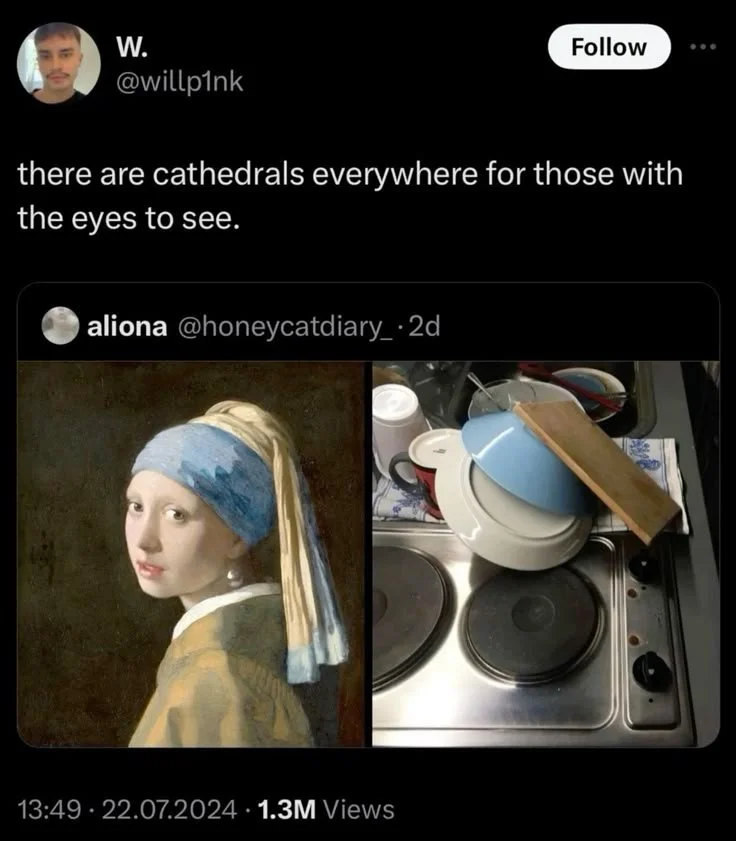
There are cathedrals everywhere for those with the eyes to see!
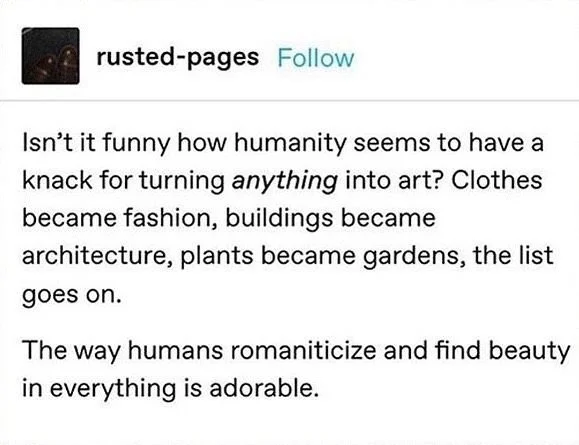
So, while history buffs will find much to study in Château de Chillon’s medieval halls, I found the view outside more compelling.
We’d savored our lakeside stroll in the morning, but it was now searingly hot and way past lunchtime, so we opted to hop on a bus back to Montreux rather than walk the two miles back. As we pondered where to eat, we walked past groups of happy locals singing and playing guitar by the lake, and a statue of Freddie Mercury (“lover of life, singer of songs”!). We opted for a thematically-apt, tasty lunch at the Montreux Jazz Café, a restaurant started by the founder of Montreux’s annual Jazz Festival. There’s another Montreux Jazz Café location in Lausanne’s technology university, EPFL, where you can actually view the Festival’s physical archives. Every concert has been recorded since its founding in 1967, and these recordings have been included in UNESCO’s Memory of the World Register, which aims to preserve and create universal access to the world’s documentary heritage.
We took the train back to Lausanne, and after a bit of rest, we headed out on a second day trip, crossing borders to visit the French spa town Évian-les-Bains. It’s amazing how much you can squeeze into a day when the sun sets past 8pm! Évian-les-Bains, of bottled water fame, is just a 35-minute ferry from Lausanne — this journey is included in the Swiss Travel Pass and while you’re required to bring your passport, there wasn’t an immigration or customs process on either side. The ferry ride offers beautiful views of the lake and mountains.
We had aspirations of playing a short round of golf at the Évian Resort, but their 9-hole course was in a separate location two kilometers away. With limited time to explore before our return ferry, we decided to stroll around their main course (which was being prepped for the annual Amundi Evian Championship, a major LPGA tournament) and wait for an Uber back down to the town.
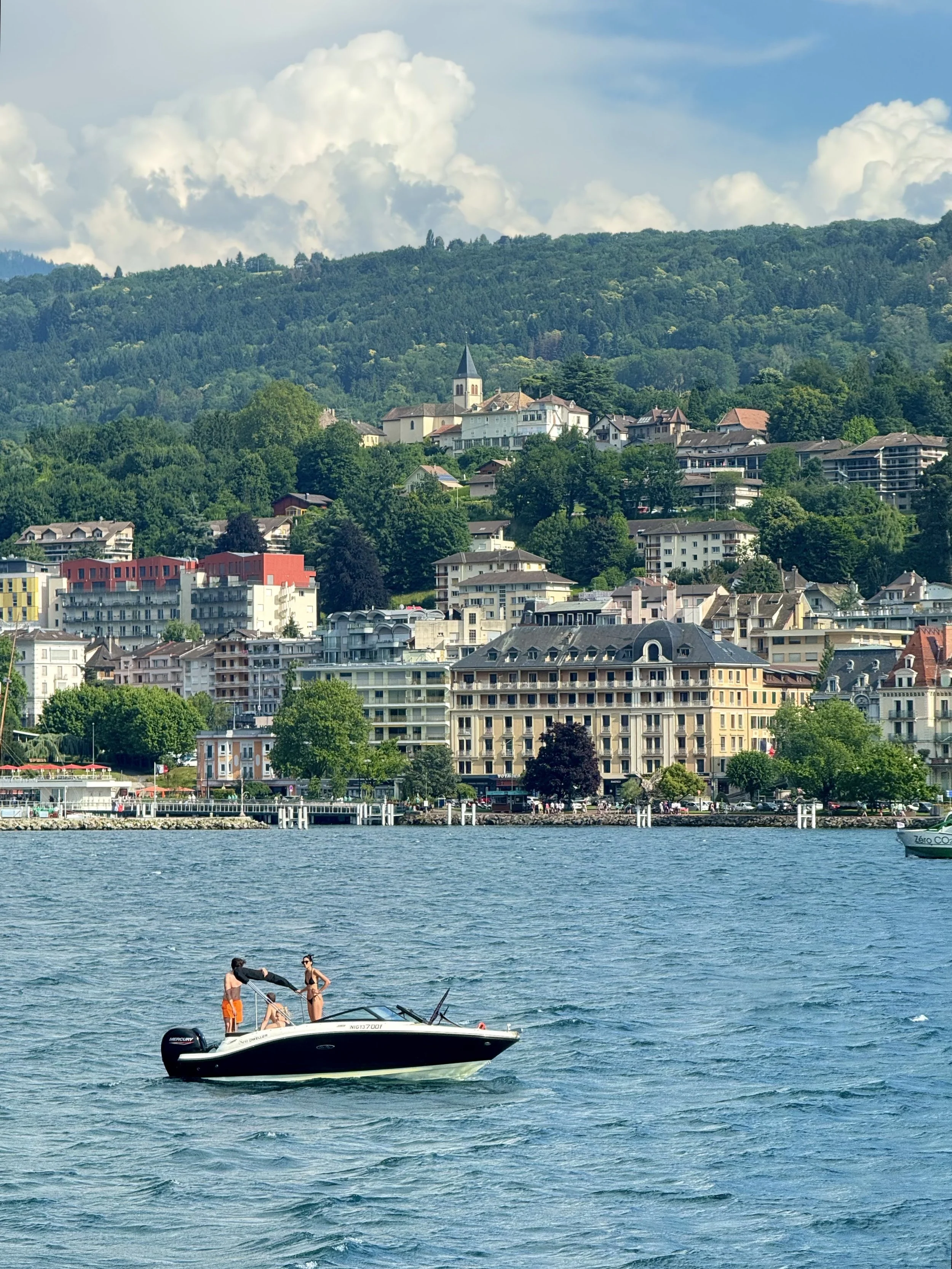
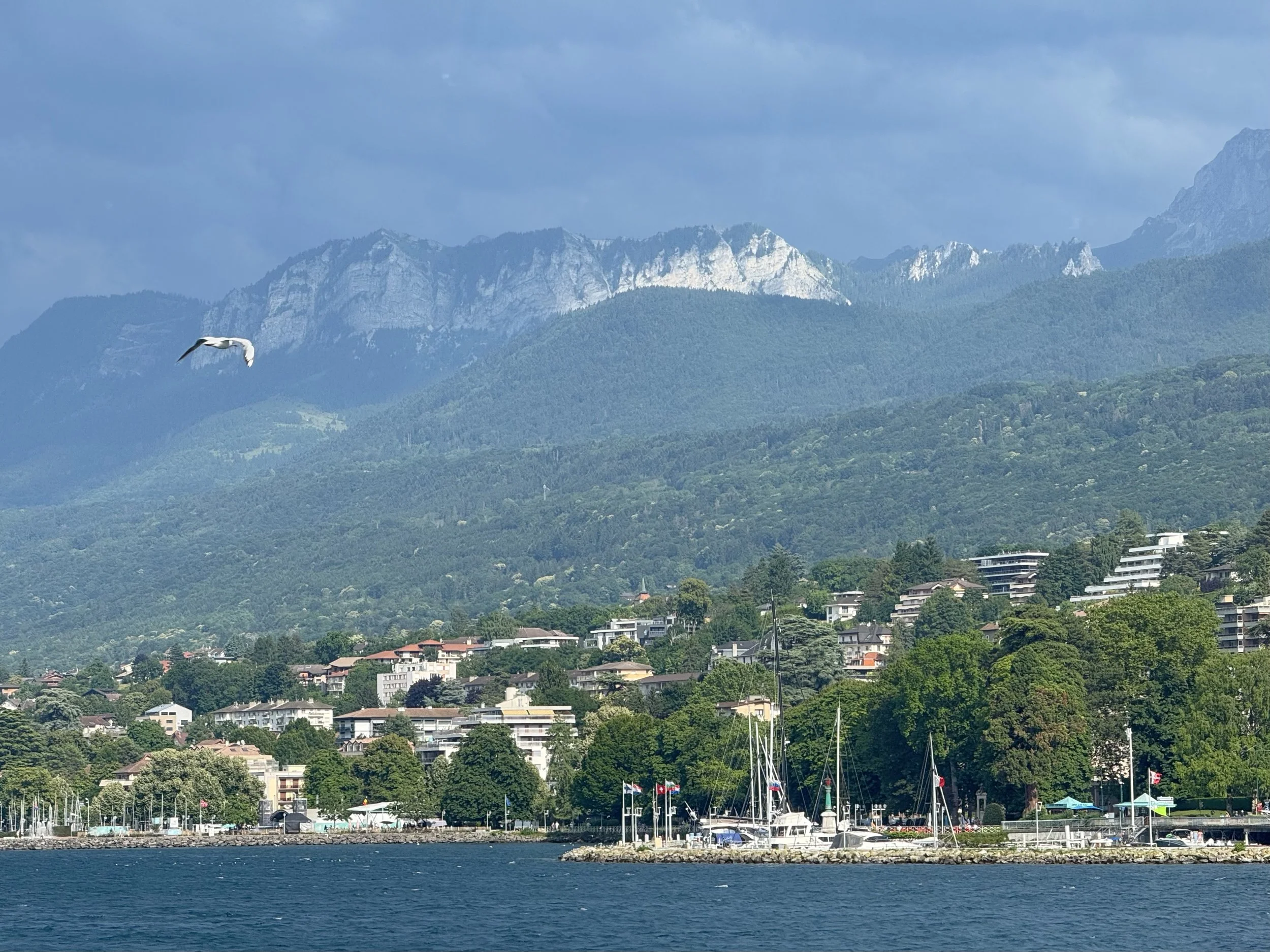
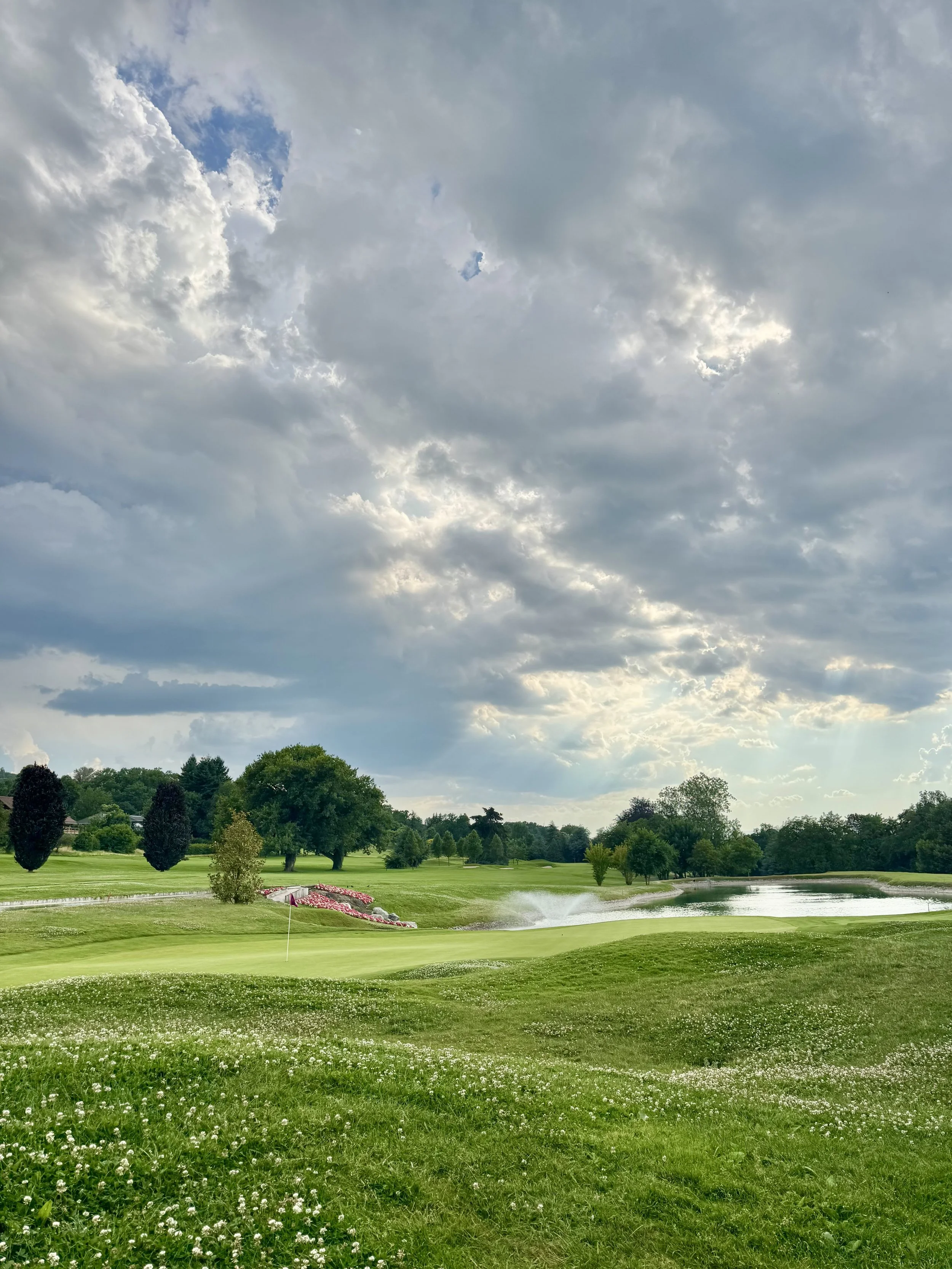
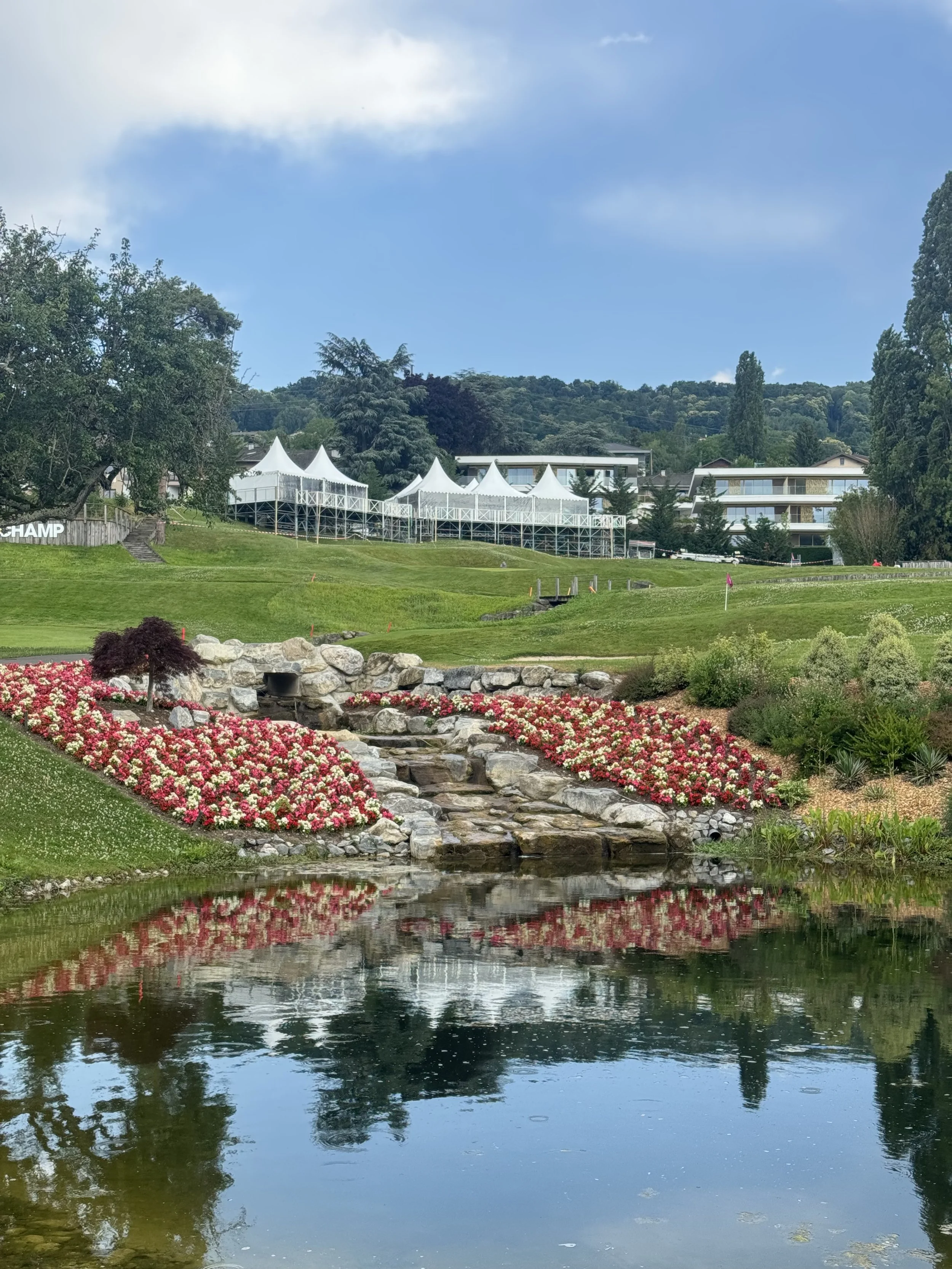
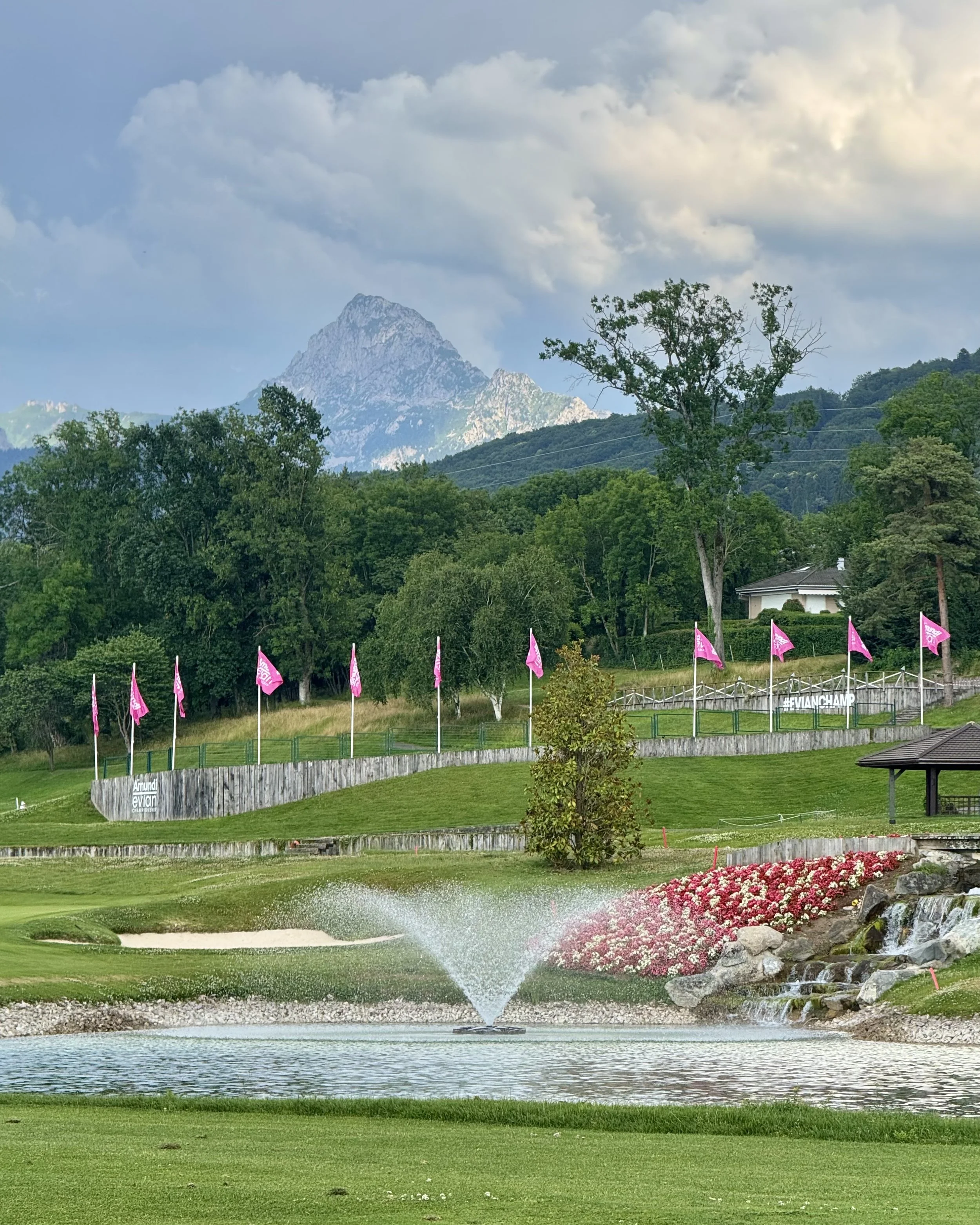
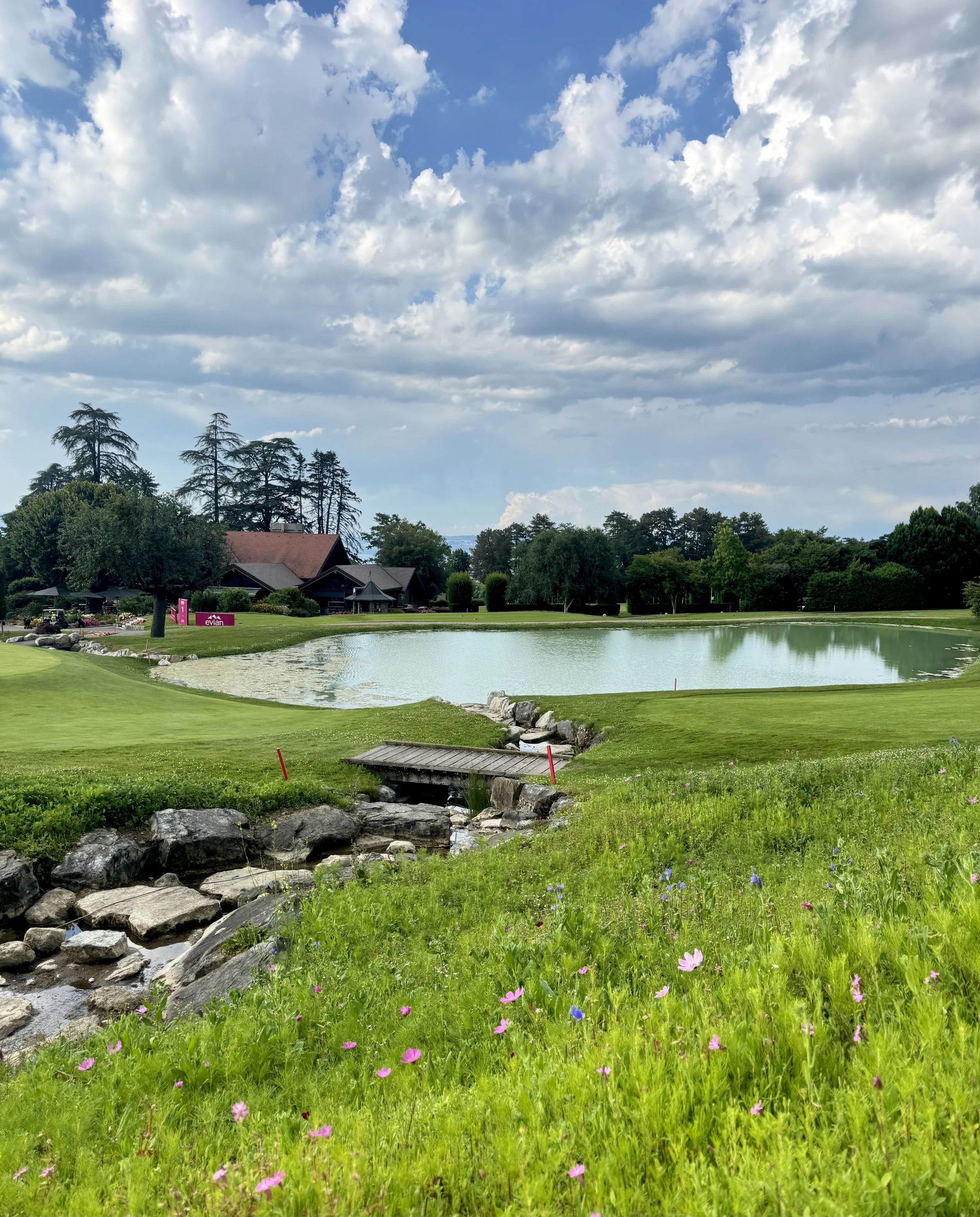
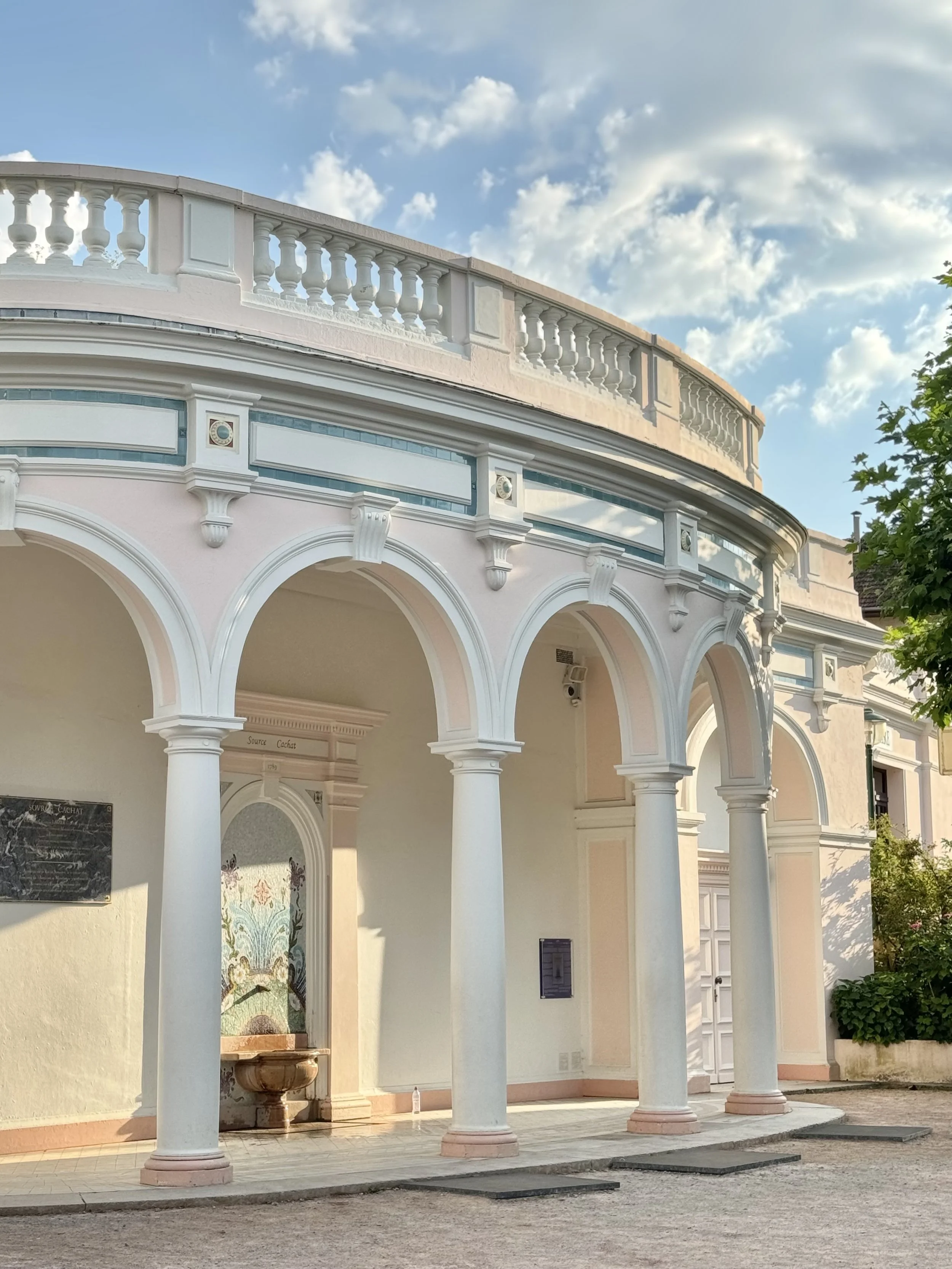
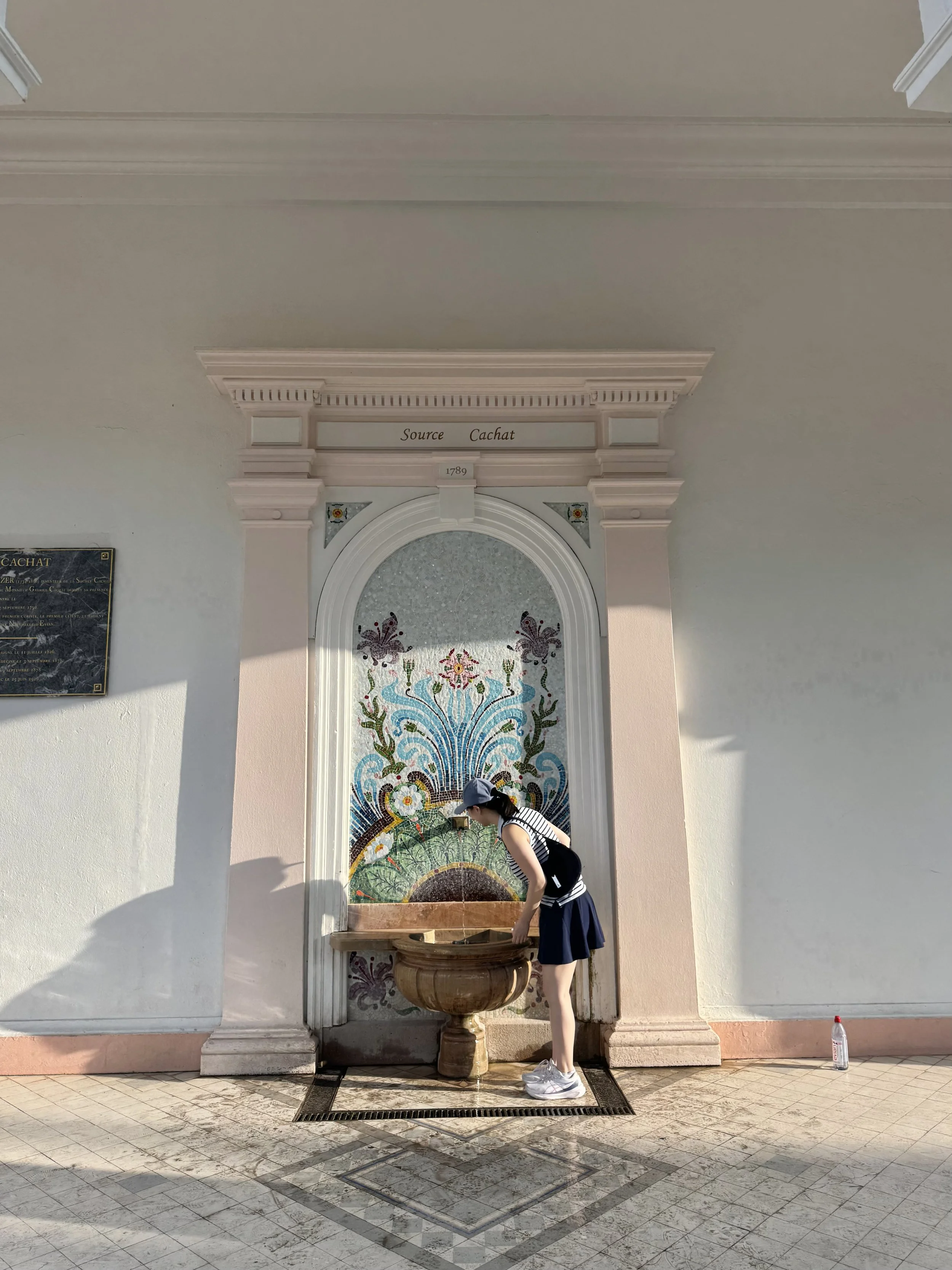
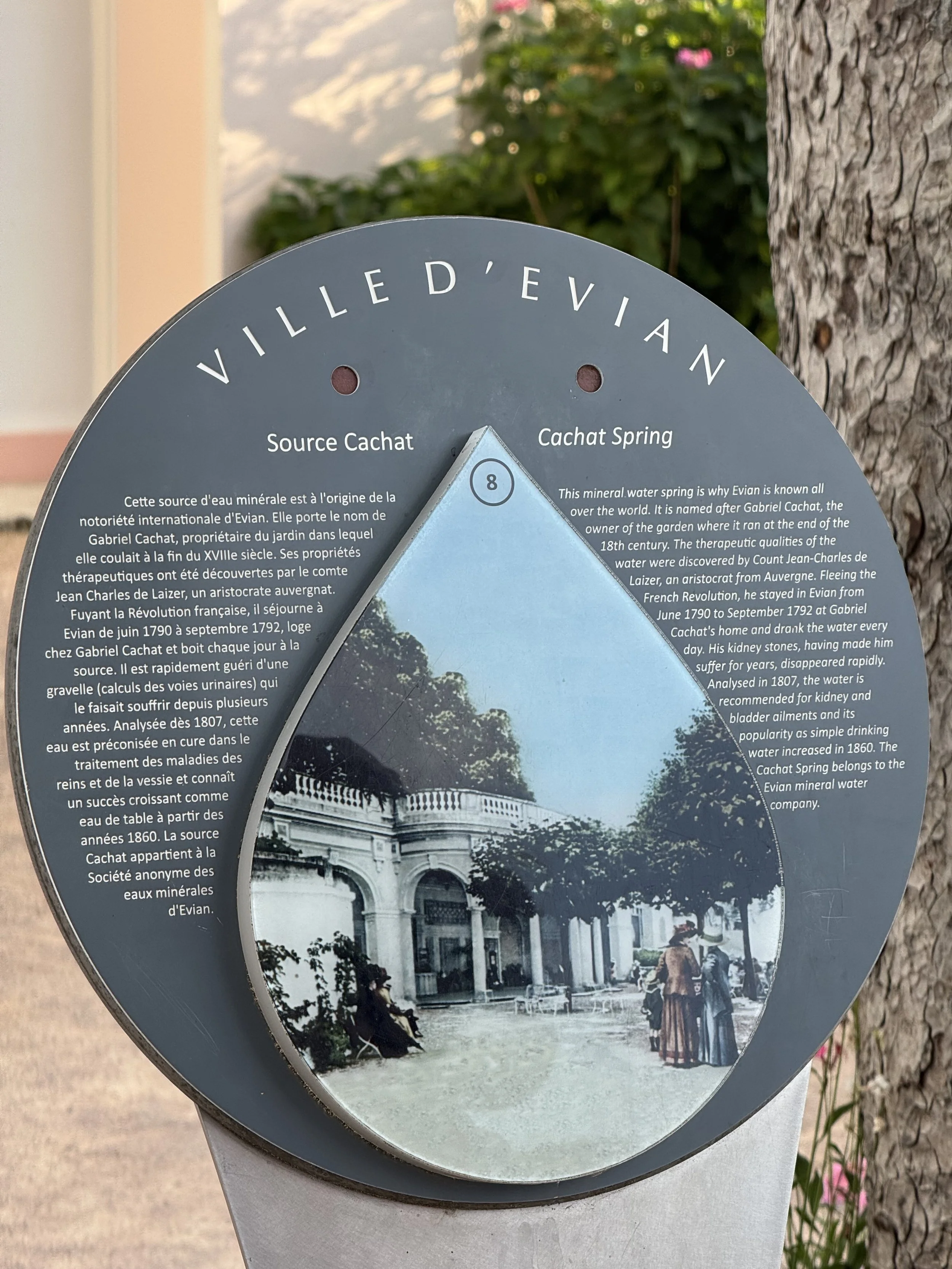
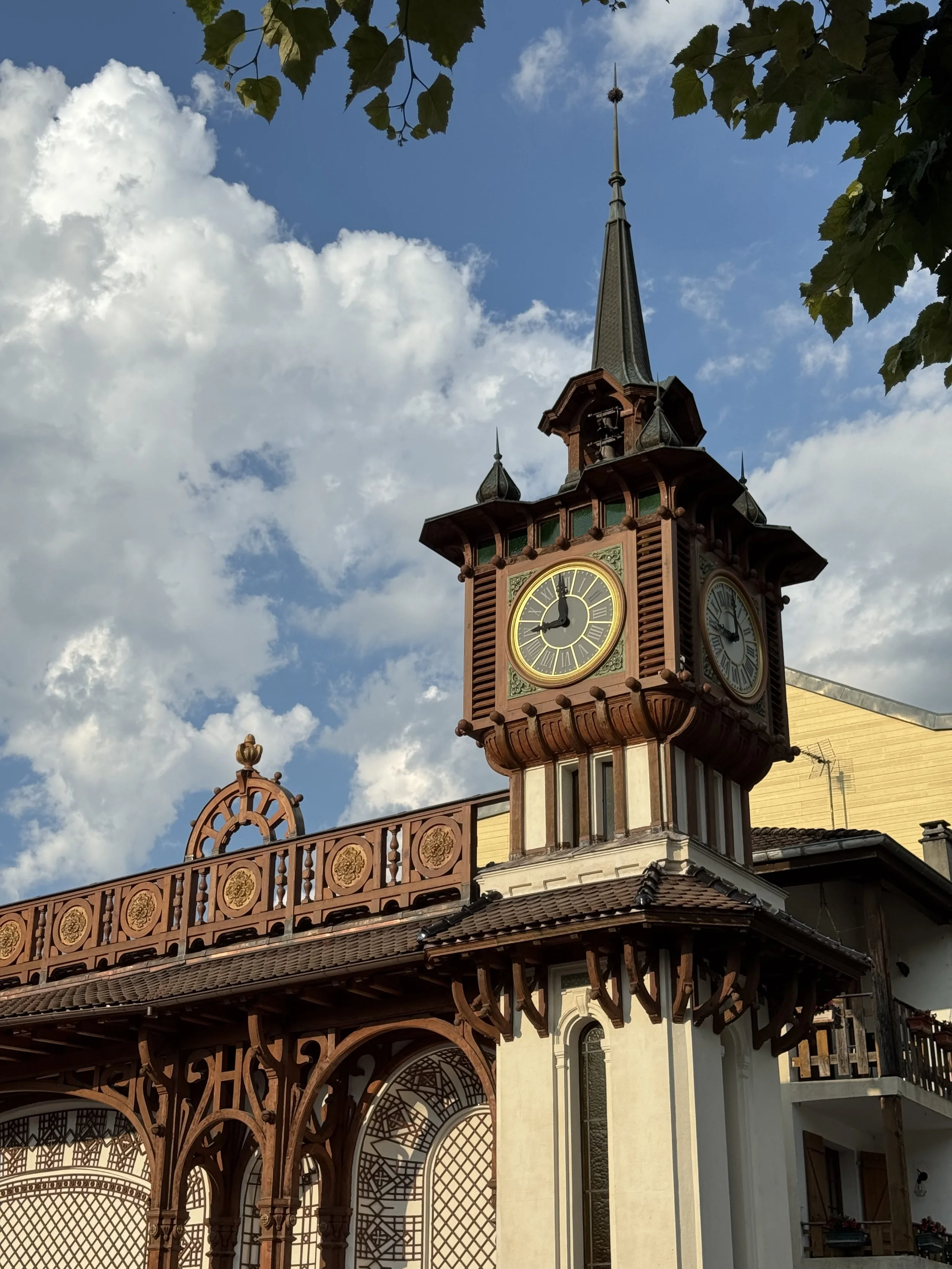
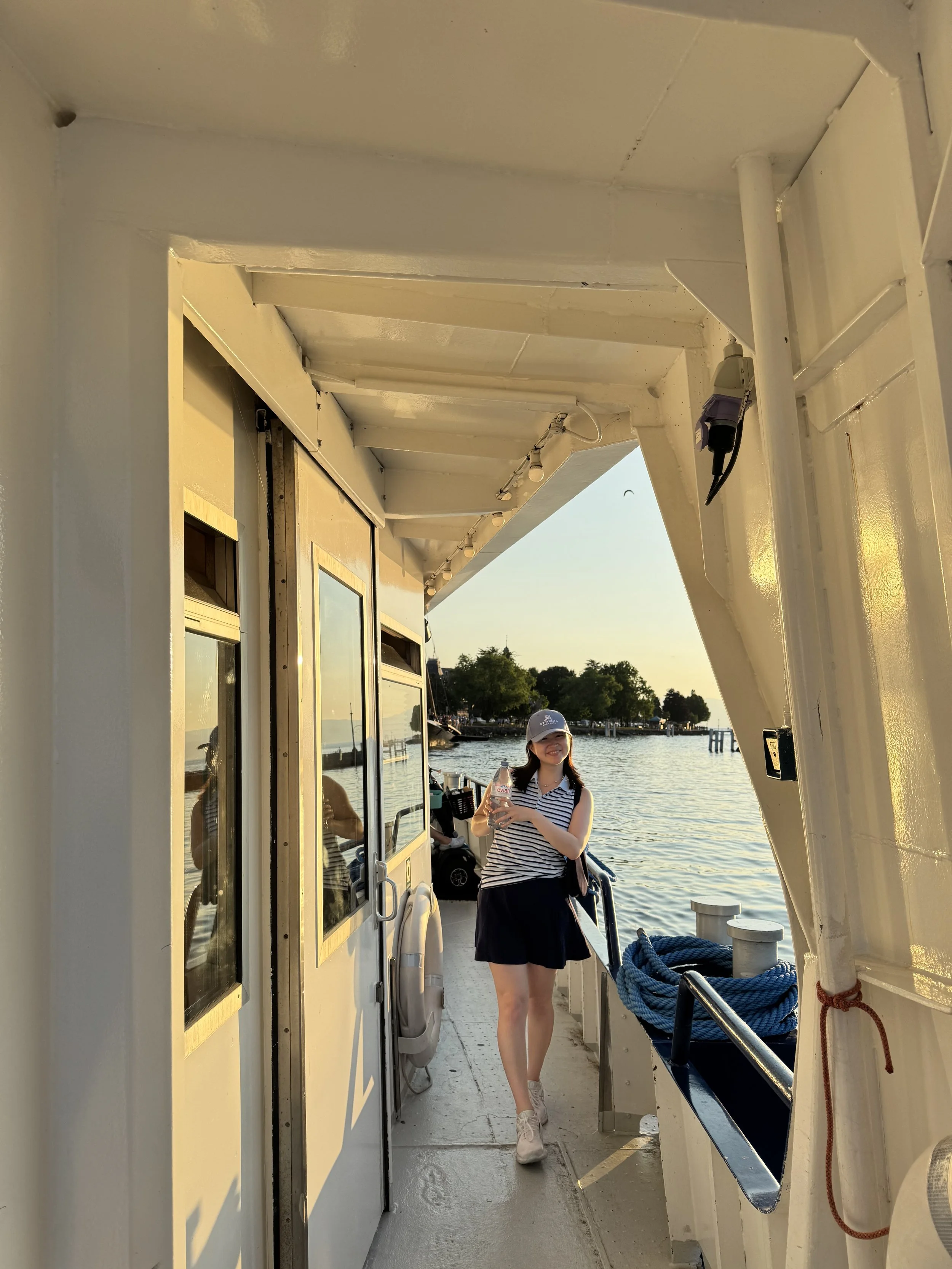
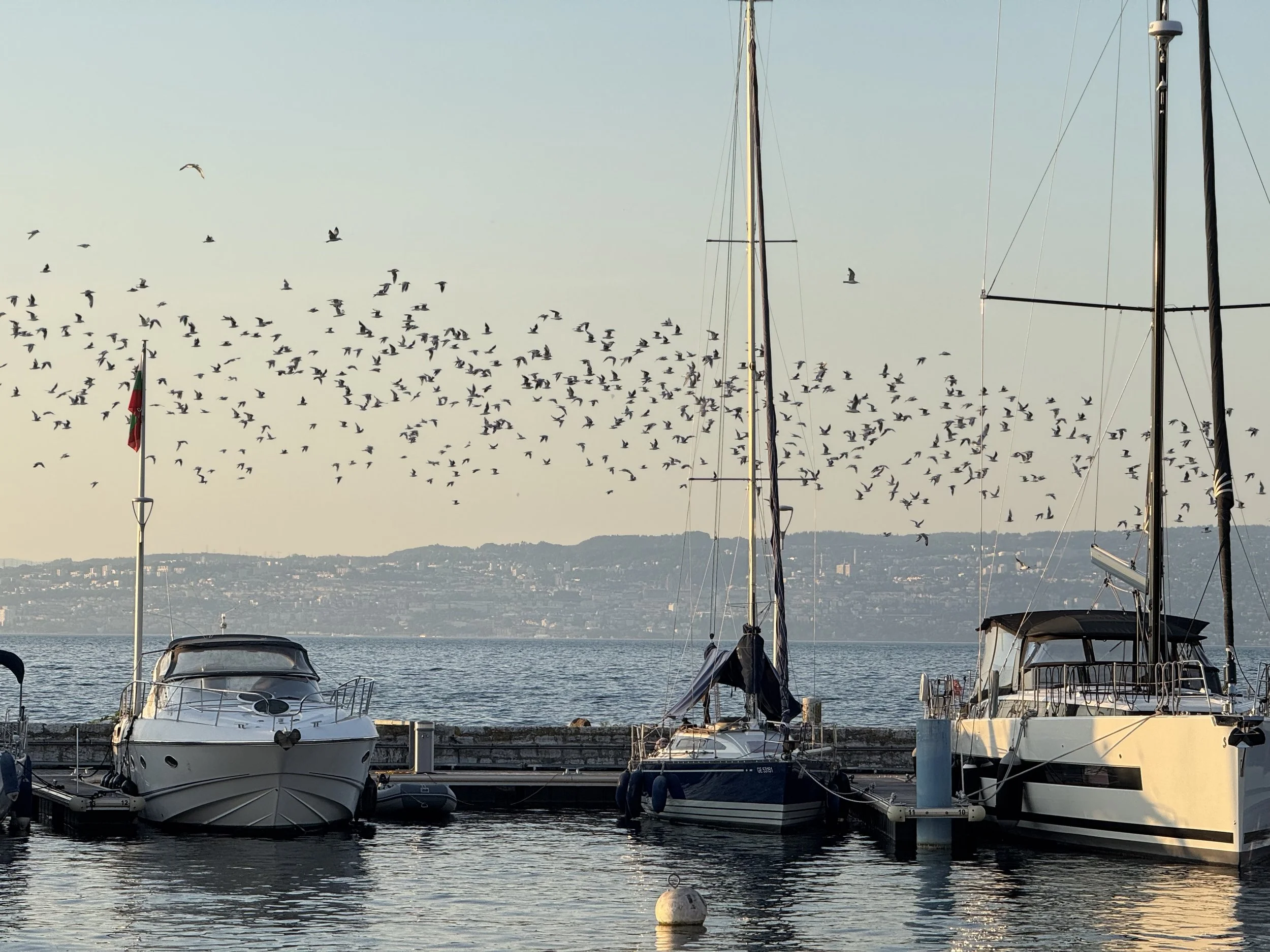
Évian-les-Bains is the home of Source Cachat, the spring that produces Évian mineral water. There were several springs around town where, as part of their daily routines, locals would line up with bottle carriers to fill up several empty plastic jugs at once. We purchased a bottle at a grocery store and drank the whole thing so we could fill a bottle of our own at the spring.
The Source Cachat is lovely. It’s embedded into a pale pink pavilion and water flows non-stop out of a floral mosaic. The water is crisp and cool, having been filtered for over a decade through glacial rock, a process that infuses it with a mix of minerals such as calcium and magnesium. A plaque by the spring describes how a French aristocrat drank the water every day and was cured of his kidney stones; the spring’s water was later analyzed for its diuretic properties and began to be prescribed for kidney ailments. I found this delightfully salient because a few of my friends are altruistic kidney donors (I’d never given much thought to kidneys before, but as it turns out, kidney failure is the 8th leading cause of death in the U.S., with over 90,000 people on the transplant waitlist and 12 people dying of kidney disease every day. Non-directed kidney donations save lives — if you’re curious, you can read more about this here and here).
We retrieved a bottle full of Évian water straight from the source, and it certainly felt like a cure for the summer heat. Paired with some ice cream and live music in the town center, followed by another dreamy sunset, our sojourn to Évian-les-Bains was restorative indeed.
I’d gone back and forth on whether it would be better to stay in Geneva for the first few days of this trip, but Lausanne’s (and in particular, Ouchy’s) proximity to the lake and more relaxed atmosphere was such a great starting point for our time in Switzerland. That’s not to say it was removed from the buzzy activities of a city — in fact, while we were there, the metro was constantly filled with groups of people wearing matching uniforms, but we couldn’t tell what the event they were attending because group sizes and ages were so varied. It made for amusing people-watching because the teams mingled and sang together, and their overlapping chatter bounced between different languages — a truly convivial atmosphere and a welcome contrast to the intense rivalry that defines so many other sports cultures. After the trip, I found out that we’d witnessed the 77th Federal Gymnastics Festival, which brought more than 65,000 gymnasts from all over the country (“the largest popular sports event in Switzerland,” who knew?). All this to say, we had a great time in Lausanne.
Bern
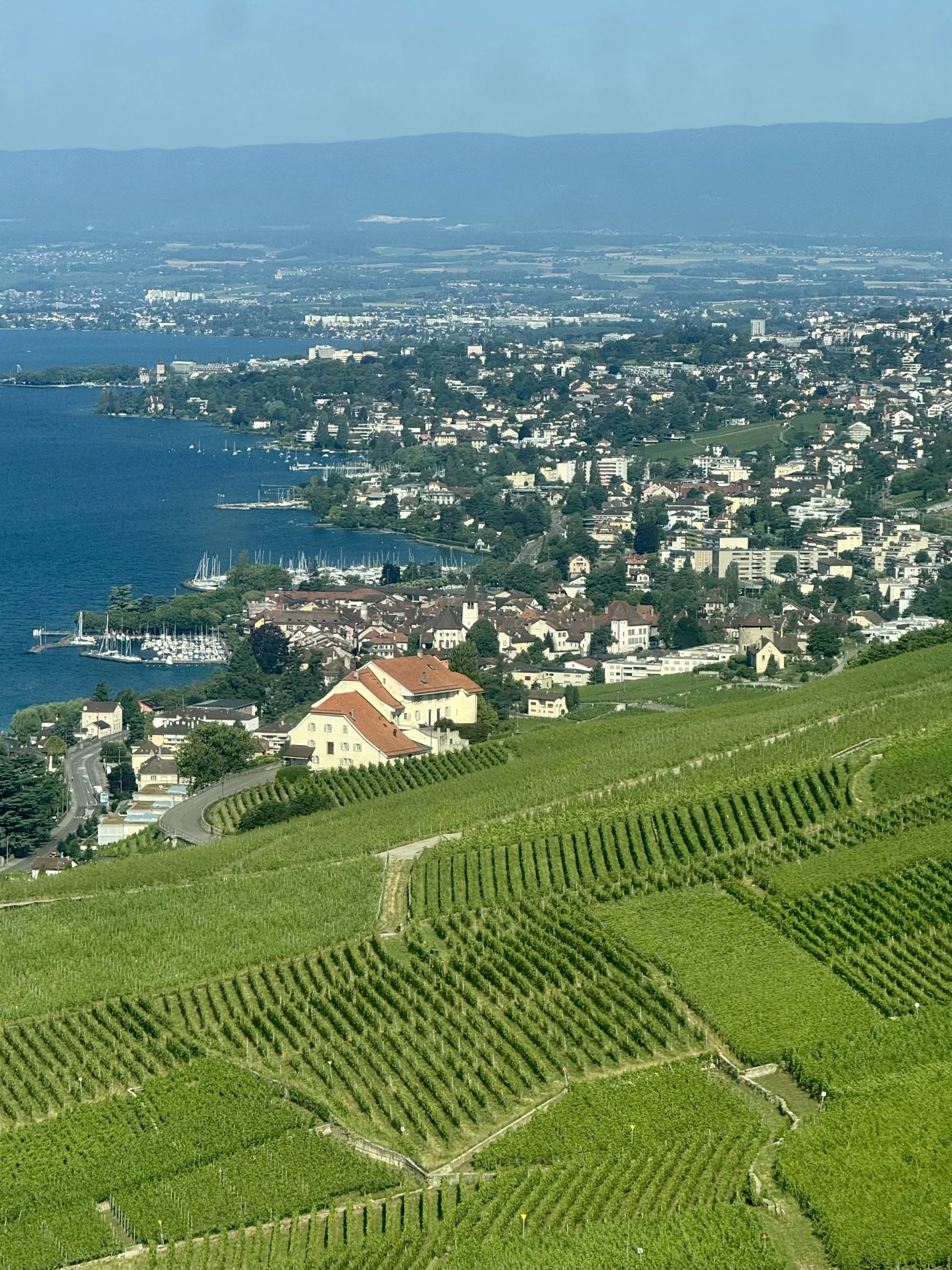
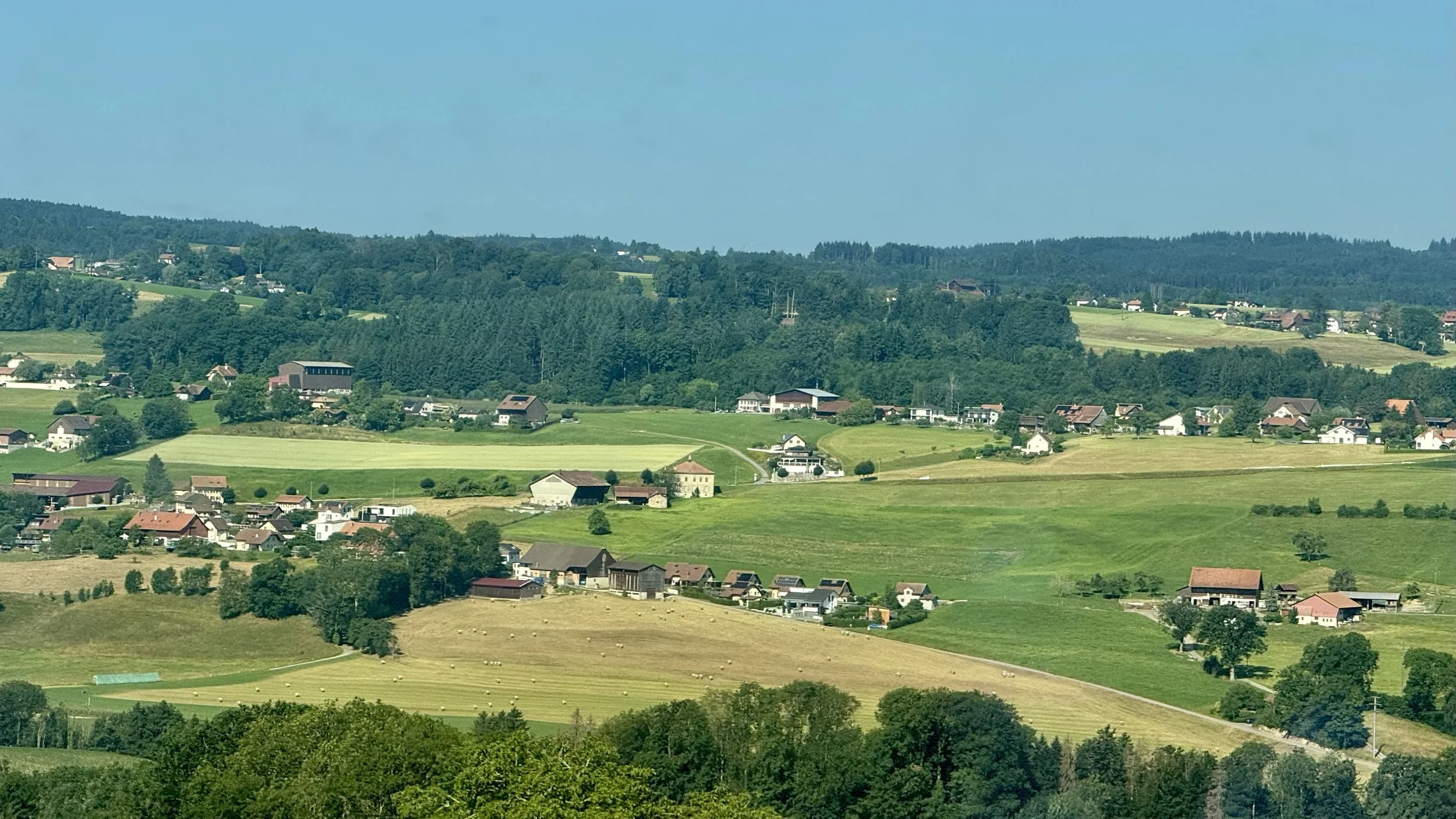
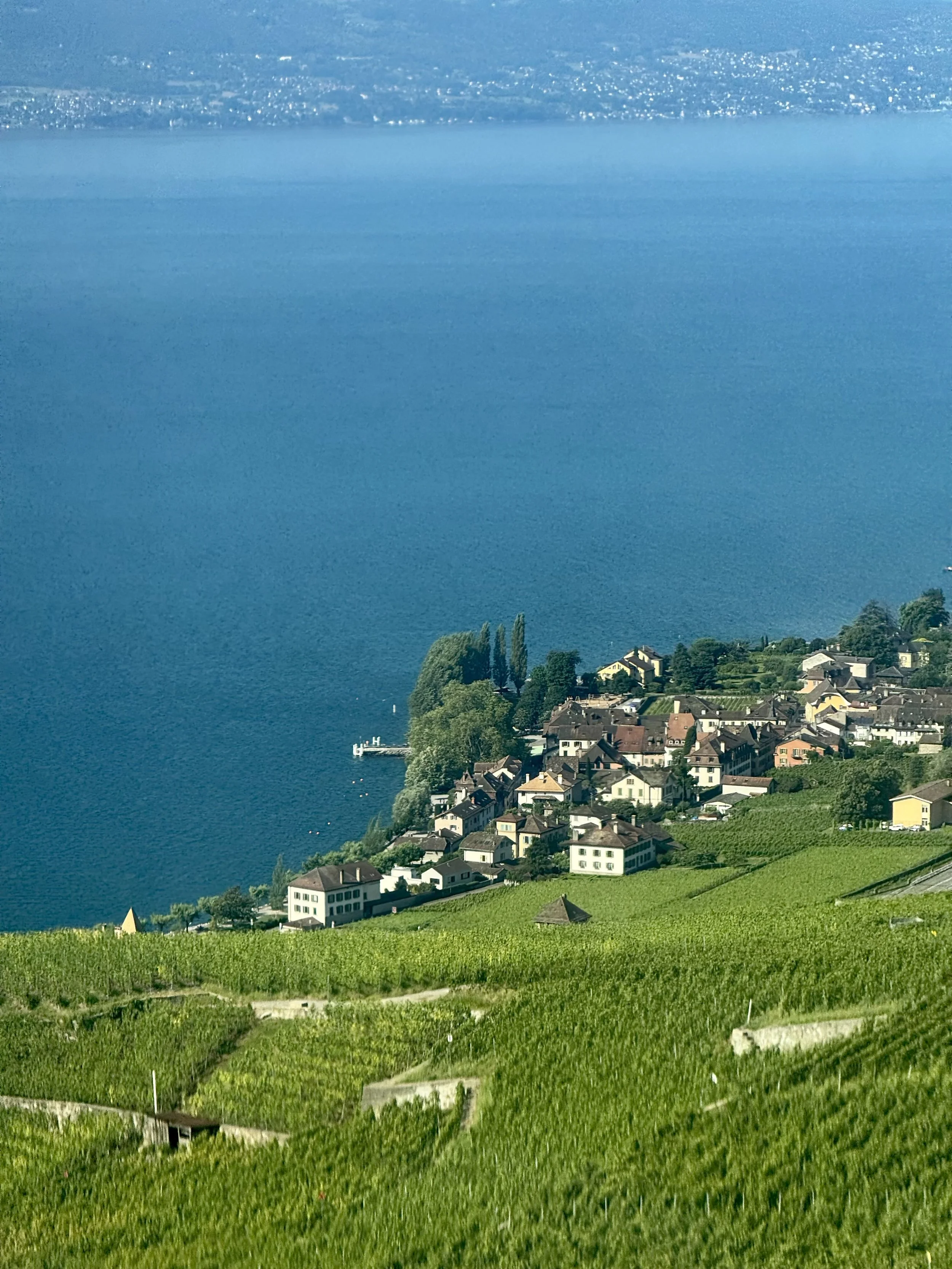
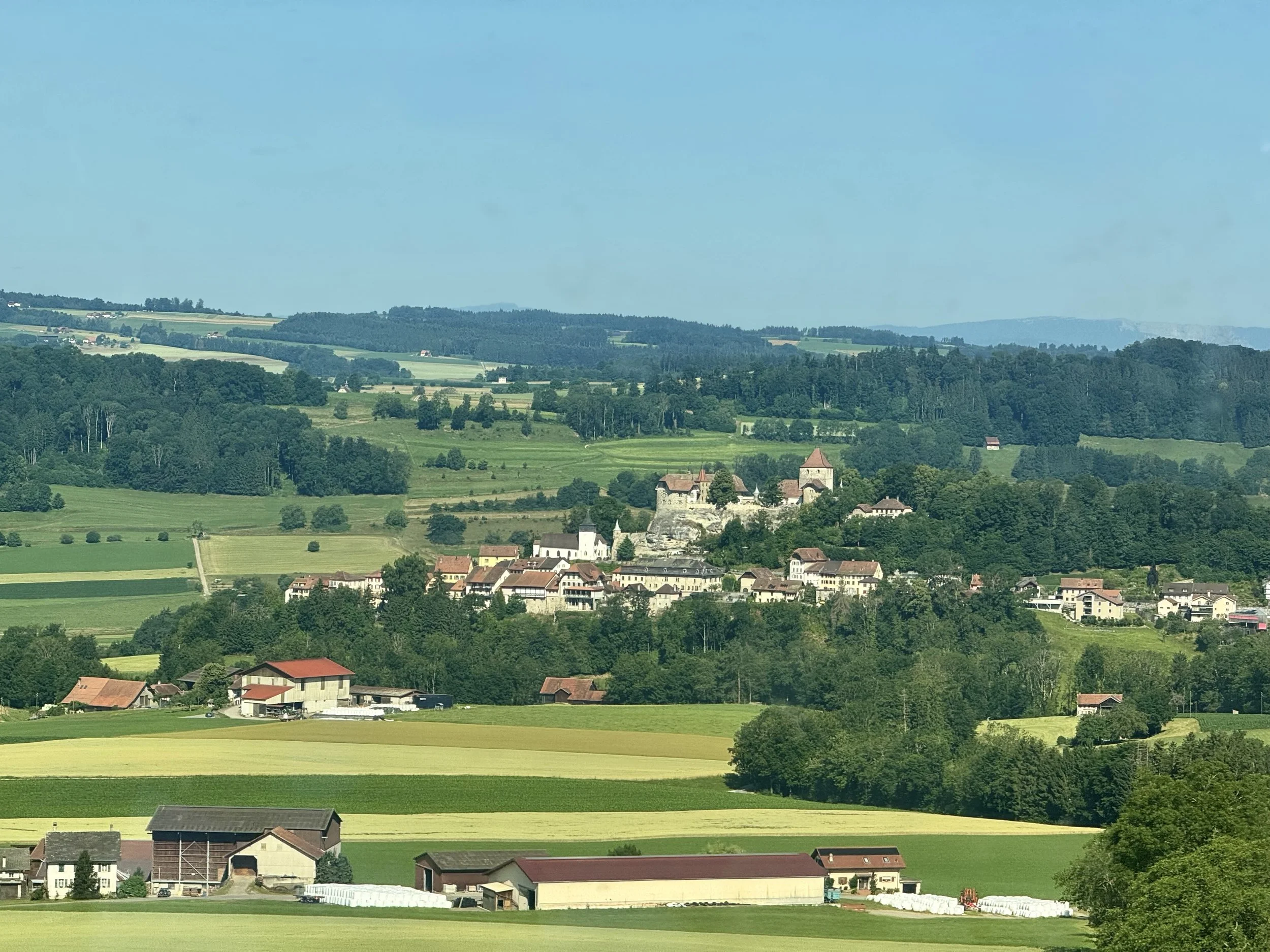
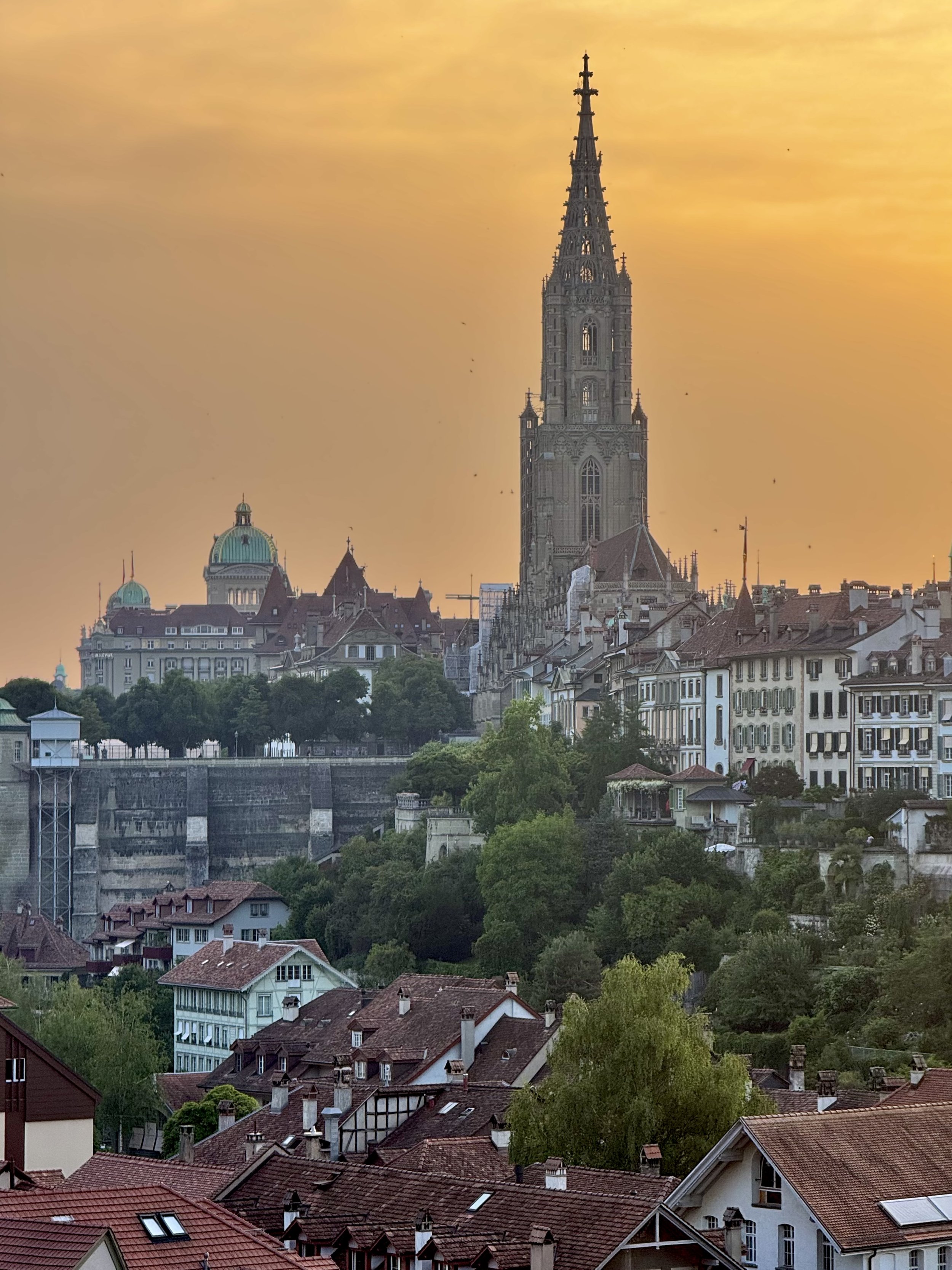
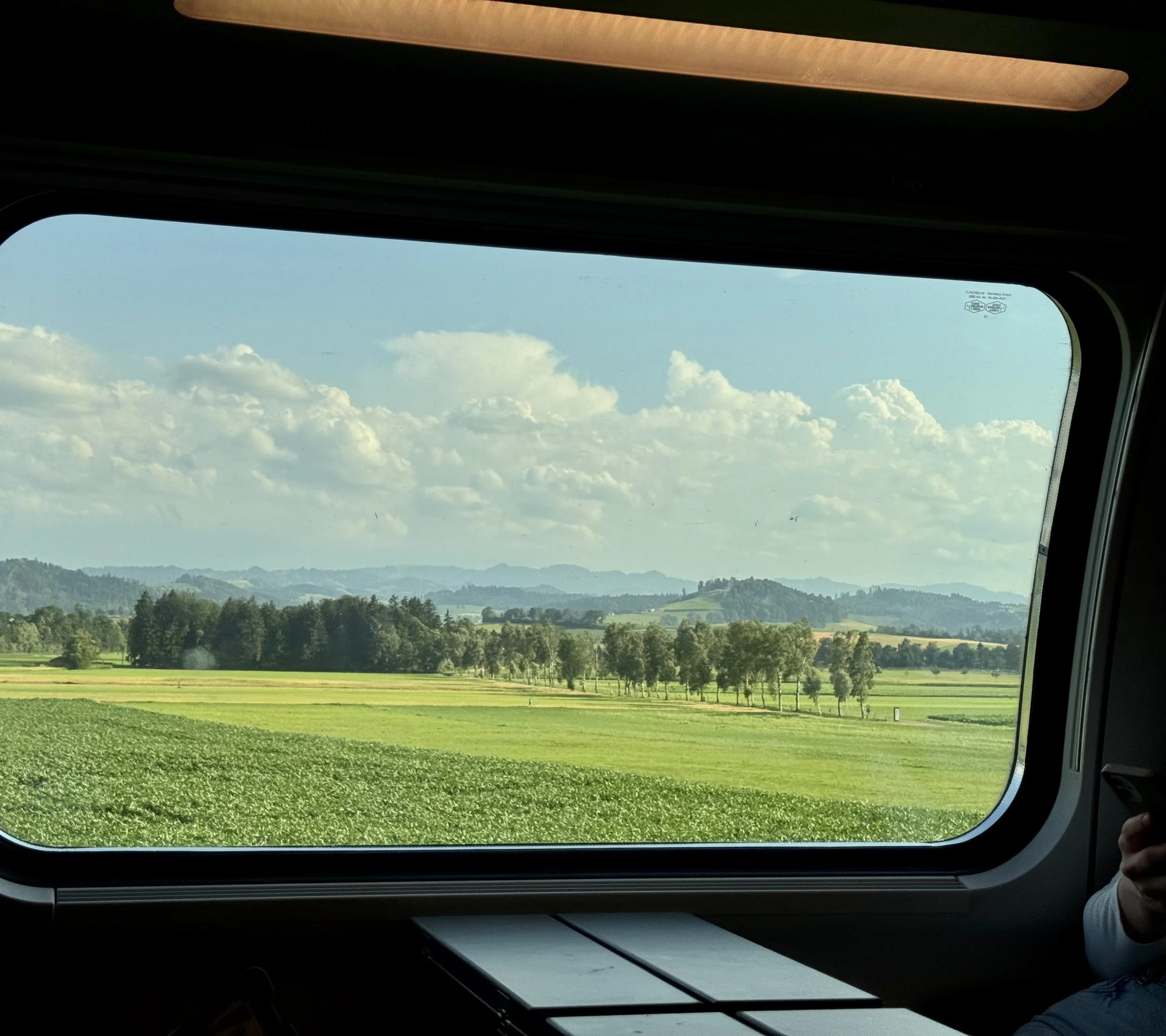
We were mesmerized by terraces, rolling hills, and neat little towns that whizzed by during our train ride to UNESCO-listed Bern, the capital of Switzerland. In retrospect, I wish I’d set aside more time to explore Bern itself, but it was a convenient hub for our many day trips.
Day 1: Basel
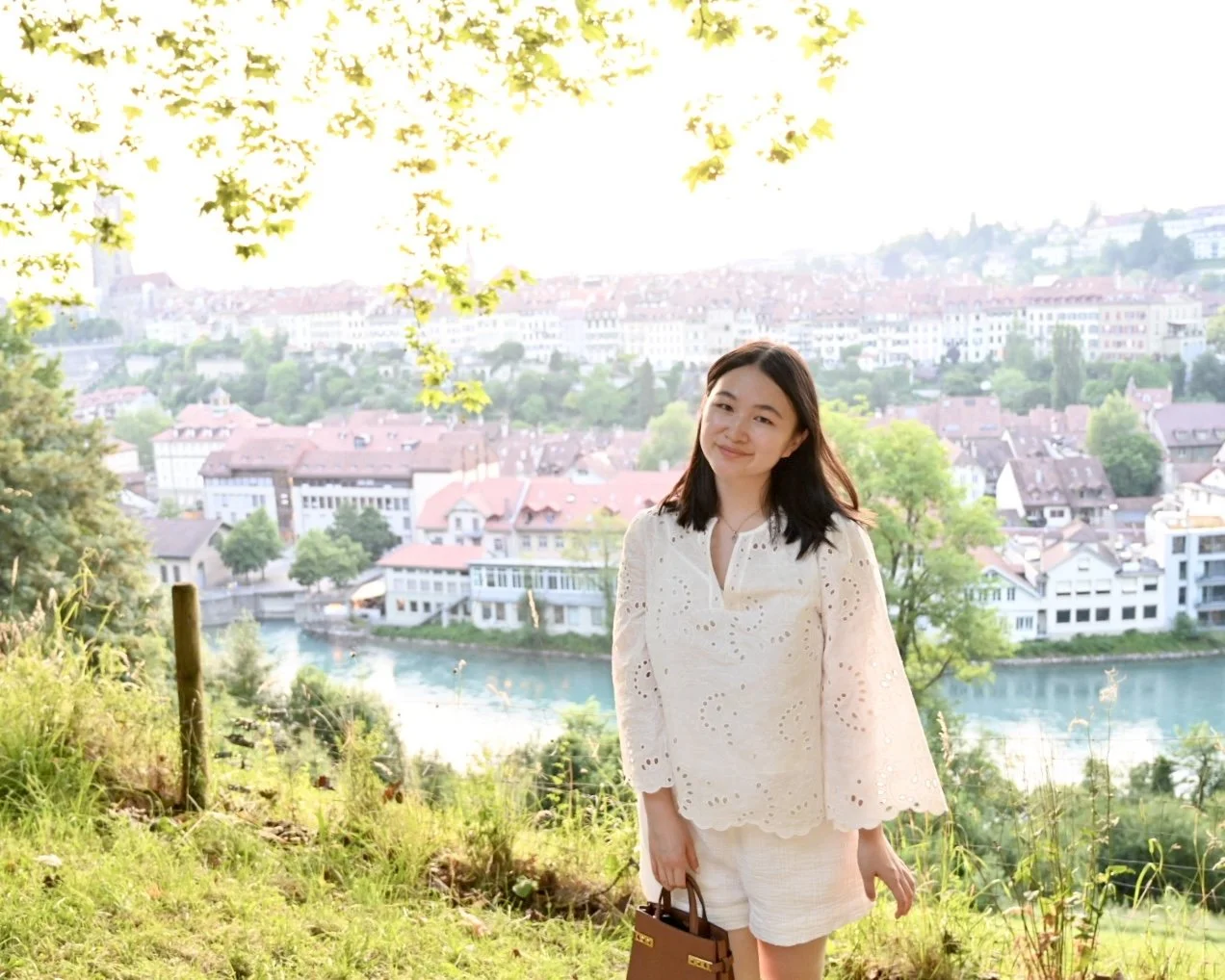
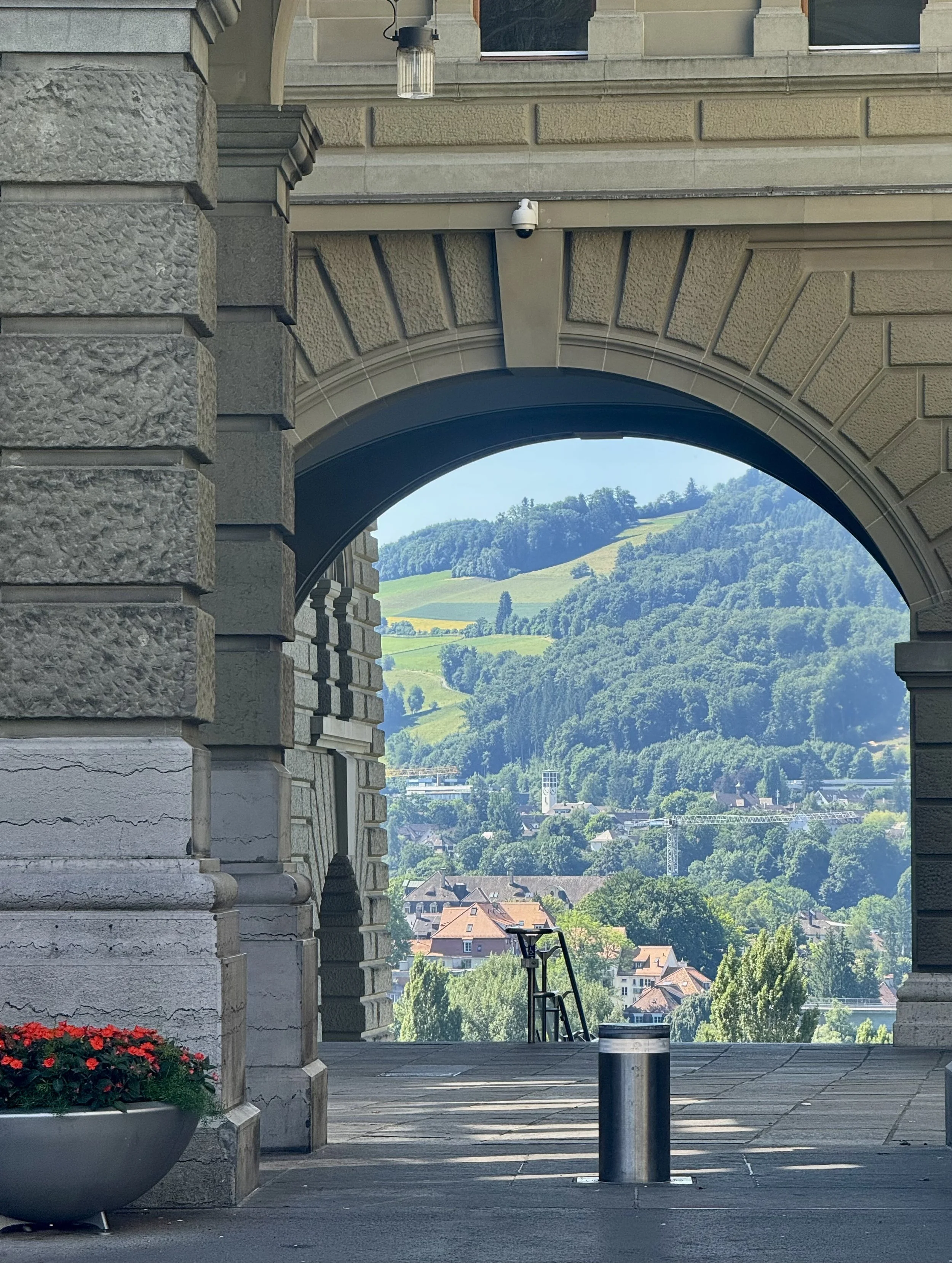
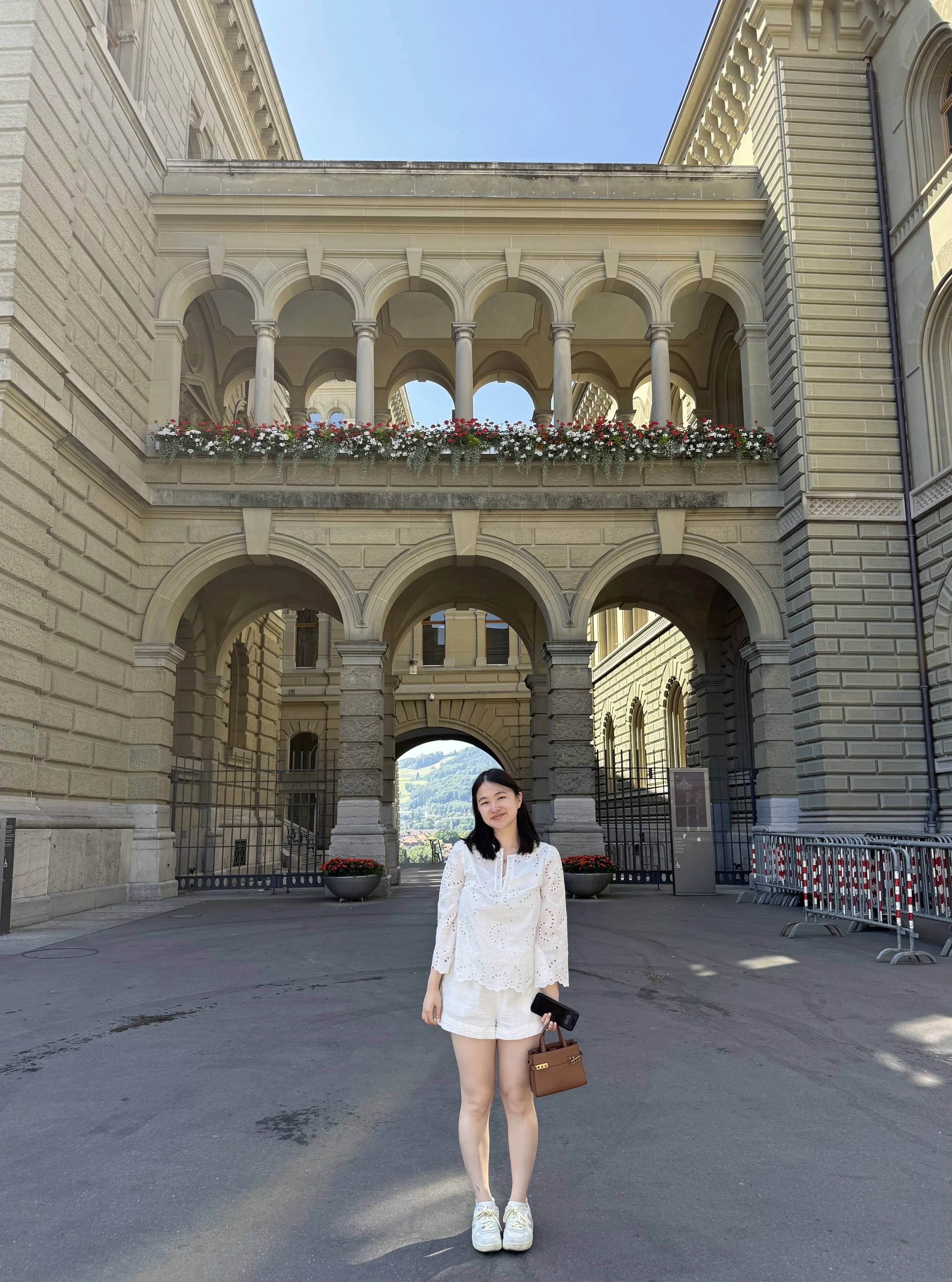
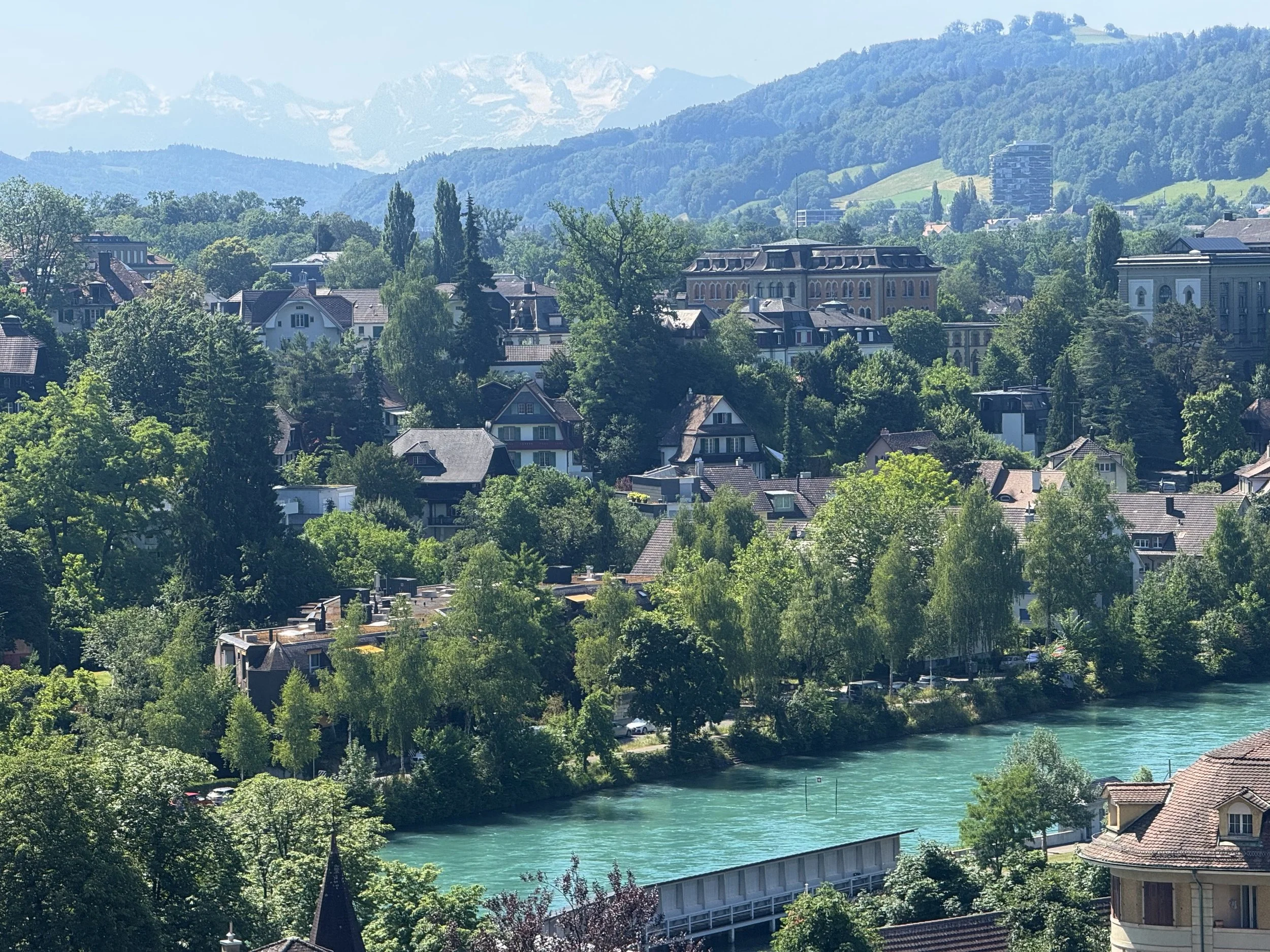
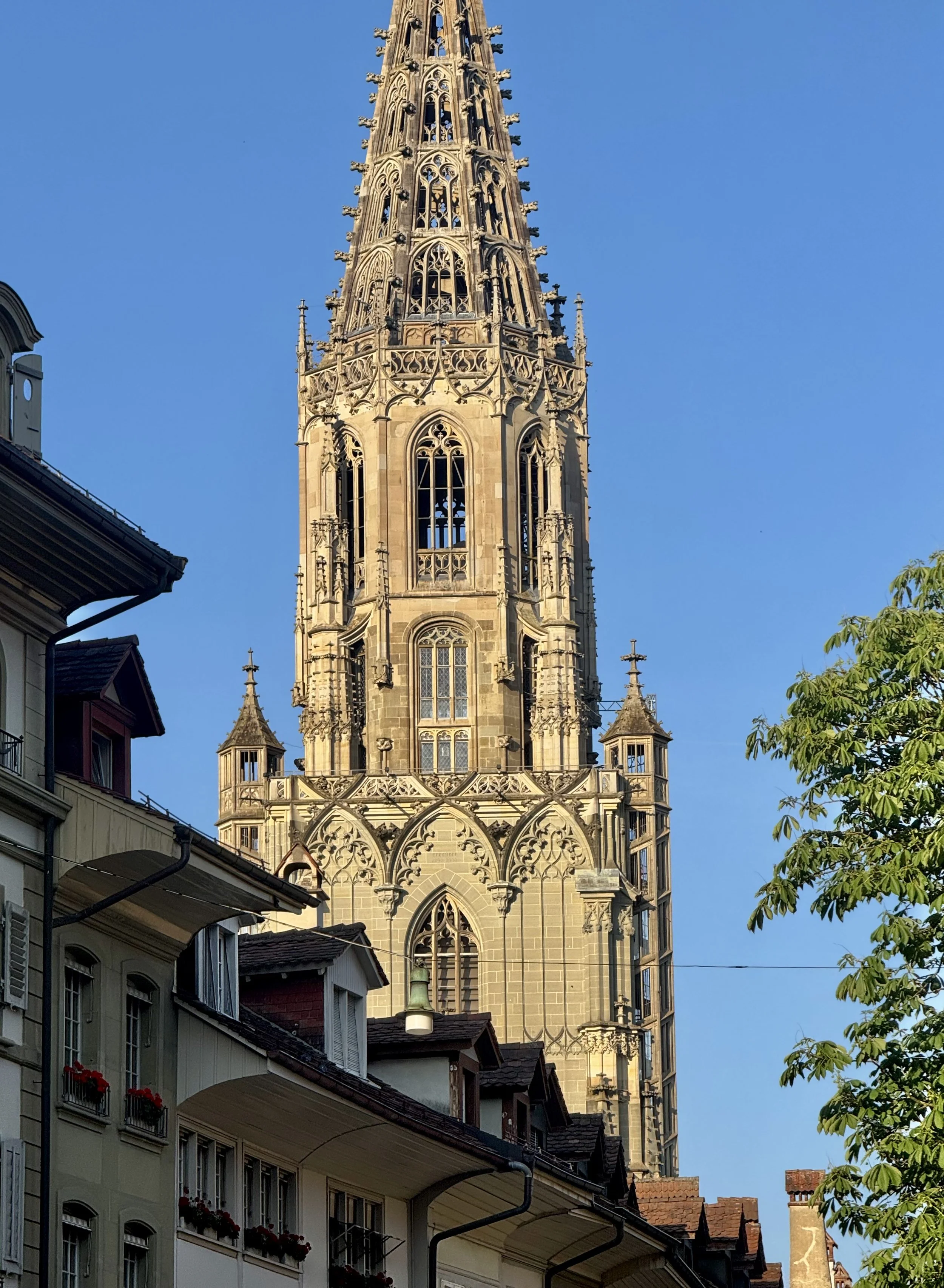
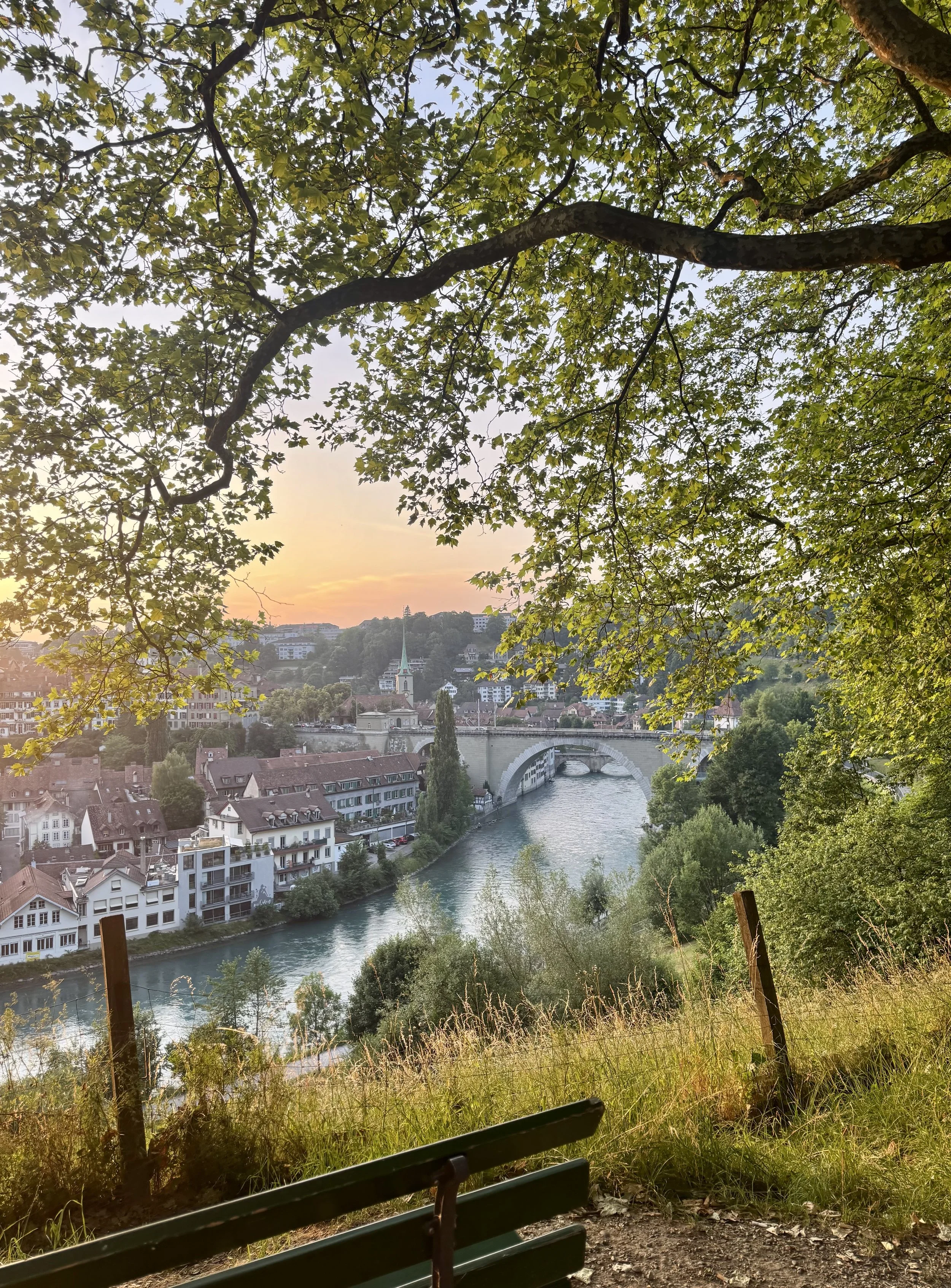
Our first day in Bern was also the last day of Art Basel, the largest and most prestigious fair of the contemporary and modern art market. Since Basel is a mere hour-long train ride from Bern, we decided to make a day trip of it. We left our bags at the hotel (and stumbled across a viewpoint while walking to the train station) and found ourselves in Basel’s Messeplatz by noon.
I had never been to an art fair before and wasn’t sure what to expect, but Art Basel felt far more accessible than I’d imagined. It was like wandering through an enormous museum where galleries from around the world presented their own mini collections. Each exhibitor represented only a handful of artists and therefore served as a sampler of each artist’s style. The sheer scale of the fair meant there was huge variety in the media presented; 289 galleries participated from 42 countries and territories.
In a museum, you expect art to come with context and for a curators’ description to guide your interpretation of a work. In an art fair, most pieces were simply on display. The only external aids to one’s judgment were prices listed on glossy catalogues for prospective collectors, and perhaps the number of people lingering by each booth. As you walk around, the main question to consider is whether you like what you’re seeing — when the intention is for visitors to purchase the art, the goal isn’t education but enticement. Some booths were decorated like living rooms with furniture and art objects, making it easier to envision what a painting or sculpture might look like at home.
As we wove through the exhibition hall, I looked for patterns and trends. Embroidery seems to be having a moment; I saw lots of tapestries and embroidered details in mixed media artworks. I’m unsurprised that in the age of AI generation, there’s craving for materiality and a deeper appreciation for labor- and time-intensive textile work that requires craft. For example, Tiffany Chung’s intricate embroidered maps trace the real flight paths and boat journeys of refugees who fled Vietnam in the late 20th century. The choice to embroider feels like an emphasis on effort: the enormous effort expended by those searching for a better life in new places, and the effort to document histories that would otherwise be overlooked. I was also drawn to Maryam Hoseini’s wood panel art and its abstract shapes, which convey fluidity in a medium that typically feels so solid. Another ‘trend’ was an unexpected (to me!) number of pieces by Picasso and Miró—though that feels mostly like a testament to how prolific they were. One of my favorite pieces was Leonora Carrington's Sueño de Sirenas, a large-scale triptych that “celebrates the force and mercuriality of the female universe,” commissioned by and depicting the famed actress and seductress, María Félix, as a siren in three incarnations. The frame was created in collaboration with sculptor José Horna, and features two hands extending outwards, inviting the viewer to look in.
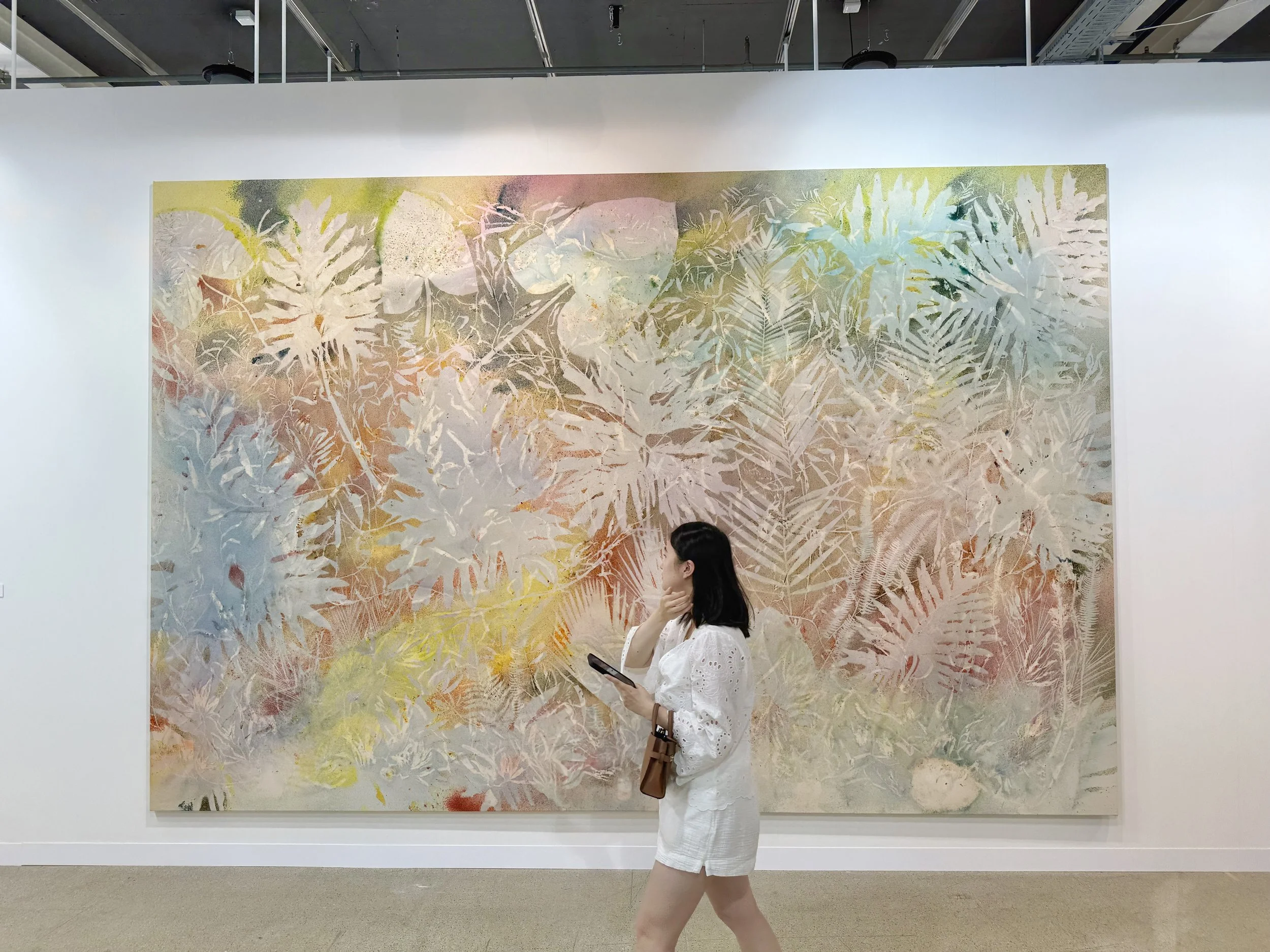
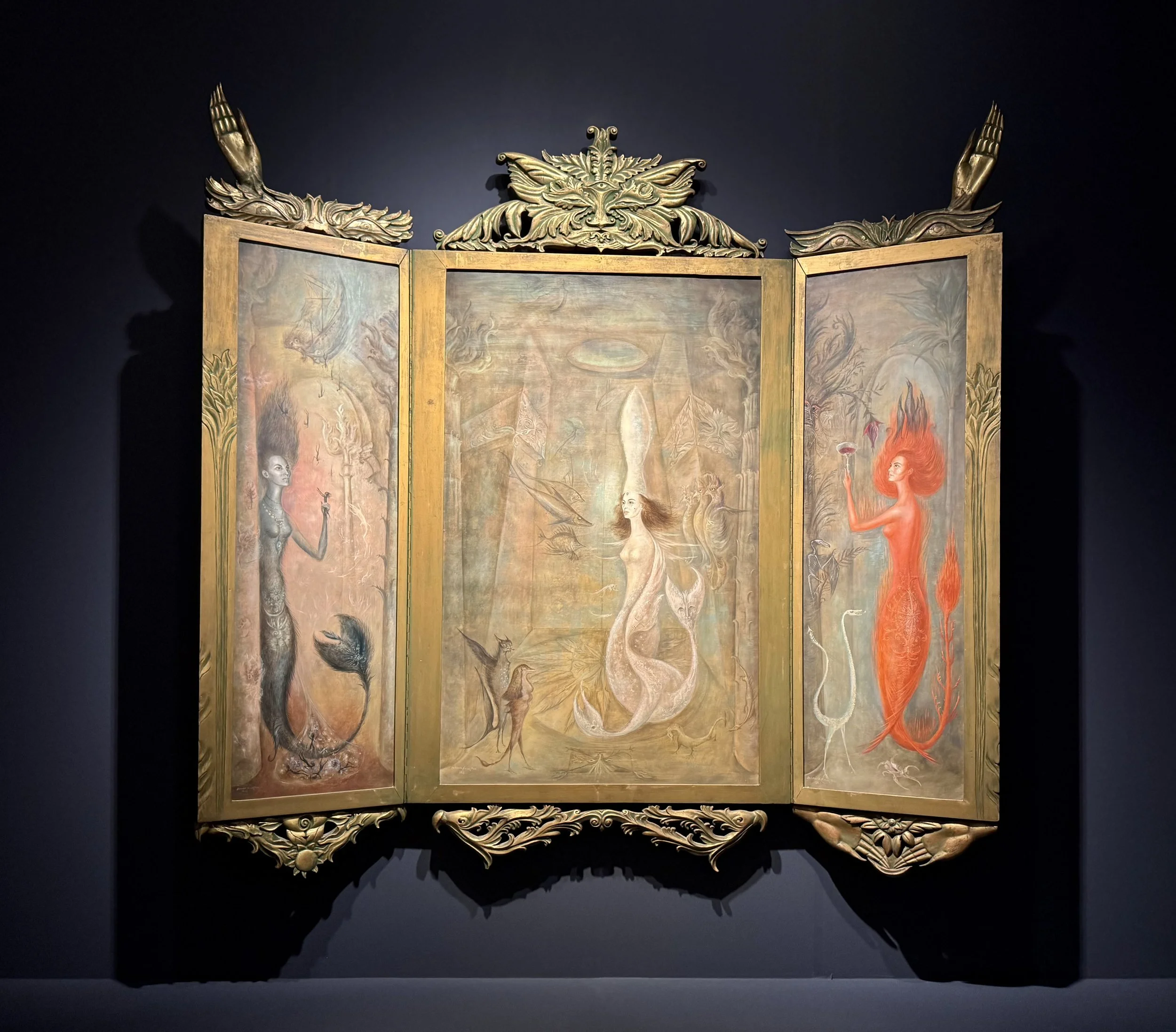
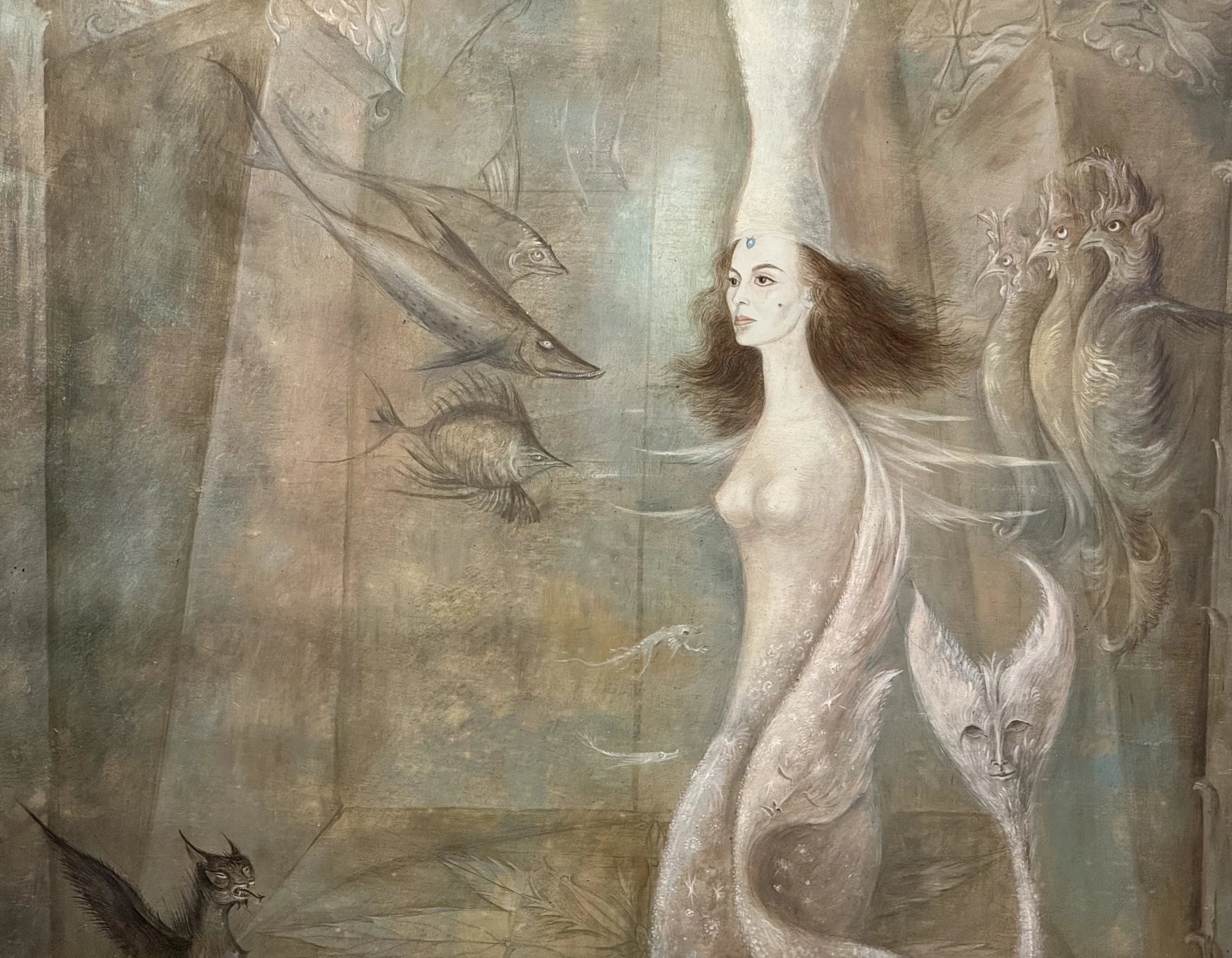
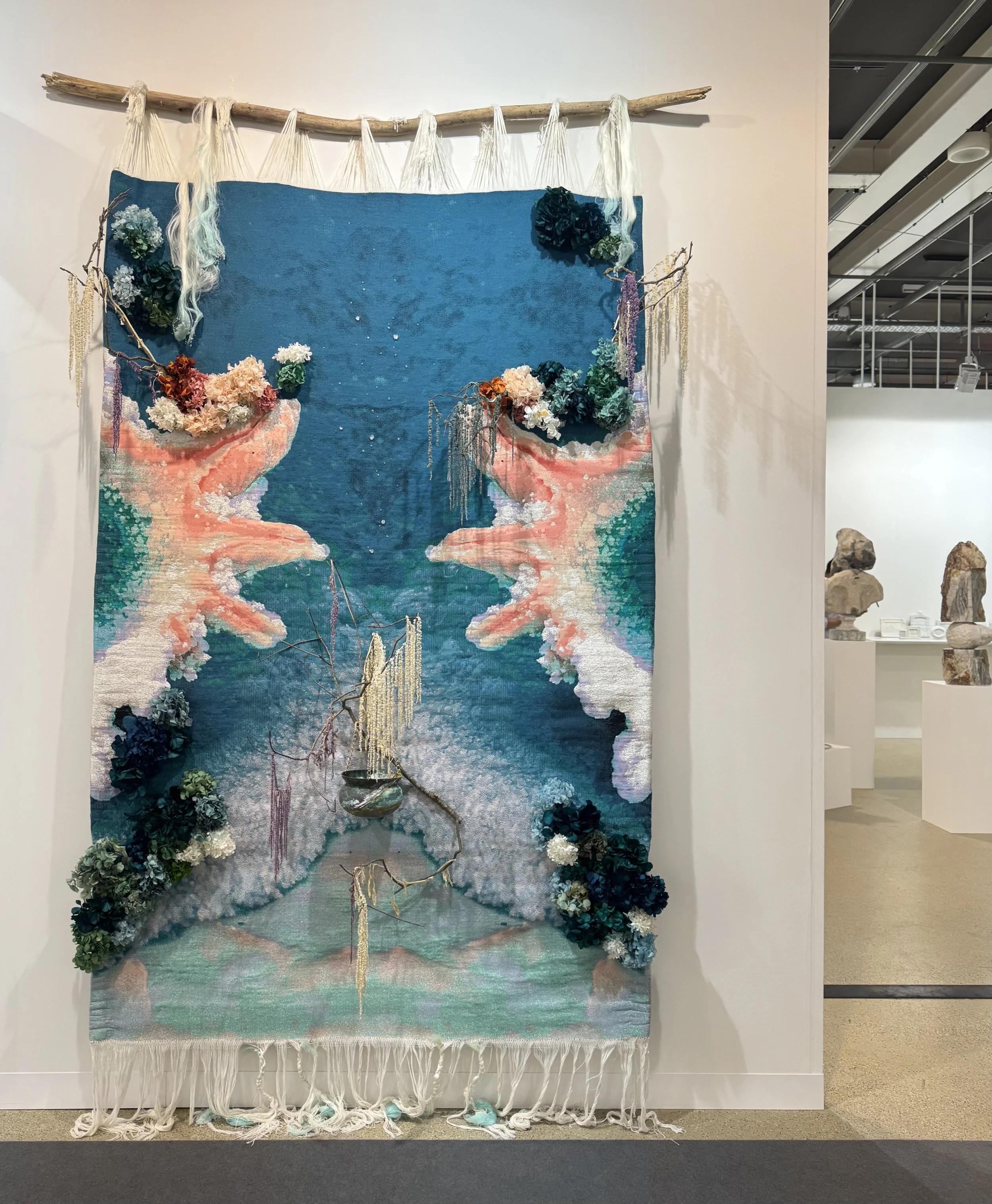
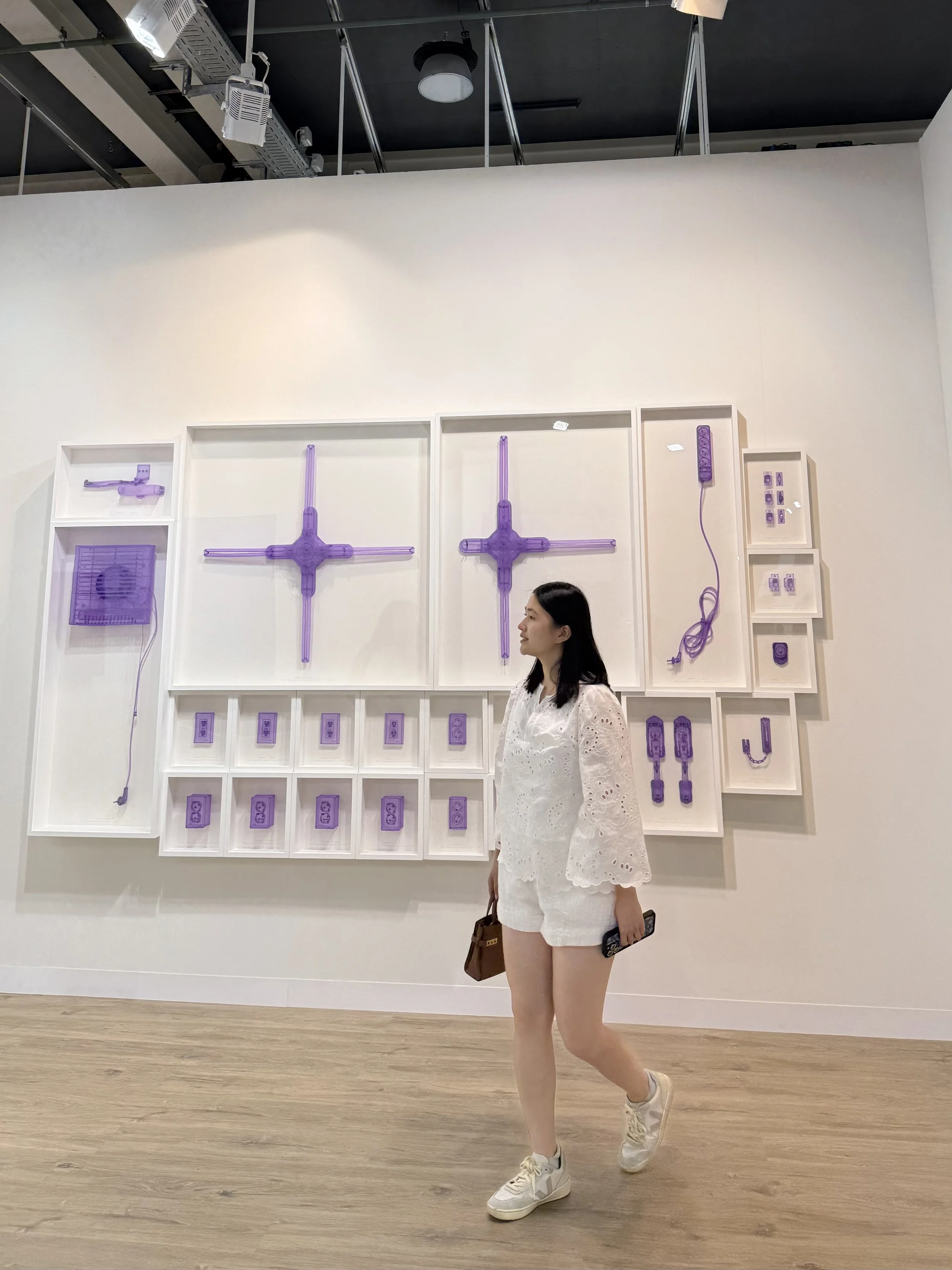
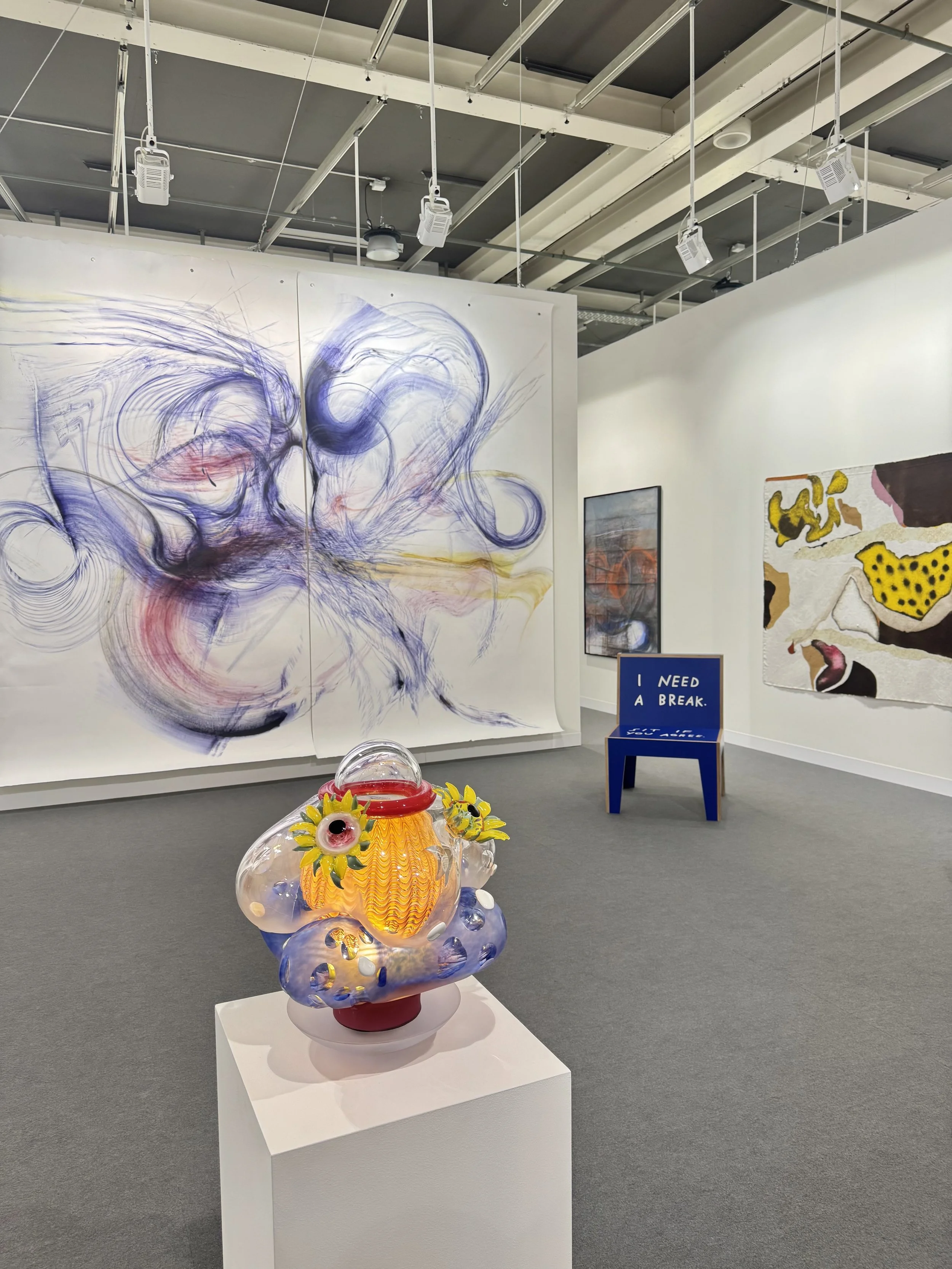
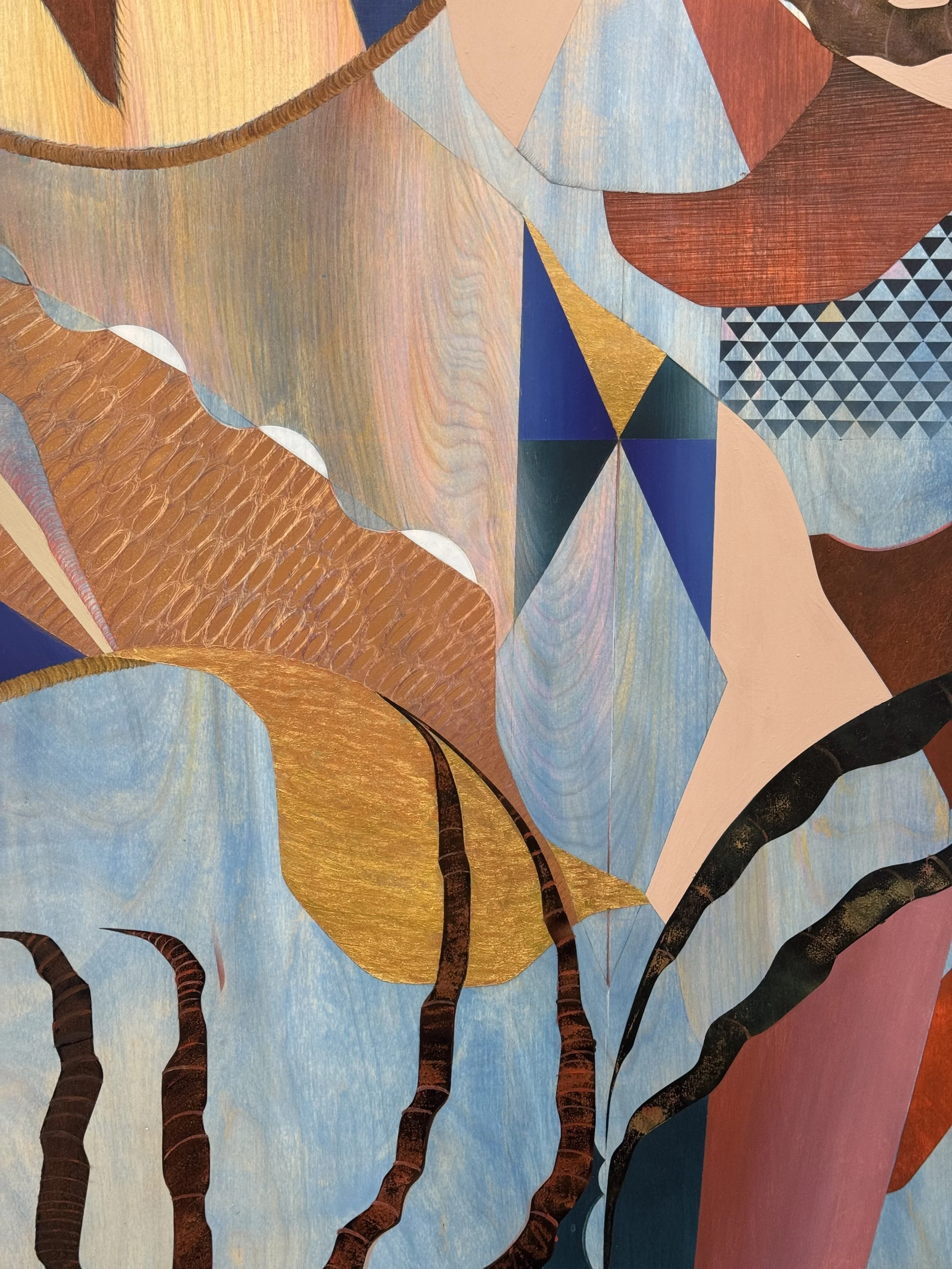
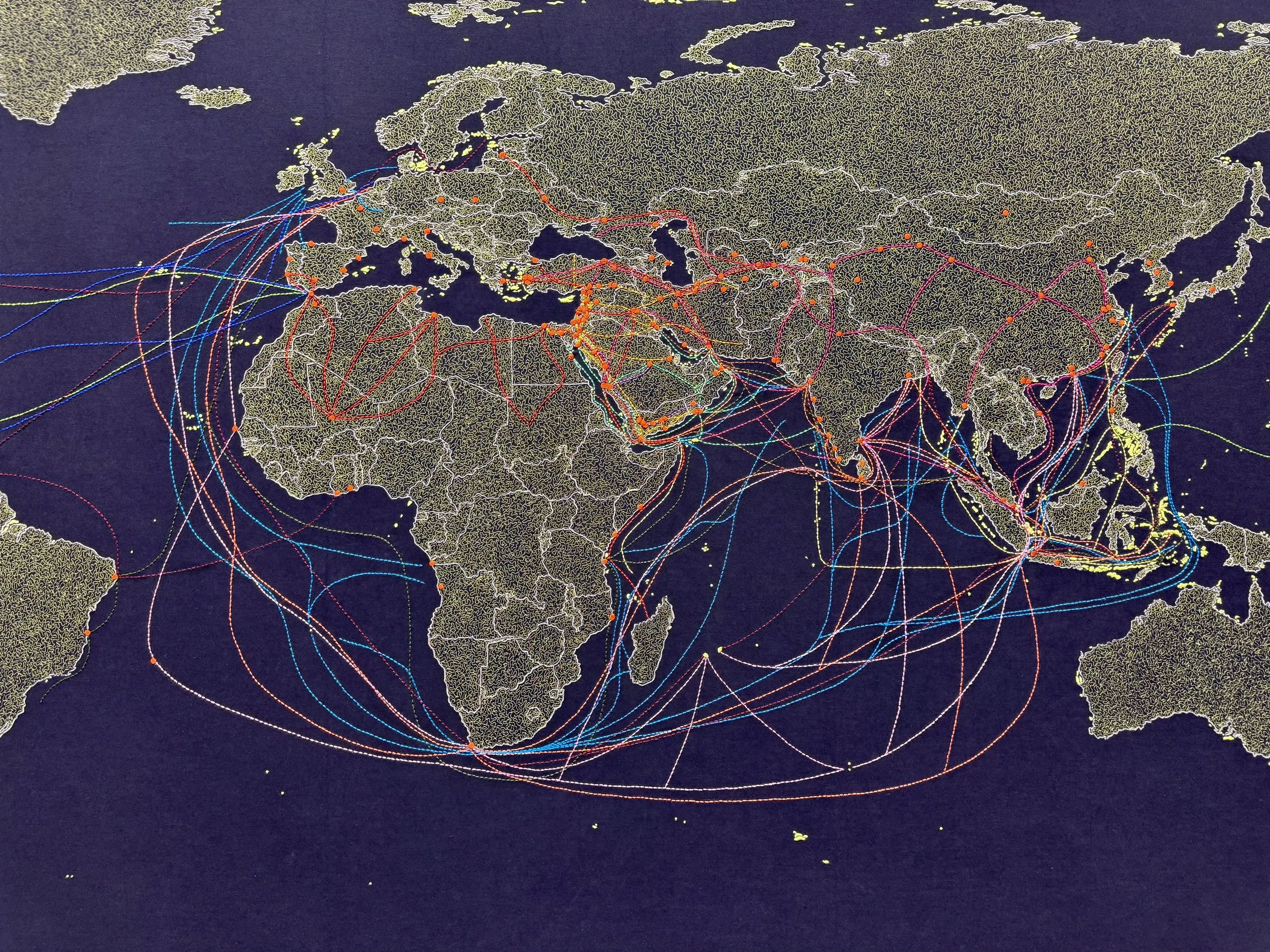
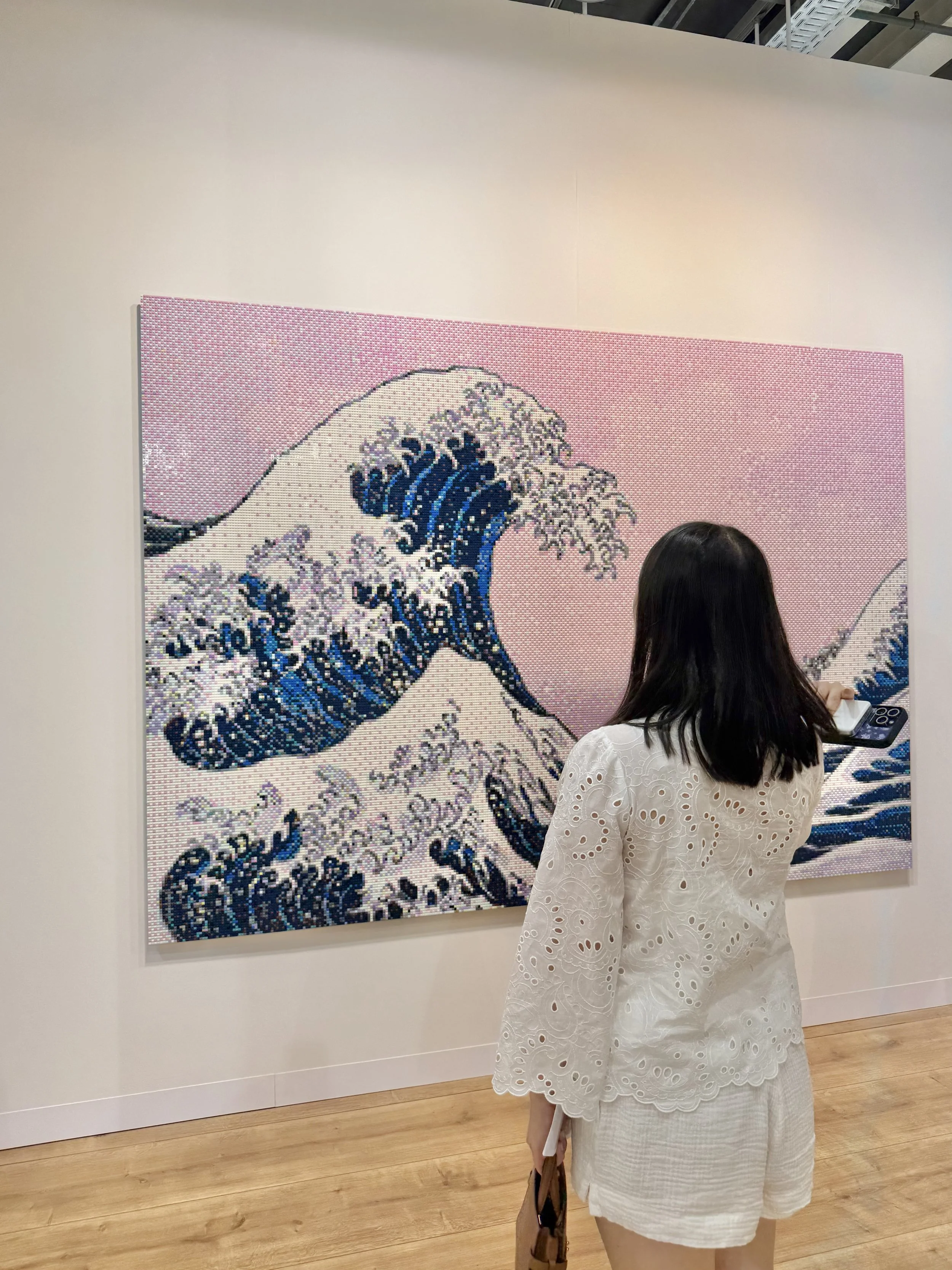
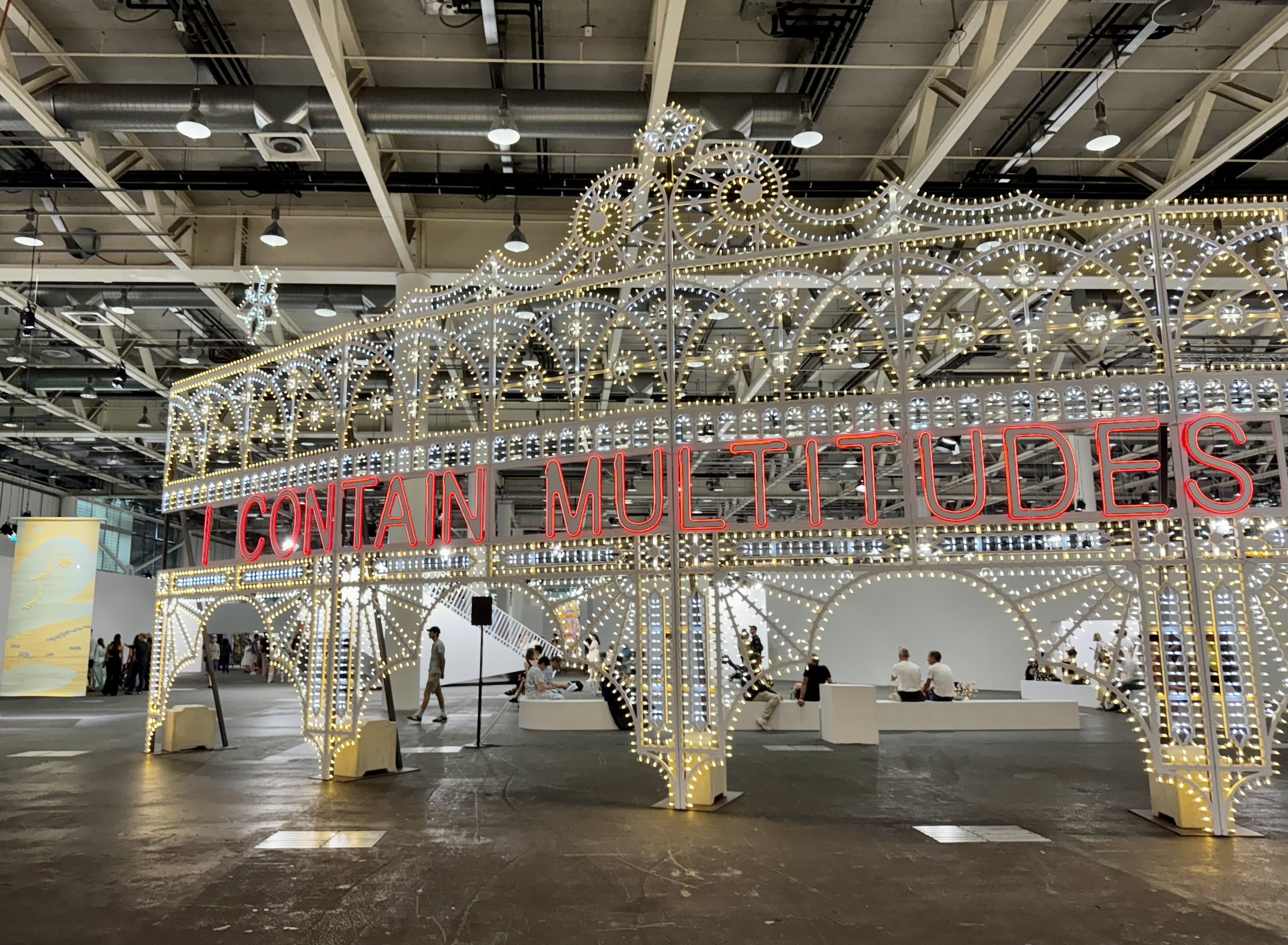
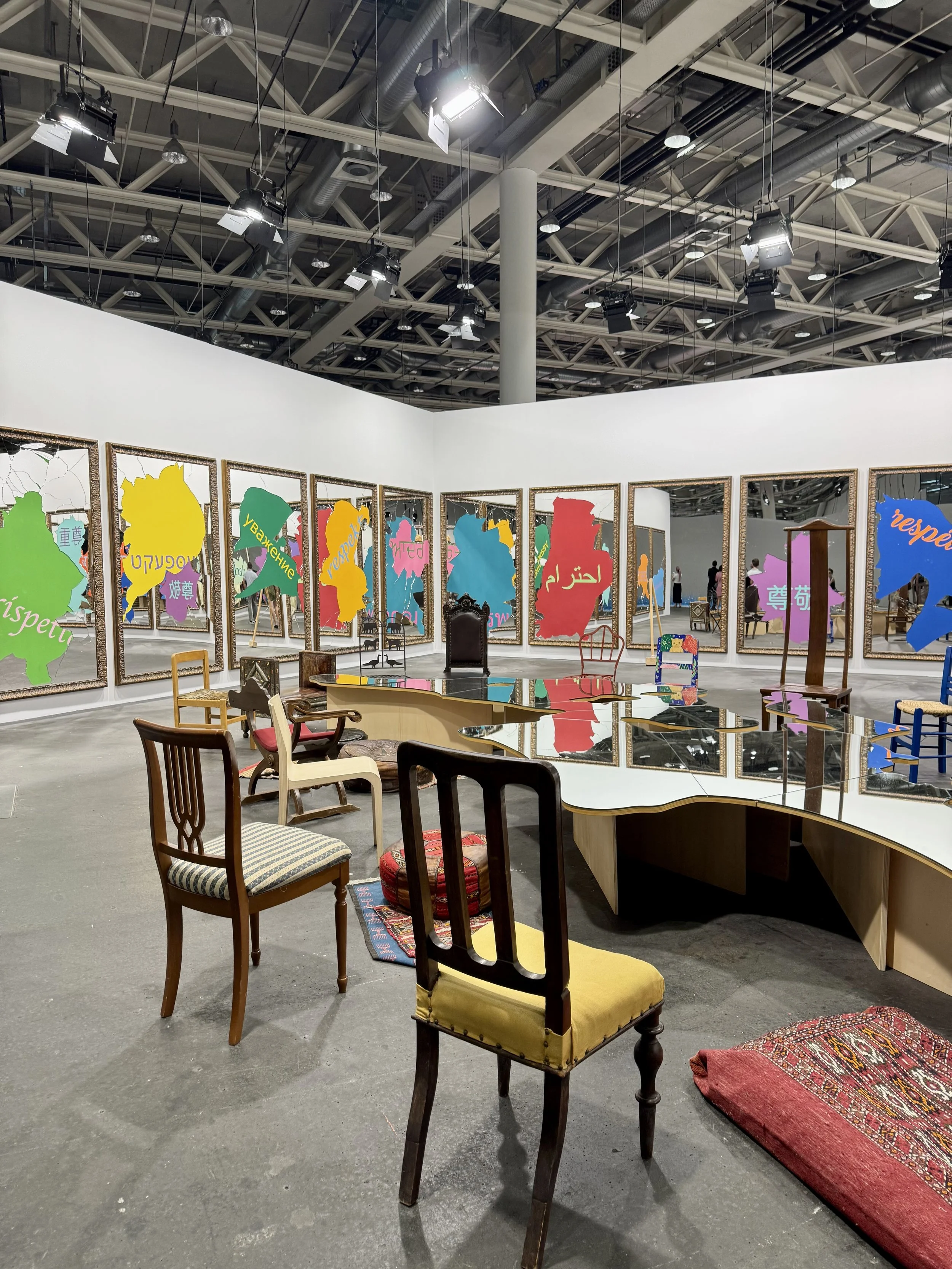
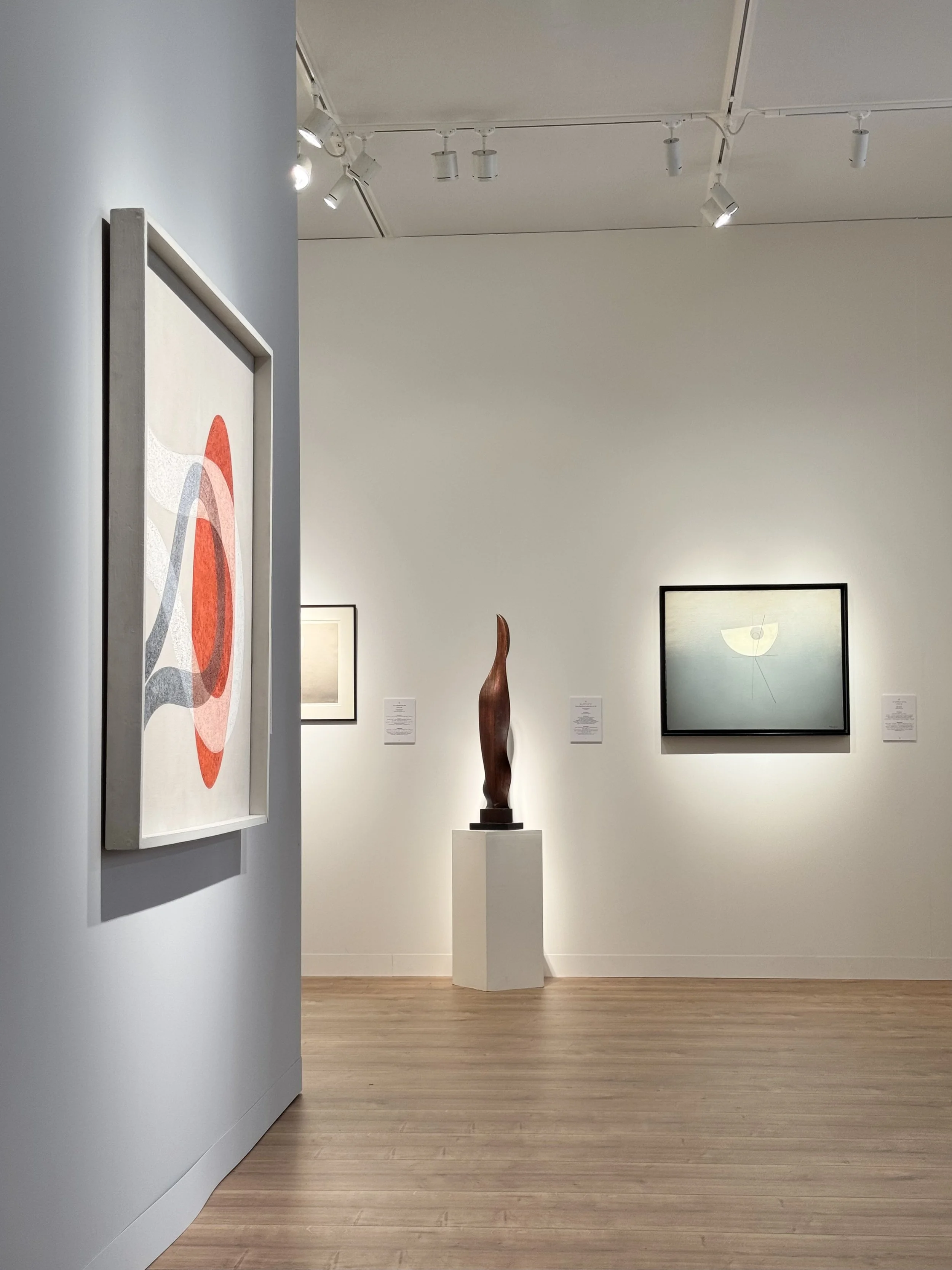
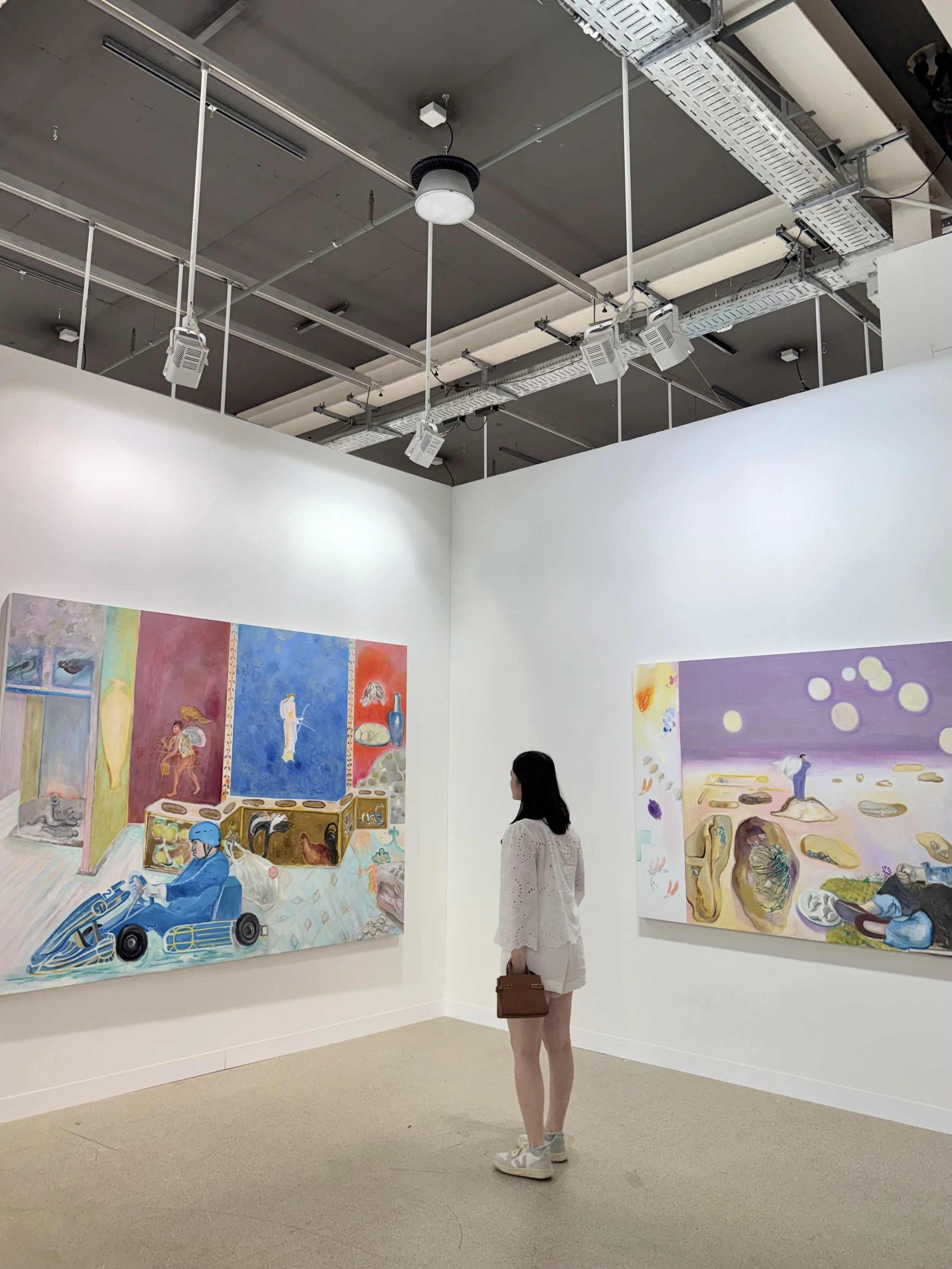
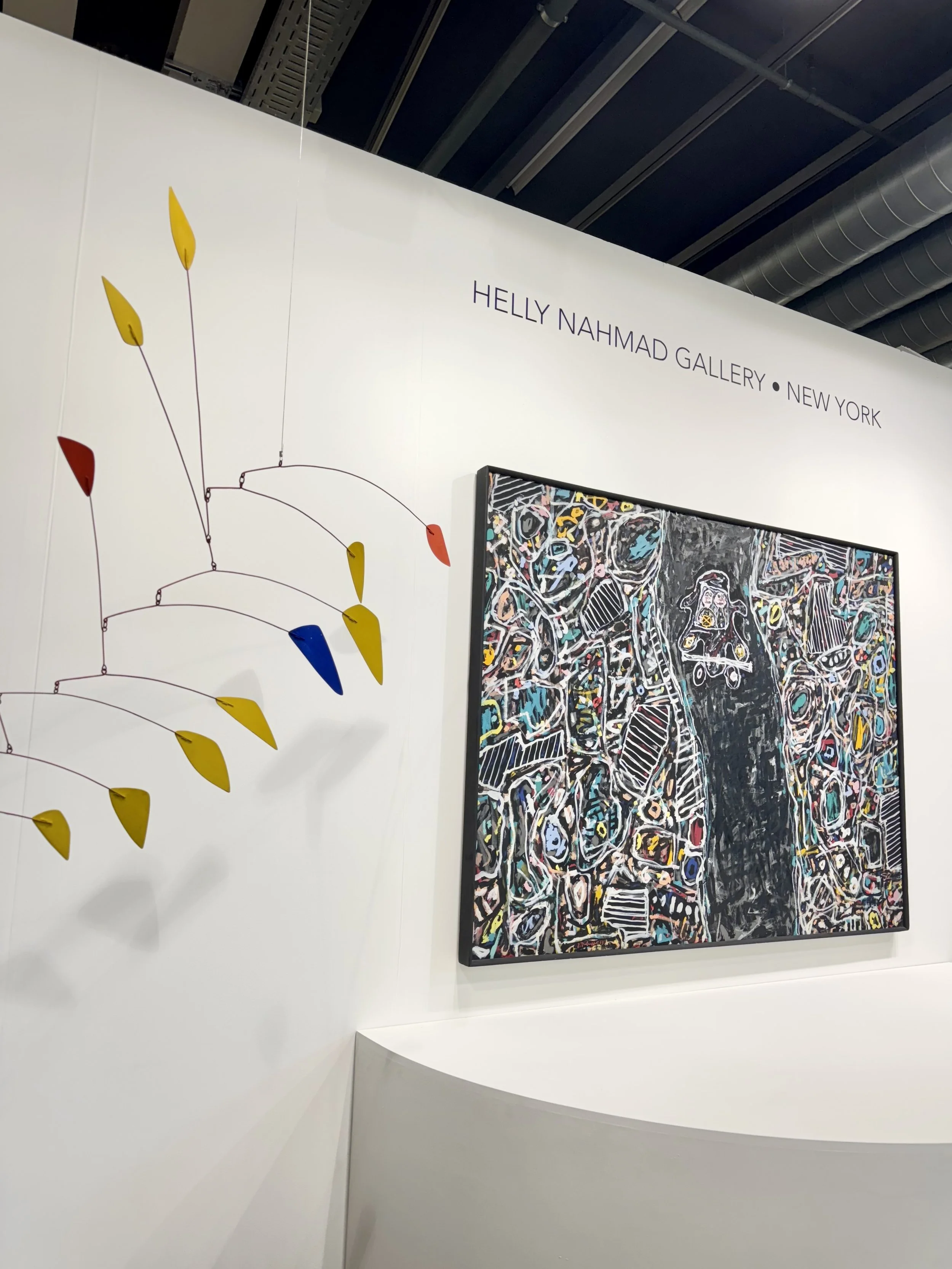
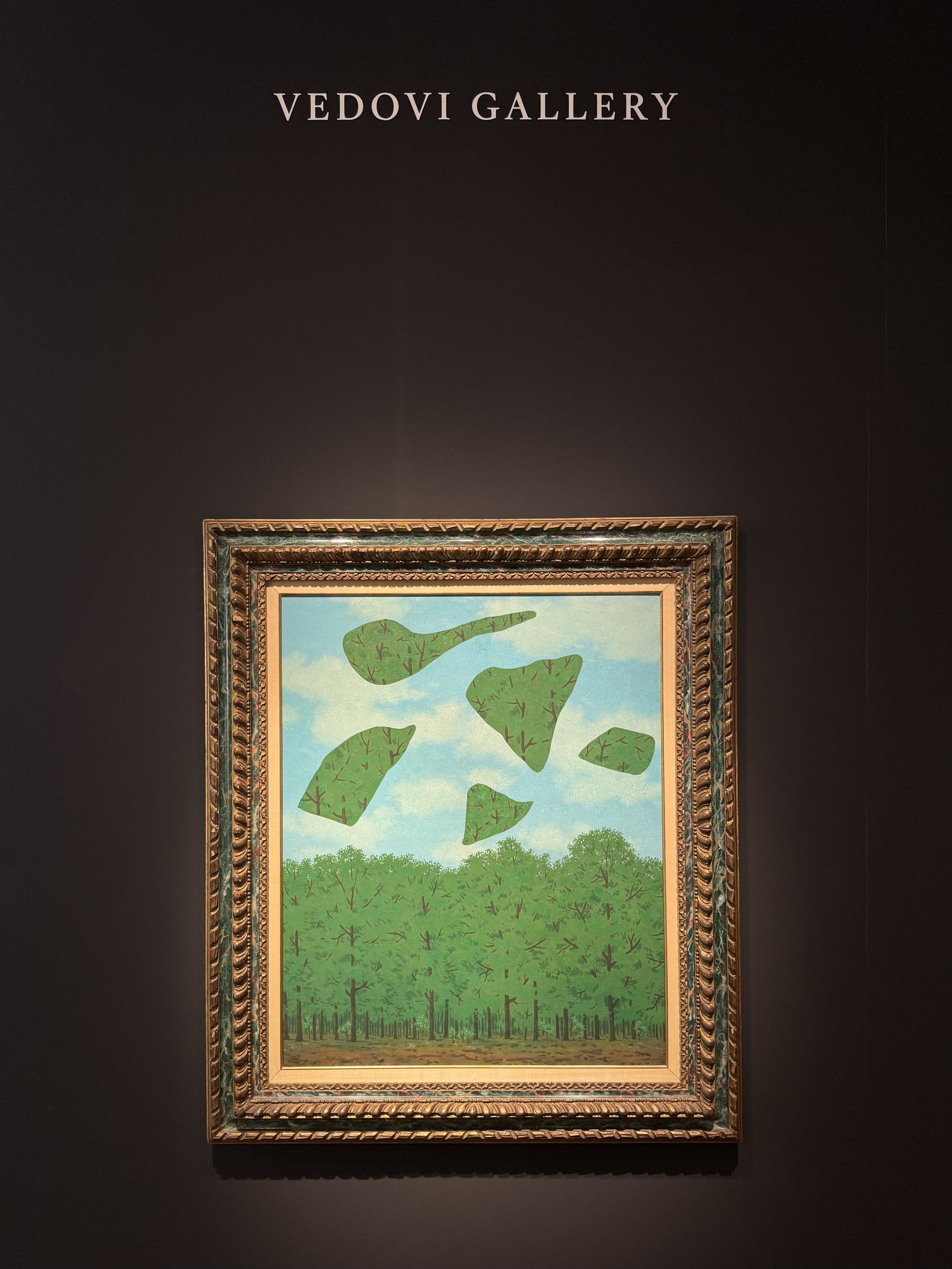
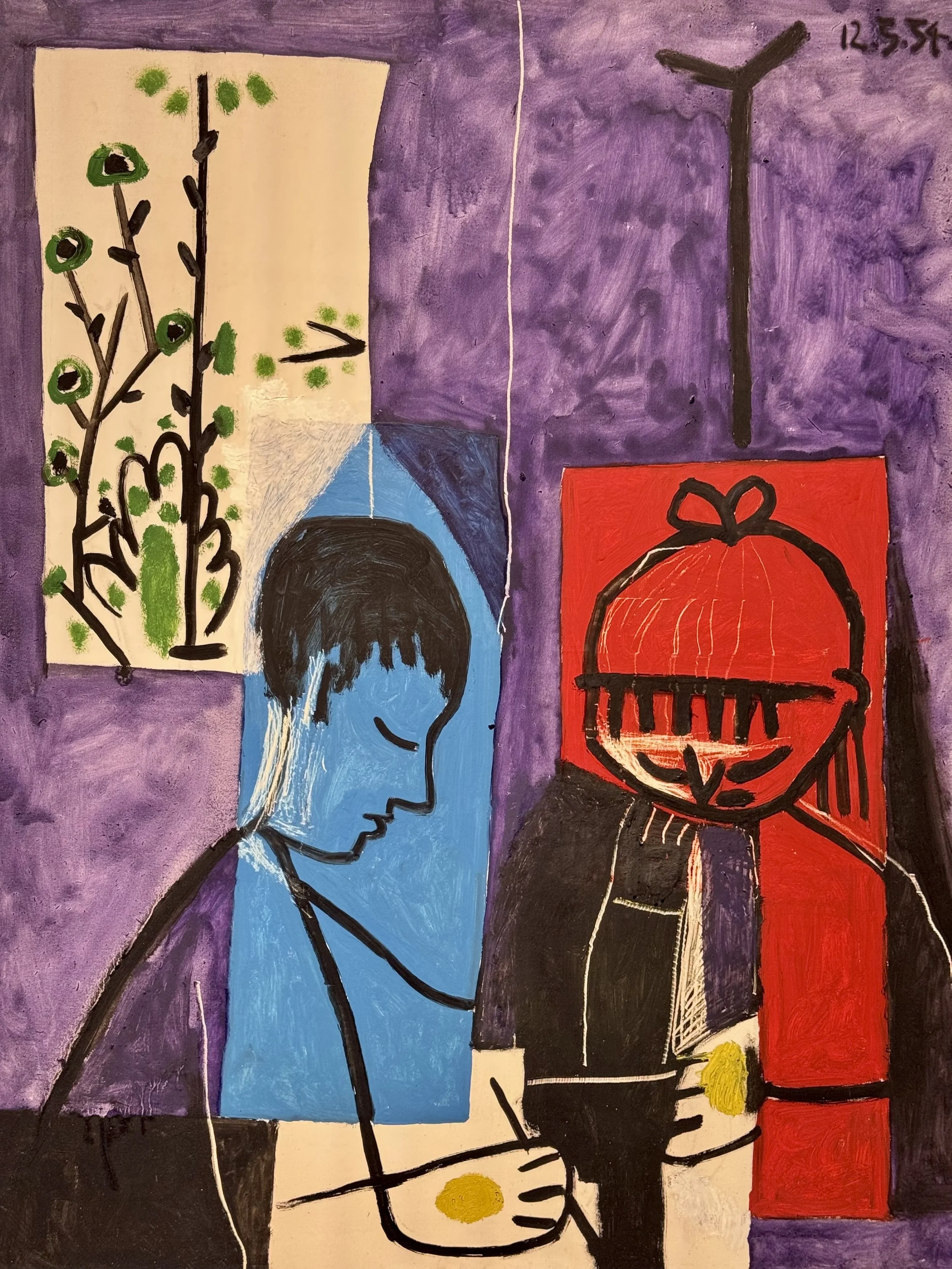
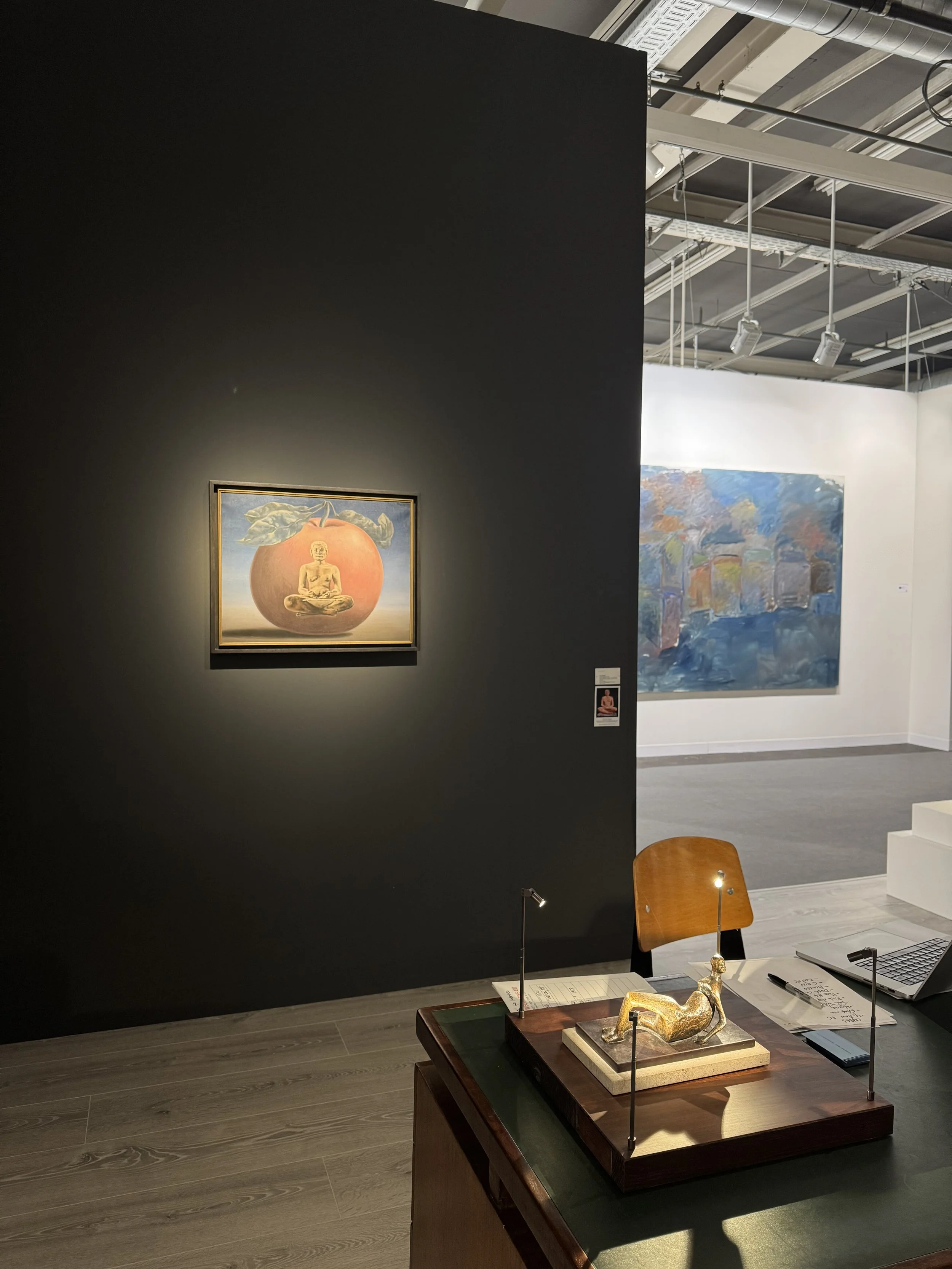
We wandered around methodically but aimlessly, just trying to make our way through each section of the exhibition hall without retracing our steps too often. Later we found our way to the Unlimited section, which featured large-format and monumental projects like the playful, polka-dotted ‘paradise of glorious tulips’ by Yayoi Kusama or Michelangelo Pistoletto’s booth lined with mirrors that demanded ‘respect’ in different languages. We ultimately spent five hours at Art Basel and certainly hadn’t seen everything by the time we left — dazed, feet aching, but aesthetically fulfilled. Consider me an art fair fan!
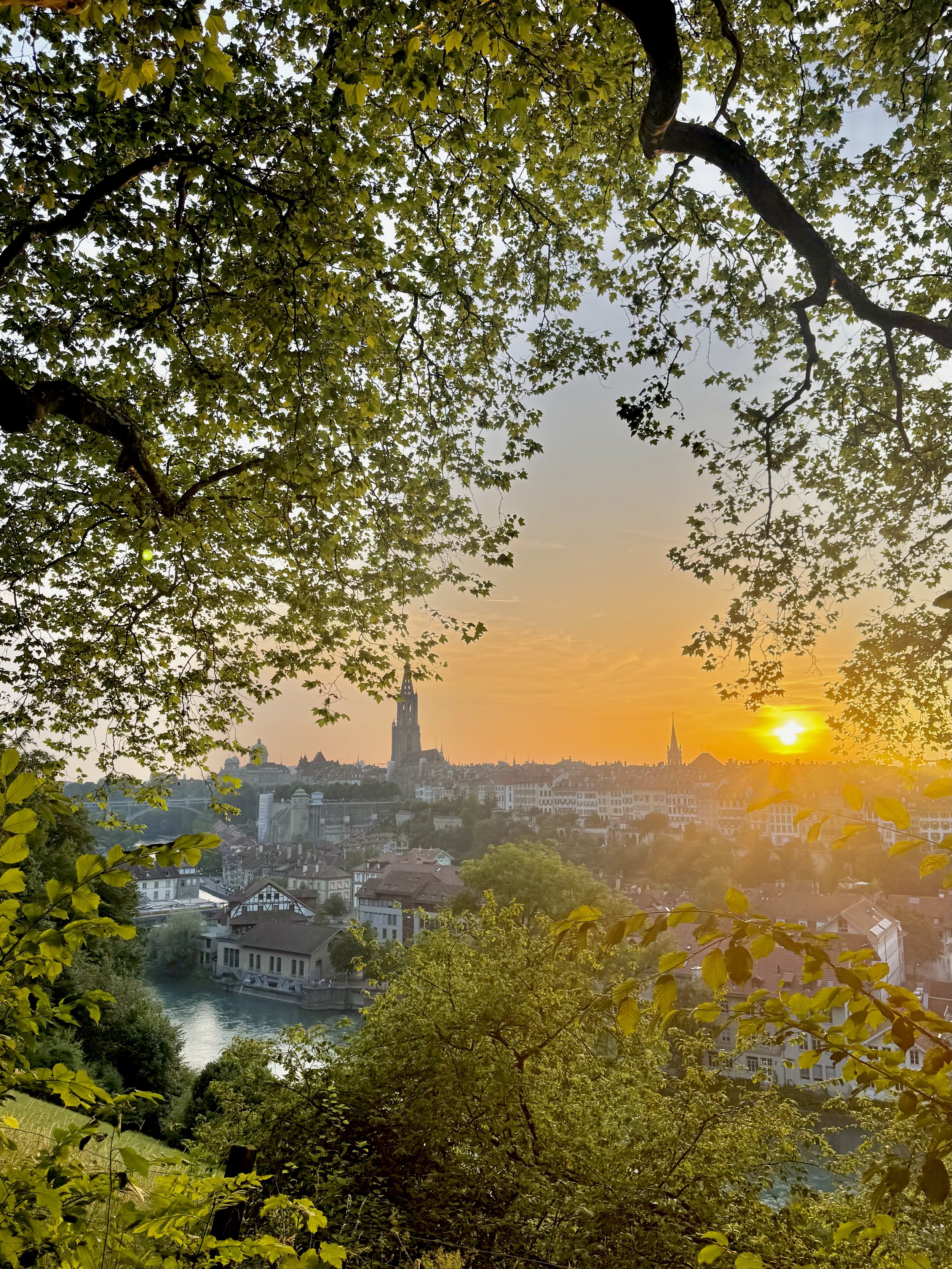
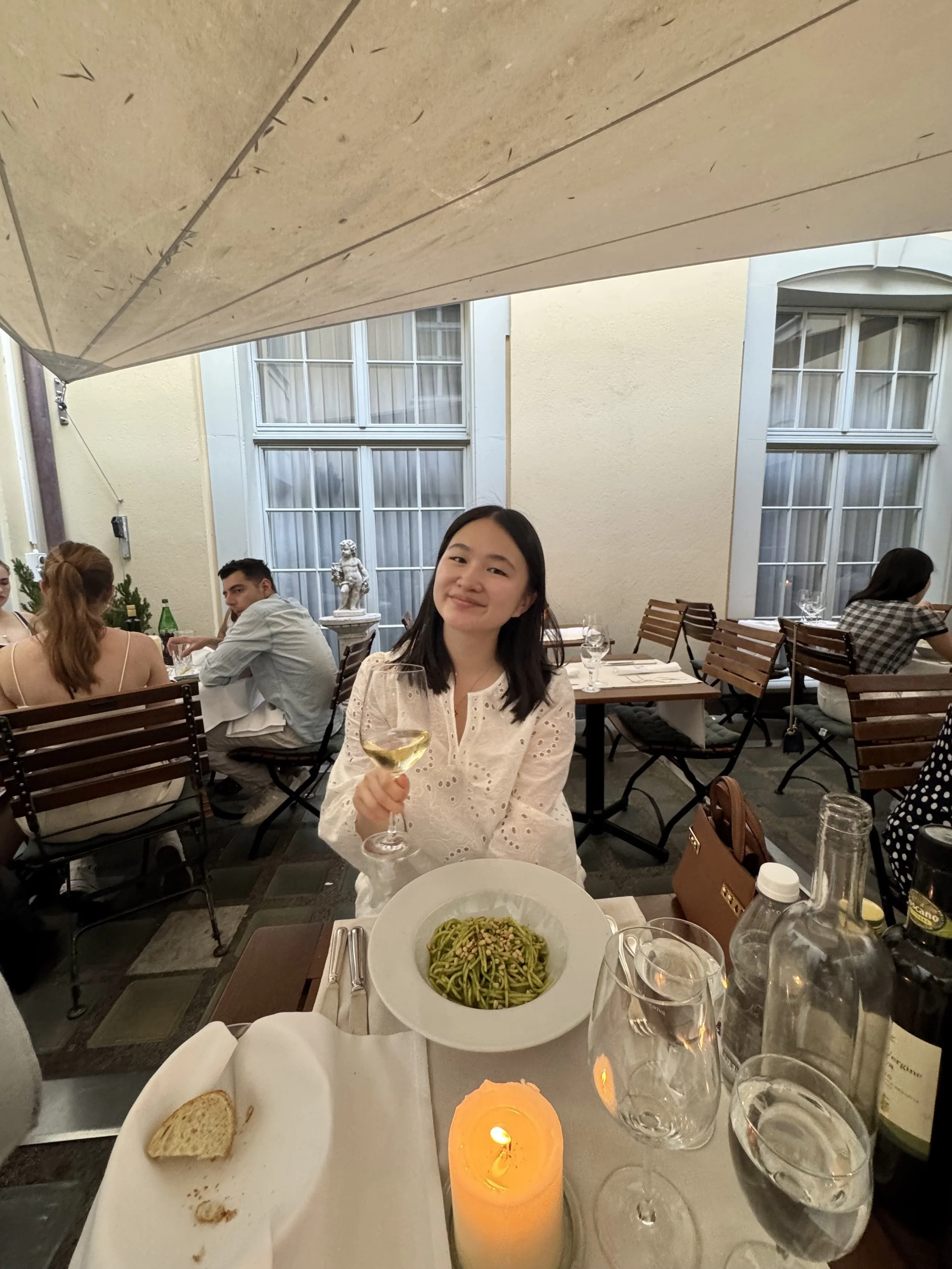
Back in Bern, we had dinner at an Italian restaurant before catching the sunset at a viewpoint from which we could see the Aare River looping around the Old Town.
Day 2: Lucerne
When planning day trips from Bern, I was torn between many ‘can’t-miss’ options: iconic Grindelwald, dotted with charming chalets? Lauterbrunnen, with its waterfall, or perhaps Interlaken? My mom had visited all of these towns before and while she could confirm they were postcard-perfect, there was only one place she thought I shouldn’t miss out on: Lucerne.
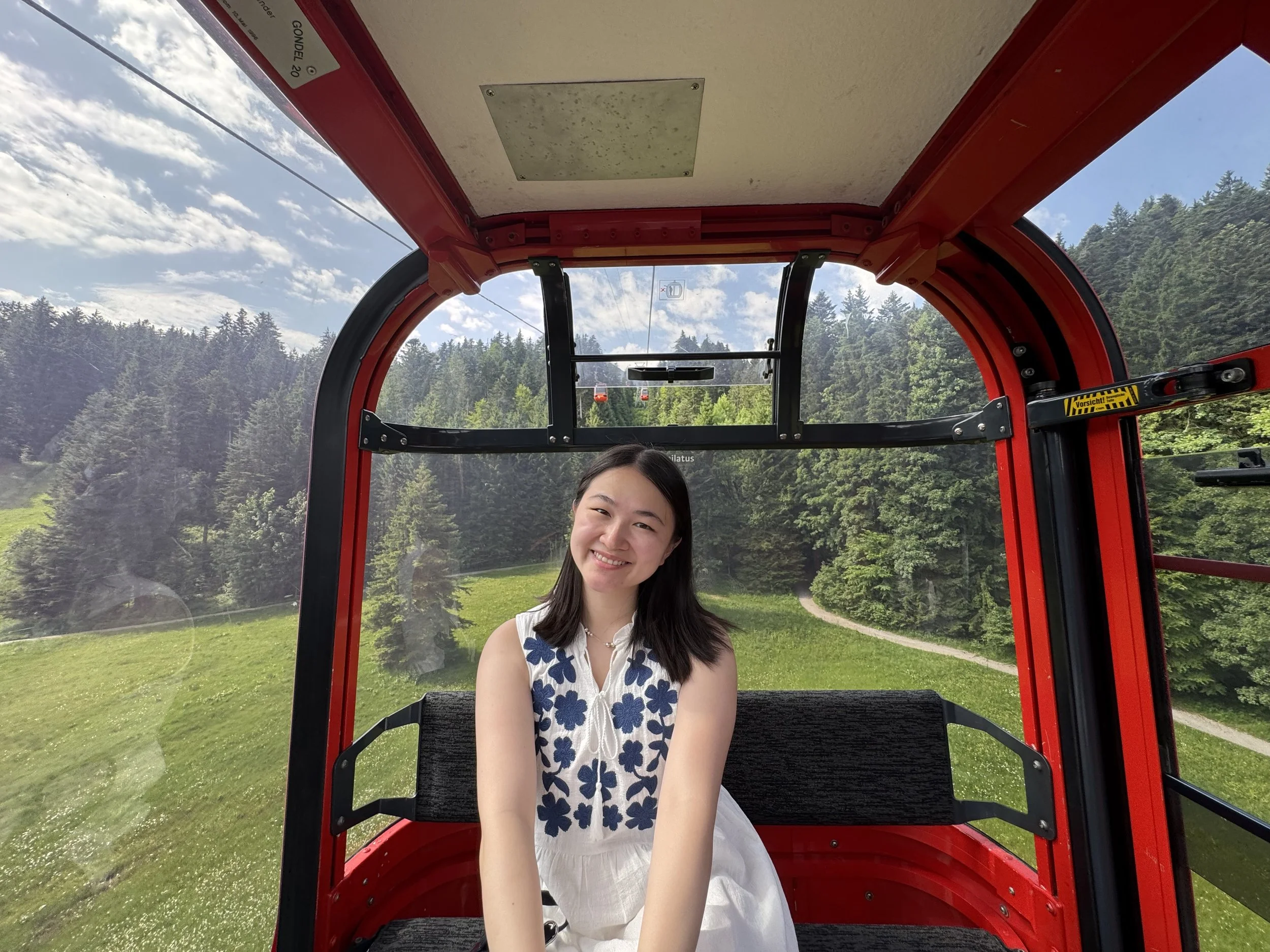
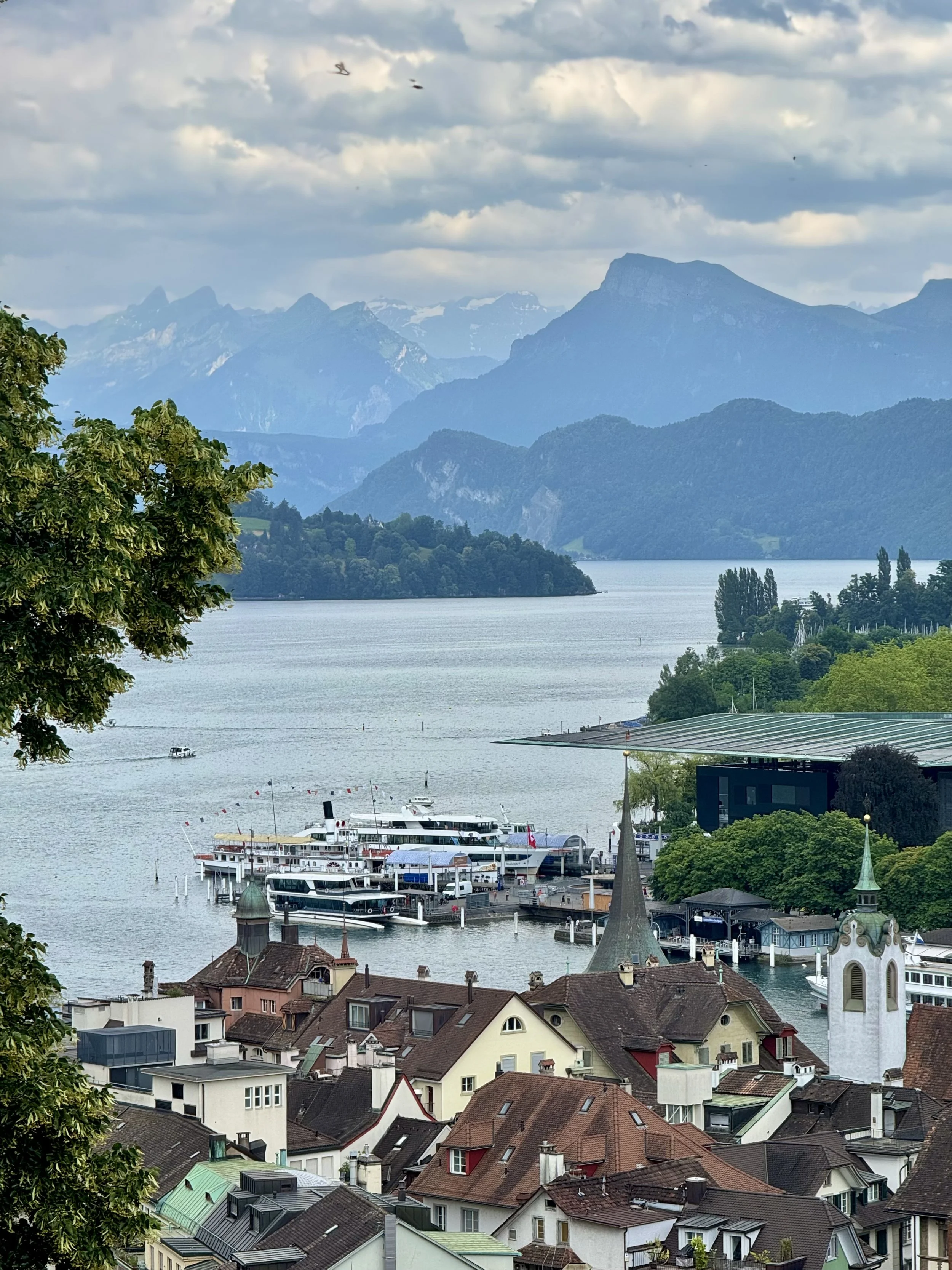
In the morning, we caught a train to Lucerne and took a bus to Kriens, where we could walk to the entry point for the panoramic cable car up to Mount Pilatus. There are several ways to get up to Mount Pilatus, each with a different starting point. The cable car ride is 40 minutes long, but it’s stunning the whole way. As the gondola climbed, we watched the landscape unfold beneath and around us. Kriens’s buildings gave way to green hills covered in evergreen trees, and we could see neat farmland and steeper mountains in the distance. Then, of course, Lake Lucerne, carved into its exquisite shape by the surrounding land and islets.
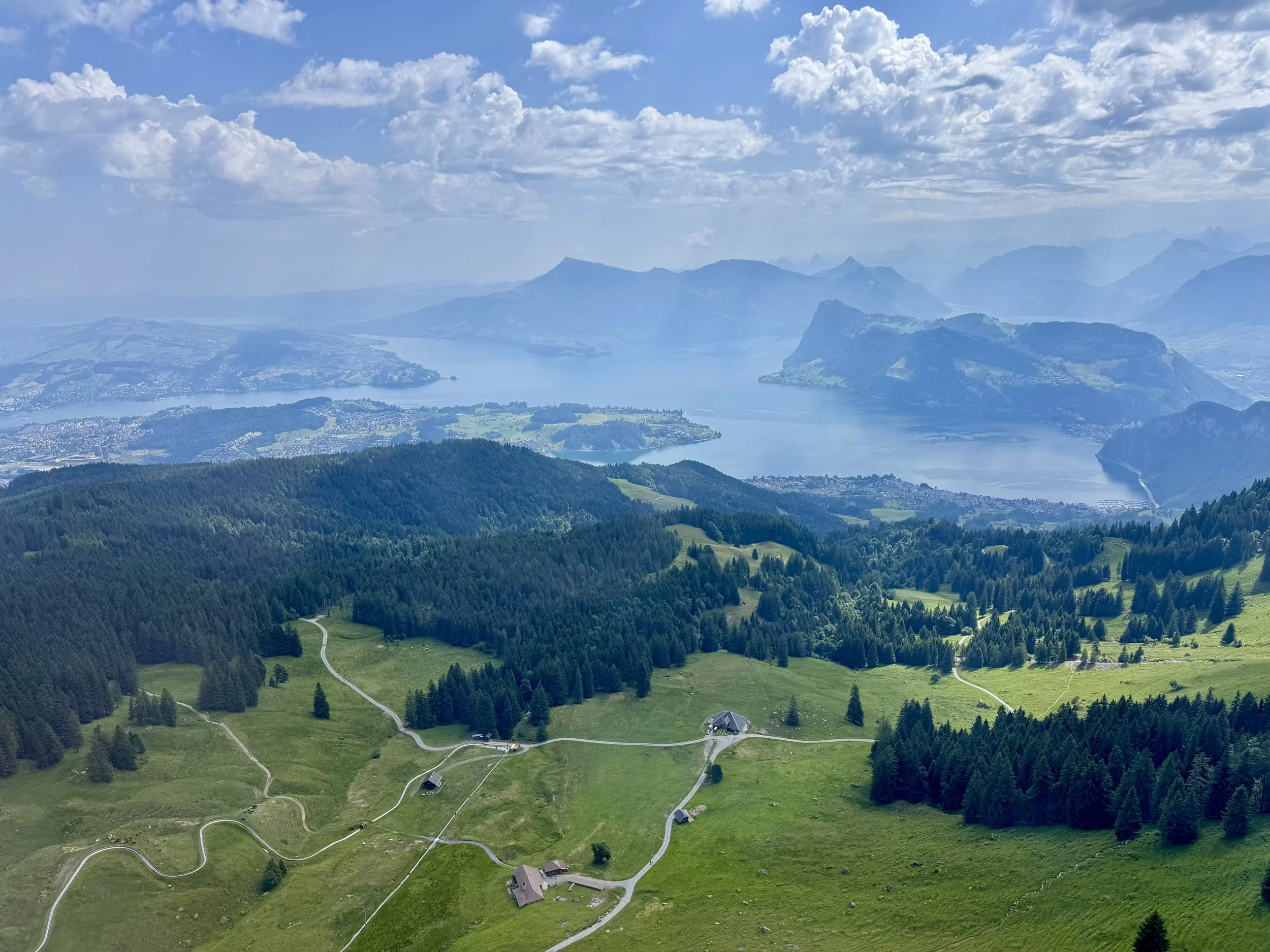
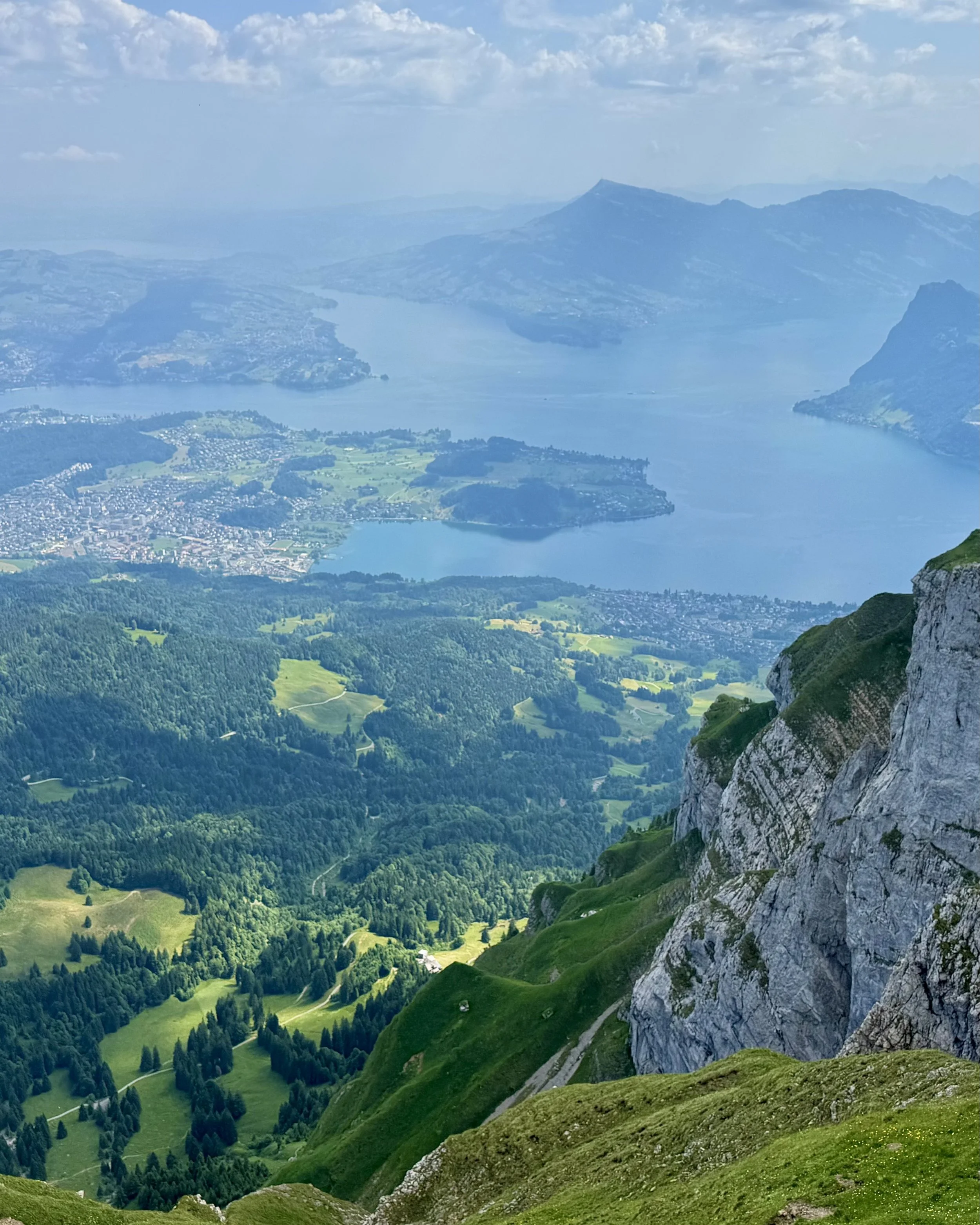
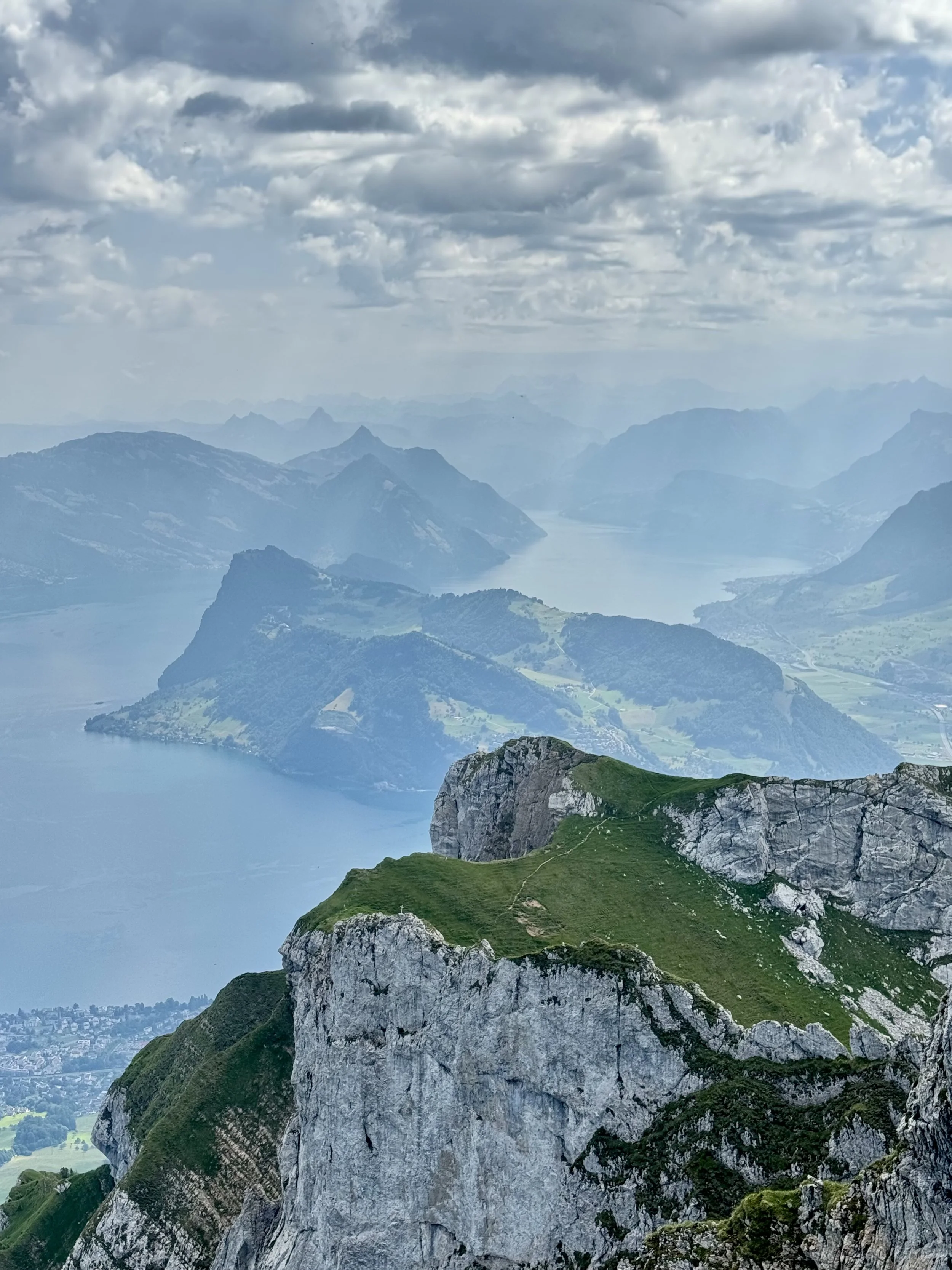
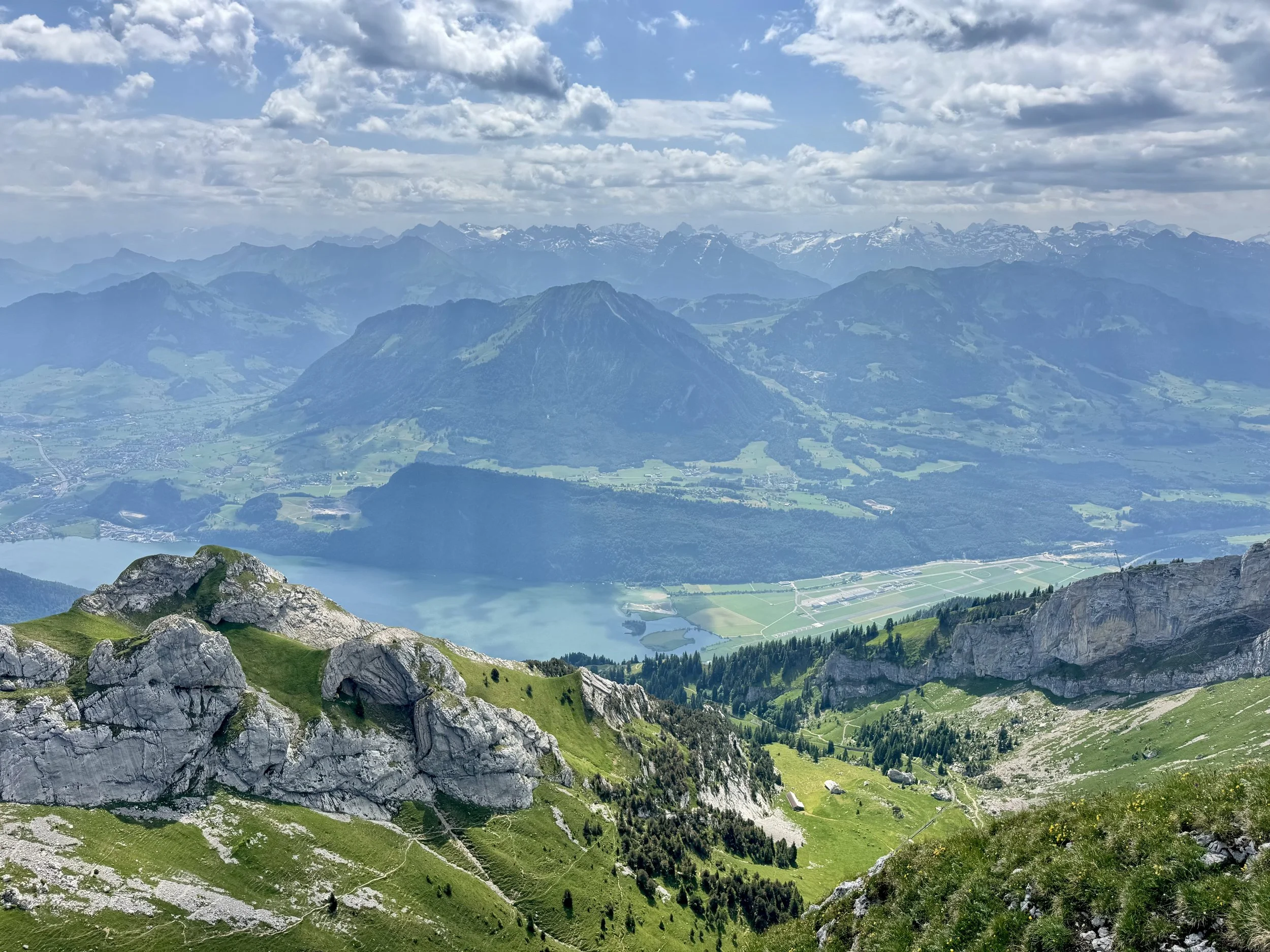
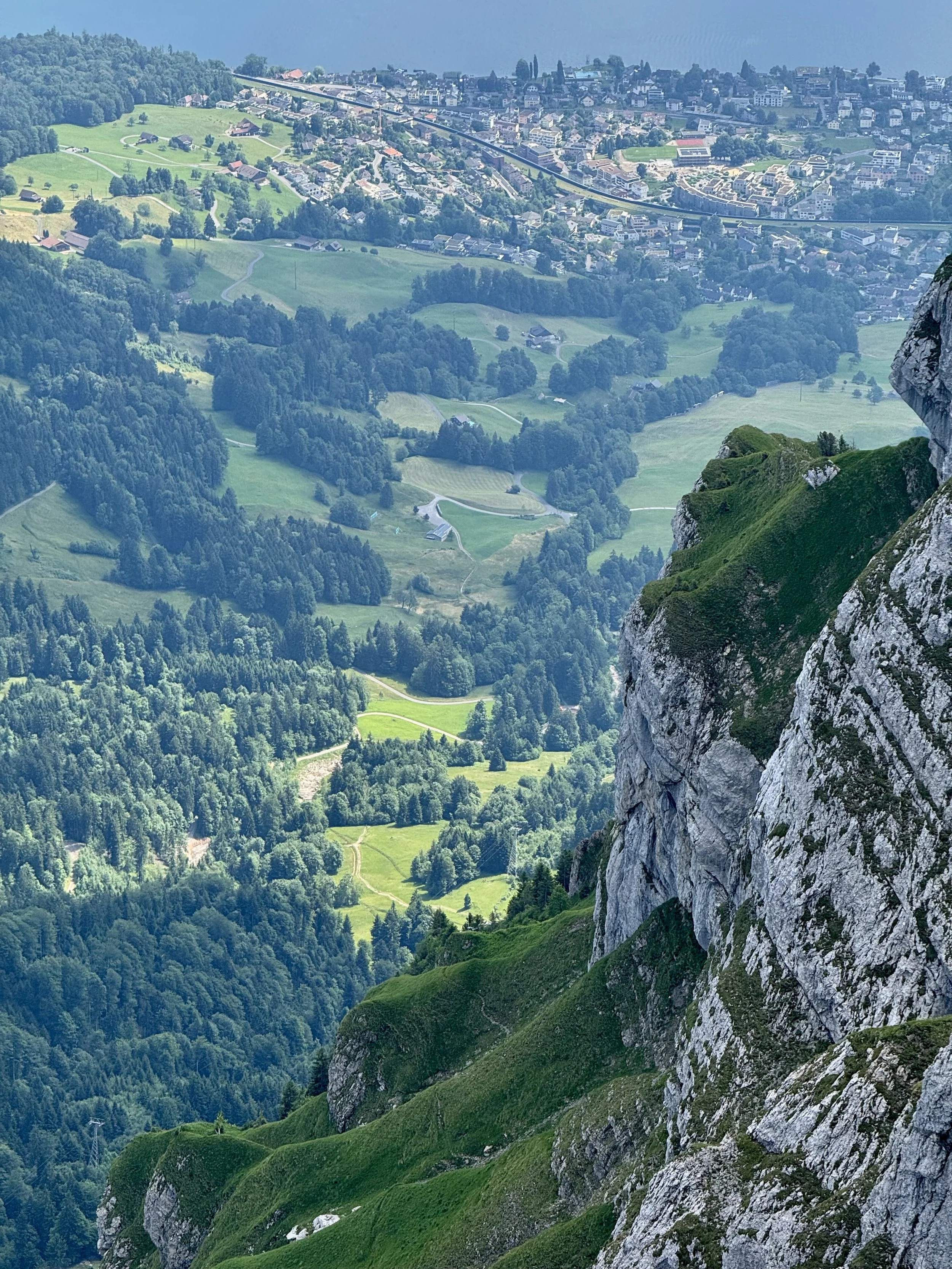
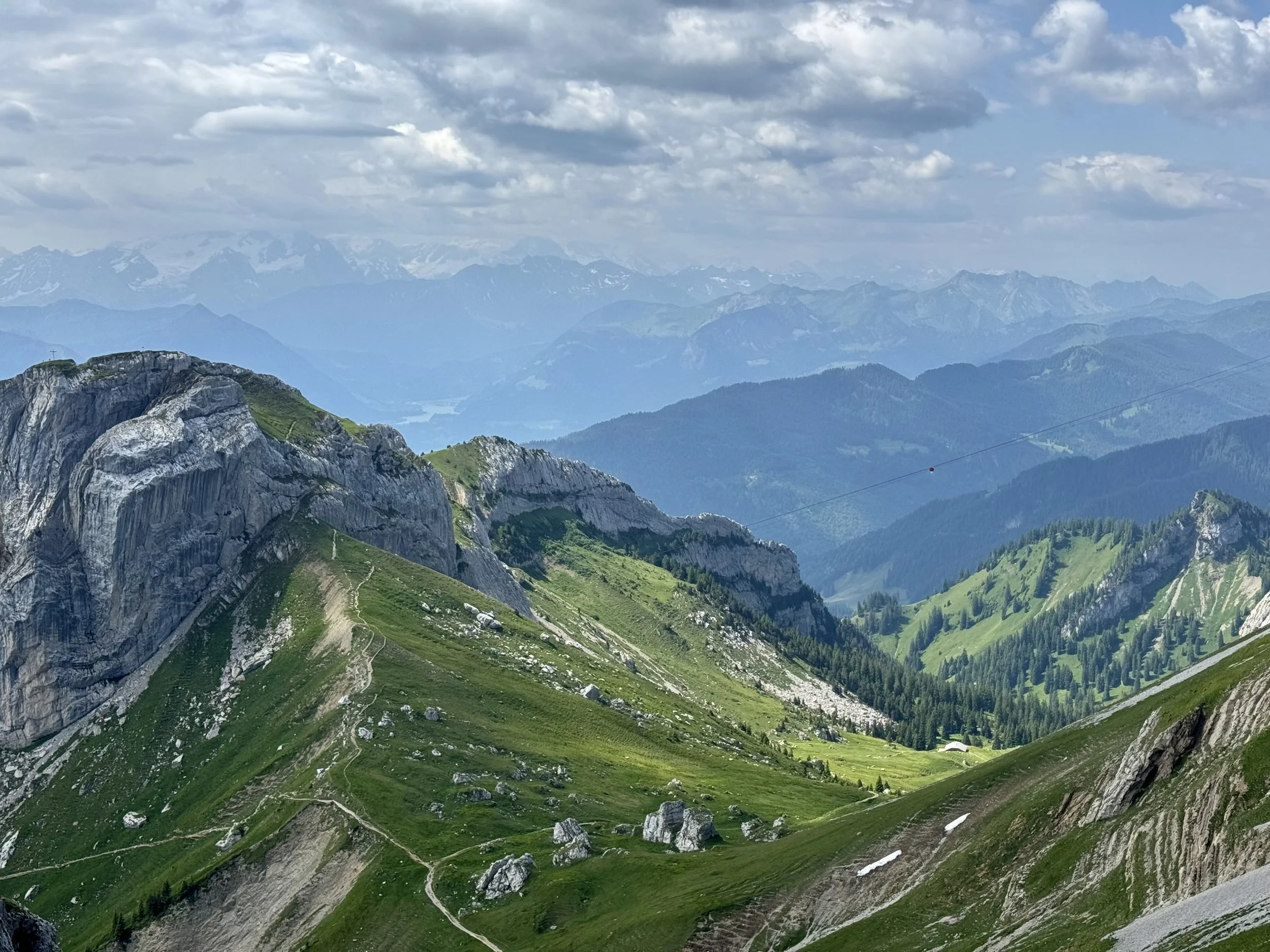
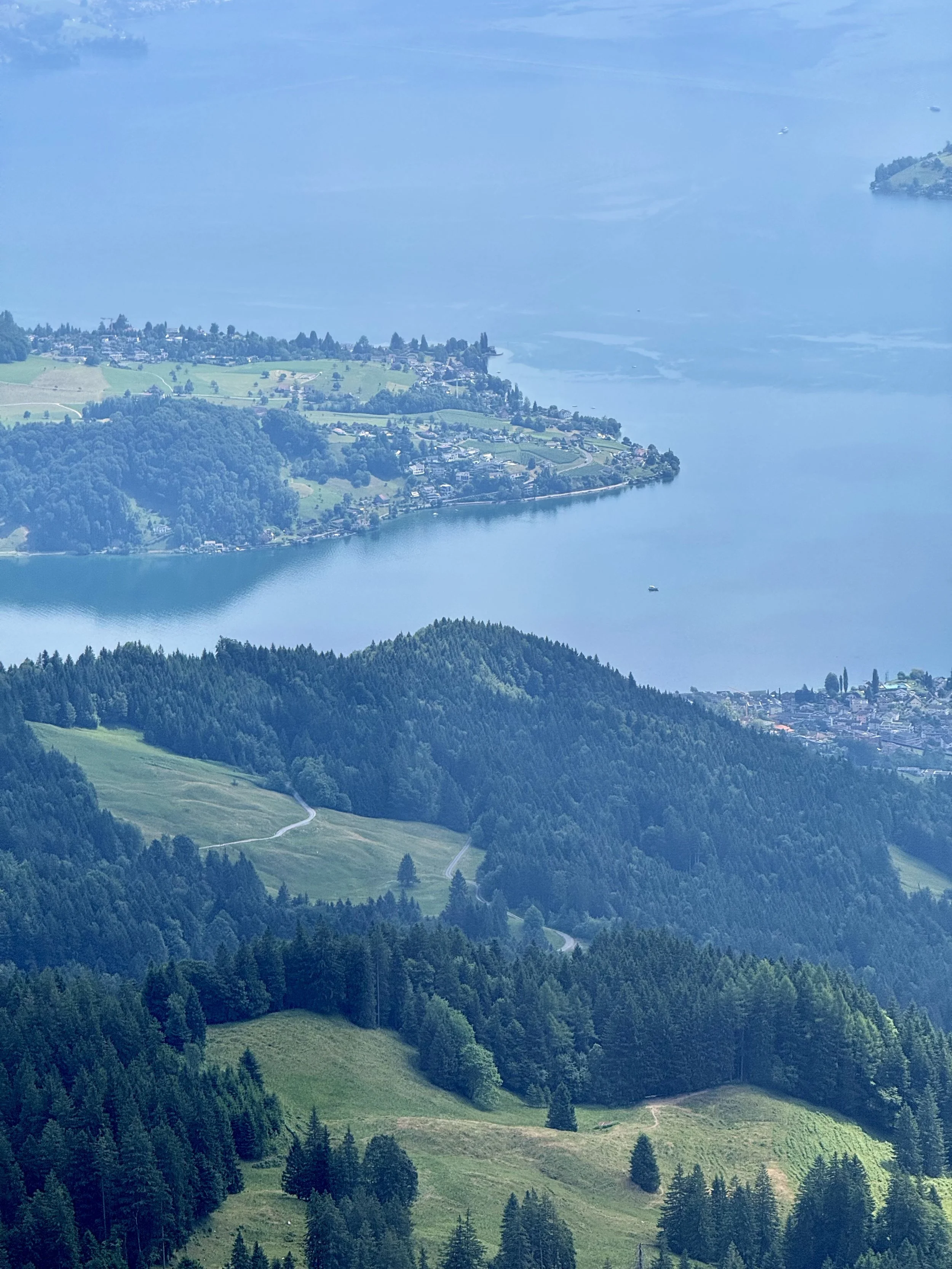
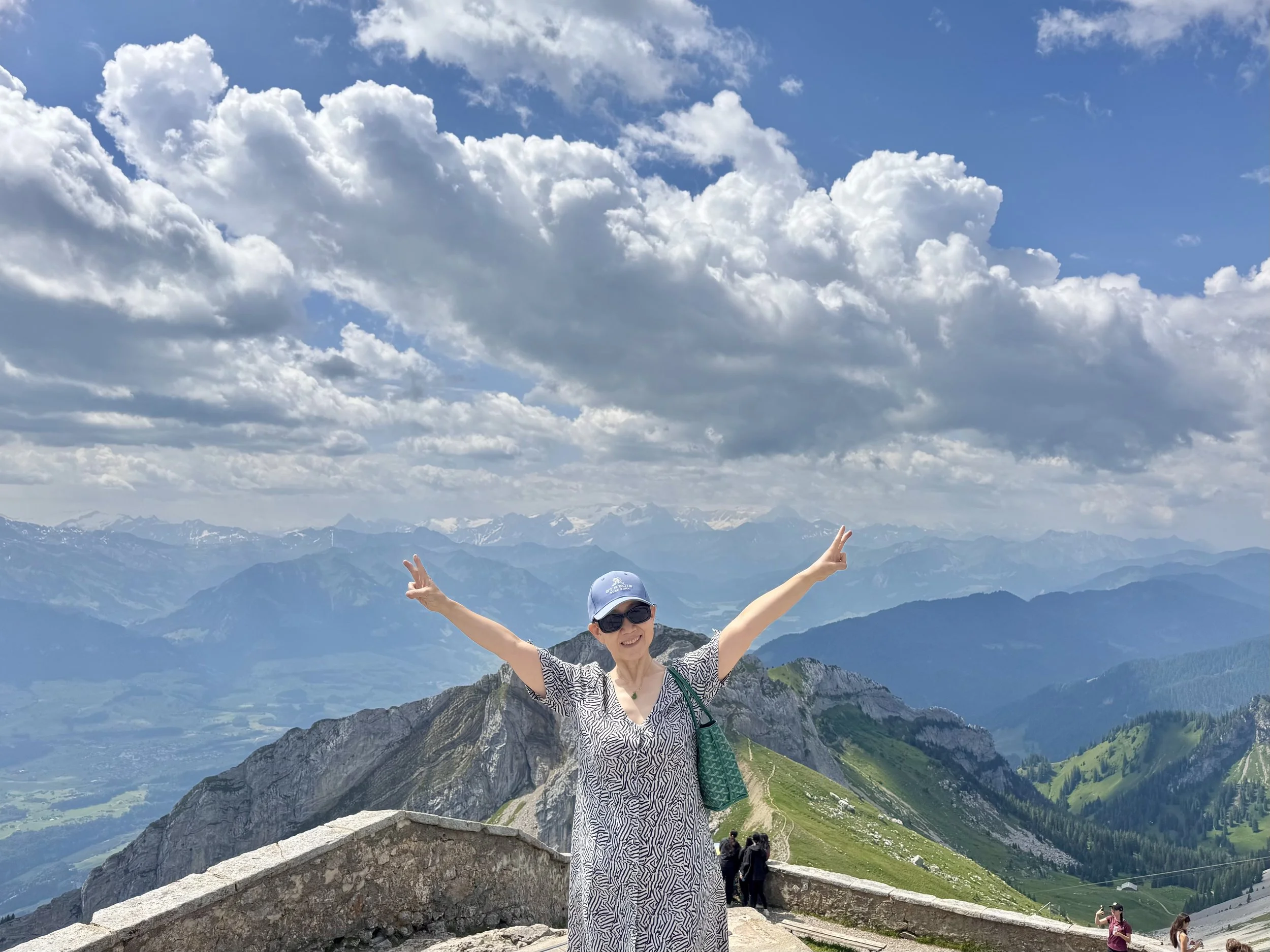
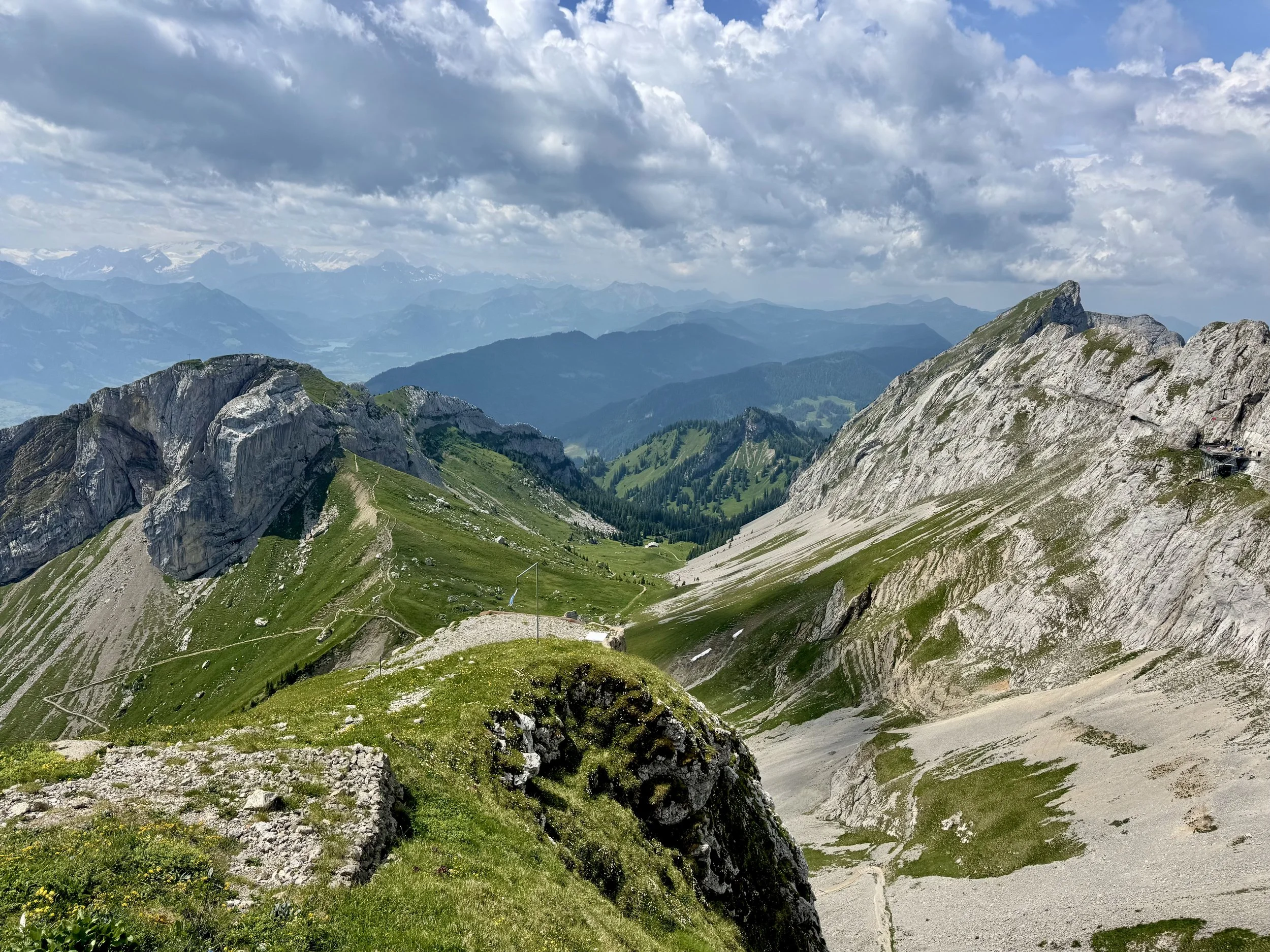
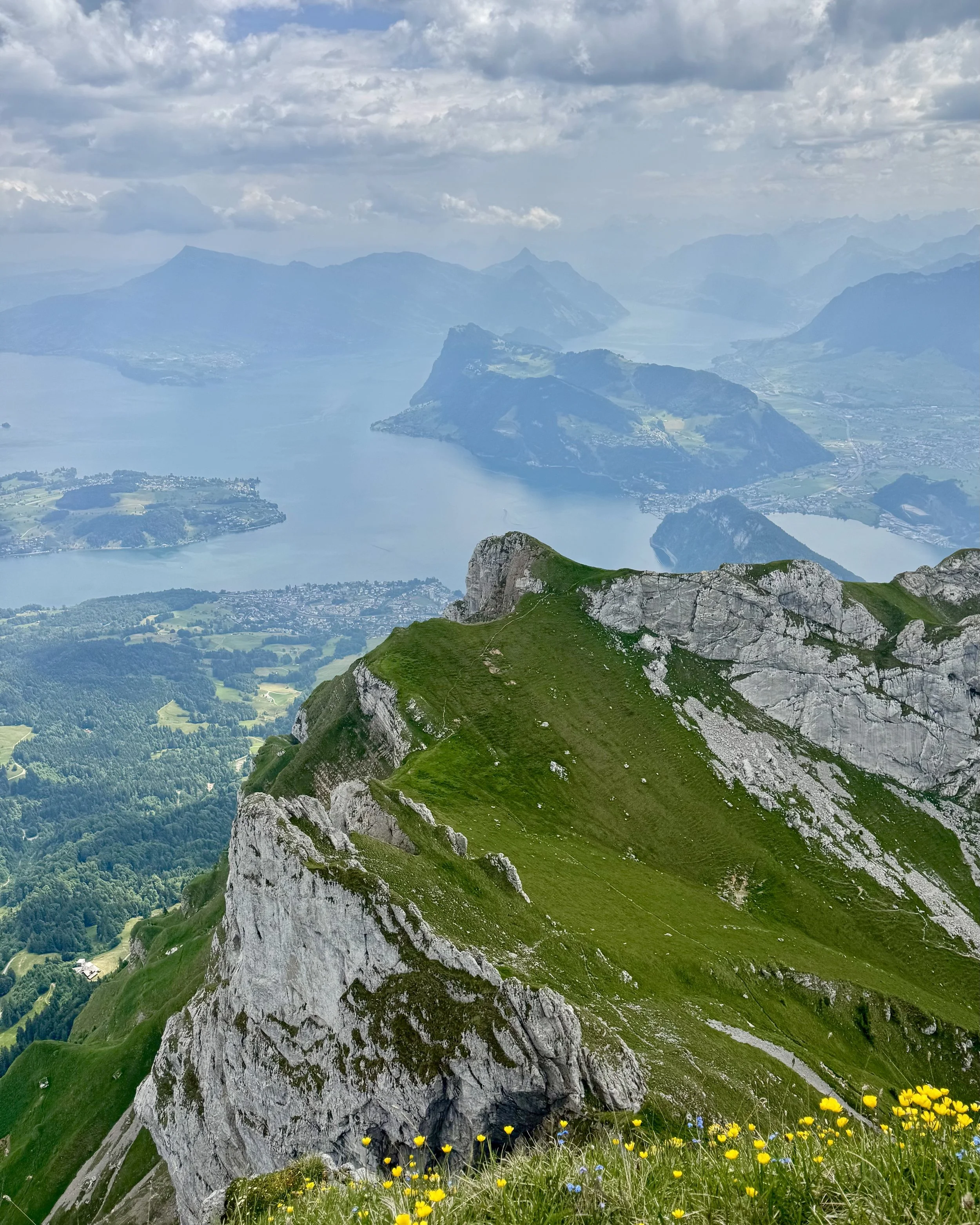
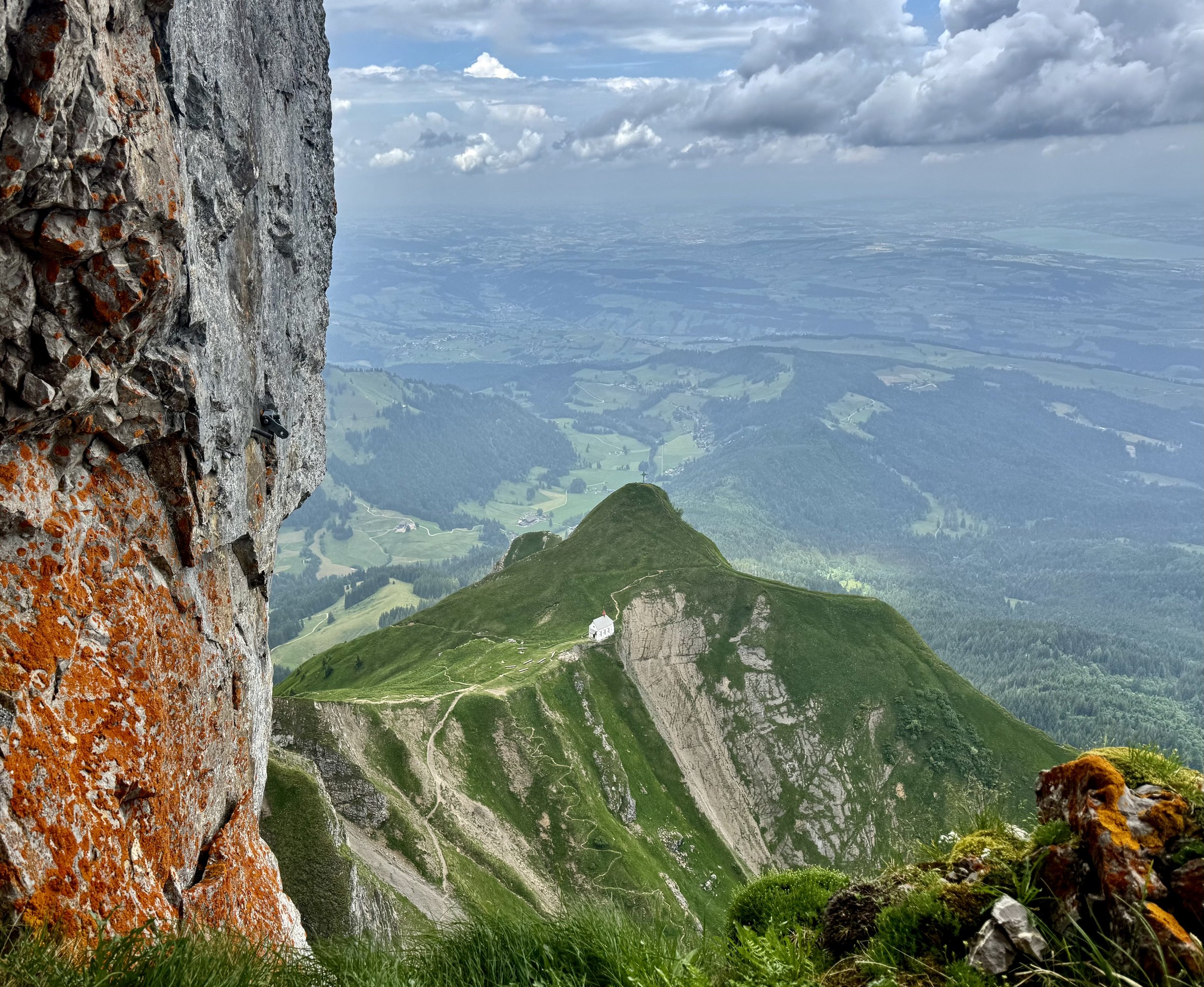
Photos really don’t do the scene justice. We could see the lake and mountains stretching out in every direction, and the ever-shifting light created new patterns and areas of interest in the undulating, lush green below. At their highest peaks, mountains were still covered in snow. Closer to us, the jagged slopes were dusted in artful arrangements of moss and zig-zagging hiking trails. It was all majestic; magnificent. Everything commanded attention. We stayed for more than two hours, just walking around and taking photos.
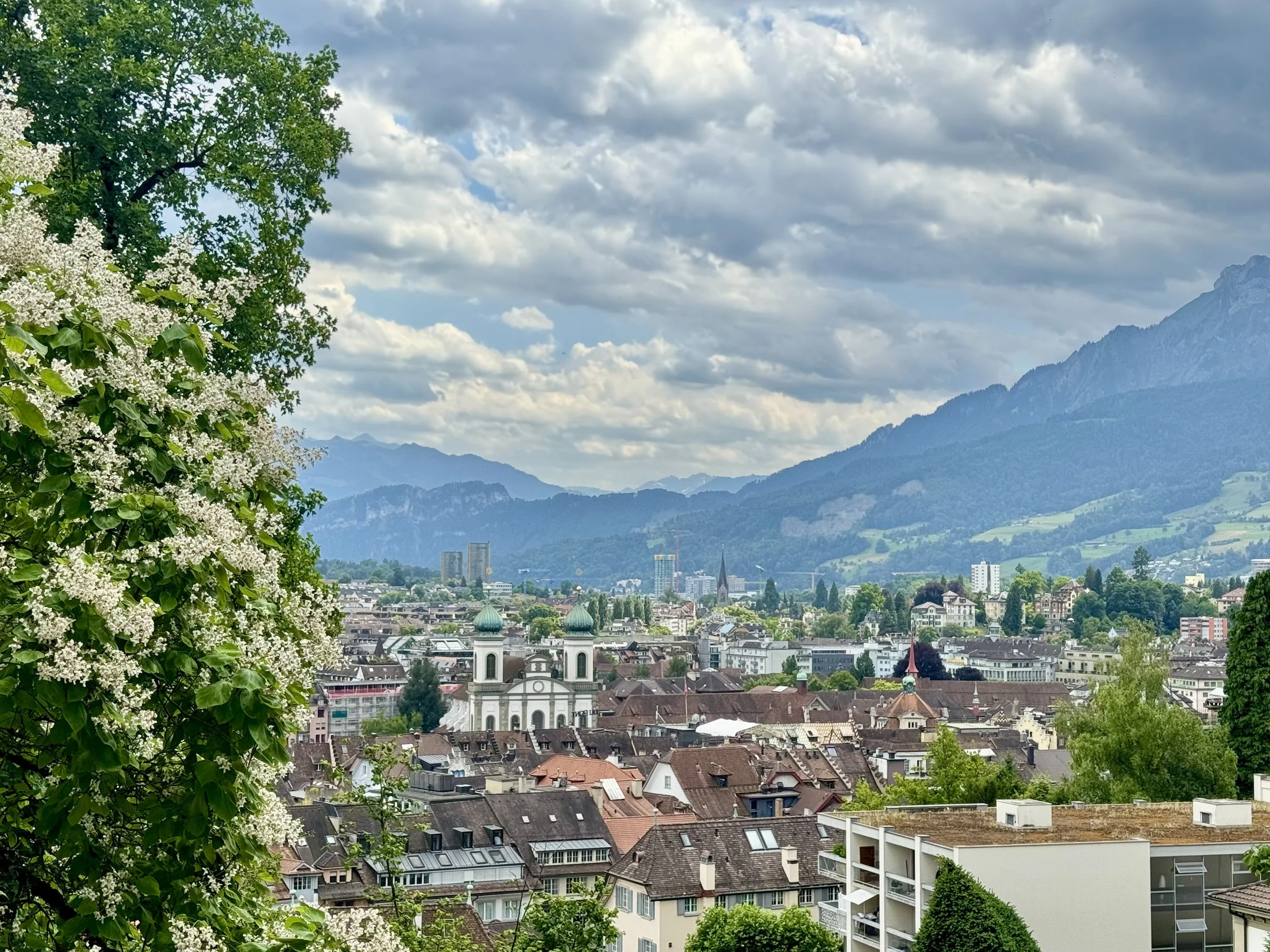
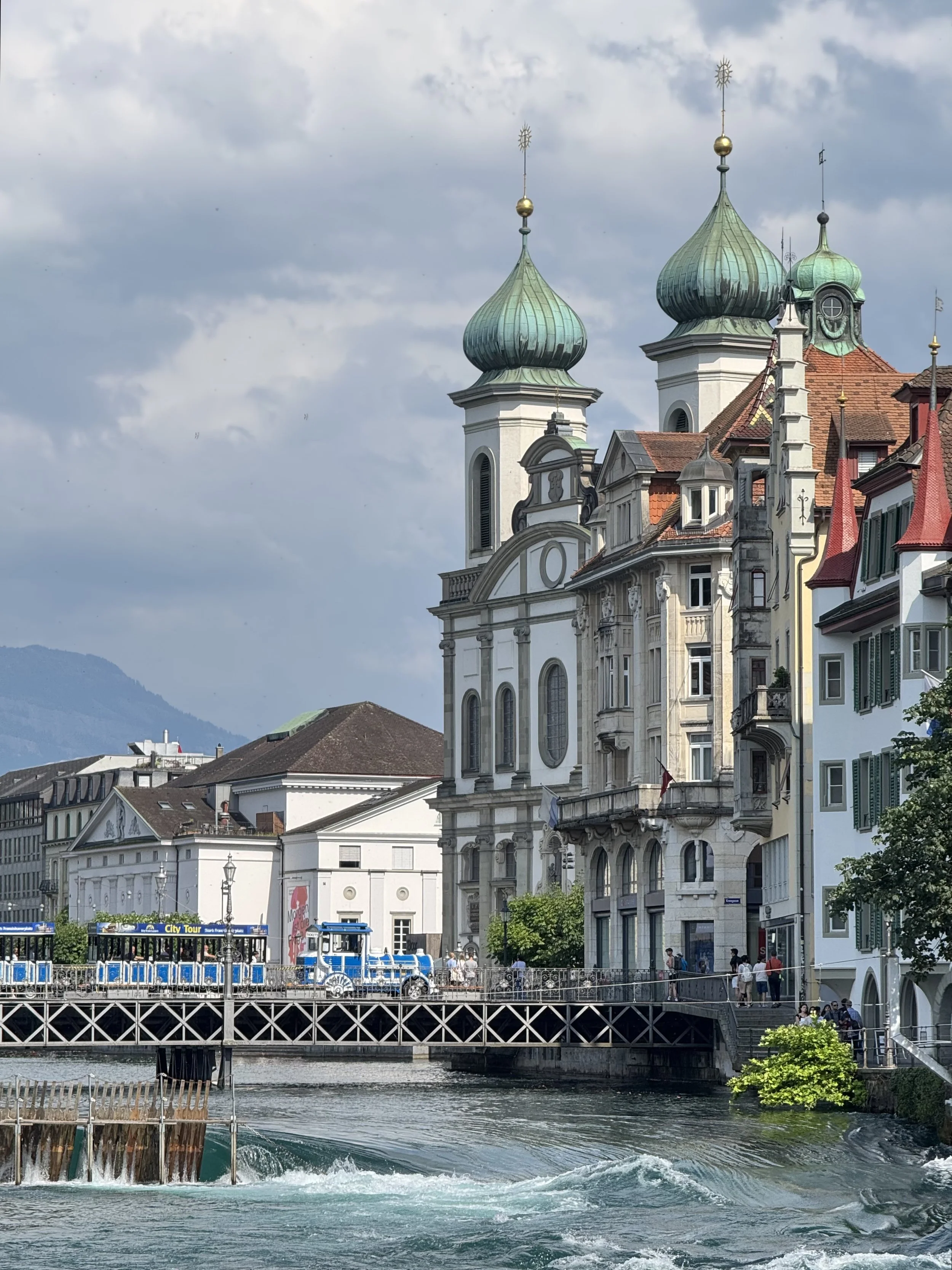
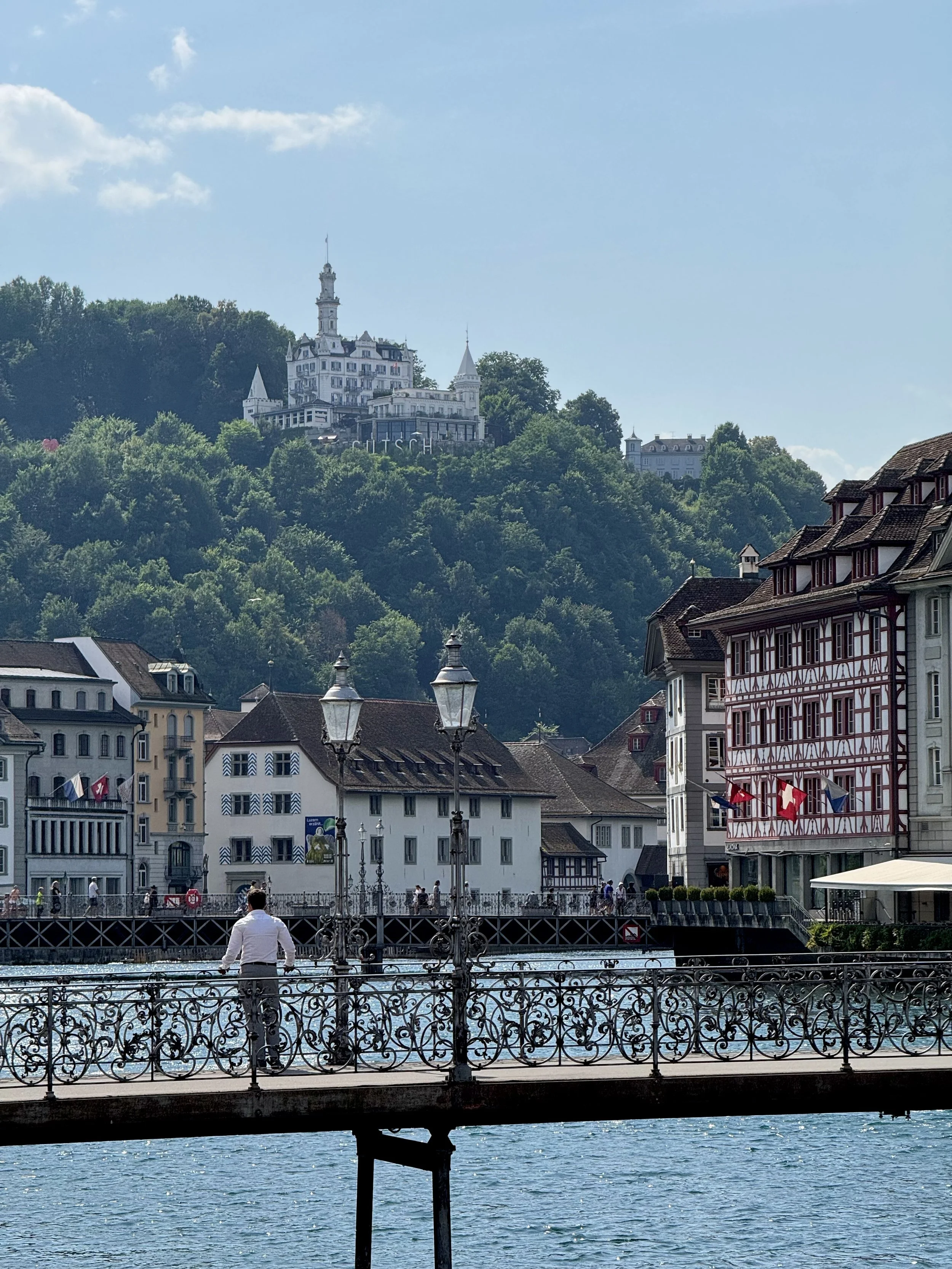
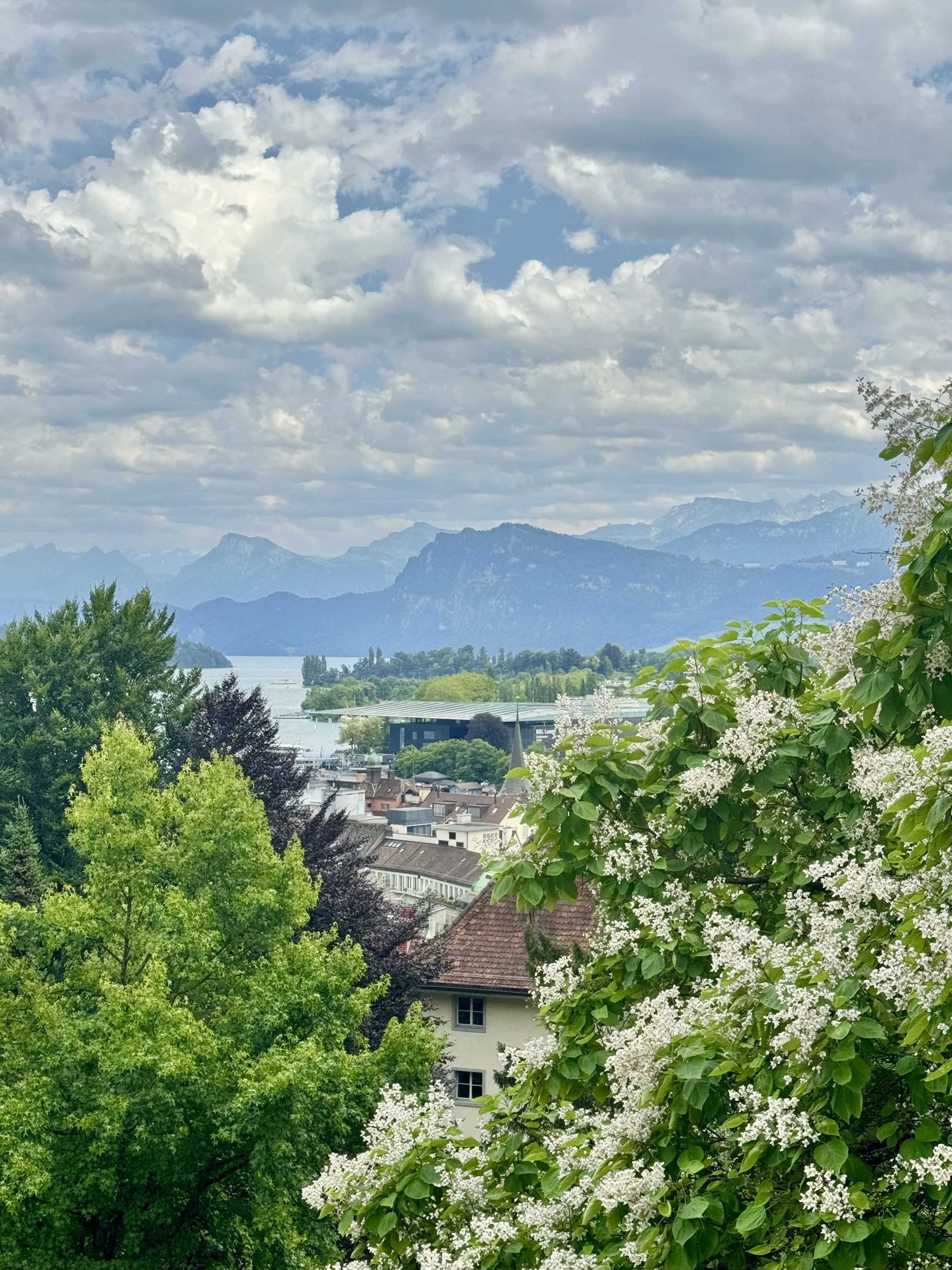
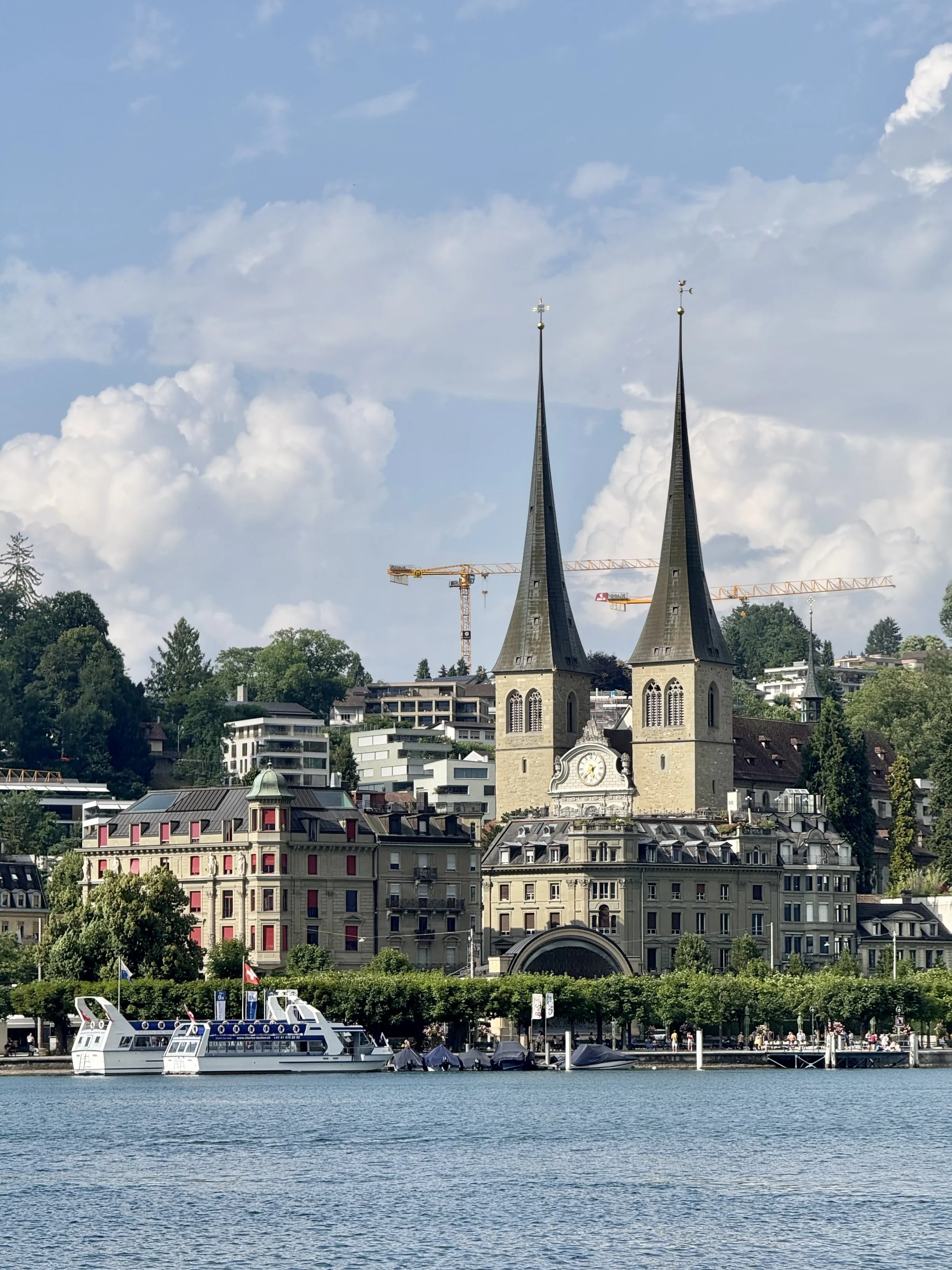
I’d started to feel a bit unwell after our cable car ride back down (and we were inexcusably late for our lunch reservation), but we eventually made it to the beautiful Montana Hotel. They were able to accommodate us at their café, so I sprawled inelegantly on the couch until I could be revived by some peppermint tea. We decided to take the rest of the day slowly and just hit Lucerne’s highlights. We saw the poignant Lion Monument (a wounded lion carved into a rock face, commemorating Swiss Guards who died during the French Revolution), climbed the city walls for an aerial view (typical!), and crossed their Kapellbrücke (Chapel Bridge) adorned with flowers. Since we were planning to hike the next day and my mom still didn’t have her suitcase, we even squeezed in a shopping trip for hiking clothes and shoes. I hadn’t recovered my appetite when we returned to Bern, so we resorted to a Hannah-and-Iris summer classic: gelato for dinner.
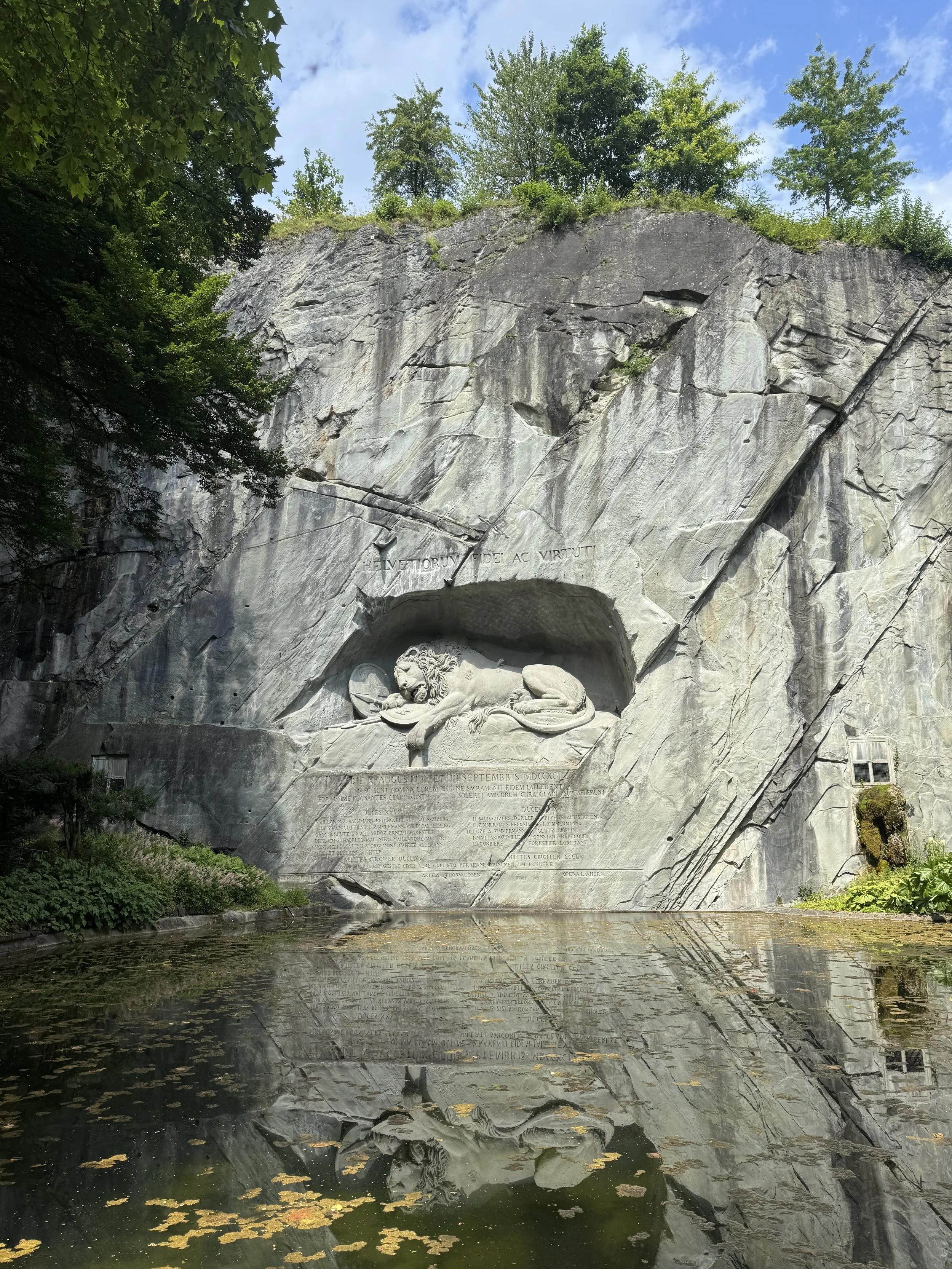
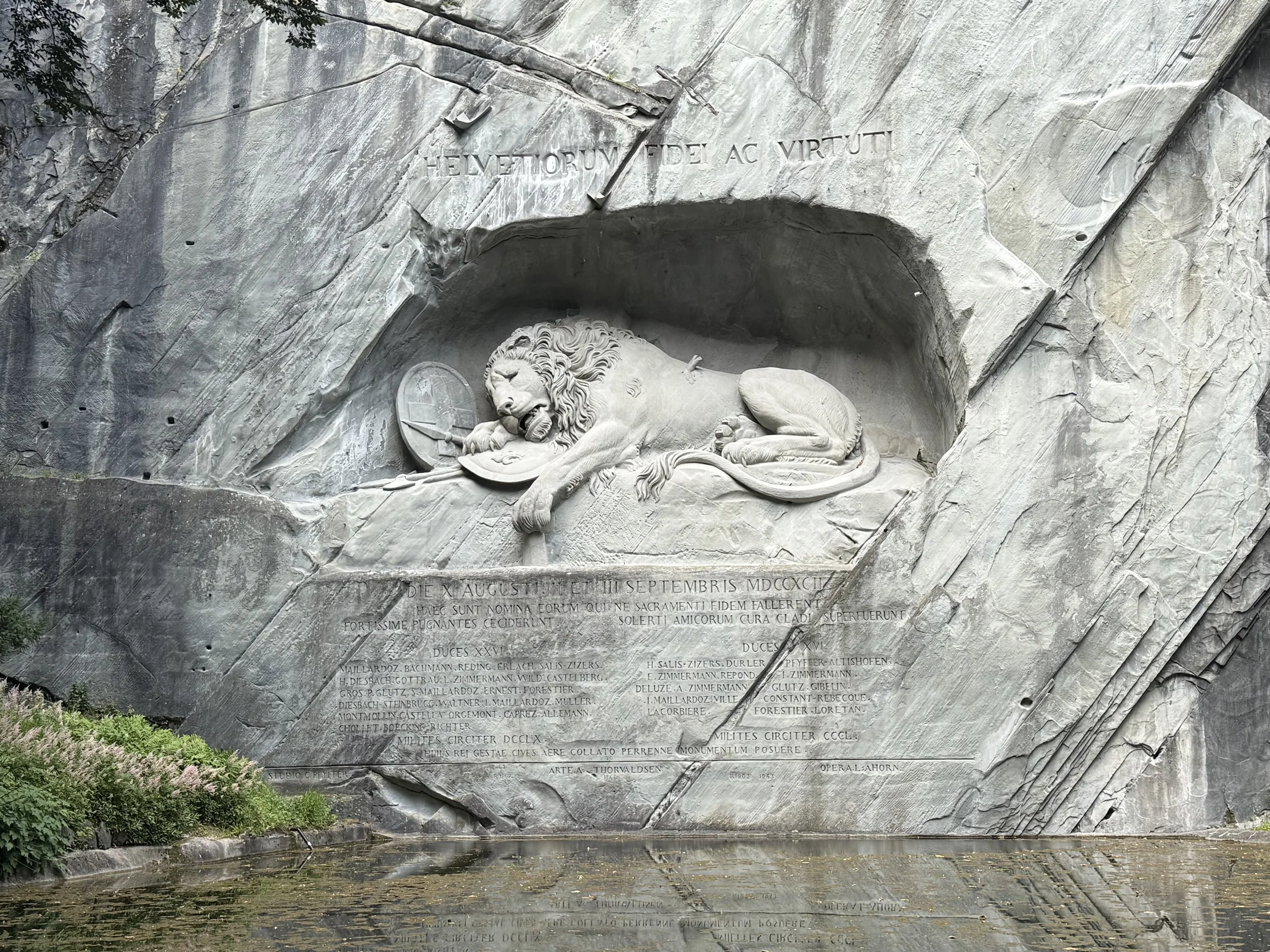
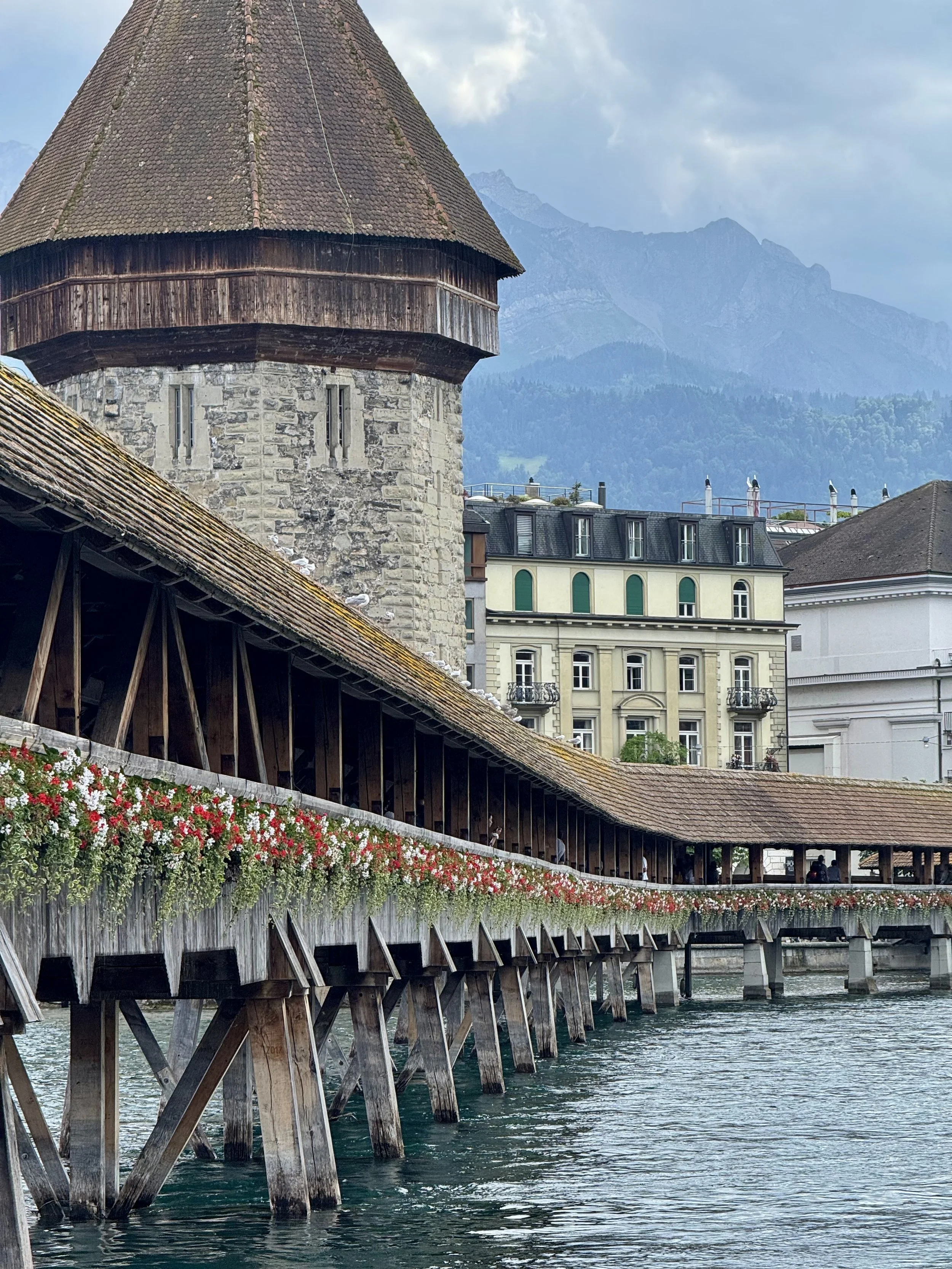
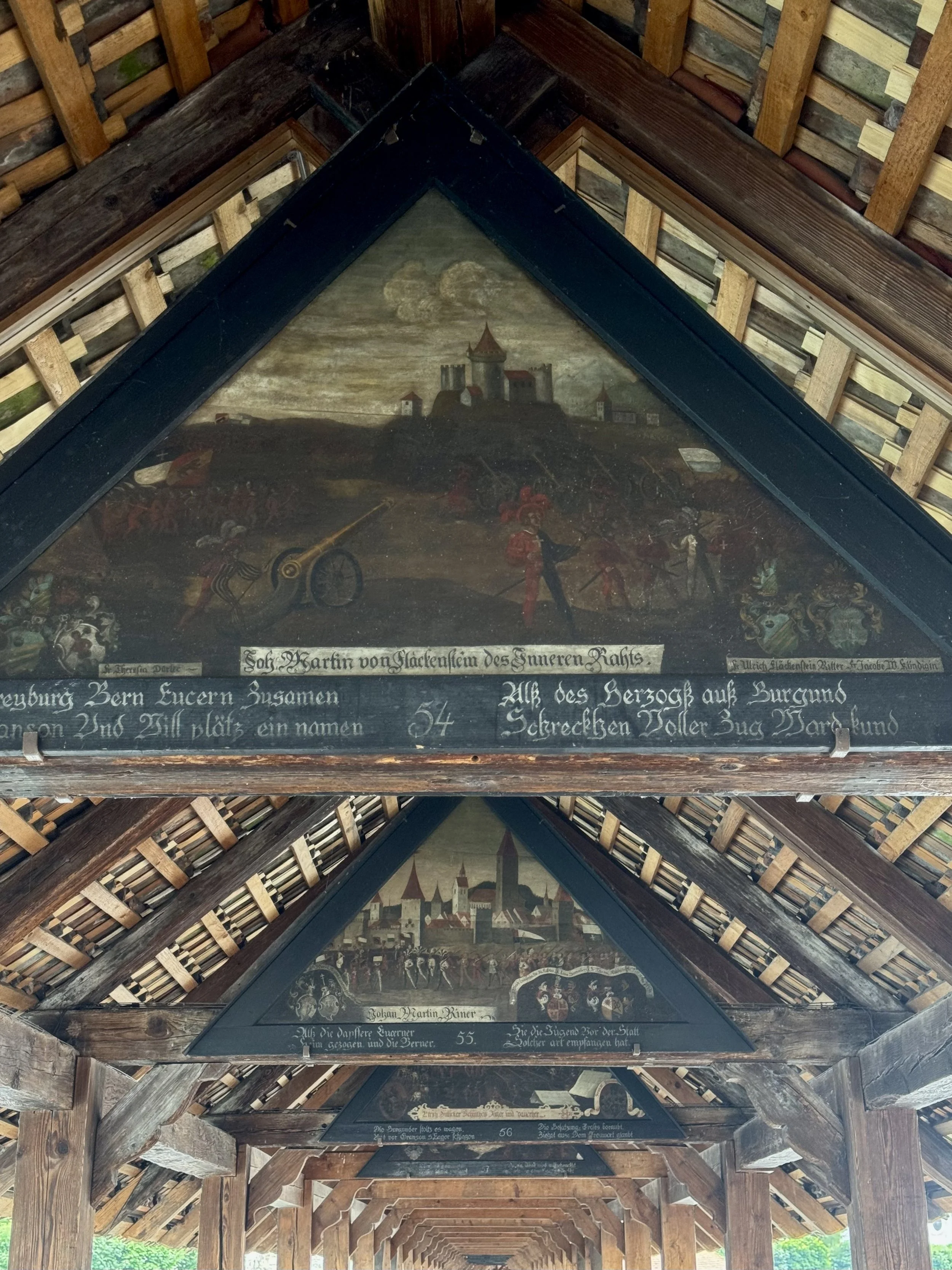
While I was properly out of office for most of our trip, I joined one project meeting that evening while my mom explored Bern. It’s funny to recount that so casually when last year, working on our new brand was just about all I thought about! And now, not so long after, that project — the indisputable highlight of my 2025 — already feels so far away.
This phenomenon consistently surprises me: I tend to commit to the work before me wholeheartedly and assume I will care about it deeply forever, whether it’s my middle school dance team or high school magazine or college marketing club (all of which I treated like full-time jobs). I anticipate constantly missing the way things were during the project: the camaraderie; the daily rewards of solving problems and seeing things progress from concept to reality; proving to myself on various occasions that I’m capable of more than I expect. But when it’s actually time to move on, each thing that once consumed a majority of my waking thoughts, or shaped my emotional highs and lows for a season, easily slips away. I realize ‘it’s not that deep’ and that I can hold onto the meaning of those experiences even after they’ve ended (in fact, how else do you carry your learnings with you, if not by embracing the expanded possibilities you’ve discovered and making room for new formative experiences?). I remember that there’s still more to look forward to and more to be done.
Day 3: Oeschinensee (and Spiez / Thun)
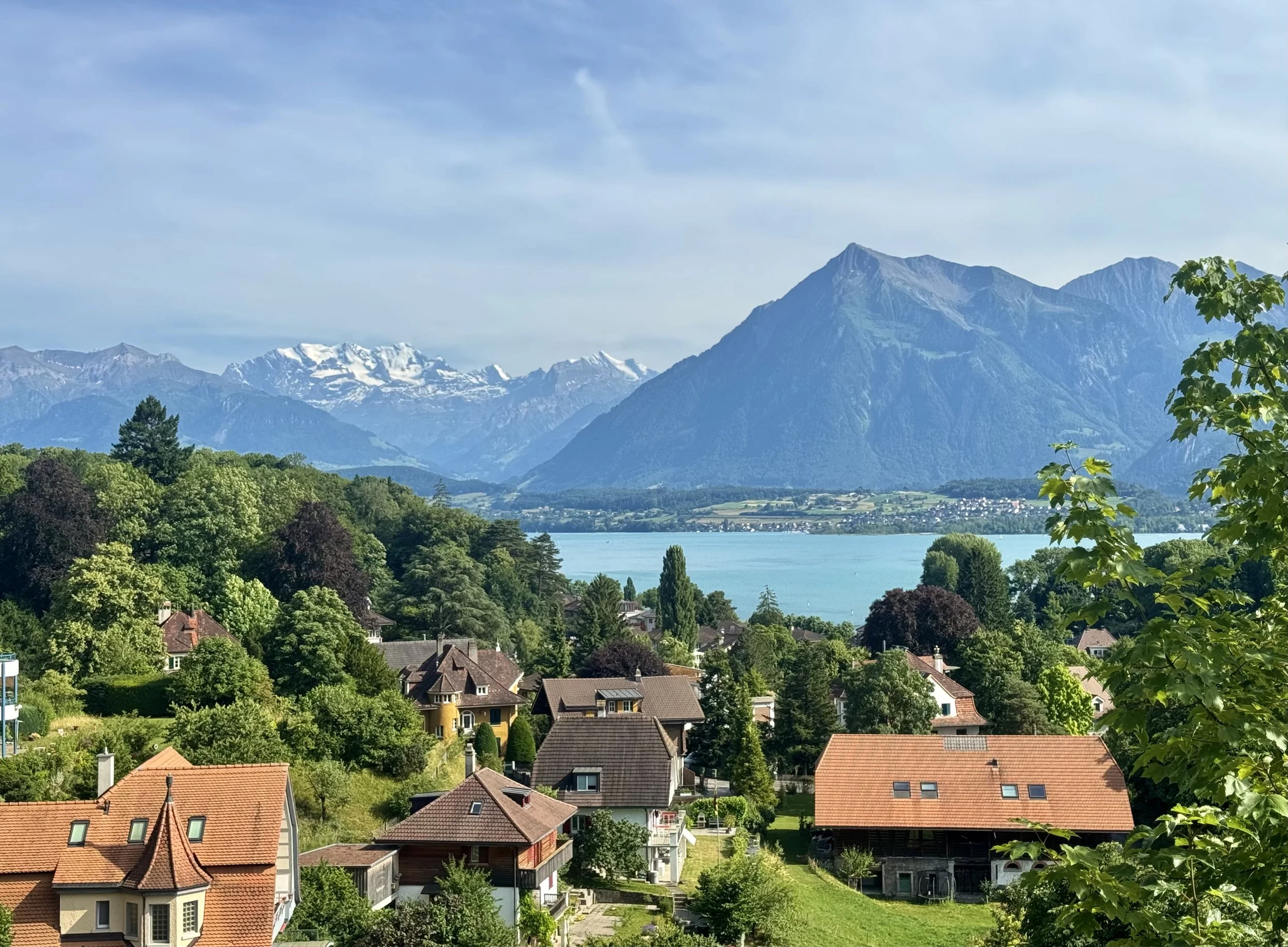
Speaking of to-dos, you can’t go to Switzerland without hiking. We took the train to Spiez, just 30 minutes from Bern, where we snapped our postcard shots from above before catching our next train to Kandersteg. We learned that it was possible for two trains to depart from the same platform — I nearly sprinted onto the express train to Brig, only to realize our regional train was further up the platform. Once we arrived in Kandersteg, we caught a packed bus to the cable car station.
The moment we stepped off the cable car, we were awestruck. We’d ascended above Kandersteg into what felt like a dreamworld. In every direction, we were enveloped by mountains that now seemed close enough to touch. The sun spilled over everything, casting each sight in vibrant color. The air was crisper, the whole world quieter. We walked gleefully along the gravel path towards our destination, the gorgeous Oeschinensee — a turquoise lake encircled with elegant peaks, where every curve in the rock and cluster of trees seemed perfectly-placed — and seeing it, I felt reverent. This travel journal, in so many words, is really a testament that beauty seems to be default state of affairs everywhere in Switzerland. Sure, the hiking paths and viewpoints at popular destinations were created by people, but it’s not as though the entirety of the country was landscaped and designed. Numerous snapshot-worthy mountains and lakes quietly exist, meticulously crafted by the elements. Nature is quite the artist, and many people spend their lives attempting to capture her creations, whether through photography, videography, the written word, or other art forms (consider this cool song composed of 200 sound clips recorded across Switzerland, including an ice cave, an underground lake, and various blocks of cheese).
Despite the deep impression Heidi left on me as a child, I wasn’t aware of Heidi: Girl of the Alps, a television series created by Hayao Miyazaki and Isao Takahata (who later co-founded Studio Ghibli), and Yōichi Kotabe (an animator known for his work on the Super Mario video game series, the Pokémon franchise, and Nintendo). I happened to read about the intensive creative process behind this project:
“In July 1973, Zuiyo sent Takahata, Miyazaki and Kotabe to Switzerland for research. The studio wanted to sell Heidi abroad: to avoid embarrassing mistakes that would hurt the show’s appeal in Europe, they needed to go. But it deepened the project in creative ways, too. People, landscapes and landmarks found their way into the work. […] Each Heidi supervisor was irreplaceable and wildly overworked; each relied on the dedication of all the others in the fight against the deadline. Like many on the team, Kotabe was proud of Heidi and his own contributions to it. “I truly feel glad that I was able to make this,” he said years later. But the workload also, he noted, gave him a back injury that lasted the rest of his life.” (Animation Obsessive)
There’s a lot one could take away from their story, but a crude summary is that it takes extraordinary effort to create something great. Earth’s continually-evolving landscapes are the result of billions of years of shaping and reshaping. Many bucket-list-topping natural monuments, such as the Grand Canyon or the Great Barrier Reef, predate humanity, but they’re relatively young when considering a cosmic timescale (approximately 5-6 million years old and only 500,000-600,000 years old, respectively). It’s easy to take for granted the state of the environment now, but I think there’s extra wonder to be found in seeing the planet as a masterpiece eons in the making.
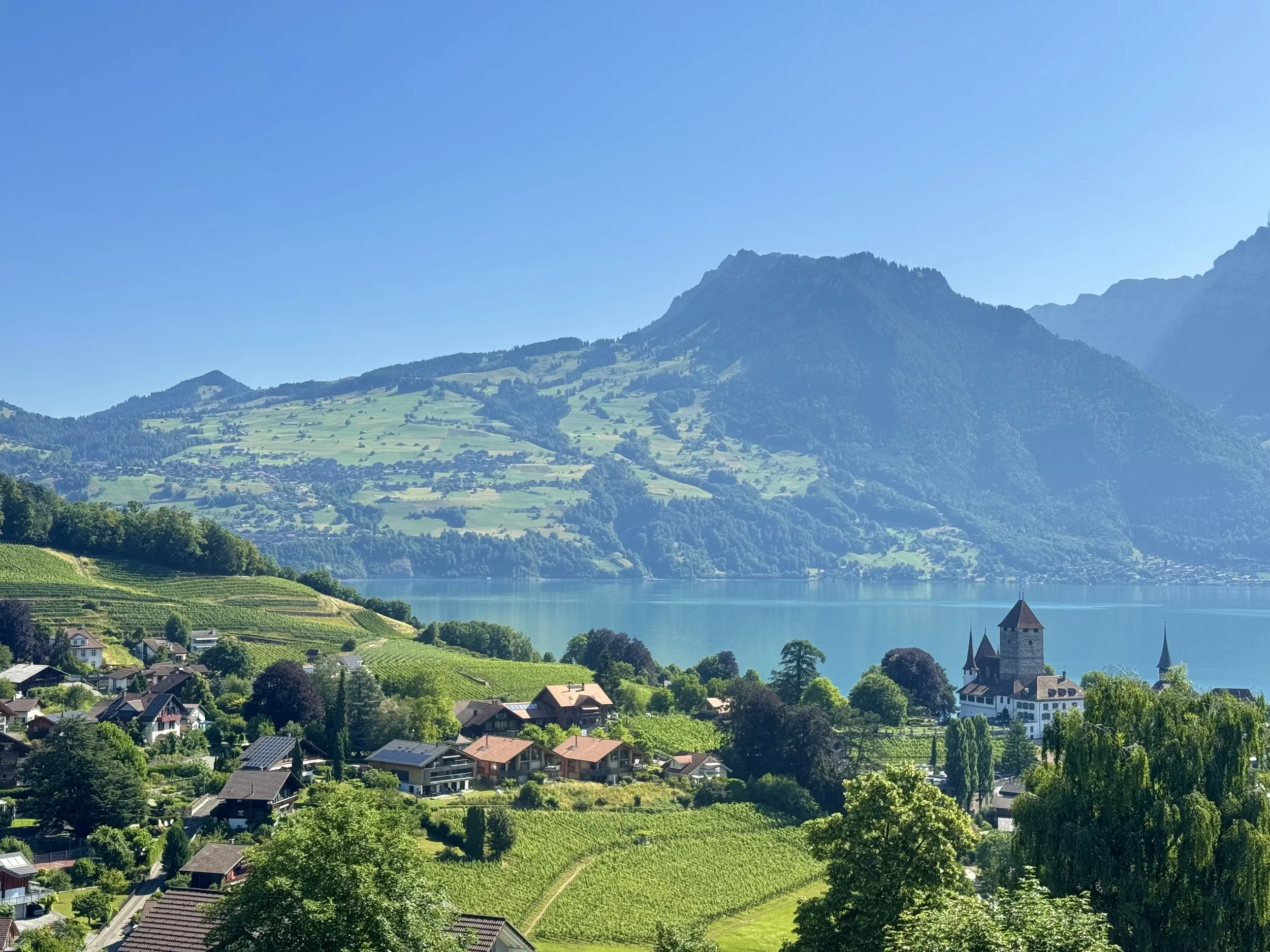
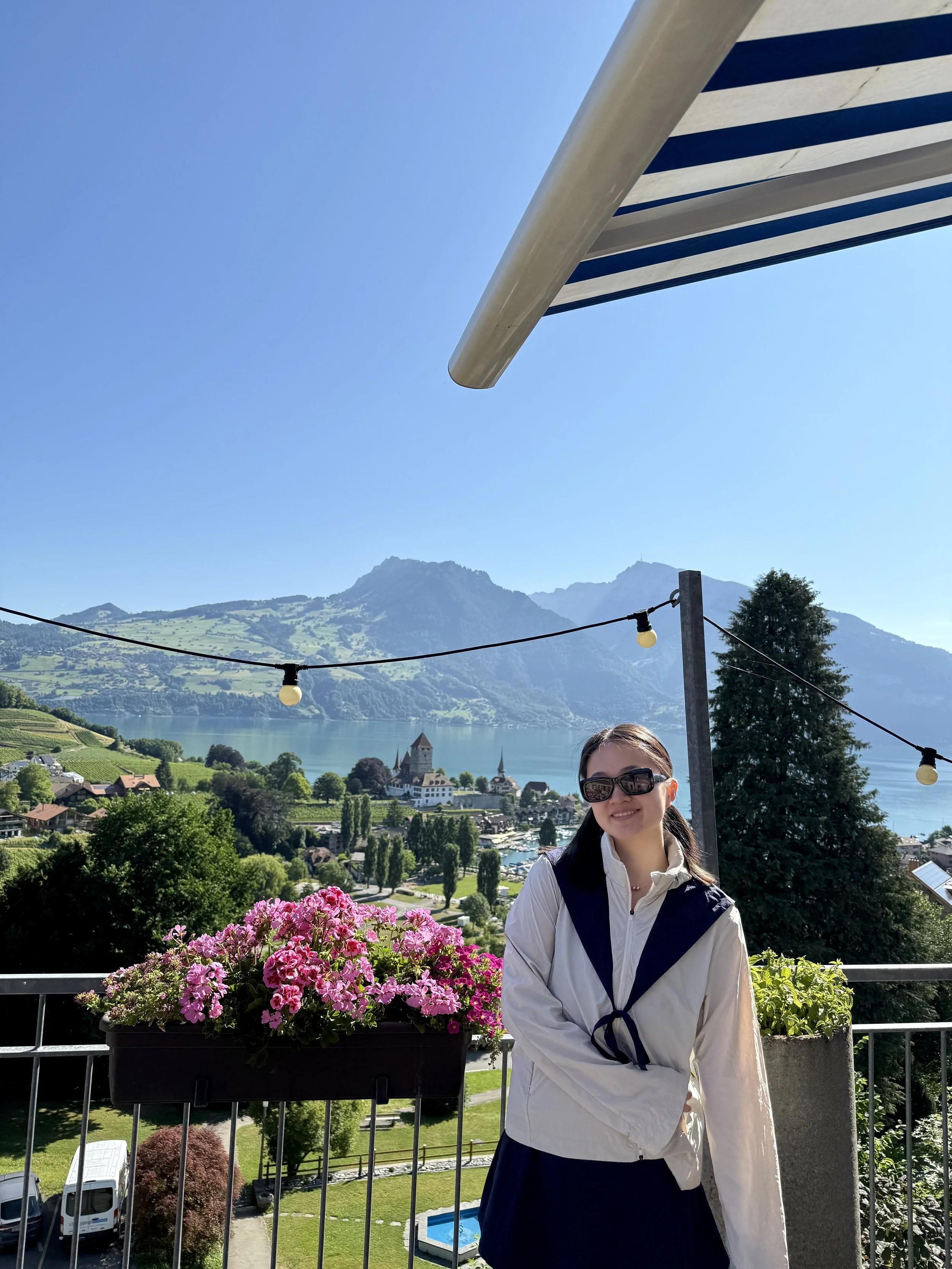
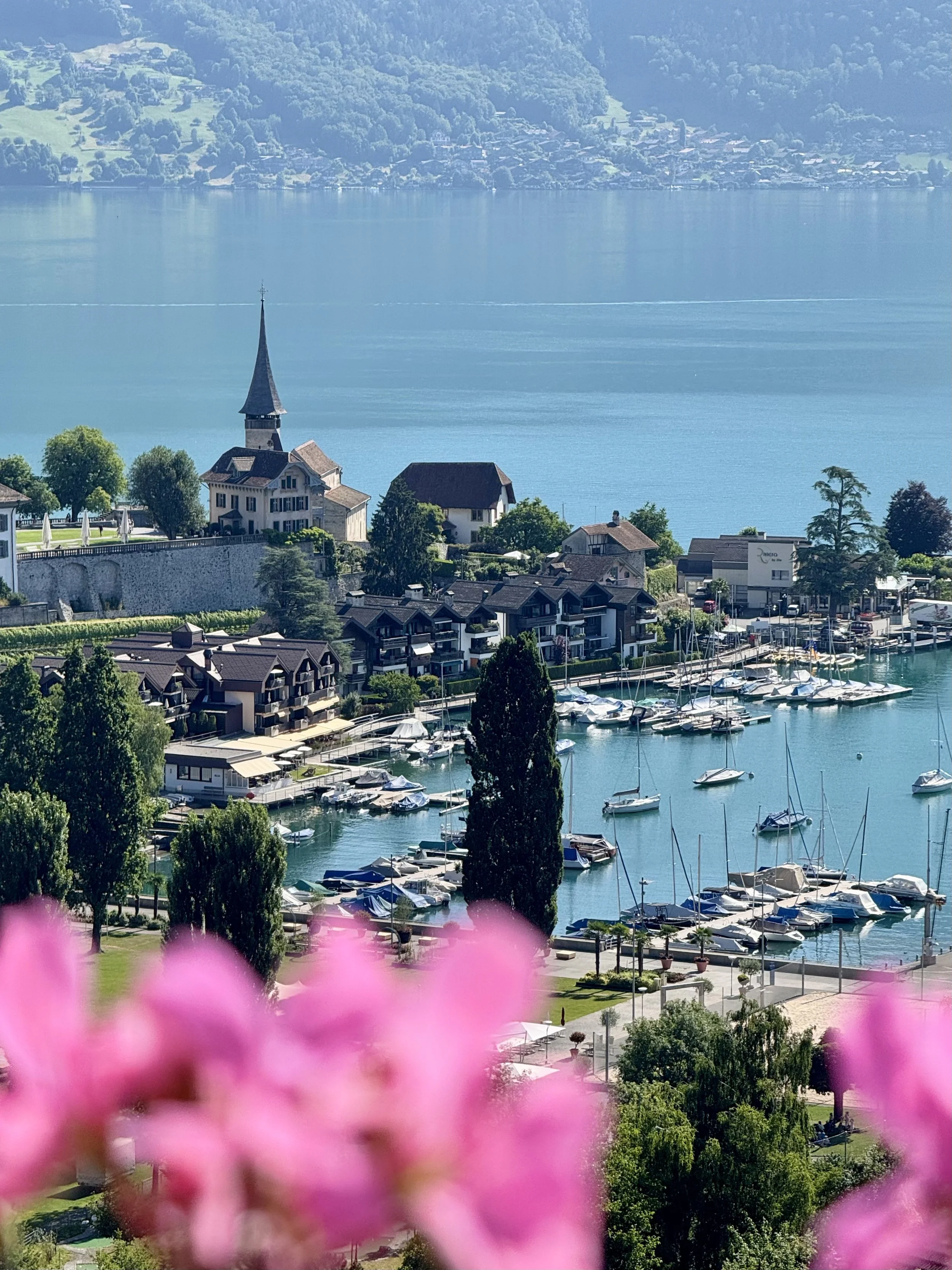
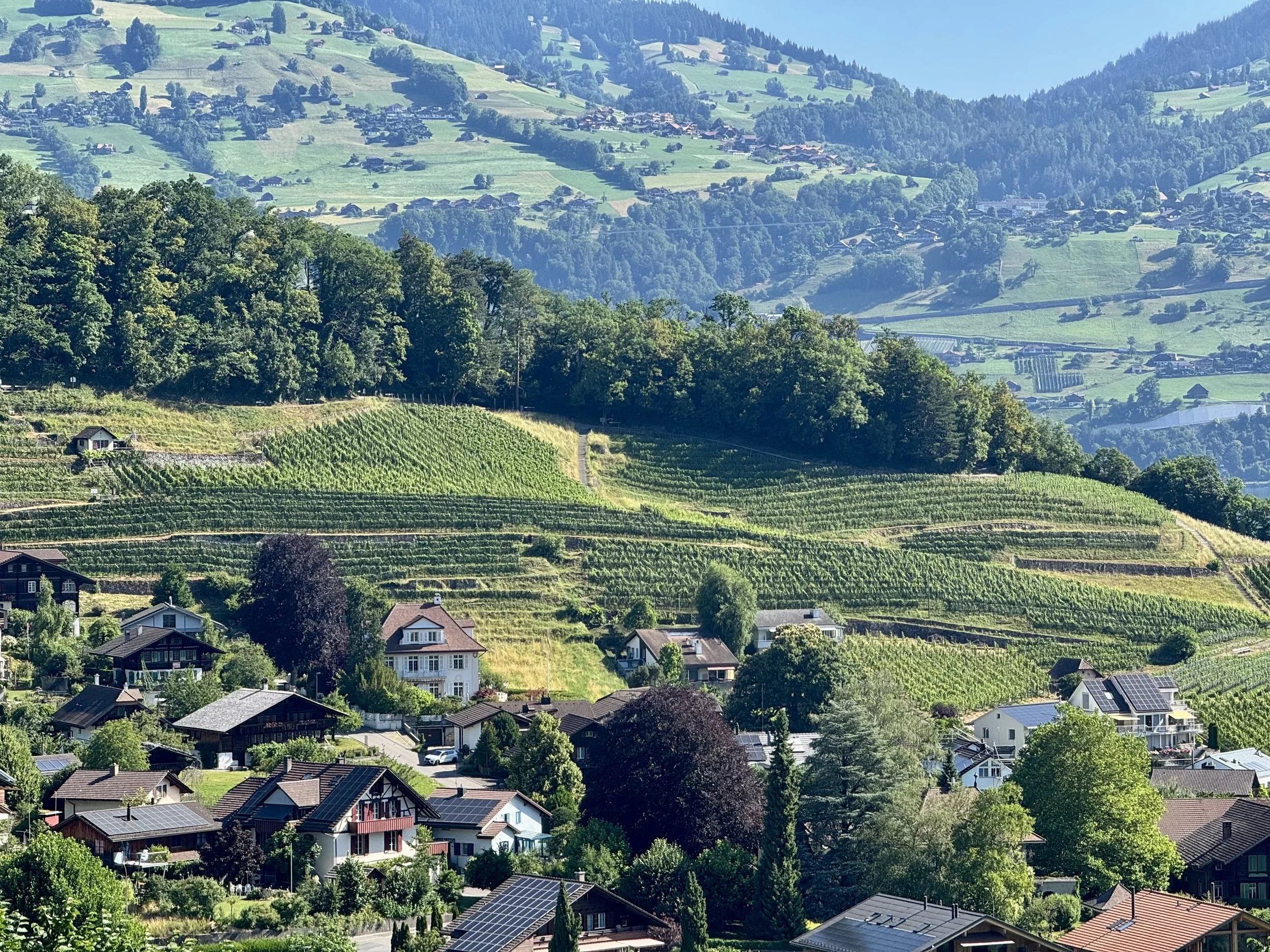
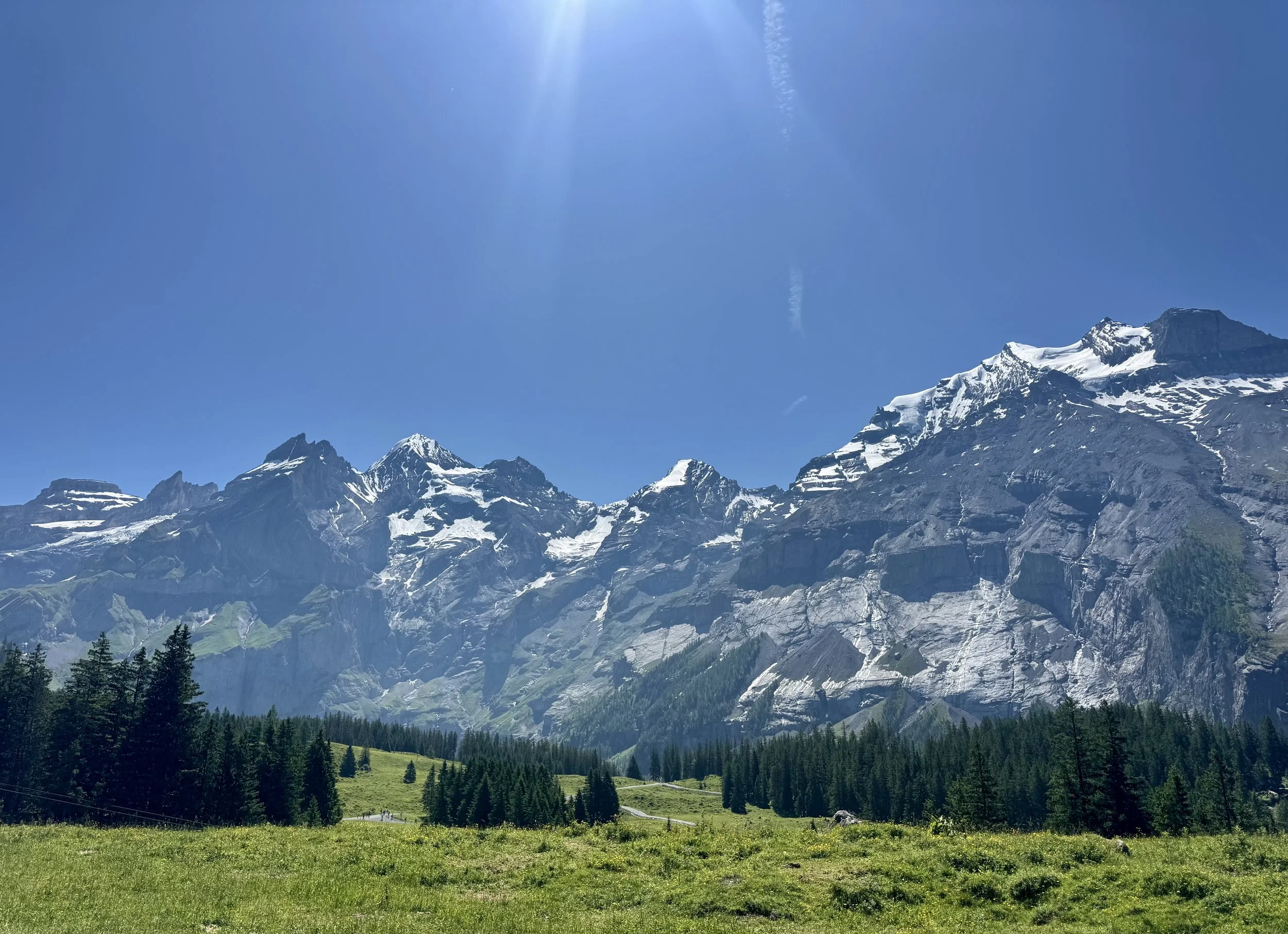
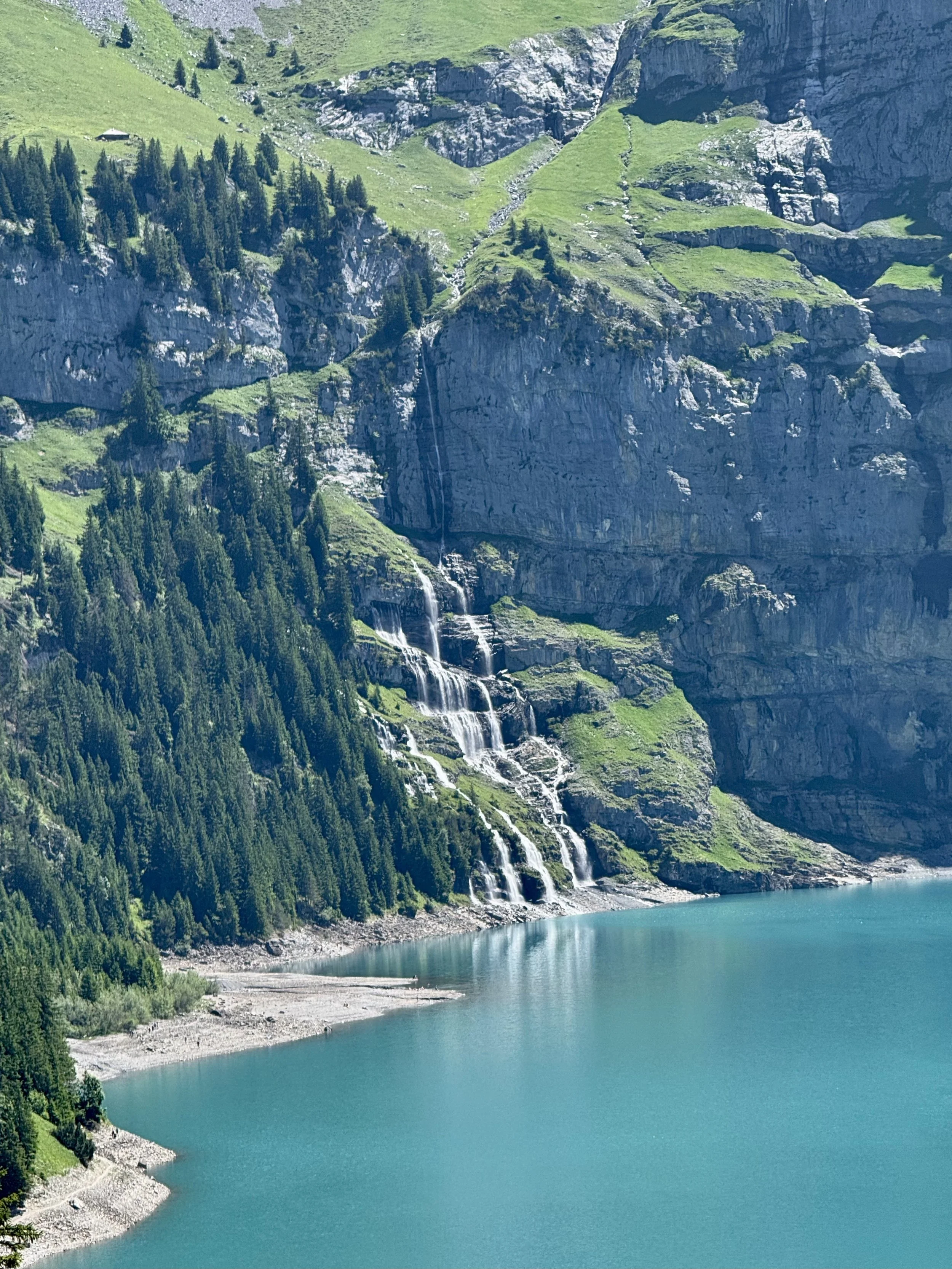
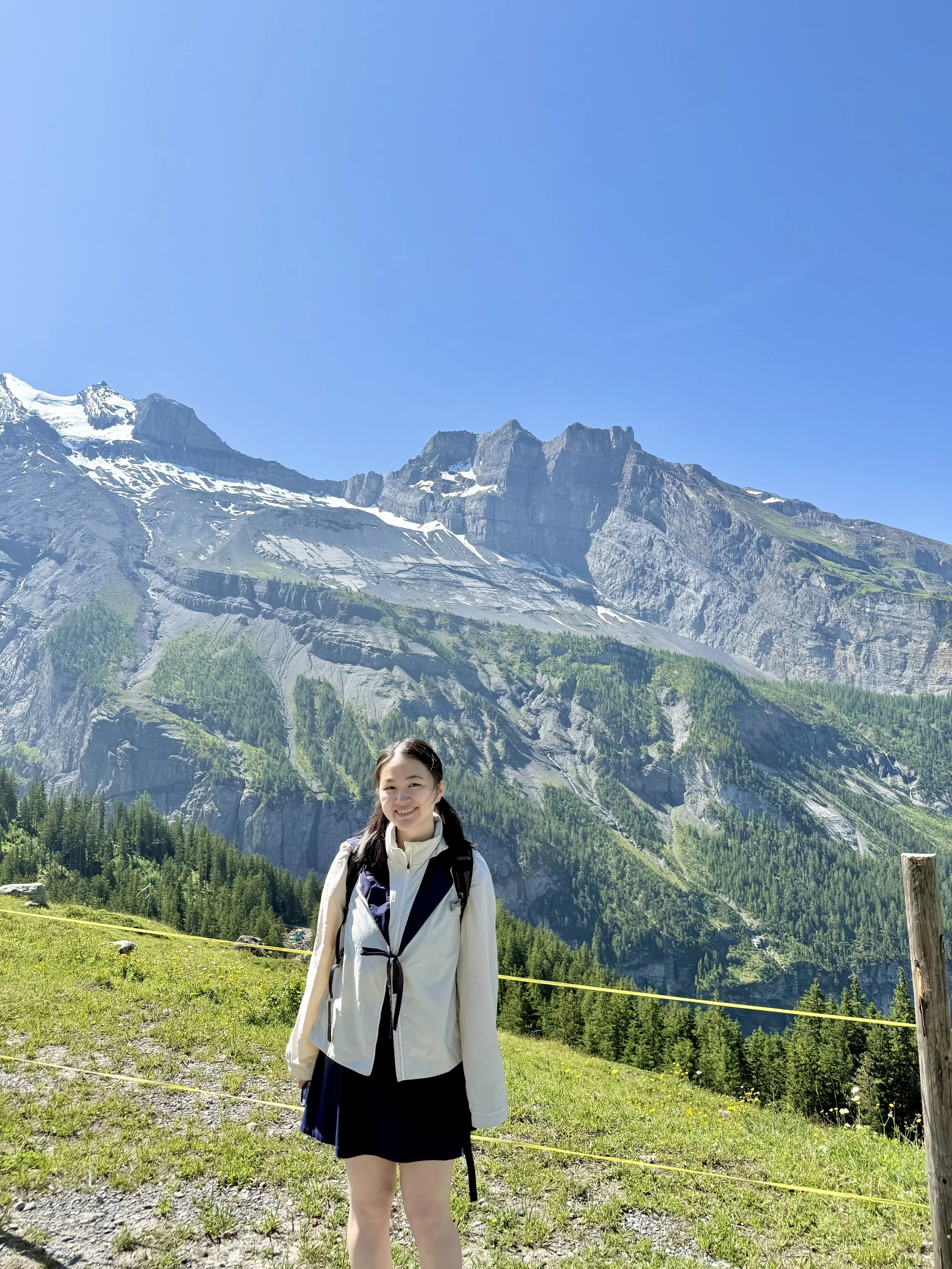
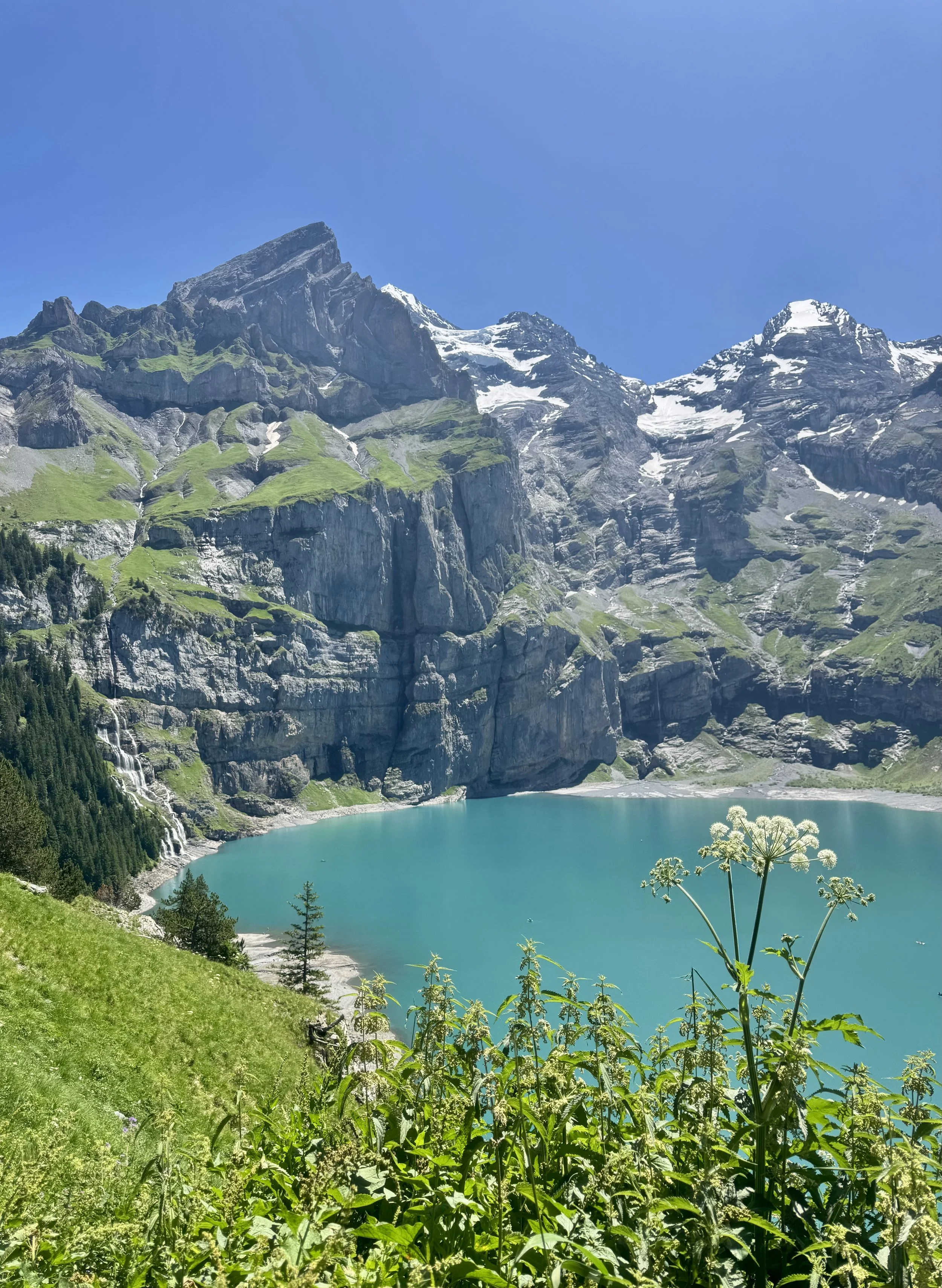
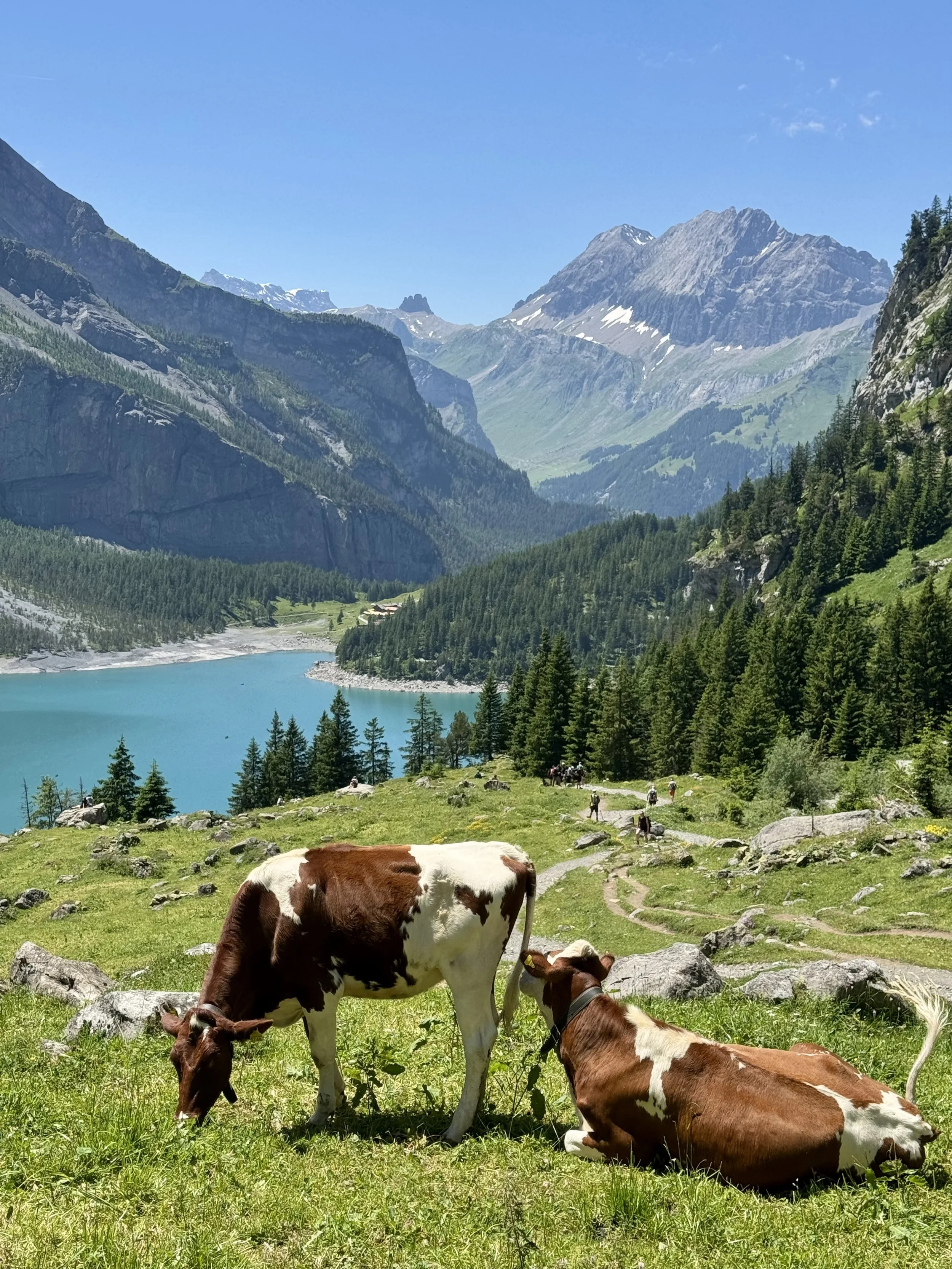
We studied potential hiking paths the night before, but once we stood there gazing blankly at the signage, we weren’t certain how to get to our desired route. Luckily, early in our attempt to follow the masses, an older couple informed us that we were about to embark on the longest and most challenging trail, so we knew where not to go! Somehow, we ended up on what I’d consider the best path for non-serious hikers: a trail that was moderately steep upfront — so it still felt like you were expending some effort for the scenery (this is important! While Lucerne’s Mount Pilatus was objectively a more awe-inspiring viewpoint, our day in Oeschinensee was my favorite of the whole trip, and I think that’s attributable to the additional effort spent actually hiking to the viewpoint versus just taking a cable car). Most of the remaining trail was pleasant and wide, and the lake was in view the whole time.
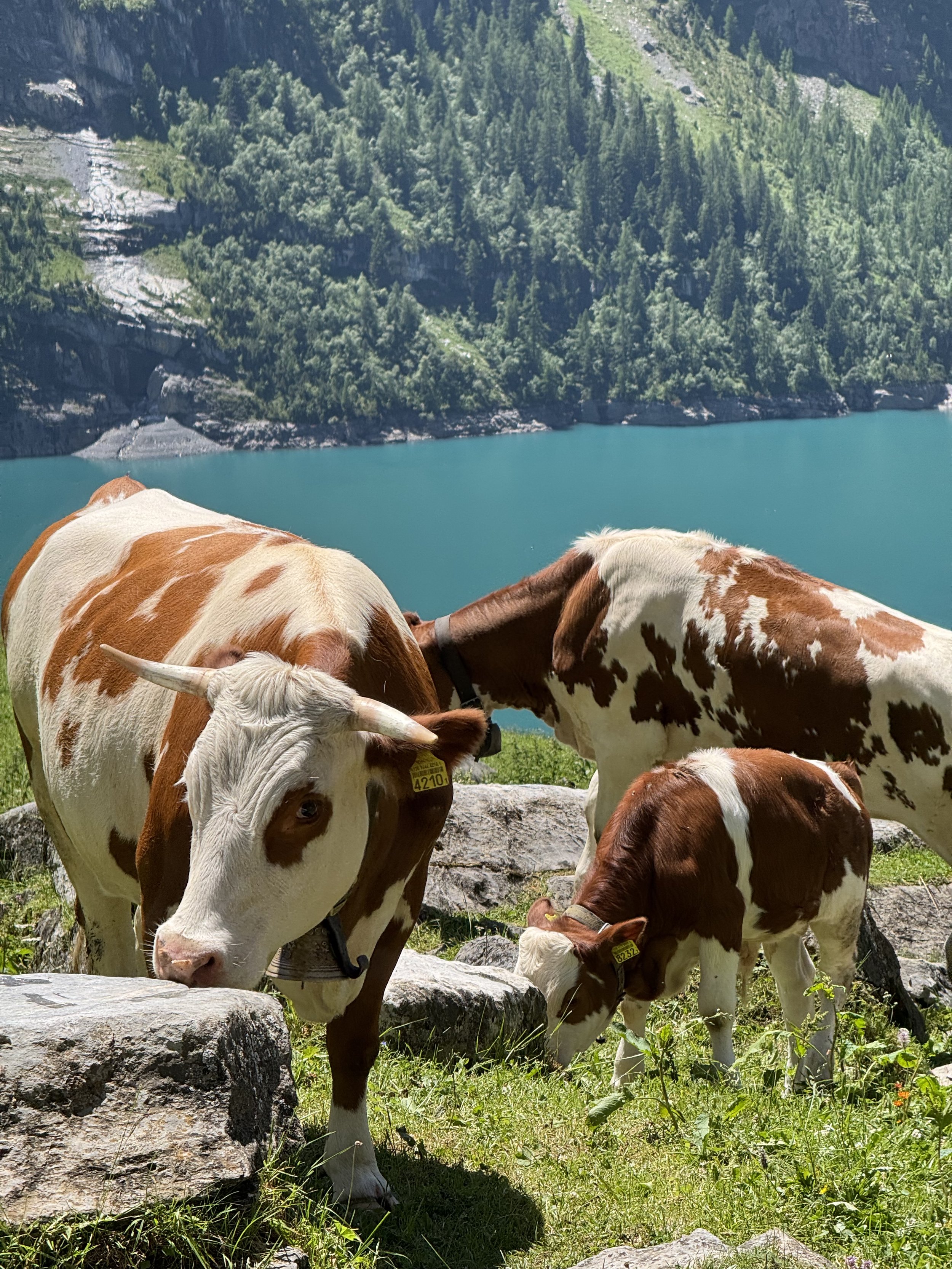
Our trail converged with several others at a meadow, from which people could continue upwards or stay and enjoy the company of many friendly cows. People joke that it would be nice to be reborn as a Swiss cow. I see the appeal. The cows ambled around freely, with bells around their necks to announce their presence, and they weren’t shy at all — they’d nudge the hikers who had sat down to eat lunch as if to say hello. Some of them sat amidst wildflowers and simply soaked up the sun, eyes closed in bliss.
Something about the cows’ kind, soulful eyes really spoke to me, because a month after the trip, when I got around to editing my vlog (and in the same week, read Joe Carlsmith’s excellent essay “On sincerity”), I decided to stop eating most meat by going pescatarian — a step towards resolving what had become a moral dilemma that poked at my conscience every mealtime.* Since becoming aware of the cruelties and scale of suffering caused by factory farming in 2024, I’d felt conscious of a gap between my beliefs and my actions, yet I couldn’t bring myself to go fully vegan (sorry, there’s a substantial amount of joy that egg and fish consumption brings to my life that I’d rather offset than omit! A life where I intentionally bar myself from having tomato and egg noodles is untenable). I wasn’t convinced that my individual dietary choices would affect industry-wide issues, so for months I claimed to be ‘reducetarian’. I did eat less meat, but increasingly, I wondered whether I should just be the kind of person who could commit to giving up some culinary pleasure and convenience in exchange for the pleasure of living in fuller accordance to my values, regardless of whether or not my marginal chicken and beef consumption was tipping the supply-demand curve. One of the qualities I value most is sincerity, and I felt like I was falling short.
“Sincerity actually asks its questions. And it risks changing its life in response.
[…] The first is epistemic: it’s scout-mindset, applied to the question of what you have most reason to do. The sincere person asks: “what, actually, should I do?” And they really try to figure it out. The second part is motivational: it’s the readiness – indeed, the desire – to act on the answer that the first part supplies. That is, when sincerity asks “what should I do?”, the “should” in question has real pull and force. If you talk with a sincere person about what to do, it feels like a real conversation; like the part of them that will make the decision is “in the room” – speaking, listening, trying to see.” (Joe Carlsmith, On sincerity)
I’ve now been mostly* pescatarian for almost half a year, and it hasn’t felt like a sacrifice. I’m glad I can now point to a real change I made to speak to the fact that I don’t endorse factory farming. More broadly, my choice is a reminder that I can change my mind and my behavior based on new information, and that I can (and should!) just… act on my principles.
For all the documentation of the bleak lives of farmed animals, who could have imagined that seeing happy, ethically-raised cows is what it would take for me to stop wanting to eat meat? I’m surprised too.
*Footnotes (ugh, I can’t believe I’m becoming the kind of person who uses footnotes in her personal travel blog!! This is tragic): 1) Fish is farmed at massive scale too, and just like chickens, pigs, and cows, fish can suffer. I make donations to FarmKind’s Impact Fund, which supports six farmed animal welfare charities, including organizations that support fish and shrimp welfare. Their Compassion Calculator allows you to see how many animals your donation will help (a typical omnivore can ‘offset’ their meat consumption for a mere $23/month, or $26/month if you also want to offset the associated CO2 emissions). 2) I have eaten meat on a couple occasions since becoming pescatarian, e.g. trying Icelandic lamb soup in Iceland after verifying that it’s considered an ethical food choice due to the country’s free-range farming practices — and I do think diet is an area where perfect shouldn’t be the enemy of good, but I’ve really made an effort to avoid it (e.g. forgoing dim sum when I visit home, which is the only occasion where it feels like I’ve given something up!). 3) I don’t care about others’ dietary preferences. I still think that change in factory farming practices needs to come from the corporate/industry-level and not from individual choices — committing to pescatarianism is something I needed to do and take seriously for myself, though I’m glad it has given me an opportunity to talk about factory farming with my friends and family so that it’s not such an invisible issue.
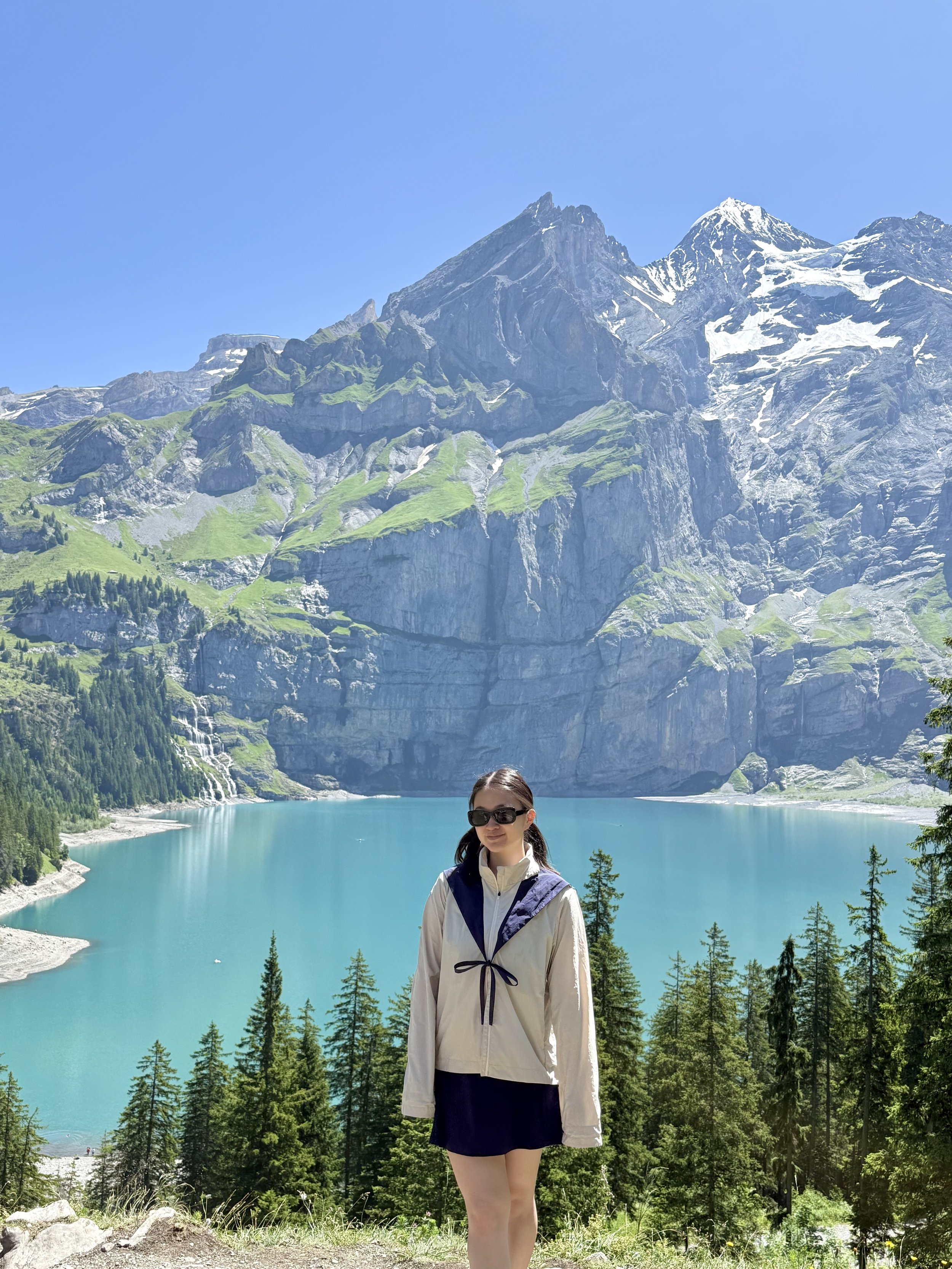
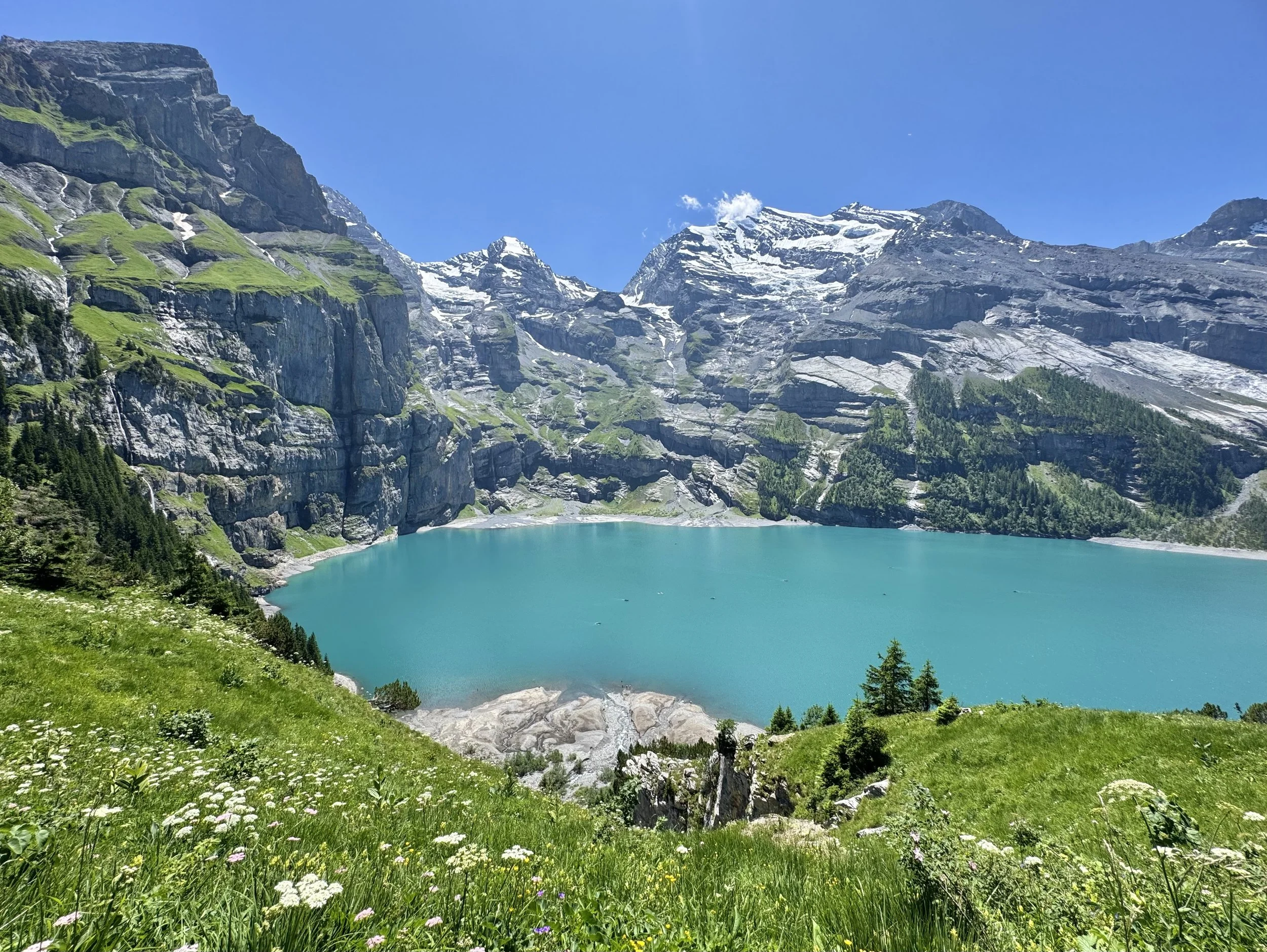
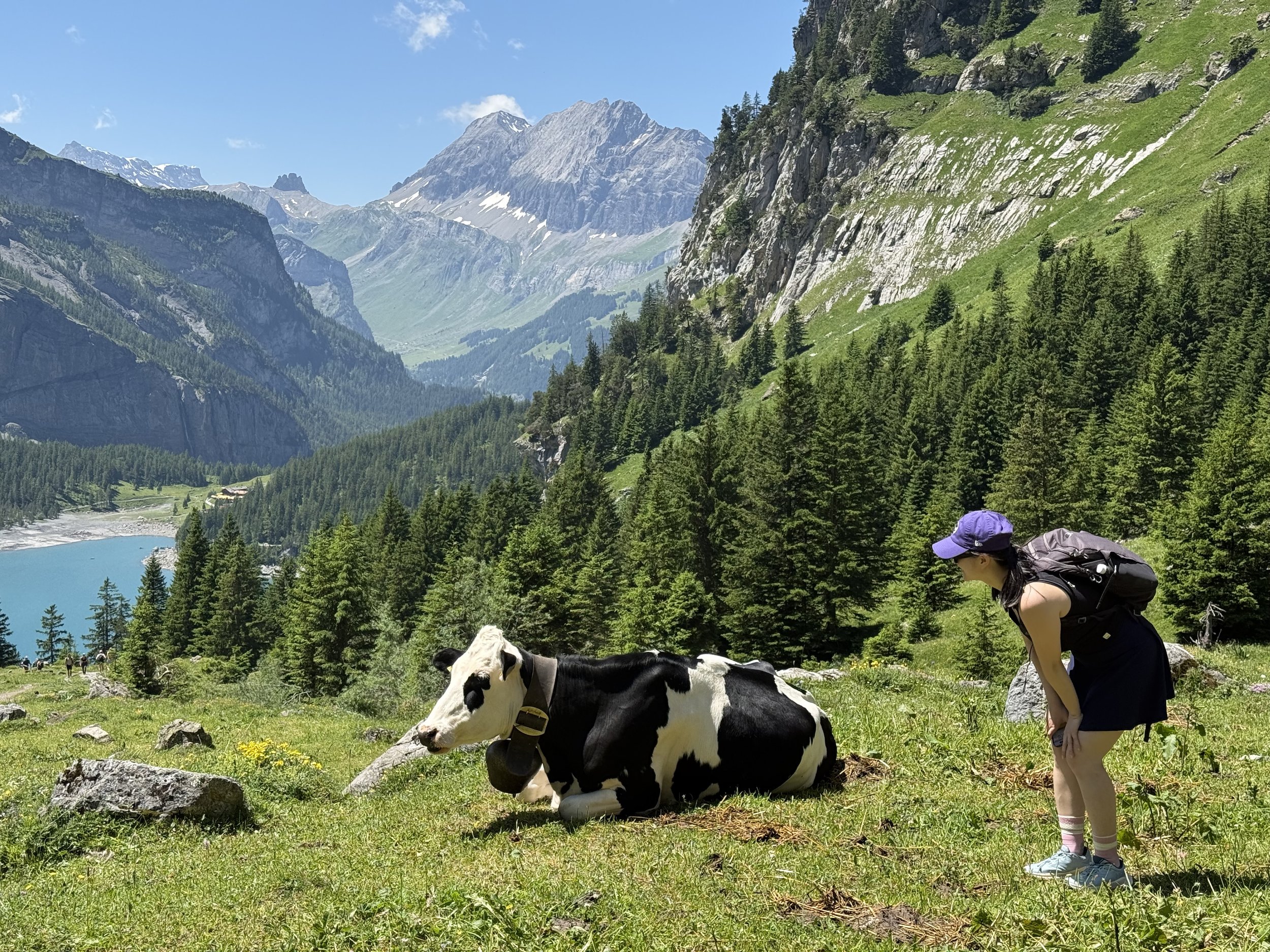
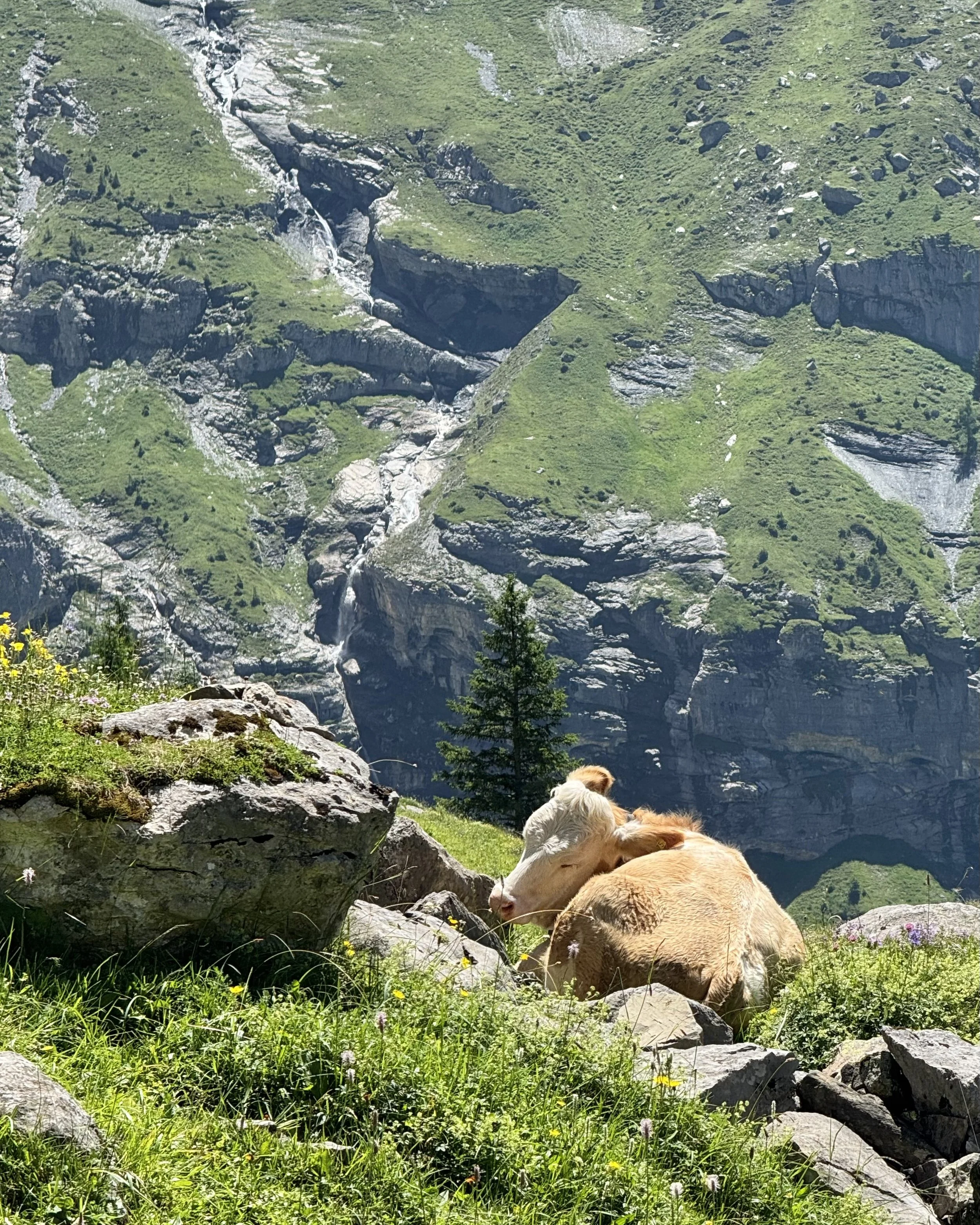
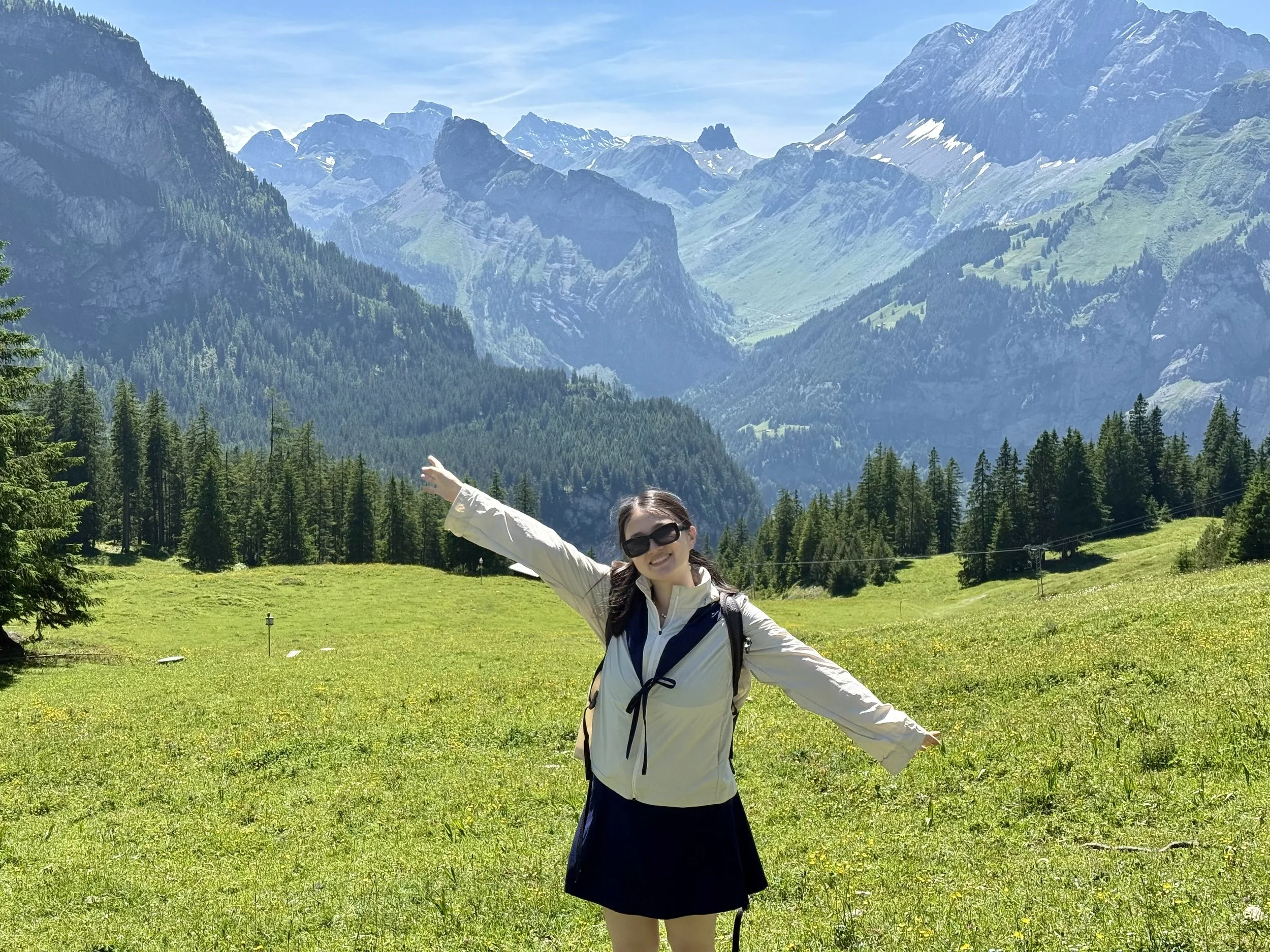
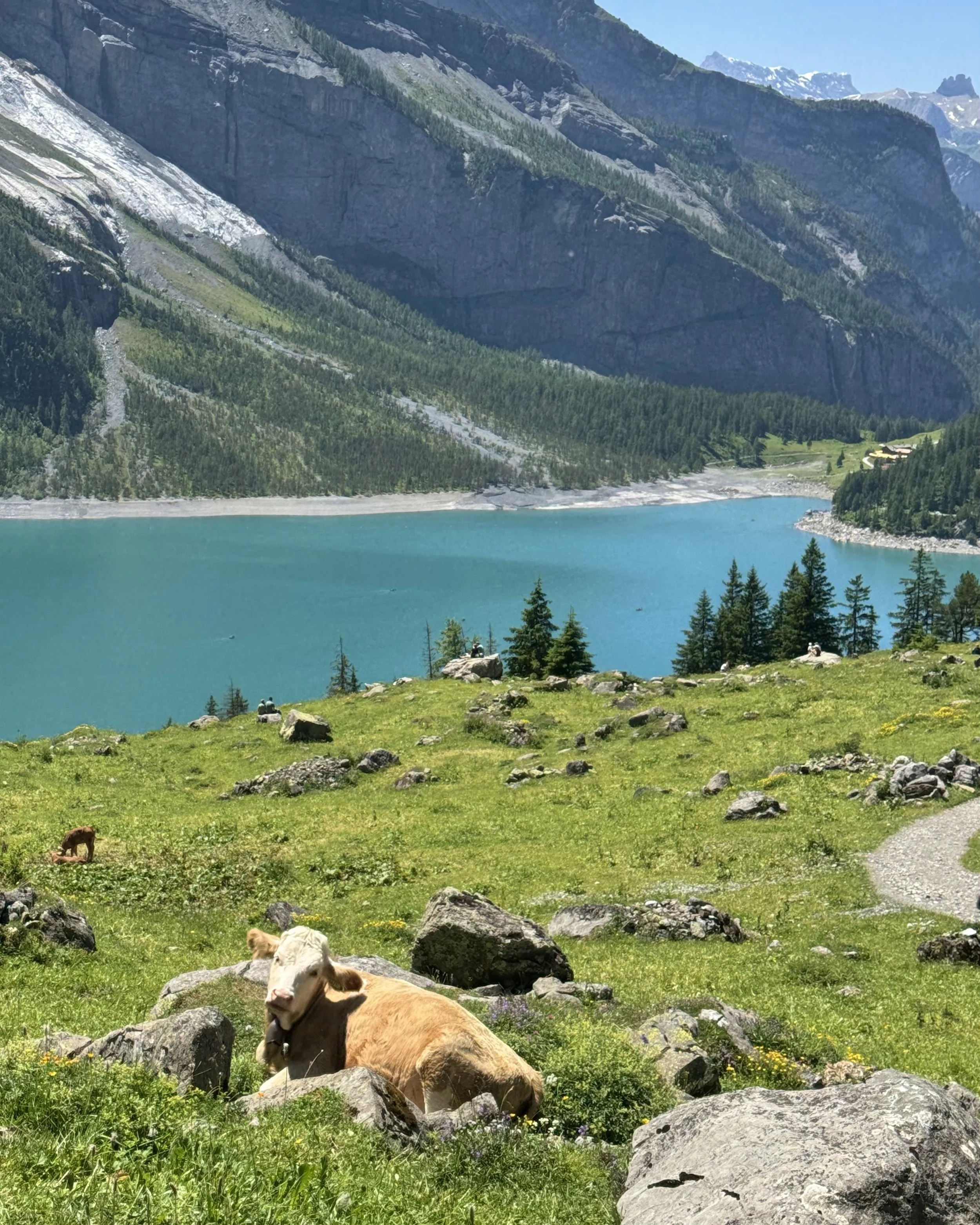
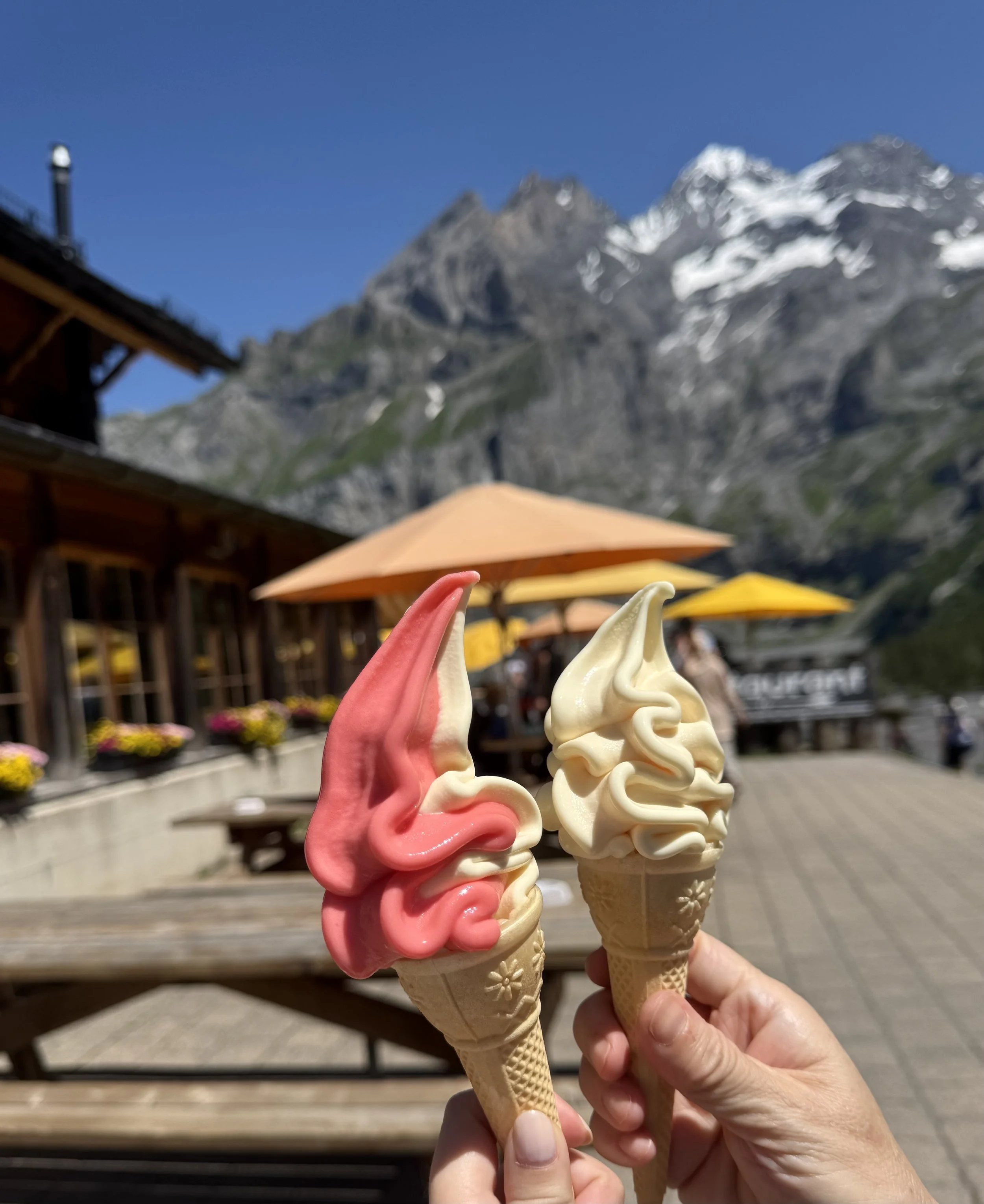
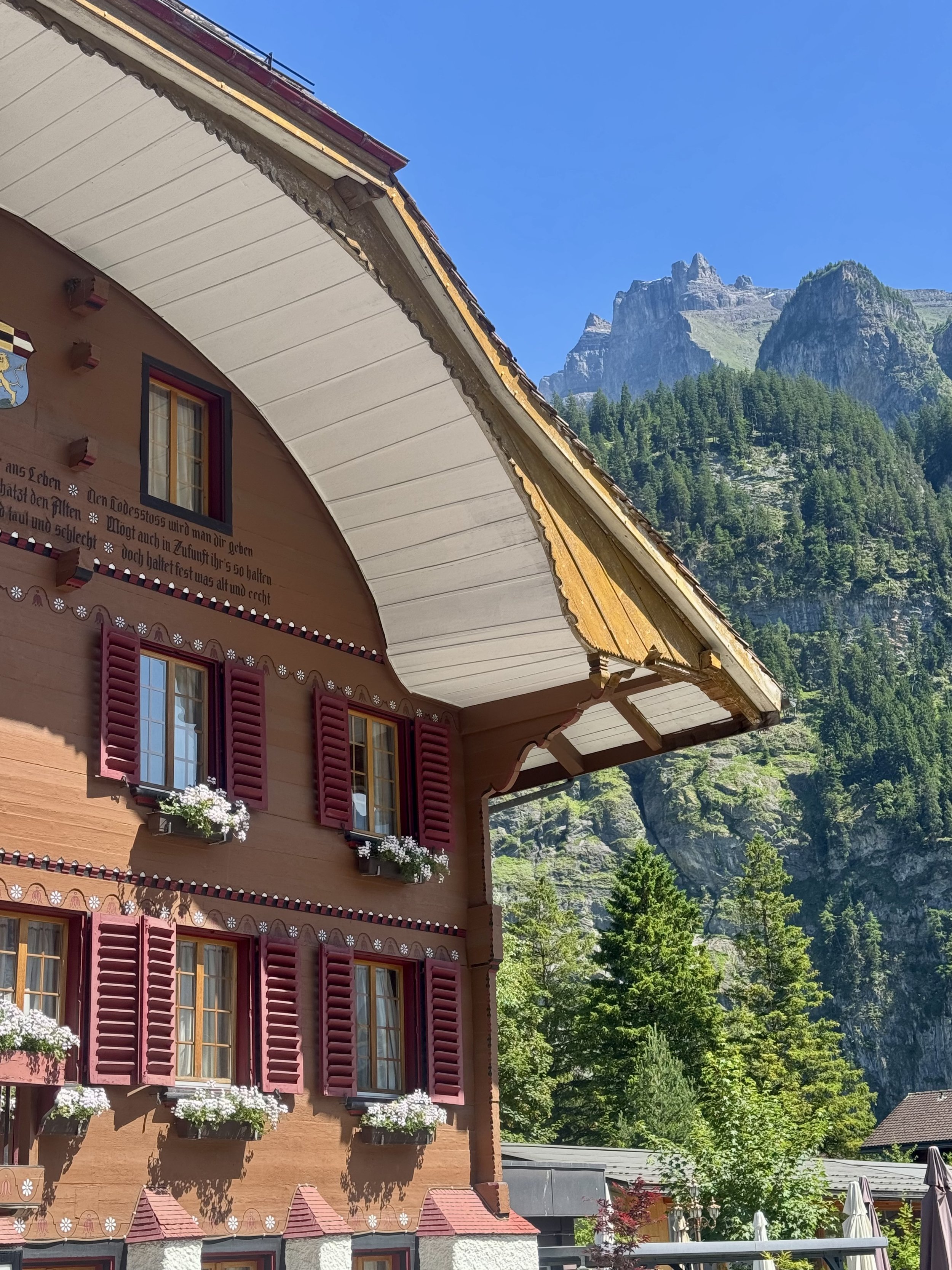
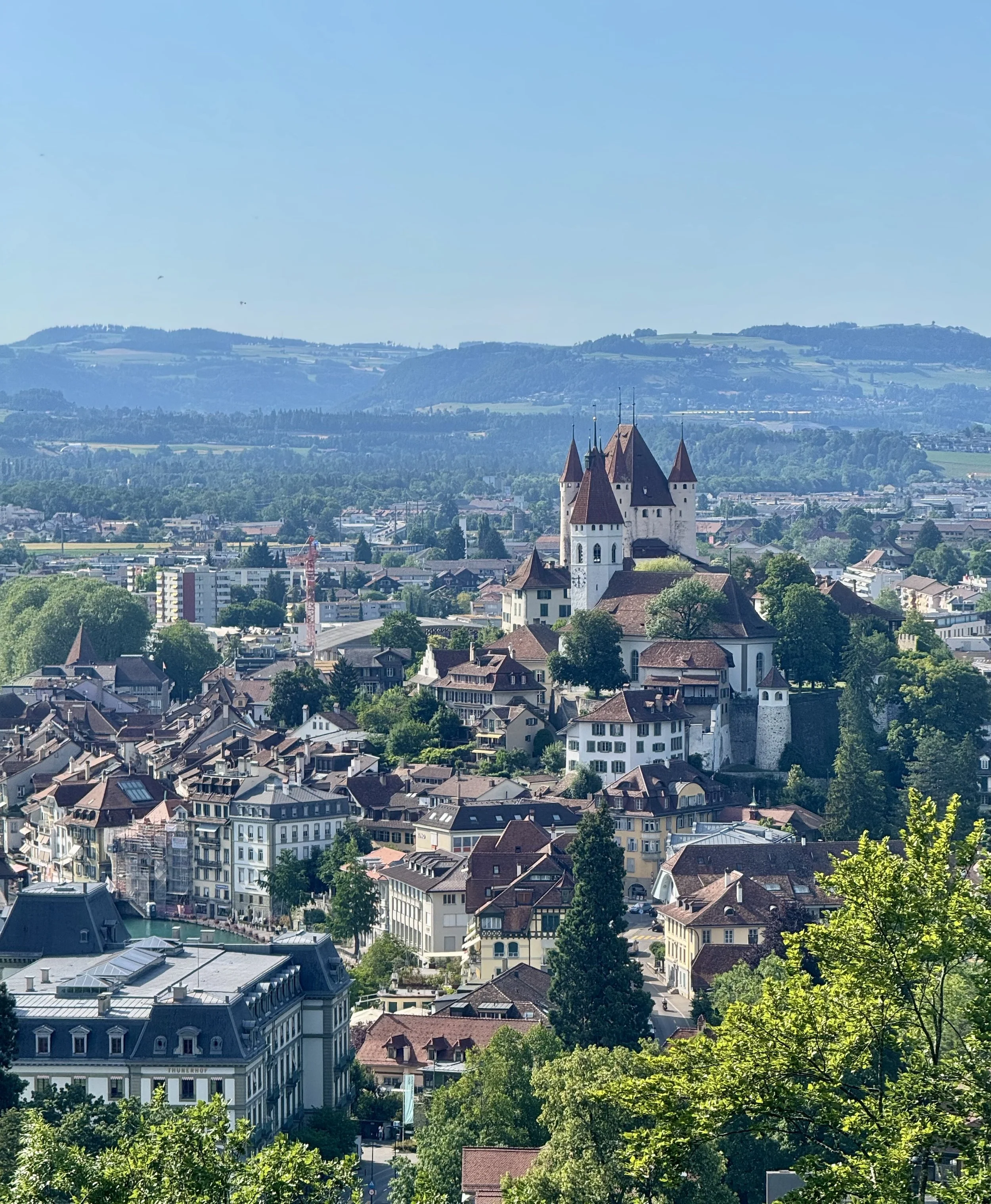
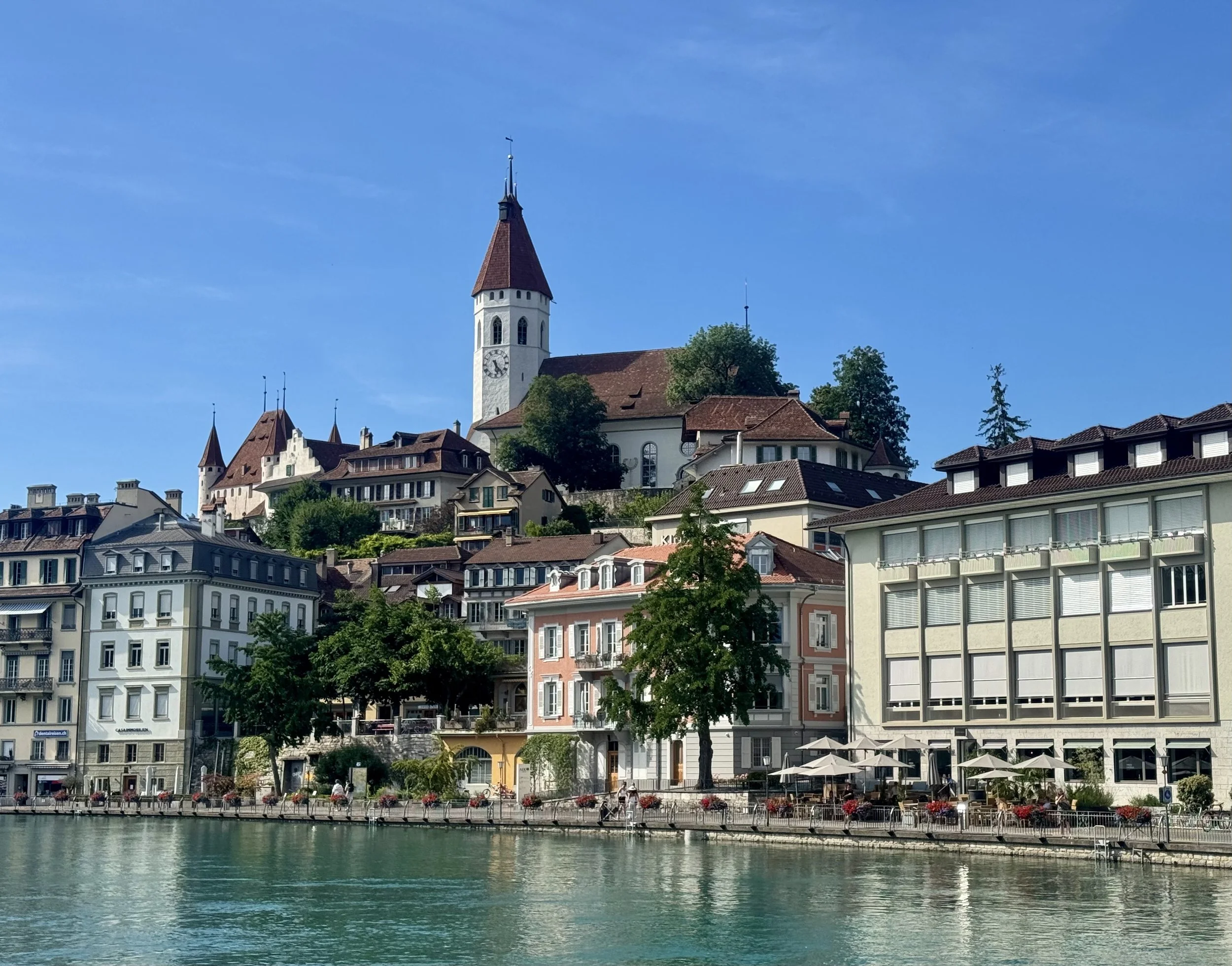
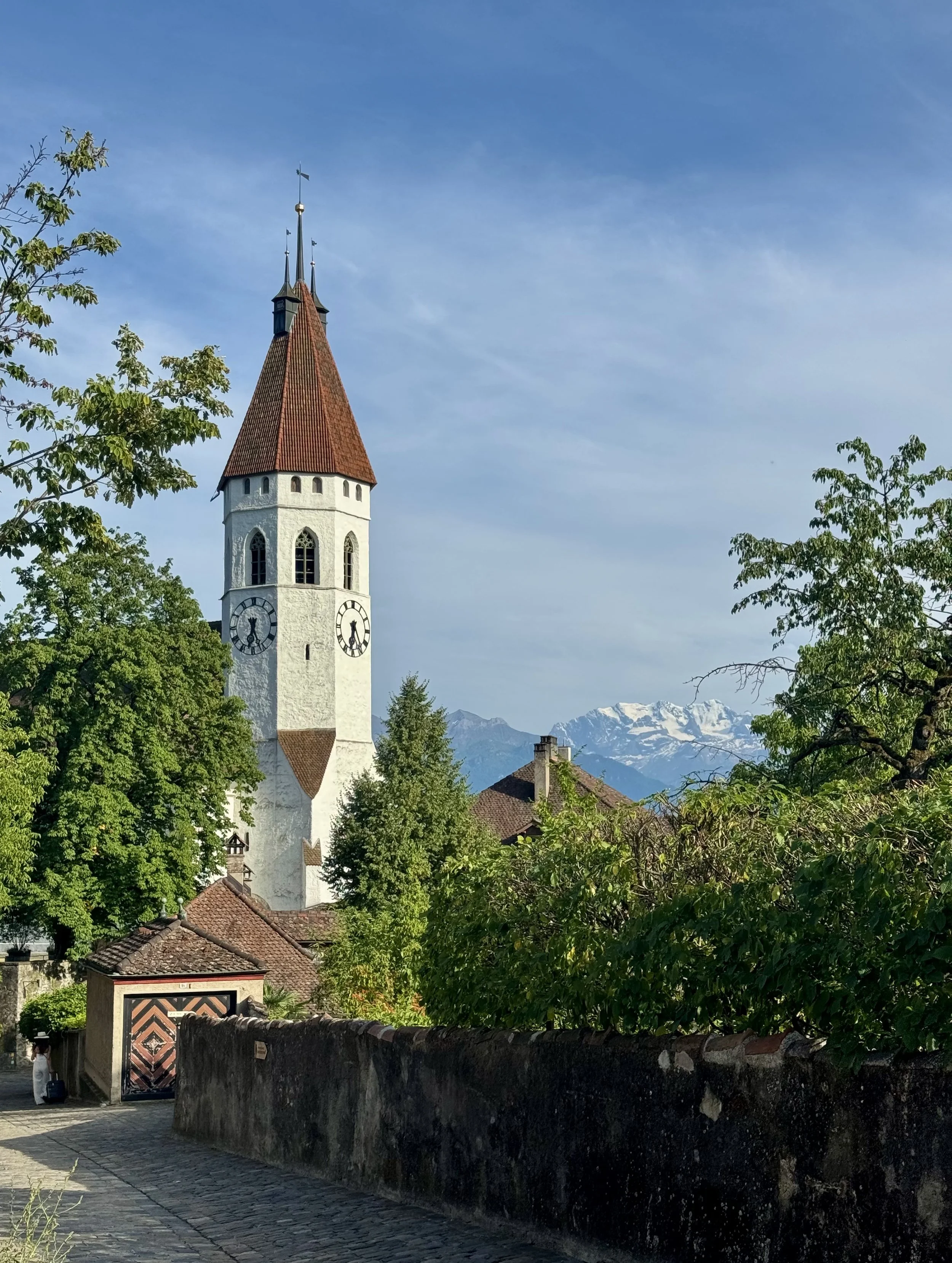
We walked back down our original trail and cooled off with some soft serve, enjoying the sunshine and the melodious tinkling of cow bells. Our next stop was Thun, another picturesque town that overlooks the same lake as Spiez. We started by walking to the Jakobshübeli viewpoint, from which you could see their fairytale castle from afar. The viewpoint was only 20 minutes from the train station, but since we were already tired from our hike and the afternoon heat was numbing, we were exhausted. But we pulled ourselves together to climb back down, stroll around town, then walk back up another hill to visit the castle up close.
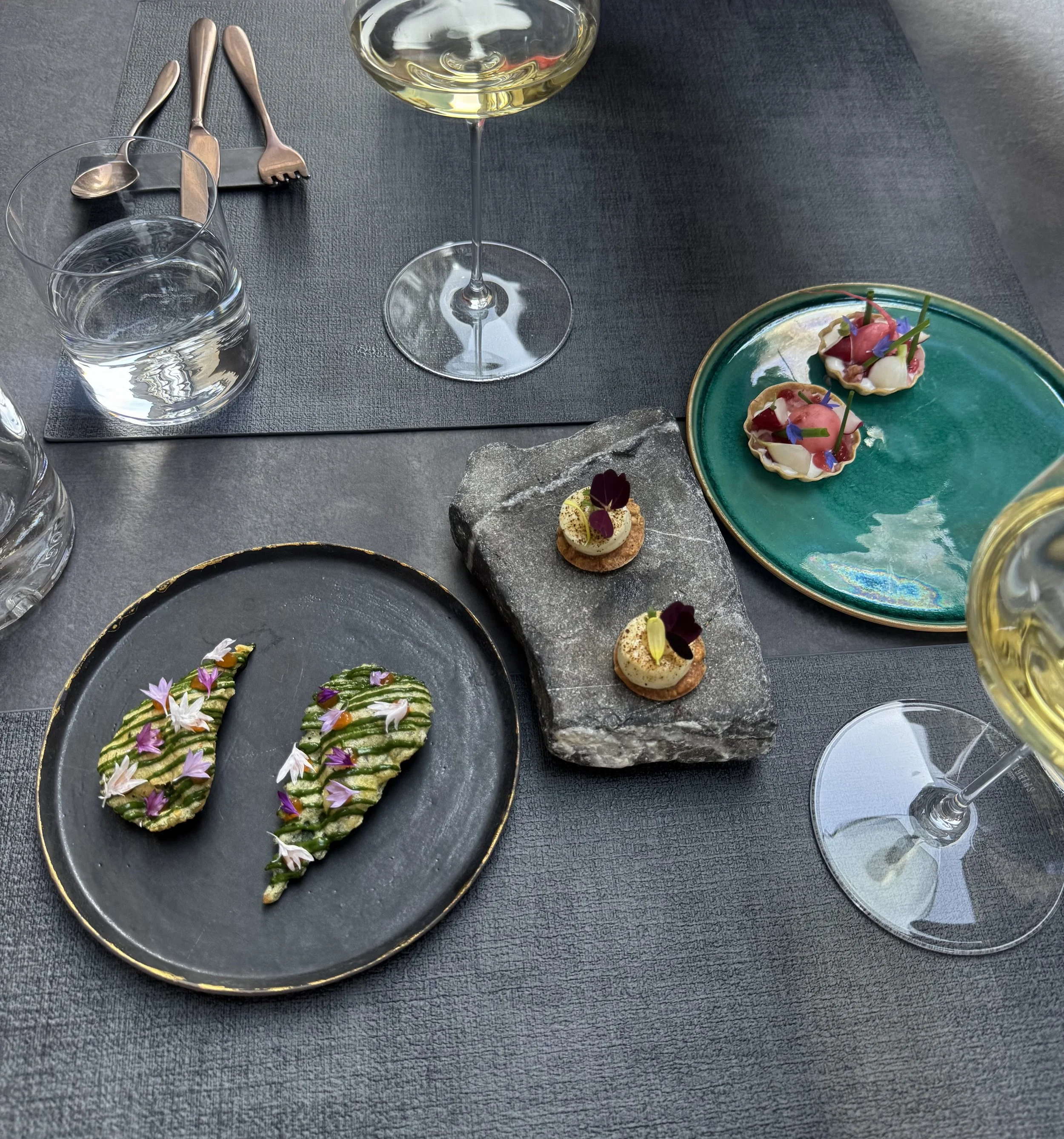
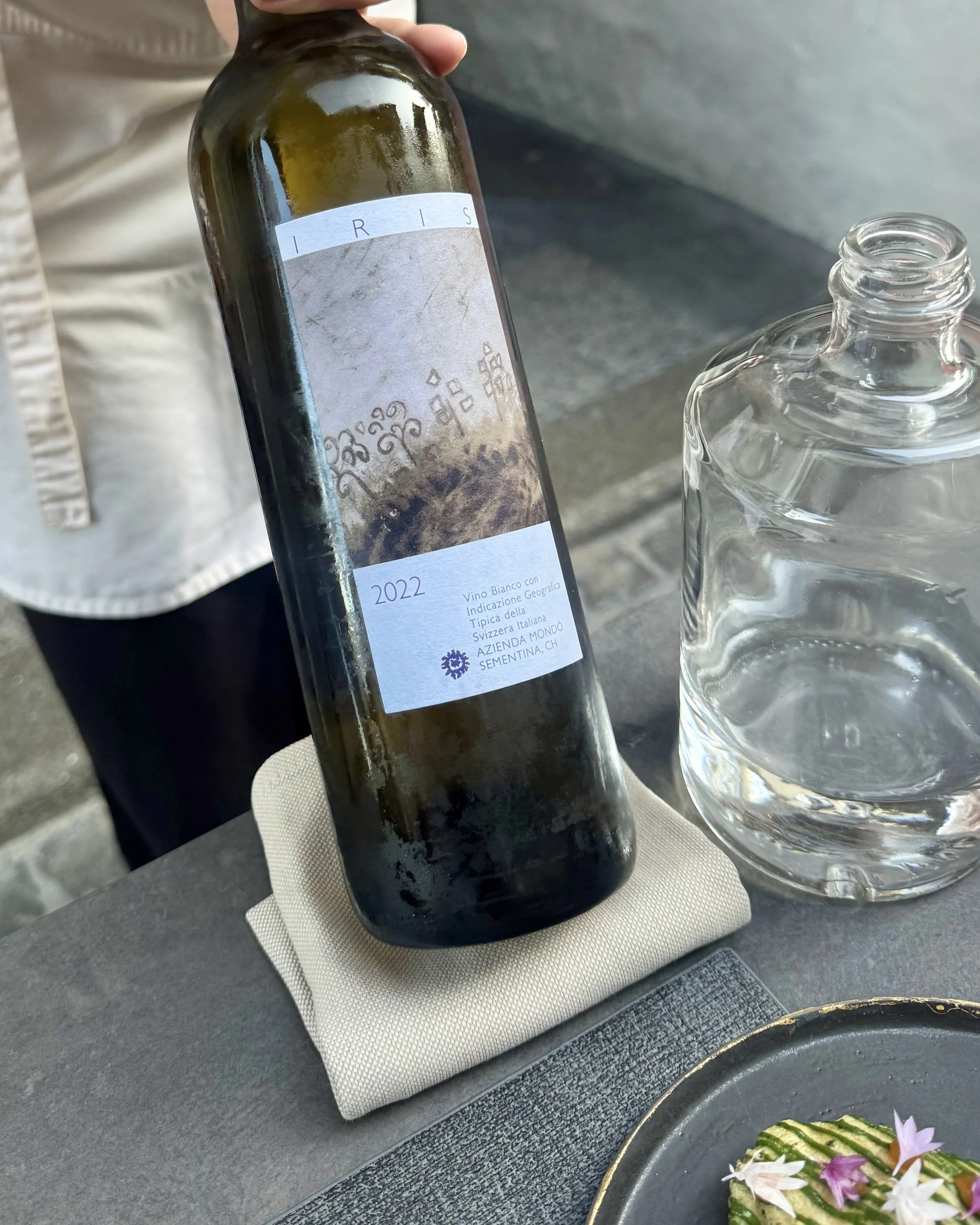
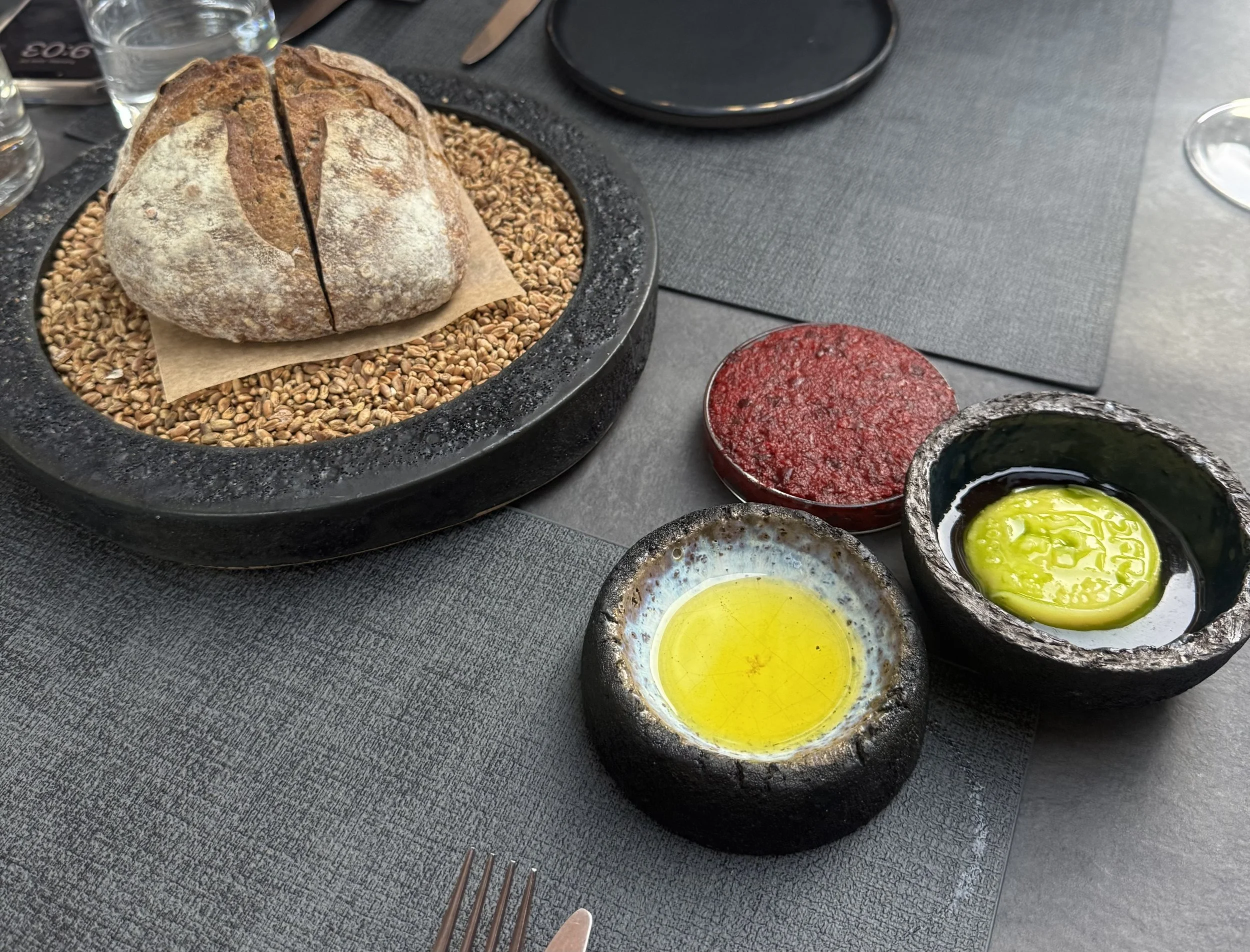
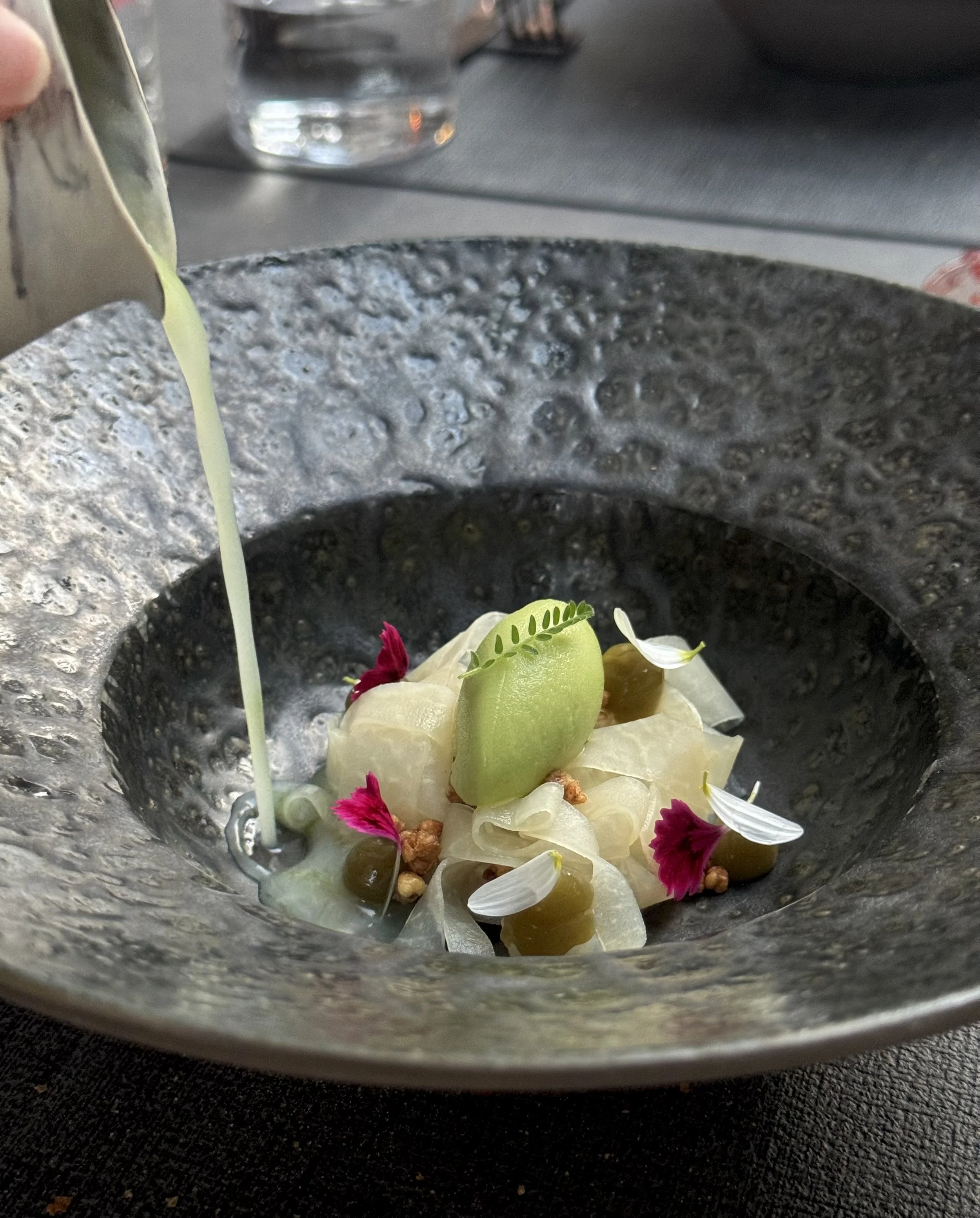
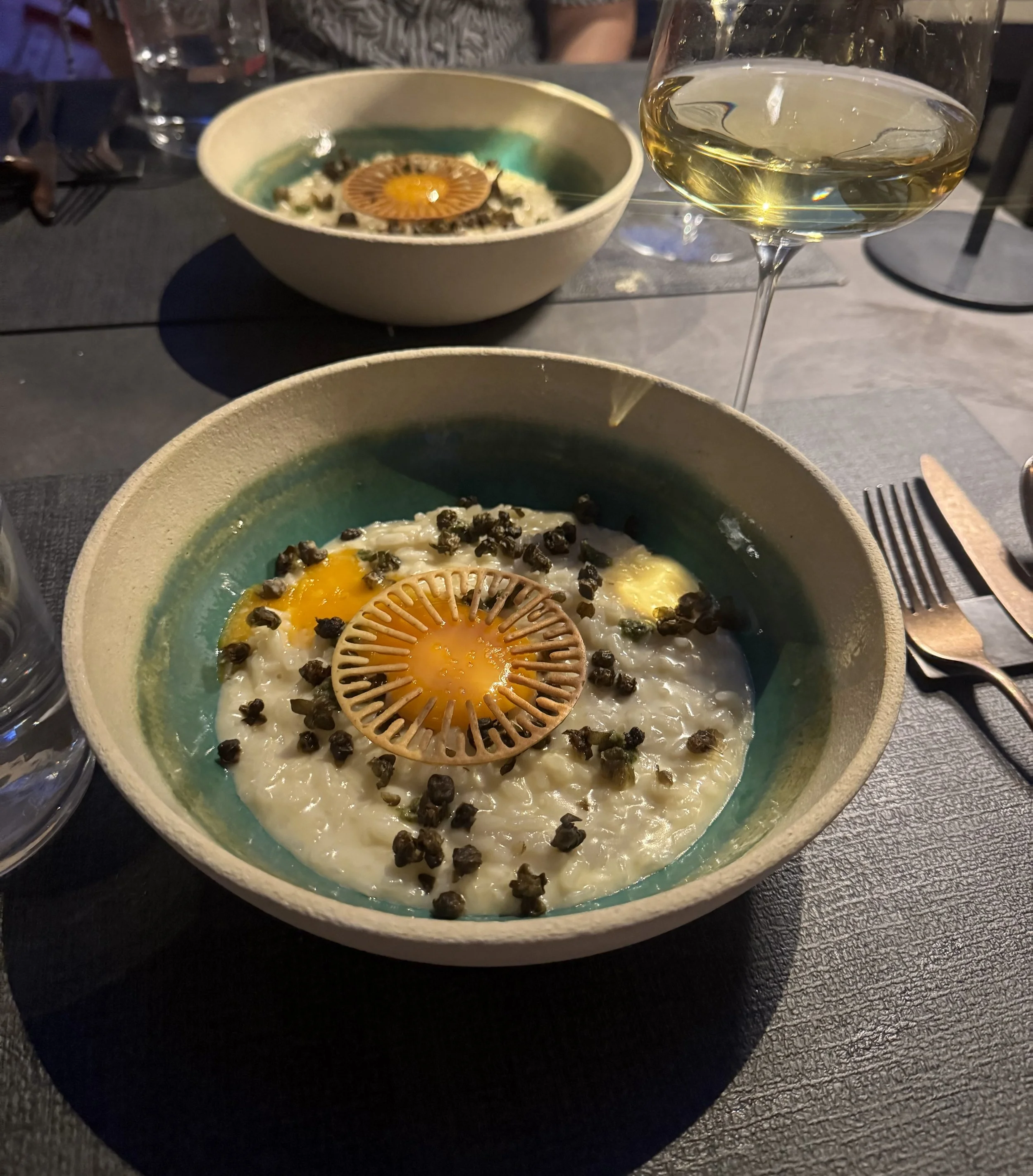
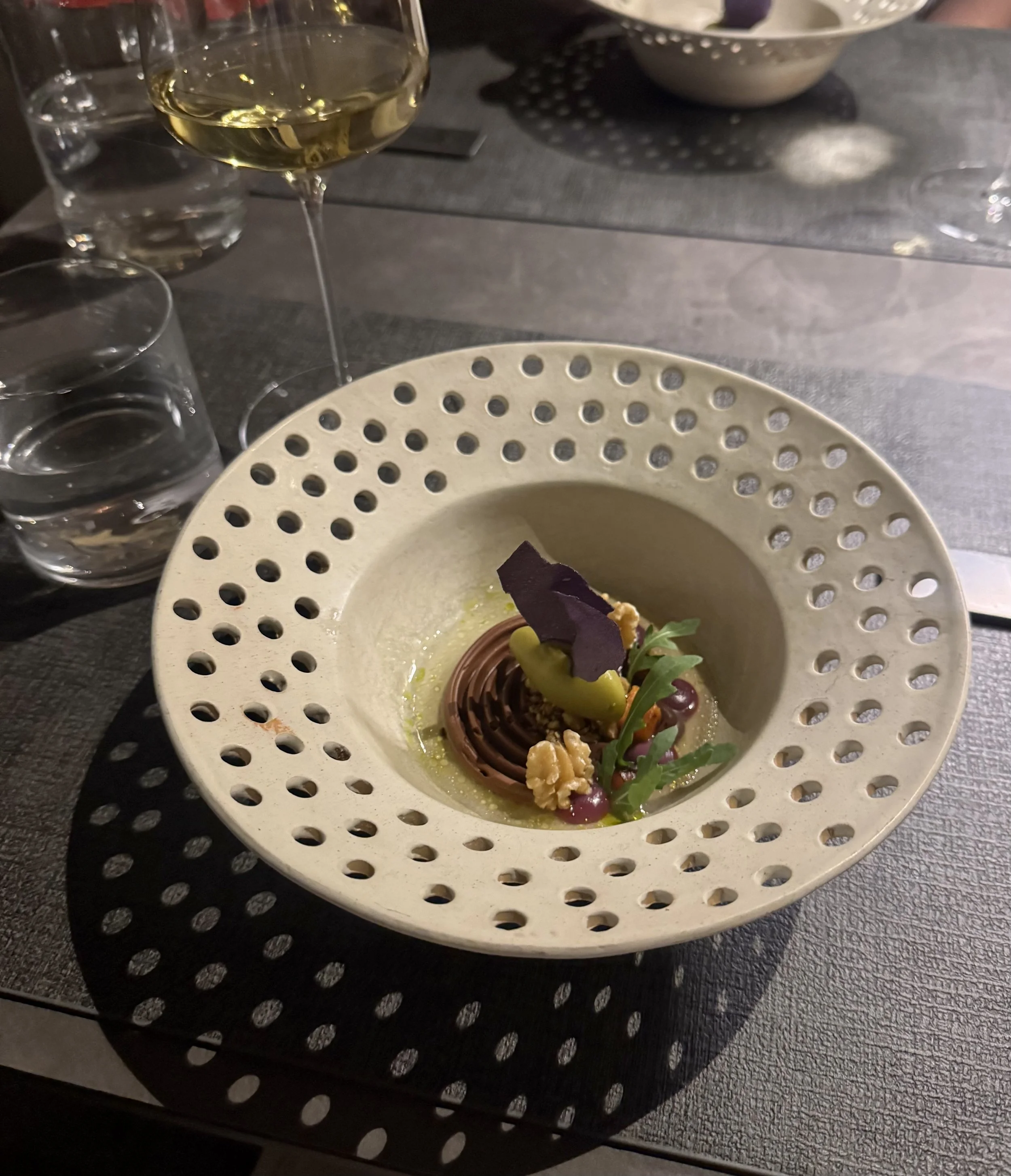
Back in Bern, a lovely al fresco dinner awaited at ZOE, which describes itself as casual fine dining. The restaurant delivers seven courses of creative vegetarian cuisine in the heart of Bern’s old town (and of course, we had to order a bottle of Mondò Sementina’s Iris white wine when we saw it on the menu!). We were particularly impressed with the bread course, which came not only with olive oil and homemade butter but also a petri dish of tasty tomato ‘tartare.’ Throughout the meal, we kept speculating about the identity of the man sitting at the table across from us — random people walking by would go up to him and make conversation in obvious recognition, which pointed us towards ‘local celebrity,’ but he also chatted at length with the restaurant staff, hugging people as they left at the end of their shifts. Before we left, we couldn’t resist asking who he was. It turns out he was the owner of the restaurant, taking notes on the menu and experience! Mystery solved, and a note for him: from flavor to service, our meal at ZOE was excellent.
Zermatt
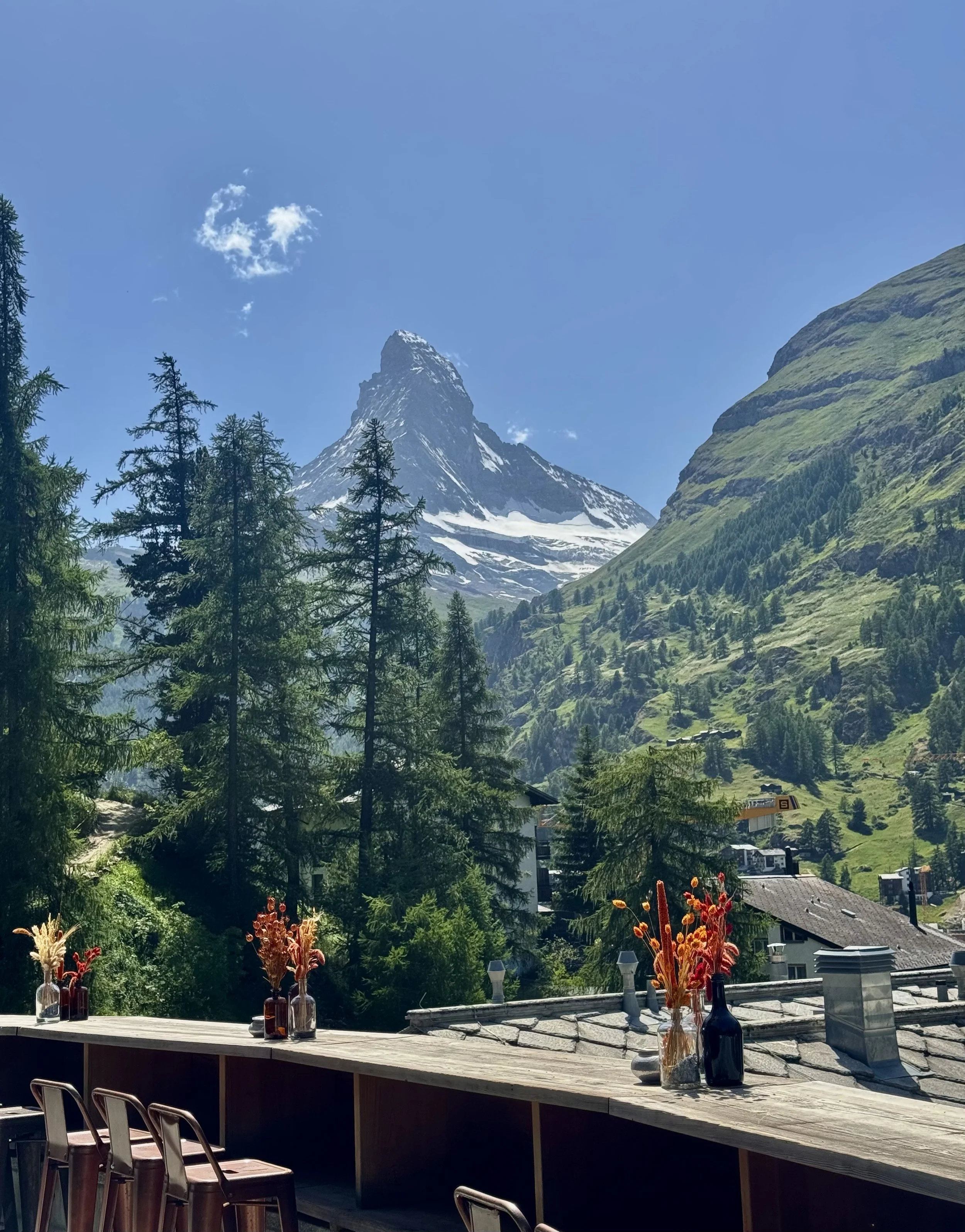
Our last stop for the trip was Zermatt, which lies below the iconic Matterhorn peak. While Zermatt is well-known for its après-ski scene, it’s also a charming summertime destination. One of the things I was most hopeful for was the chance to find Valais blacknose sheep, which are simply some of the cutest animals I’ve ever seen.* There’s a blacknose sheep GPS to find them in the wild from July to August, and Julen Farm offers guaranteed viewing depending on the season, though neither of these were options in late June.
*In my efforts to figure out when the sheep could be found grazing near Zermatt, I came across this blog post by a Swedish woman in Pennsylvania who, following a series of life events, became enamored with Valais blacknose sheep and started a farm to raise them. I found this absolutely delightful; it’s such a great example of agency.
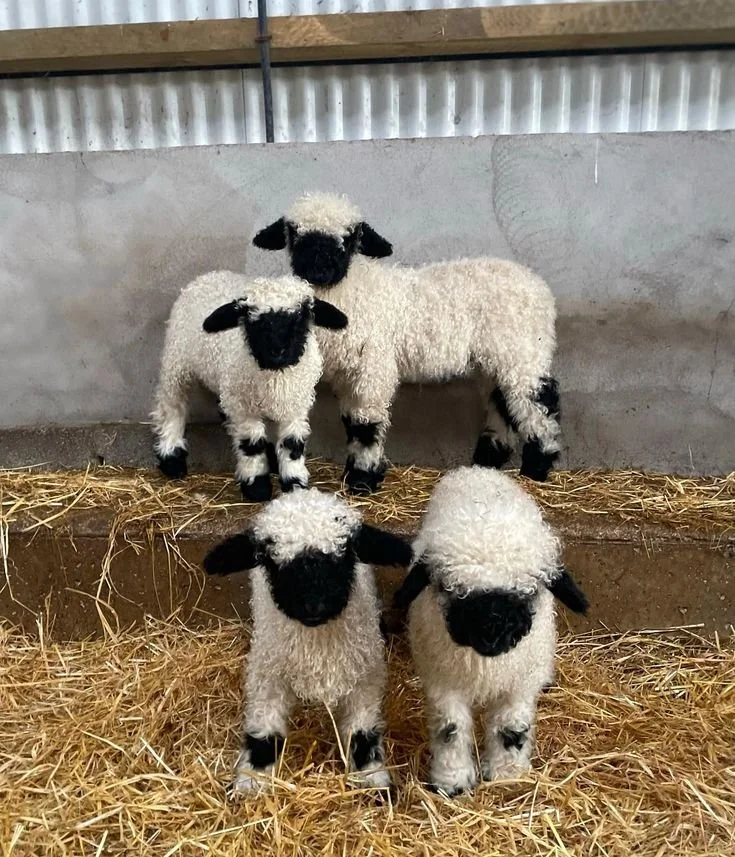
Valais blacknose sheep!!!!!
Day 1
We departed from Bern around 11am on a train to Visp, where we transferred to a smaller train to Zermatt. The Visp to Zermatt train was packed and there wasn’t air conditioning, which made for an unpleasant hour as sweaty families squeezed together with suitcases crammed everywhere. On the bright side, the big windows that let all the sunshine in also gave us a peek of countless waterfalls and streams.
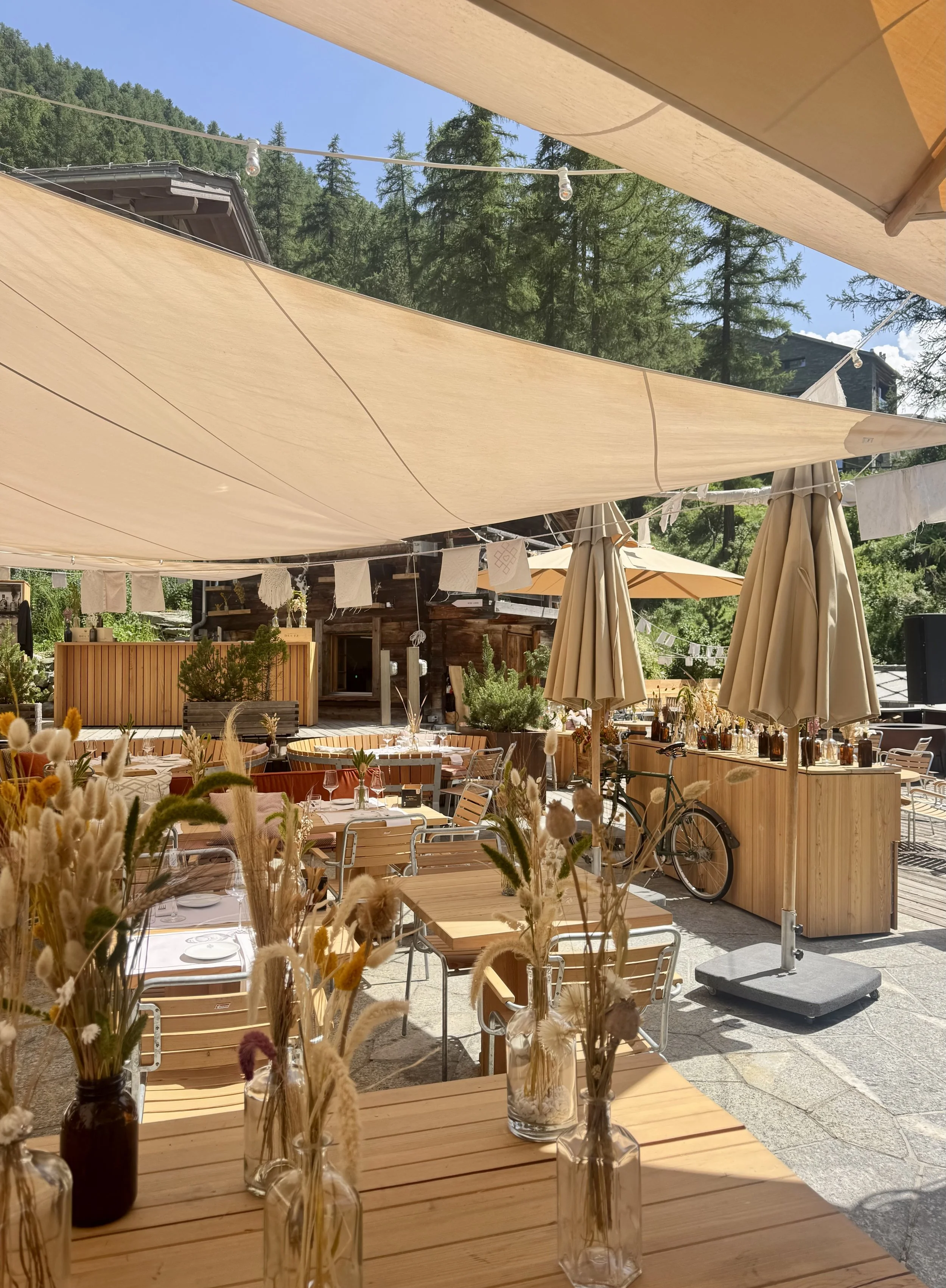
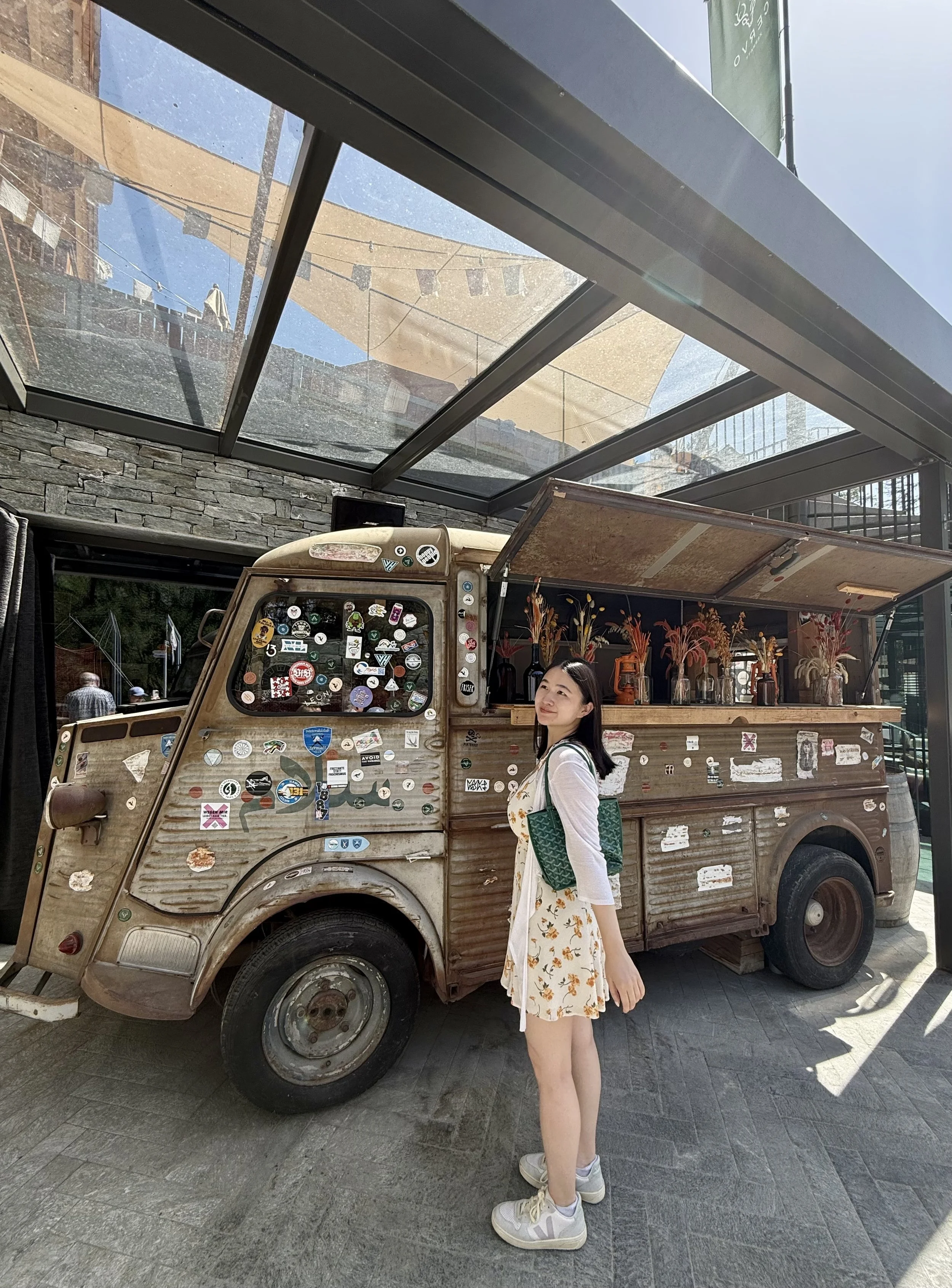
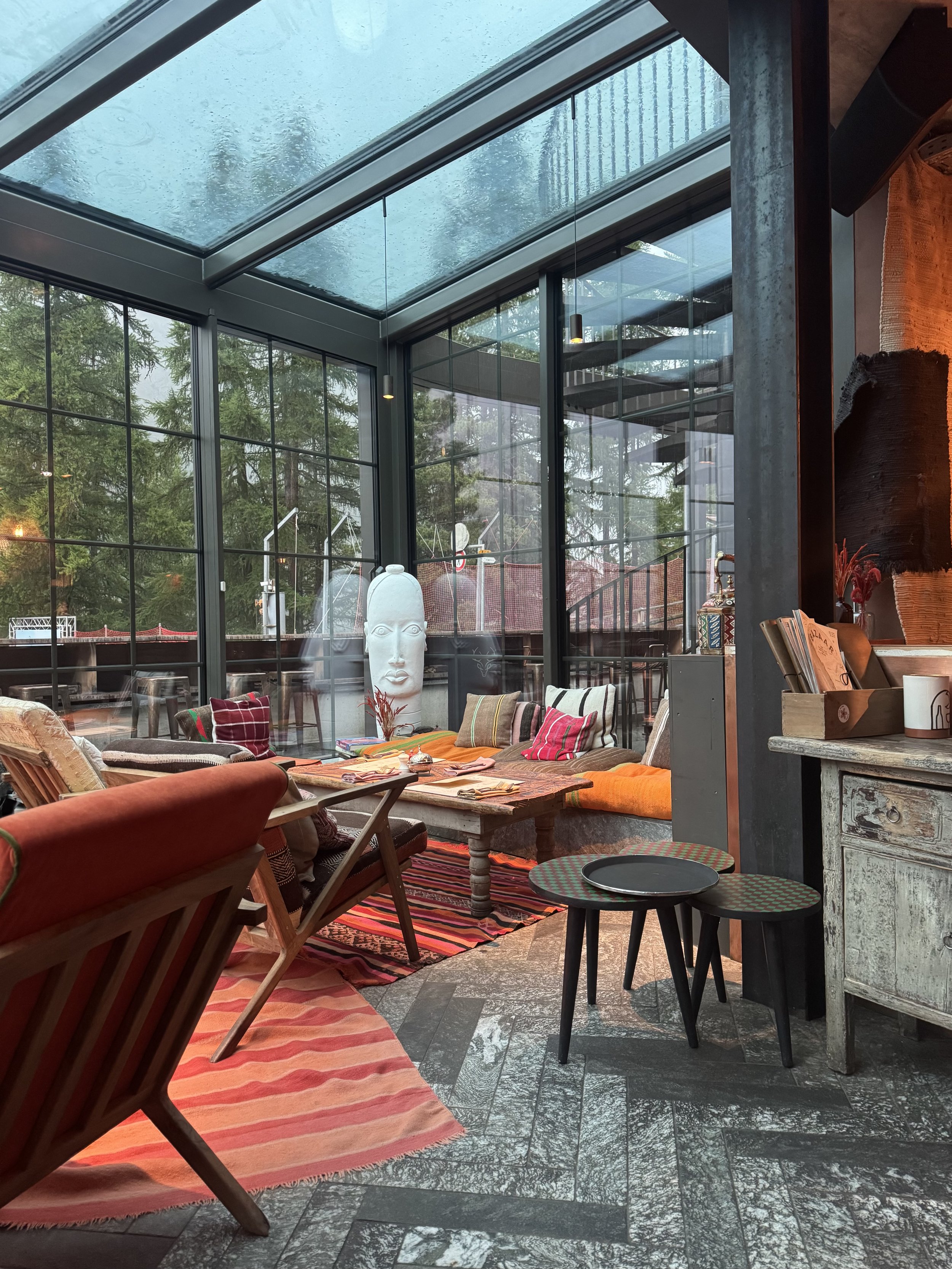
One of Zermatt’s charms is that it’s entirely car-free. Private vehicles aren’t allowed in the village; if you’re not in the mood to walk, you can opt to be shuttled around by one of the small electric taxis (though this generally takes longer than walking, as there are more pedestrian-friendly paths than roads). We were picked up by our hotel’s electric taxi at the train station, which whisked us up above the village to the sleek Cervo Mountain Resort — on our way, we caught our first glimpse of the Matterhorn. We were impressed with Cervo’s hospitality and thoughtful design; for example, our room included hiking gear that we could borrow during our stay. Conveniently, right at Cervo’s entrance, there’s an elevator that goes back down into the main village area. We walked around for a bit, but the heat depleted our appetite for exploration, so after cooling off with some gelato, we allowed ourselves a siesta.
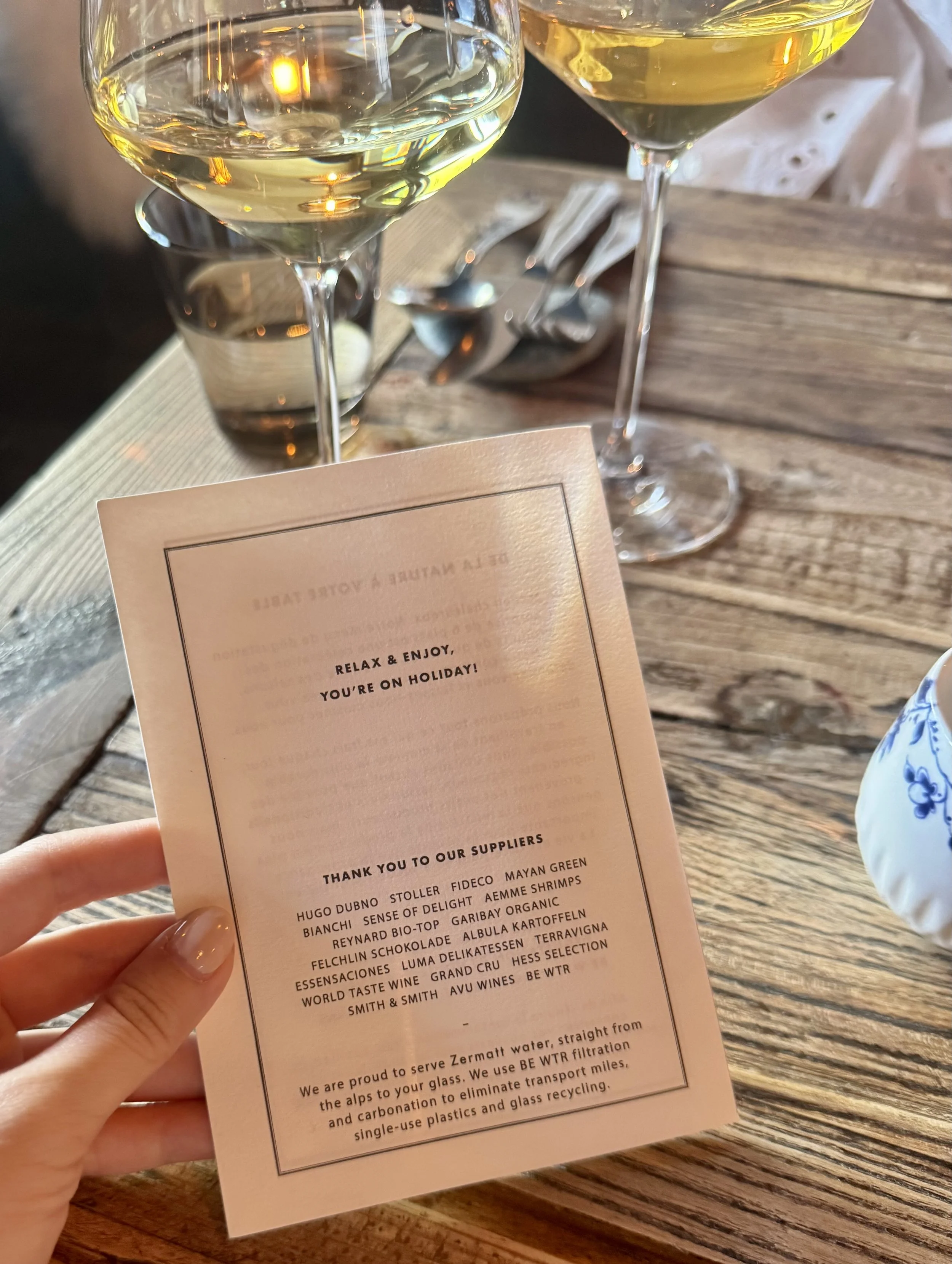
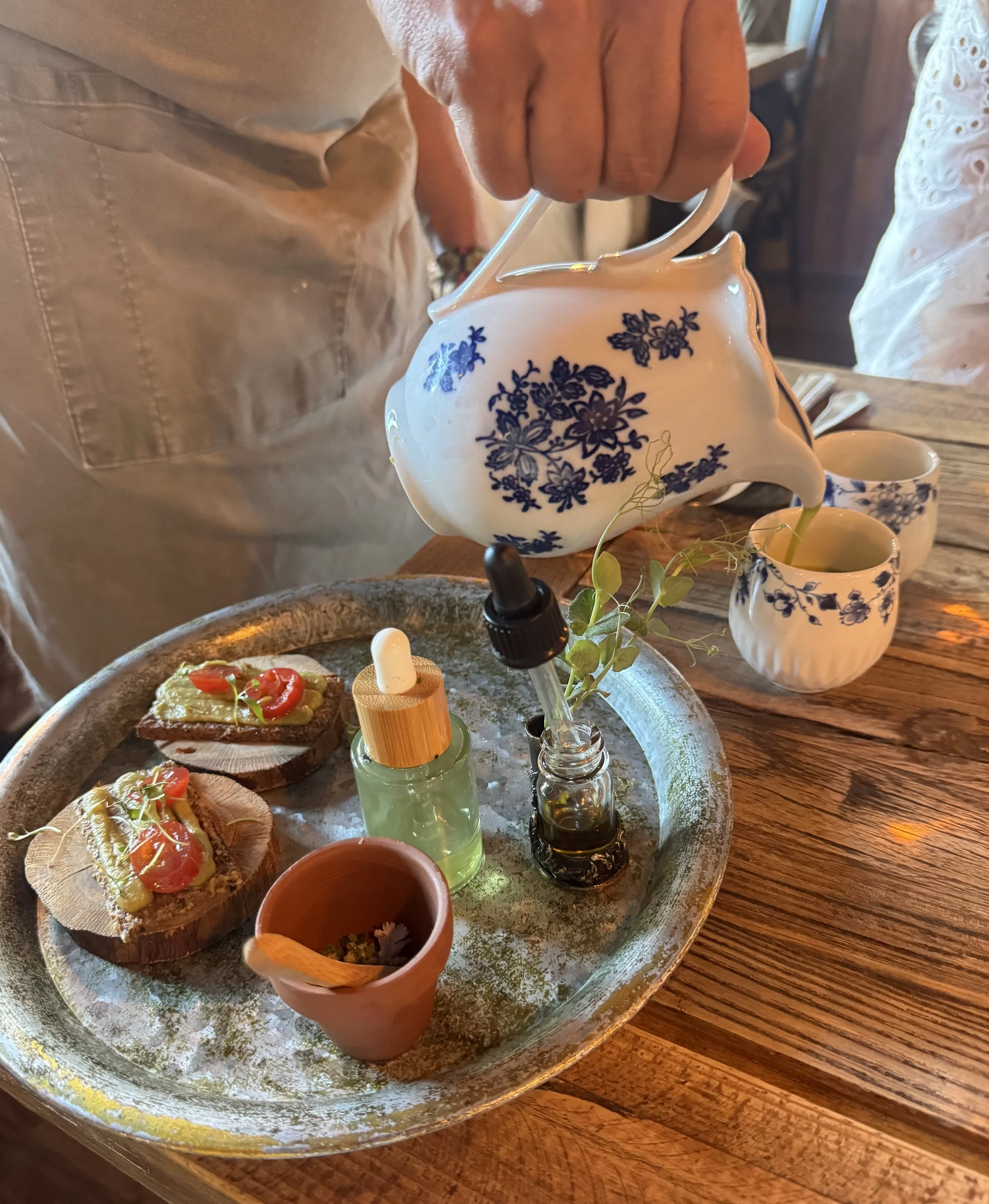
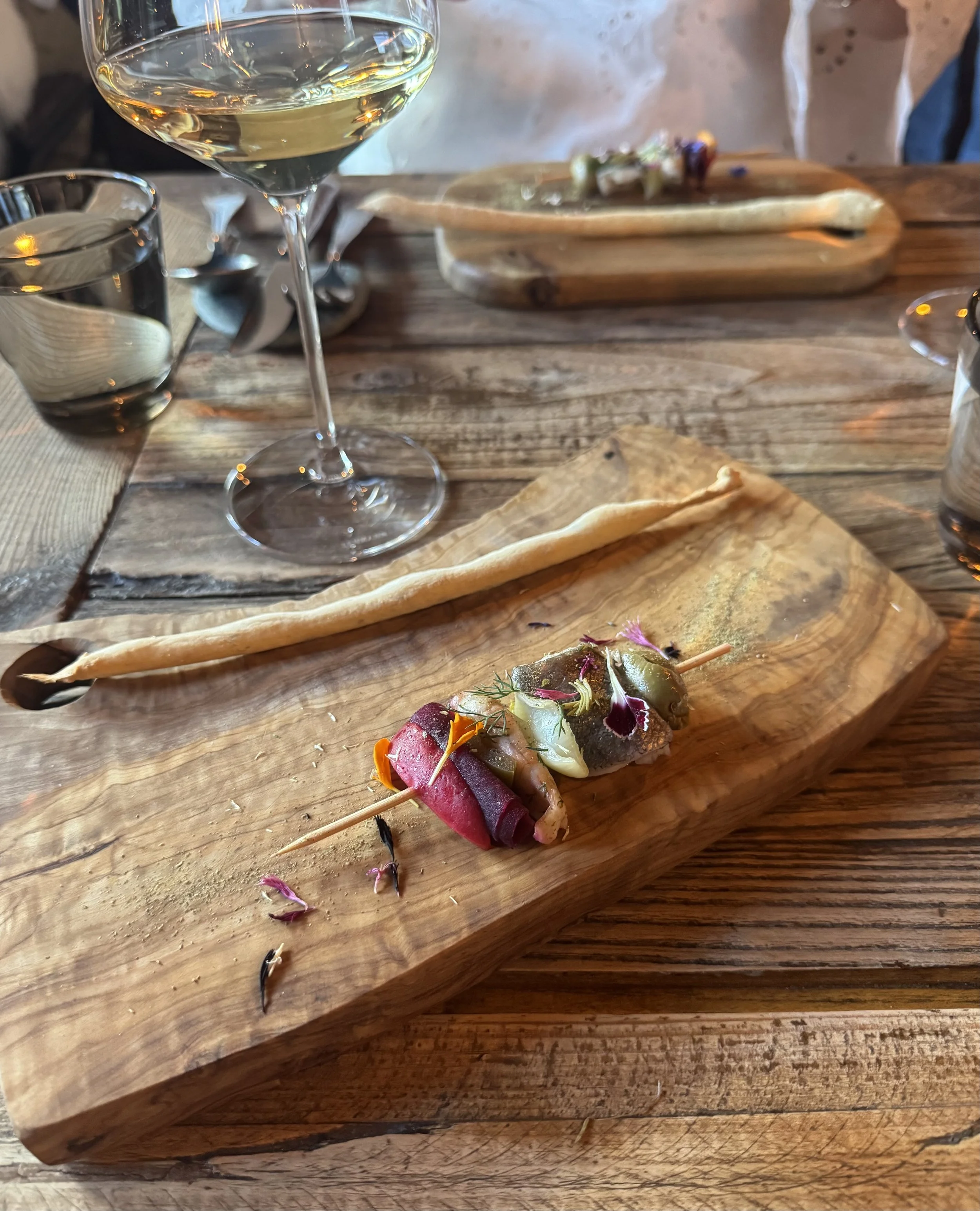
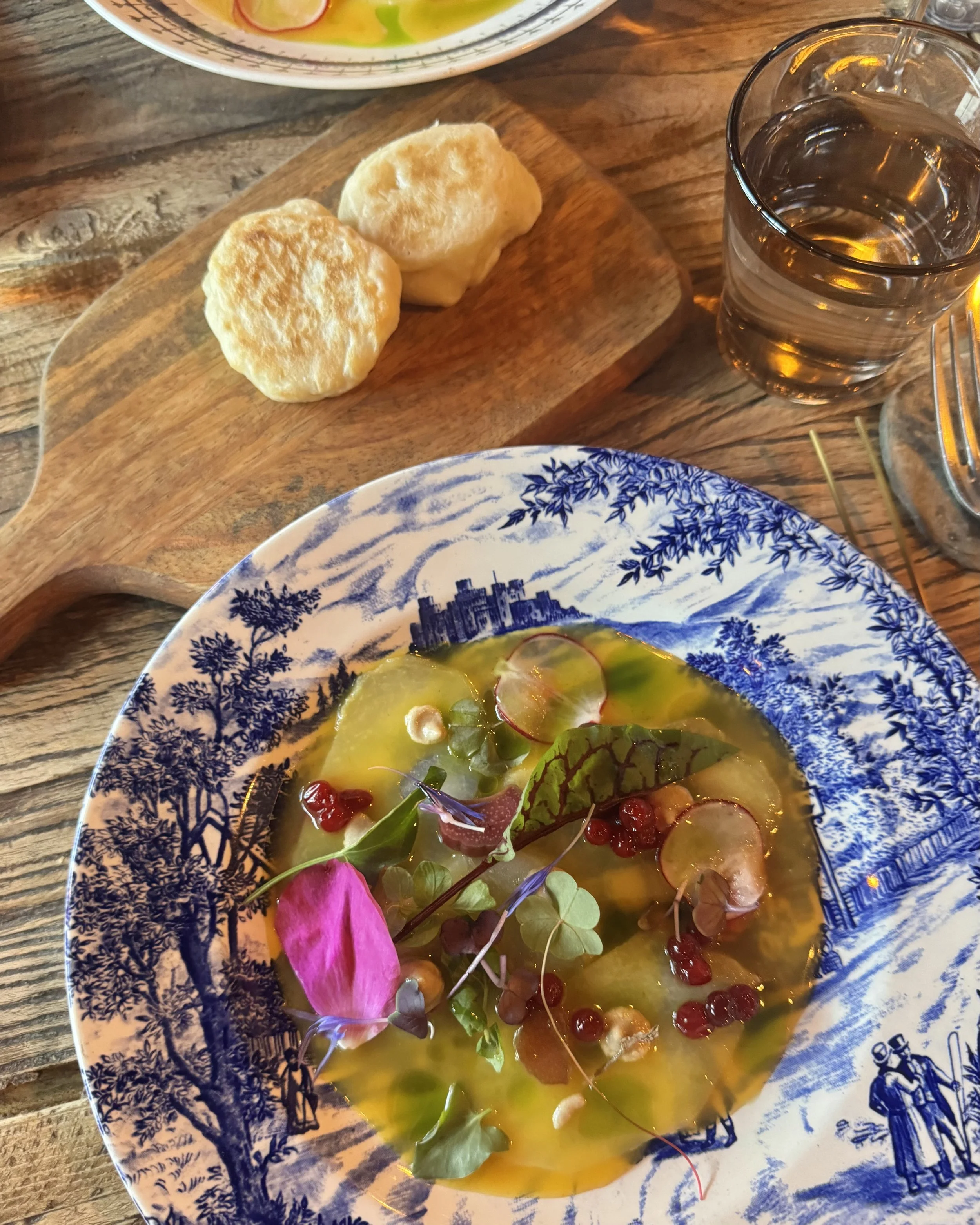
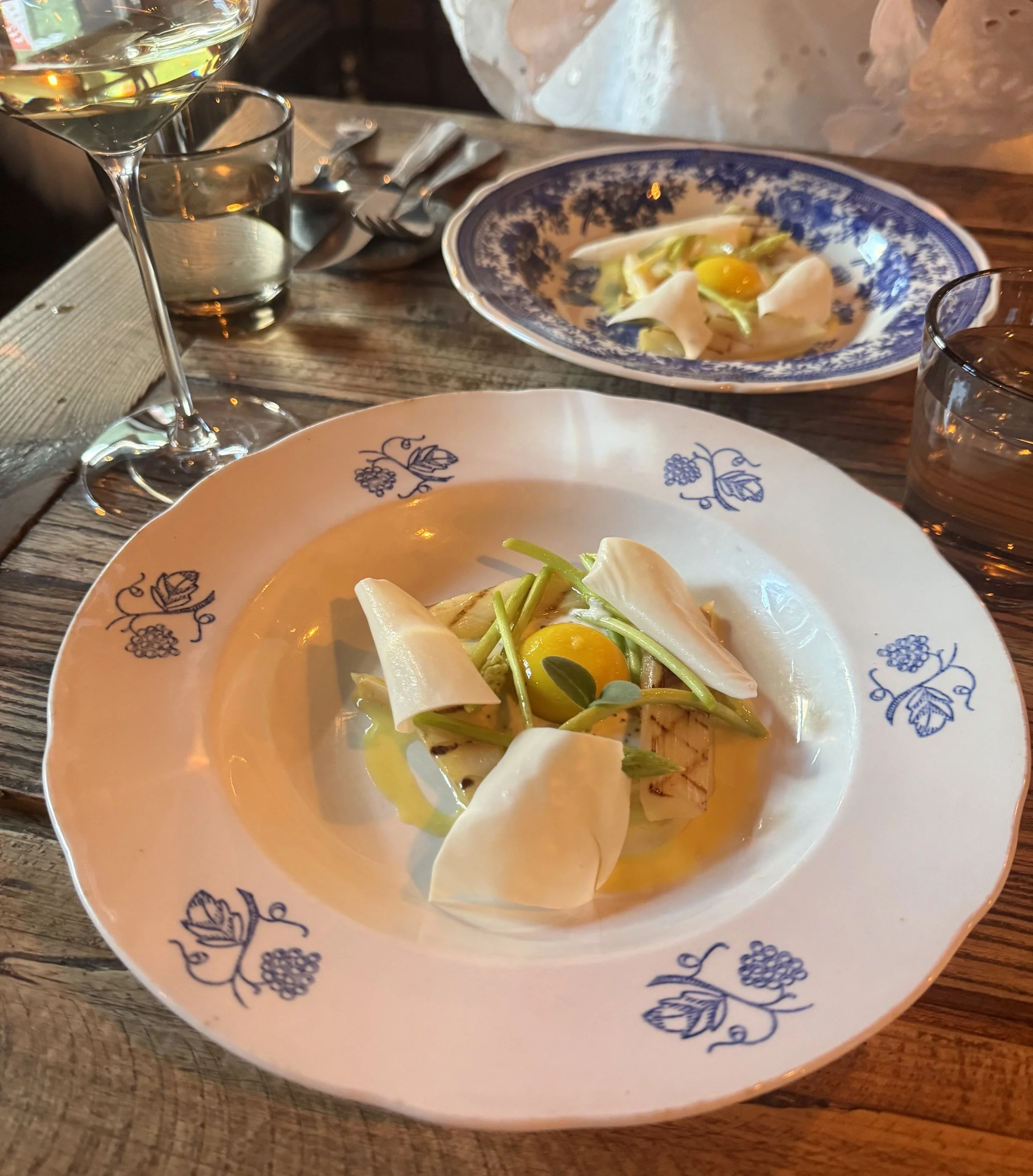
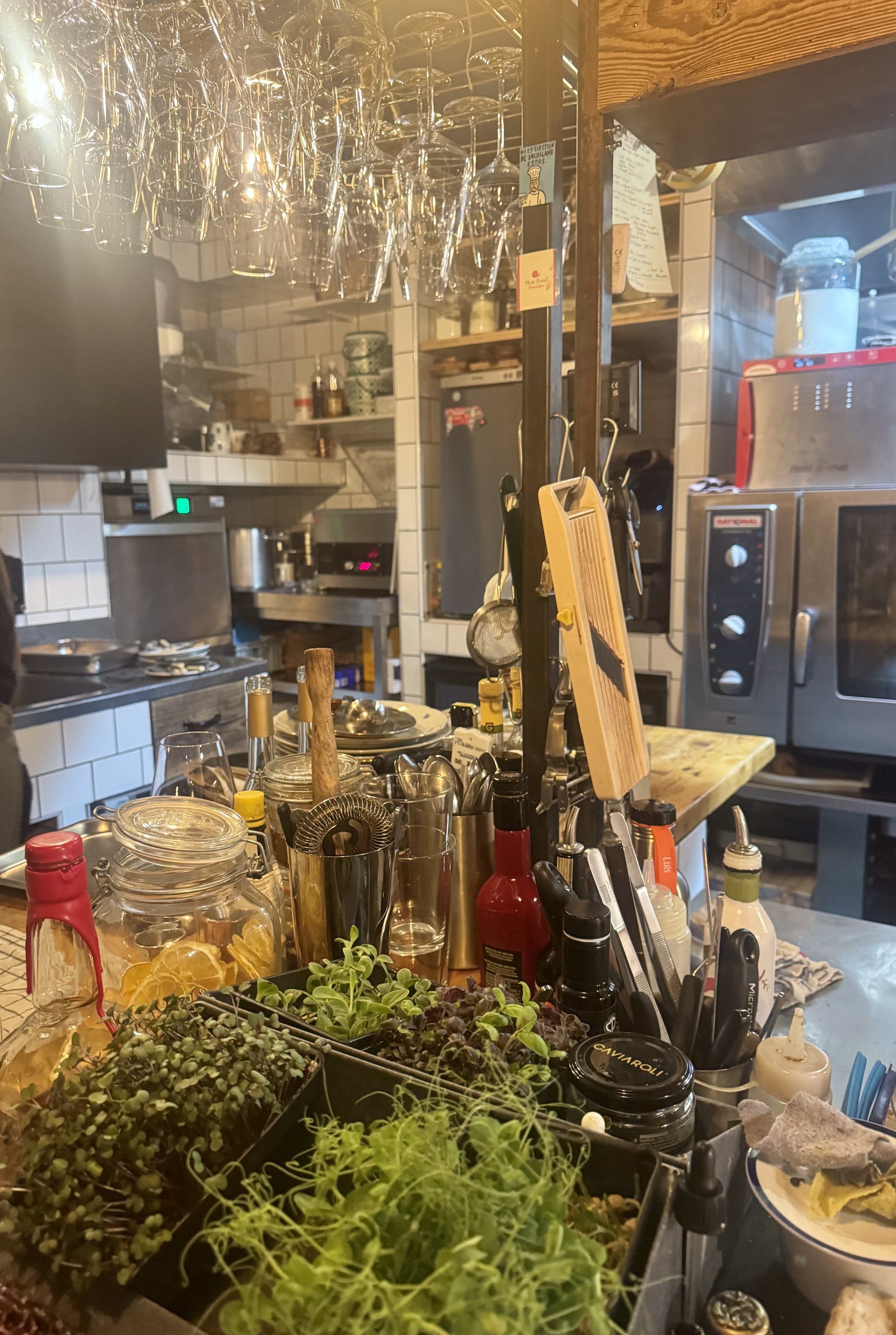
We had our favorite meal of the trip at the fantastic Brasserie Uno. Food aside, the restaurant is decorated with extreme alpine charm and taste, featuring cozy details like a typewriter hoisting their Michelin plaque and mismatched plates for each course. Their menu draws inspiration internationally, offering unfussy and well-executed renditions of delicacies ranging from miso soup to ceviche to tacos. Dining wasn’t a focus of this trip since it’s infamously expensive and unlike neighboring France and Italy, Switzerland isn’t known for its cuisine; throughout the trip, we opted for casual salads, pasta, or café fare. But I’m glad we still splurged on a few nice restaurants!
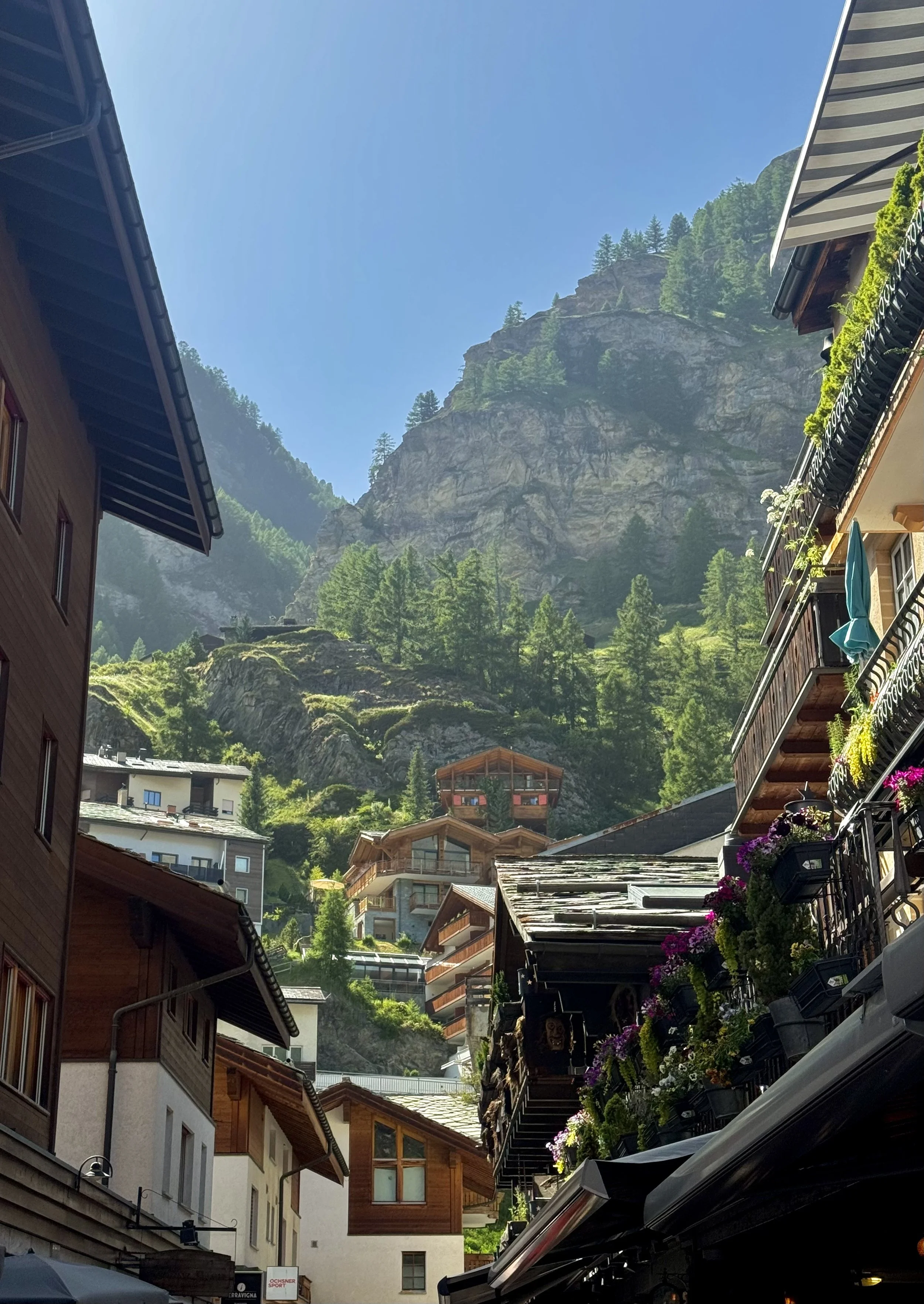
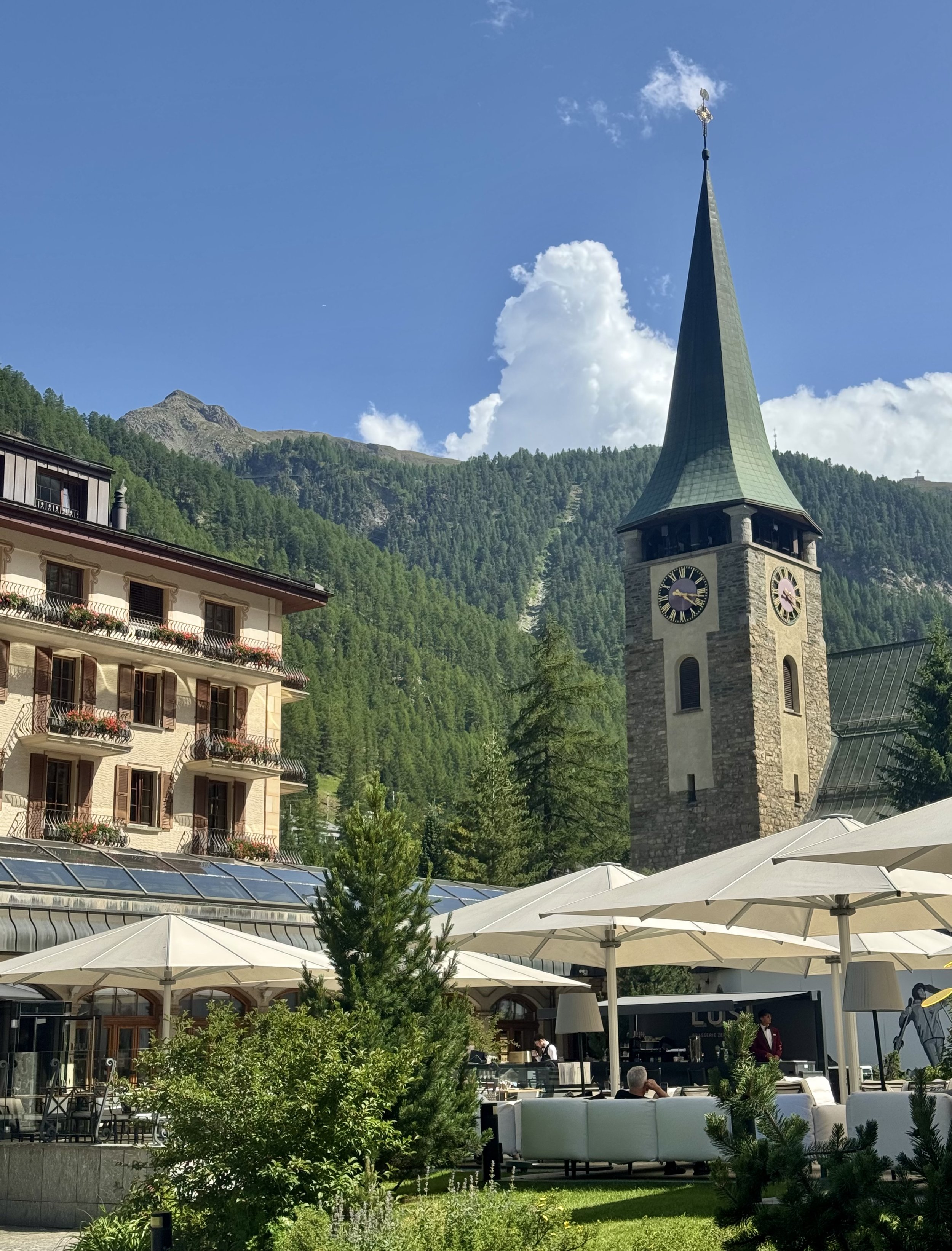
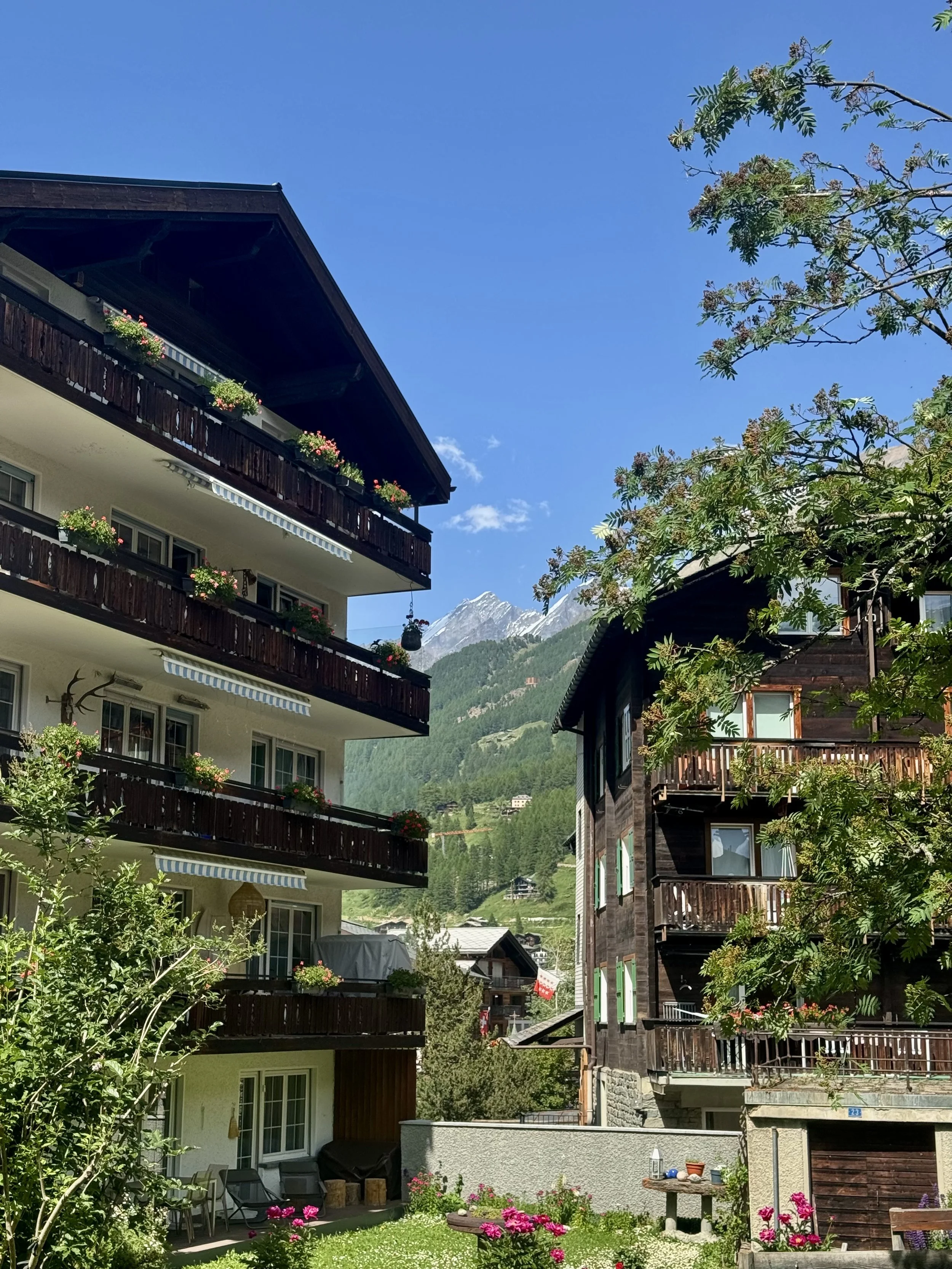
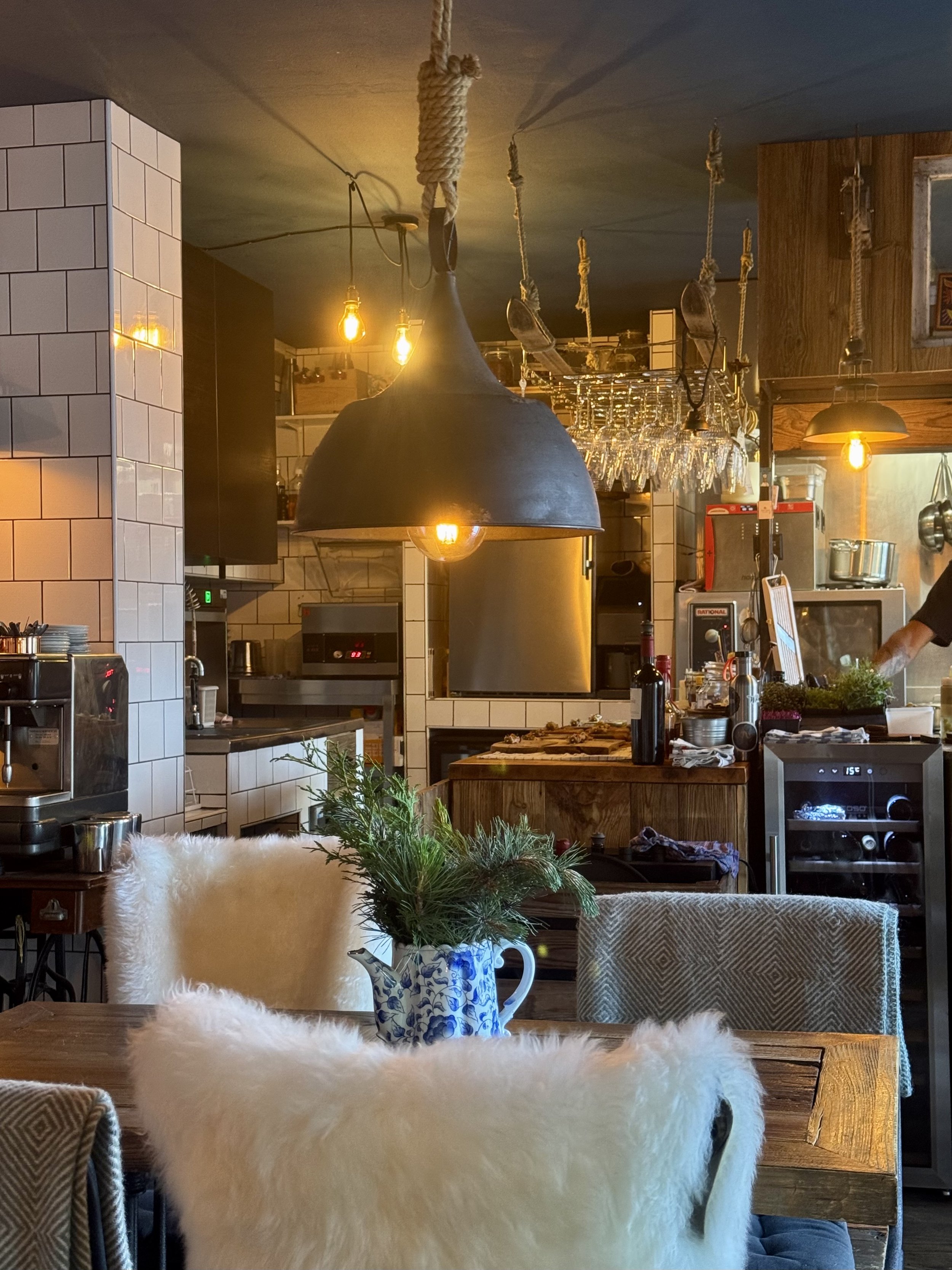
Day 2
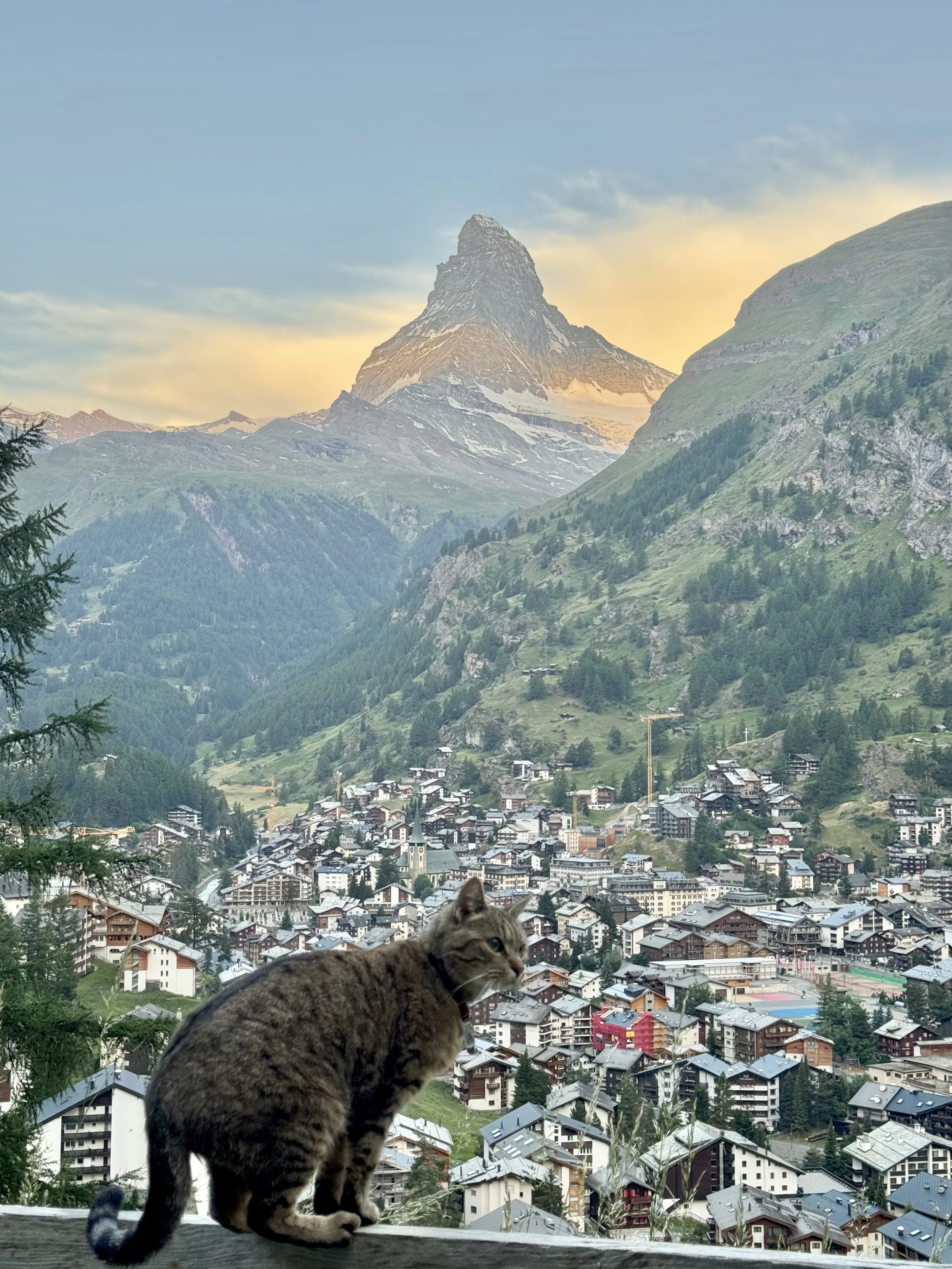
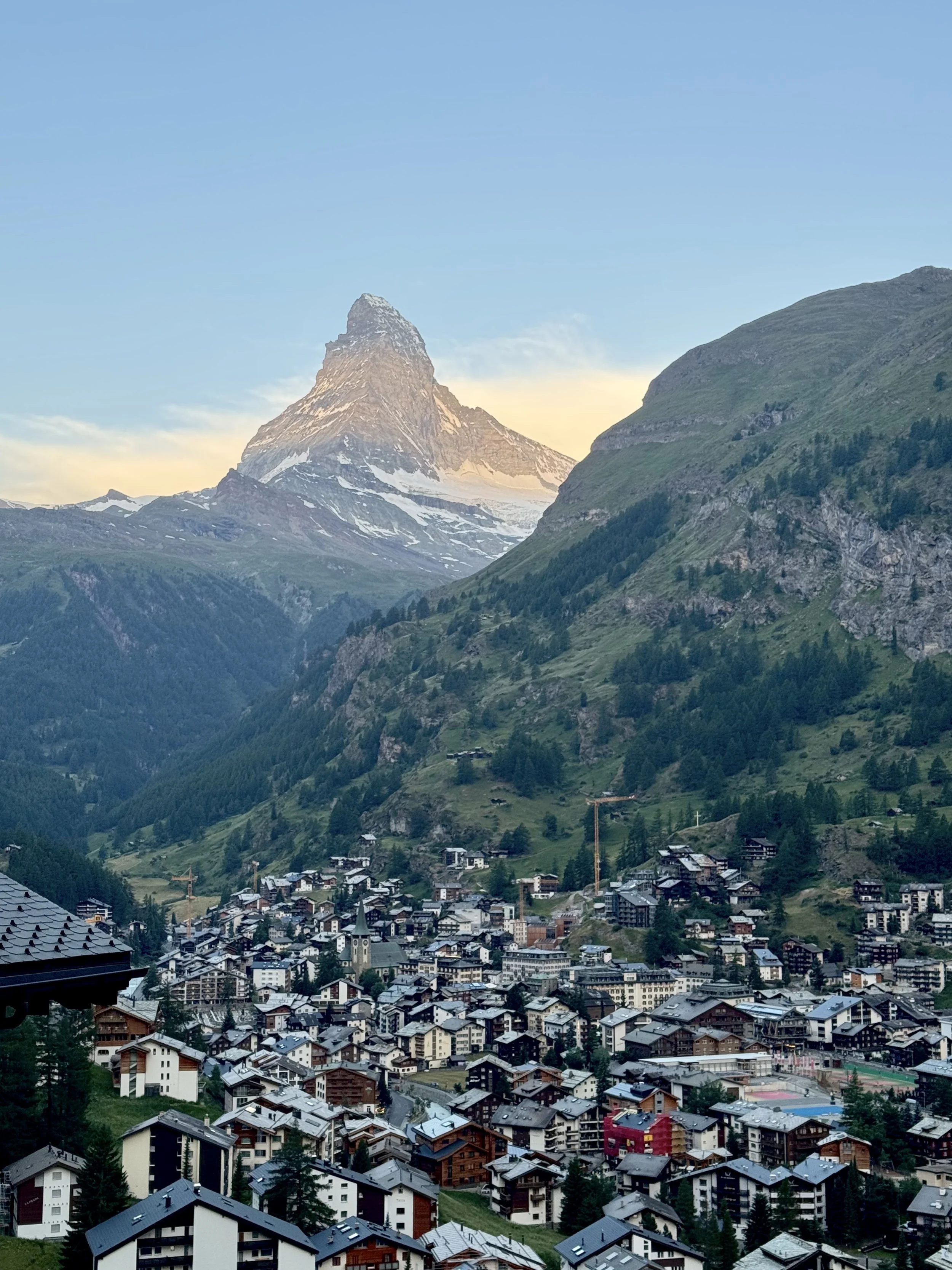
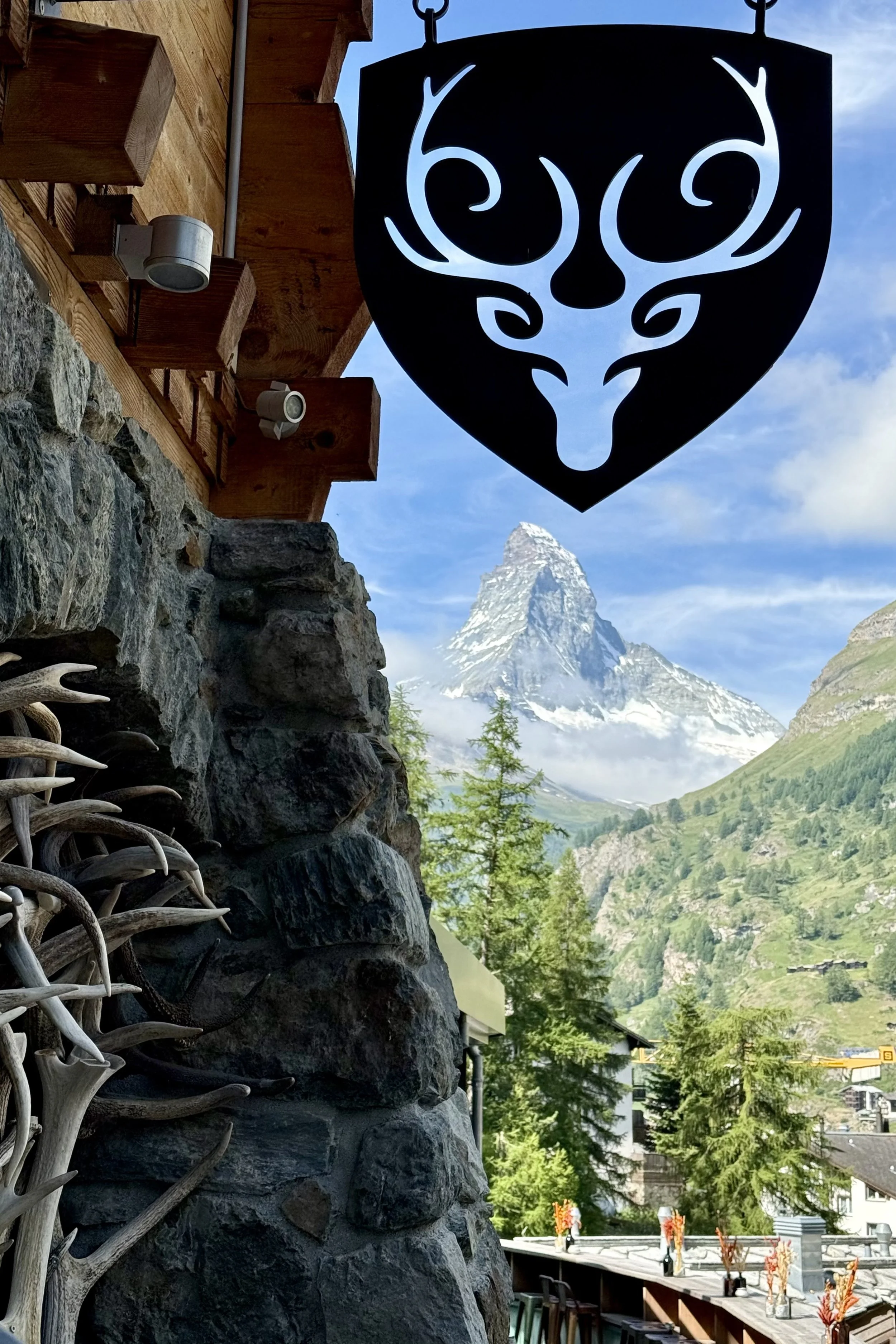
The next morning, we dragged ourselves outside at 5:30am to catch the sunrise. This was another point in favor of Cervo’s location overlooking the village — we were only a short walk away from a viewpoint, though it did involve walking through a spooky tunnel. But when we emerged from the other side, the Matterhorn was aglow, with the sunrise first painting the peak pink, then golden. It’s known for being the world’s most-photographed mountain, but what makes it special, besides the fact that it was once the muse of a chocolate company? (In 2023, after moving their production abroad, Toblerone bars stopped featuring the Matterhorn icon in order to comply with the Swissness Act.) Its aesthetic appeal is explainable: the Matterhorn’s peak is a near-symmetric pyramid, and each of its four faces is oriented towards one of the four cardinal points. The distinctive peak juts out well above any surrounding mountains, dominating the landscape. Its simplicity makes me think of the image a child would come up with when drawing a mountain from memory. And simple drawings can have great effect — in 1908, up-and-coming Swiss artist Emil Cardinaux drew the peak in what is considered one of the first modern travel posters (now part of the MoMA’s collection!), bringing tourists en masse to Zermatt.
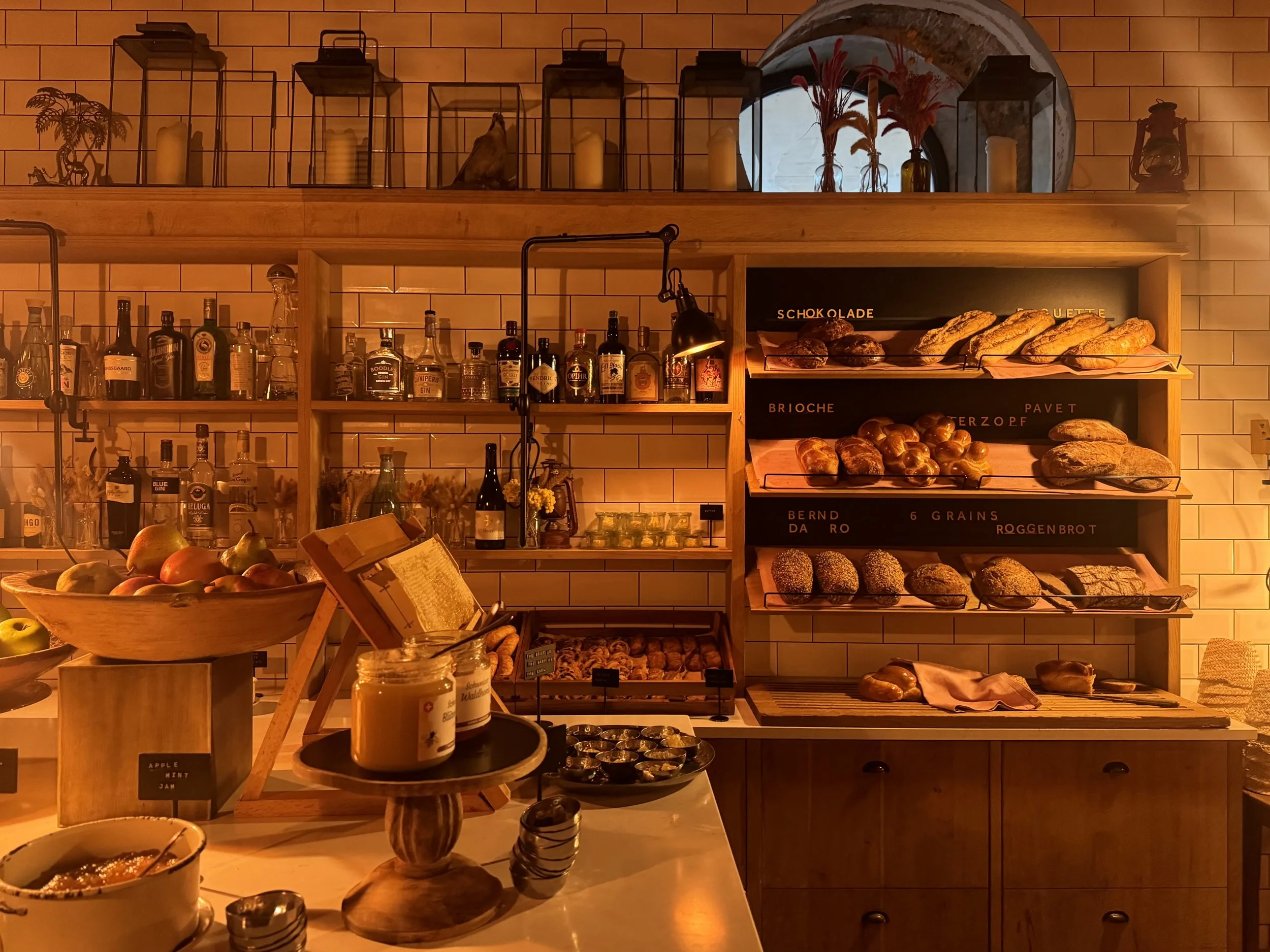
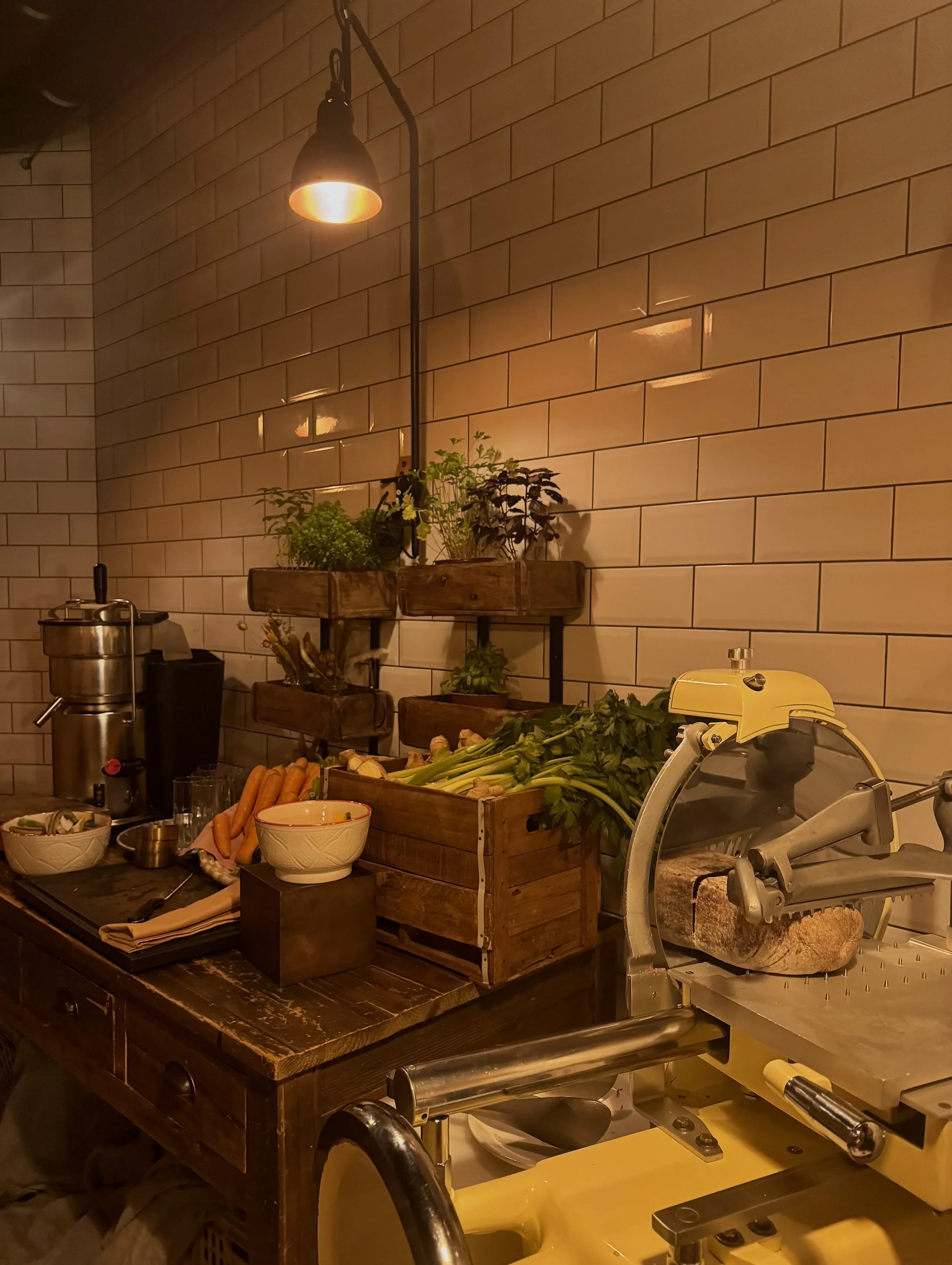
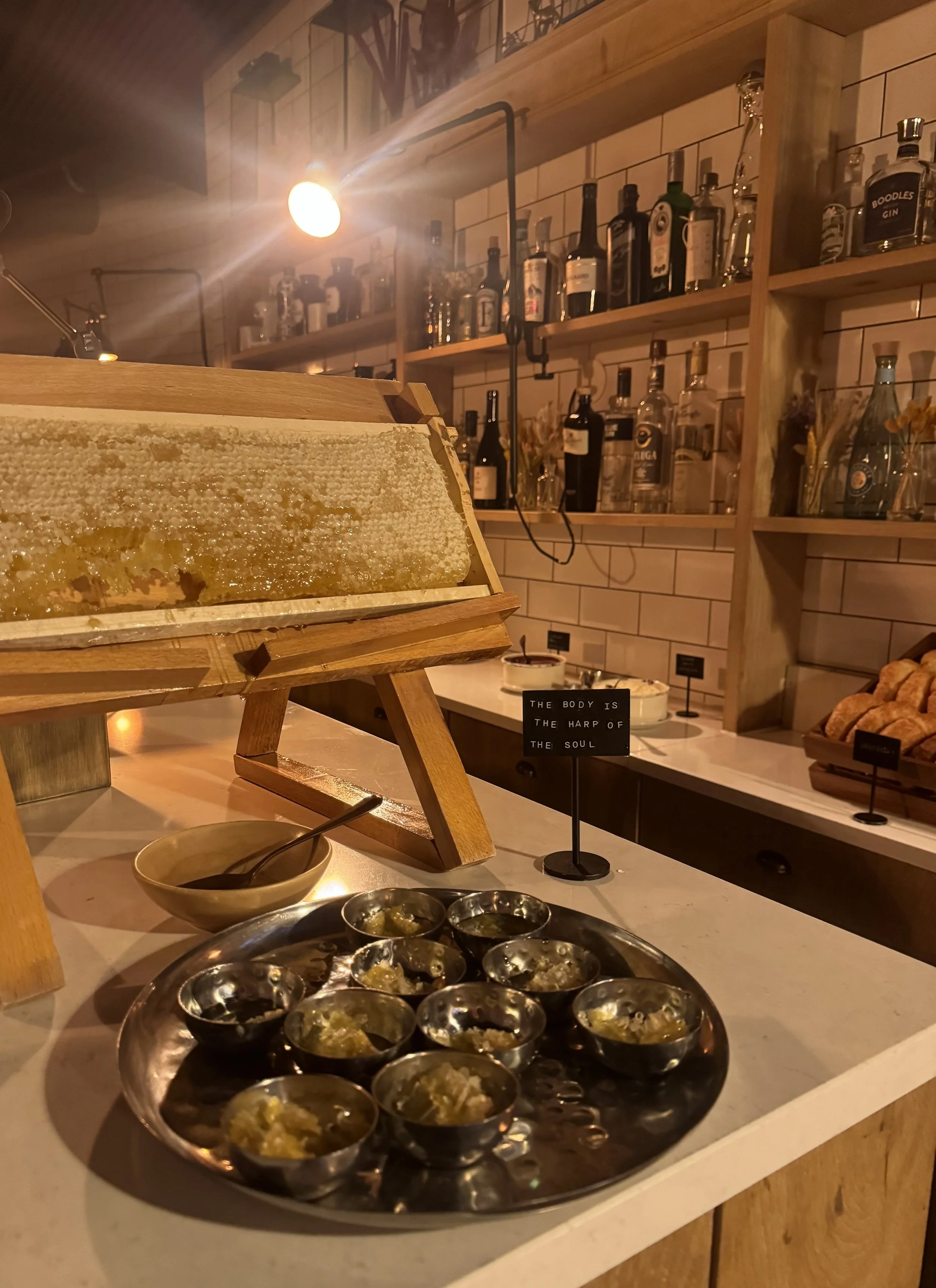
Our sunrise walk was followed by one of the most appealing breakfast buffets I’ve ever seen. Not only did Cervo serve a dizzying assortment of fresh bread and pastries, fruits and jams, charcuterie, fresh-pressed fruit juice, and honey straight from the comb, you could also order hot dishes like shakshuka and vegan momos. Everything tasted as good as it looked.
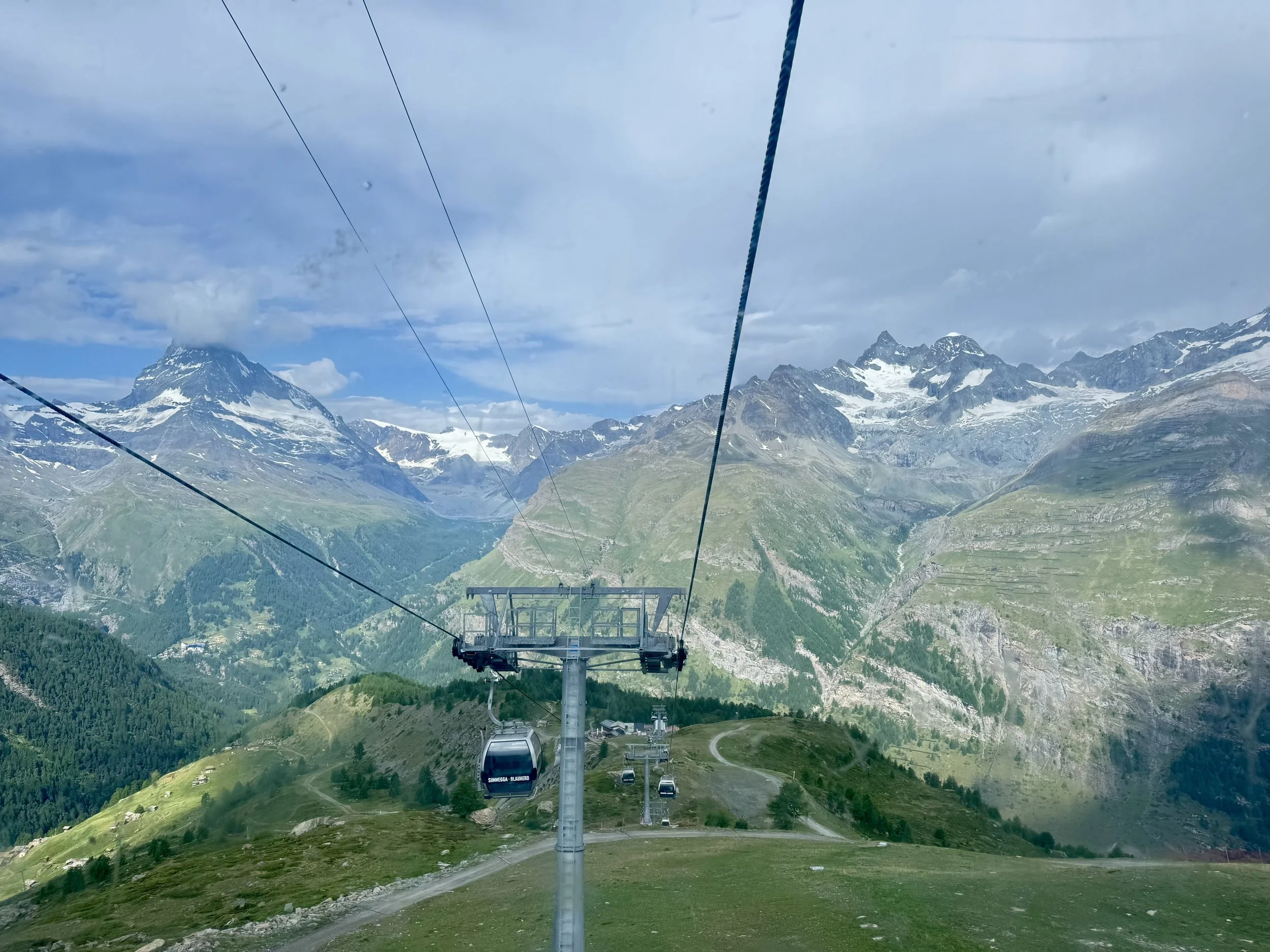
We had two main destinations for the day — the first was Stellisee, an alpine lake that is part of the famous Five Lakes Trail. You can easily access it by taking the Zermatt-Sunnegga funicular, then a cable car up to the Blauherd station. We purchased our tickets via the hotel concierge that morning, and the ride up was so breathtaking that this was our actual conversation:
My mom: “已经值回票價了!” (This was already worth the price of entry!!)
Me: “票到底是什么價?” (How much were the tickets anyways?)
My mom: “不知道, 但是已经觉得值回来了” (idk, but they were worth it)
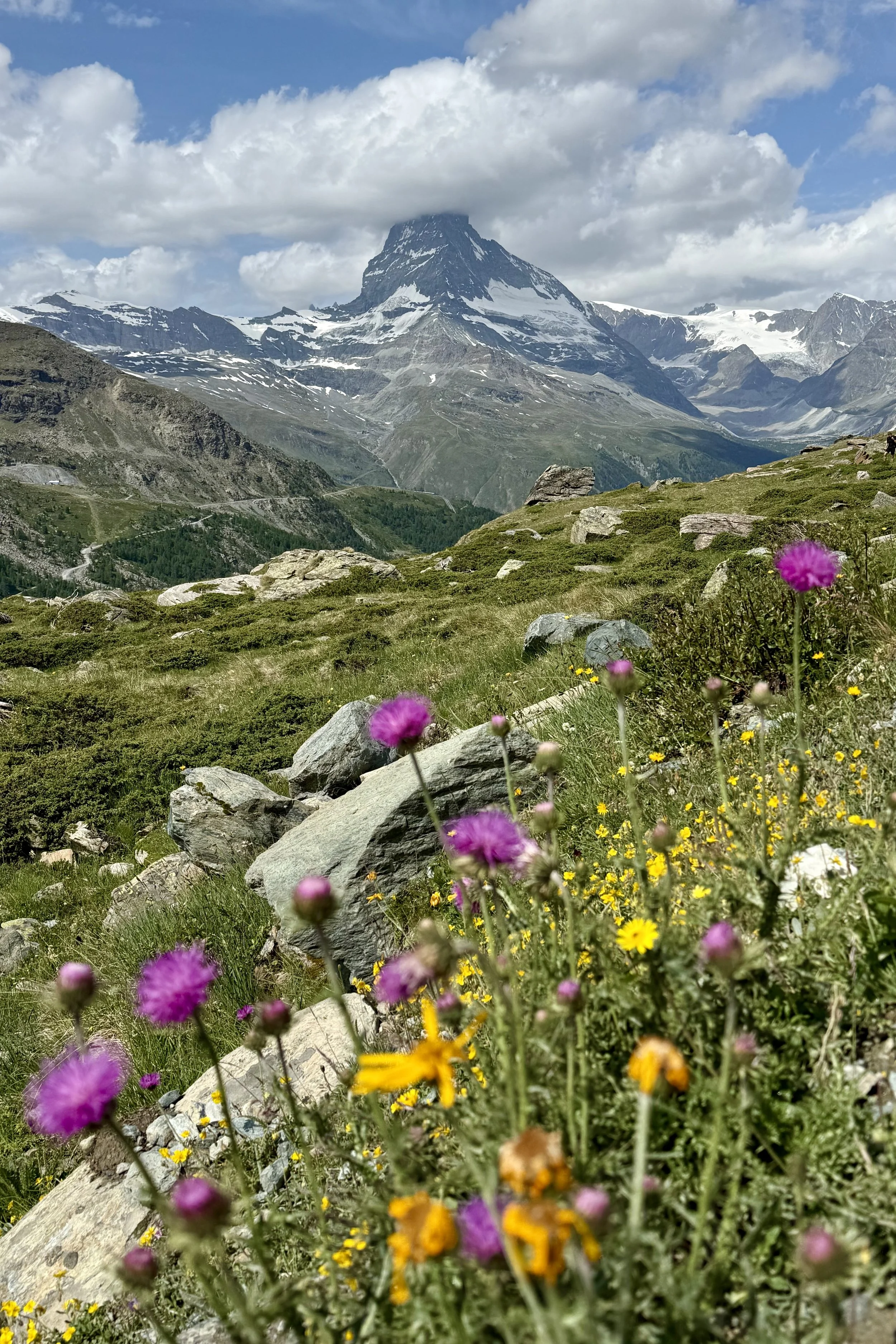
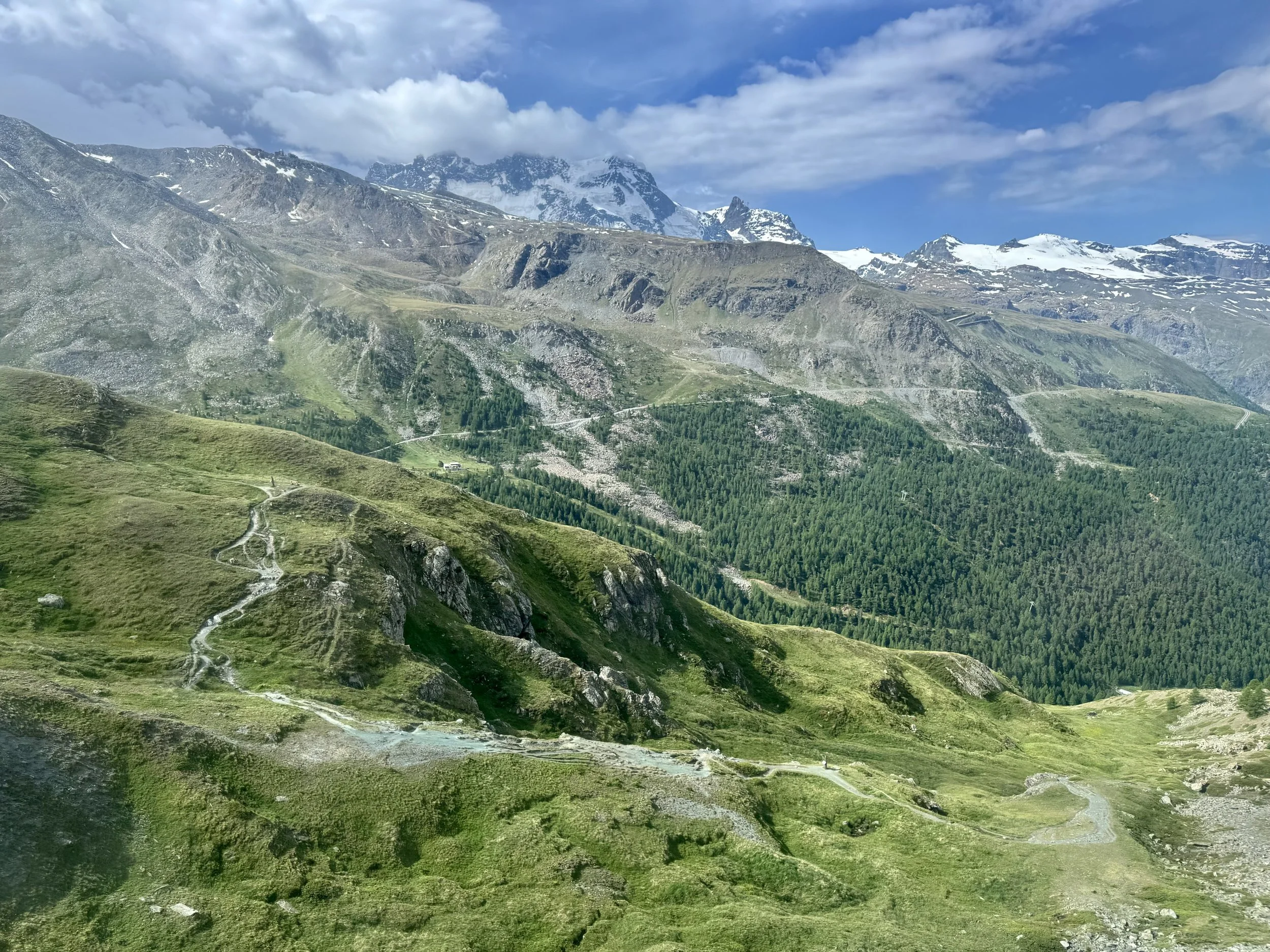
Our timing for the day was perfect; I’m glad we went in the morning before the trails started to be inundated with other tourists. We enjoyed a short, quiet stroll to the lake, where we caught the Matterhorn while its reflection was still visible on the lake’s surface, and before it disappeared behind clouds. Walking along the trail, it felt like there were views in every direction.
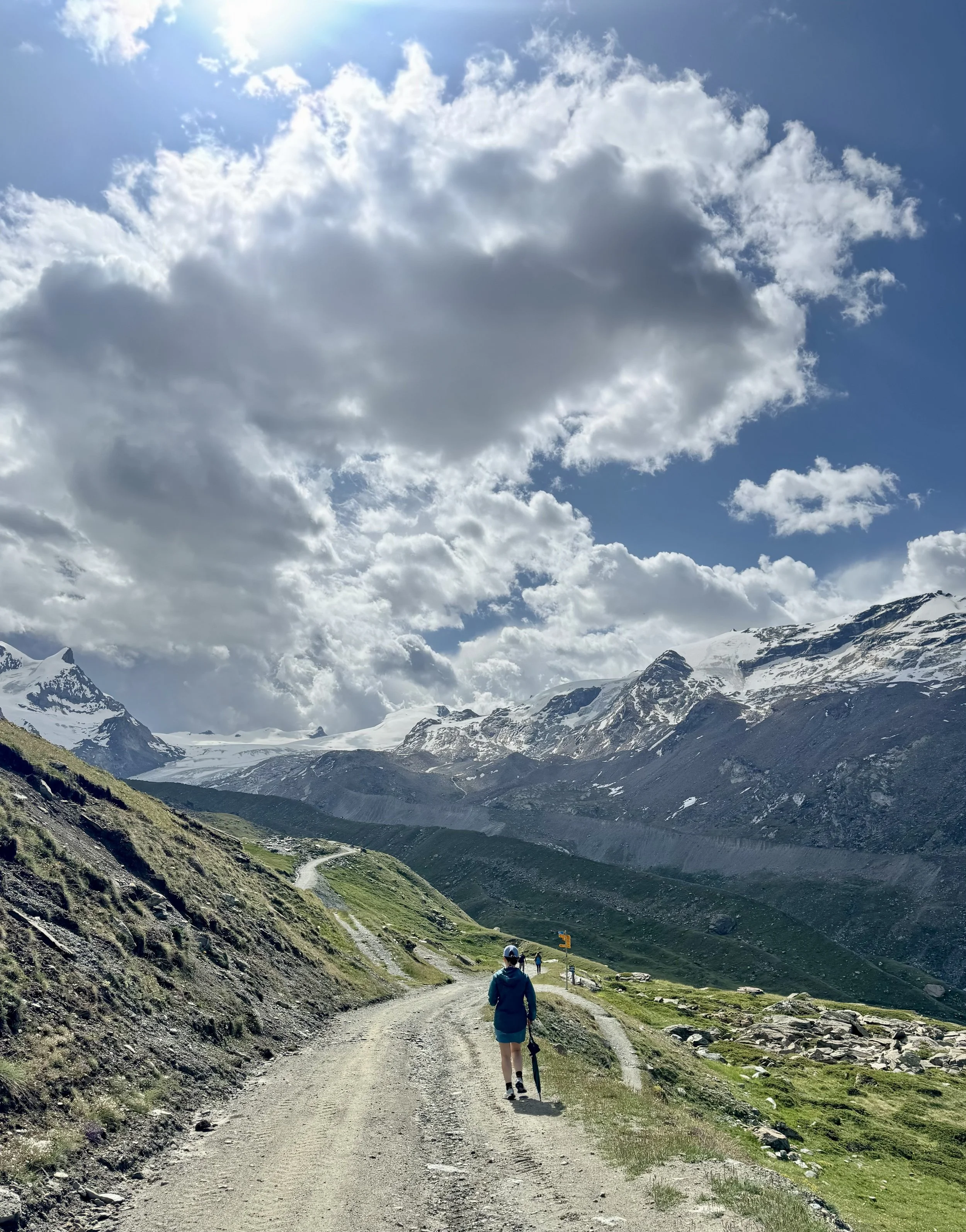
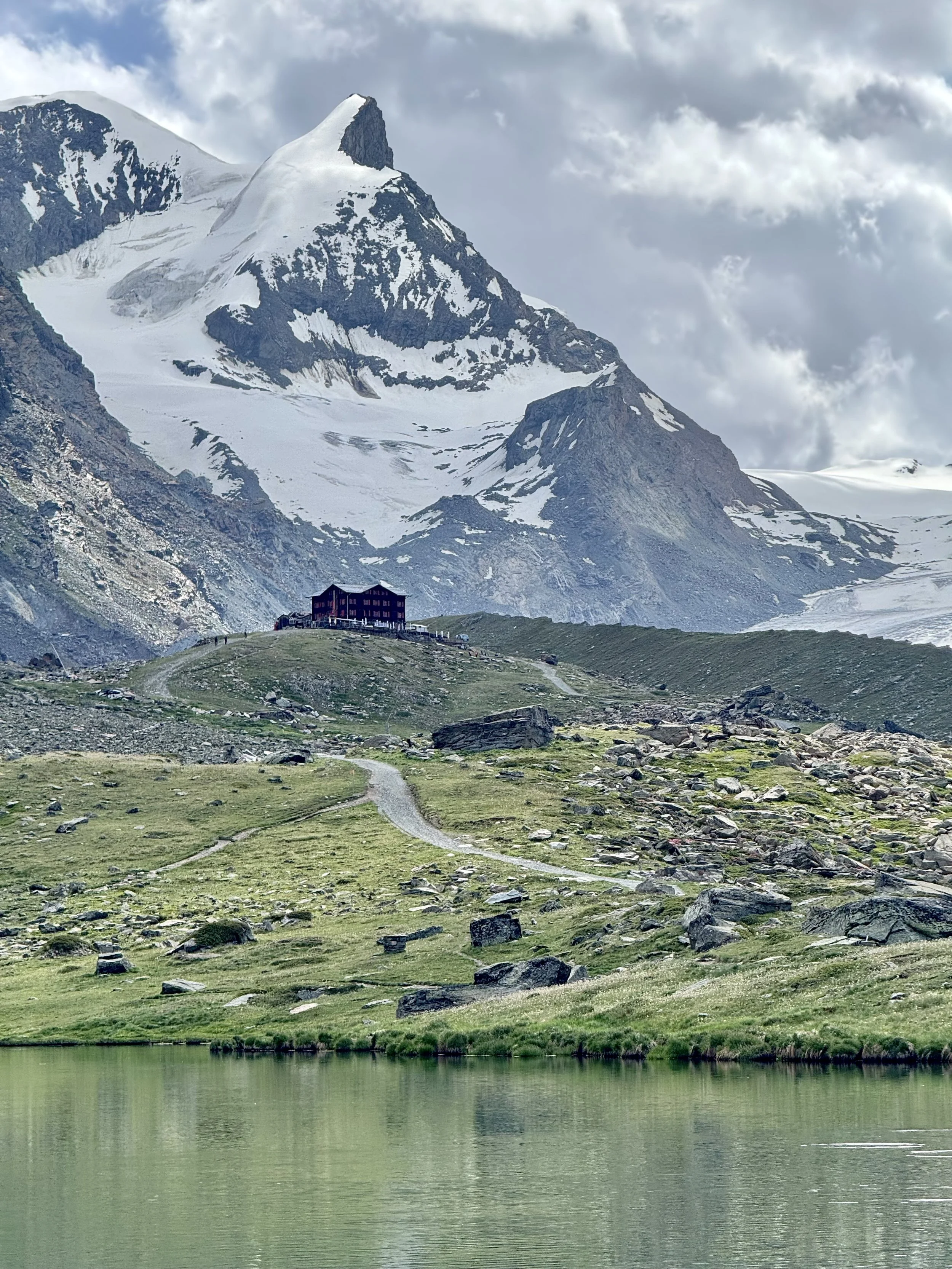
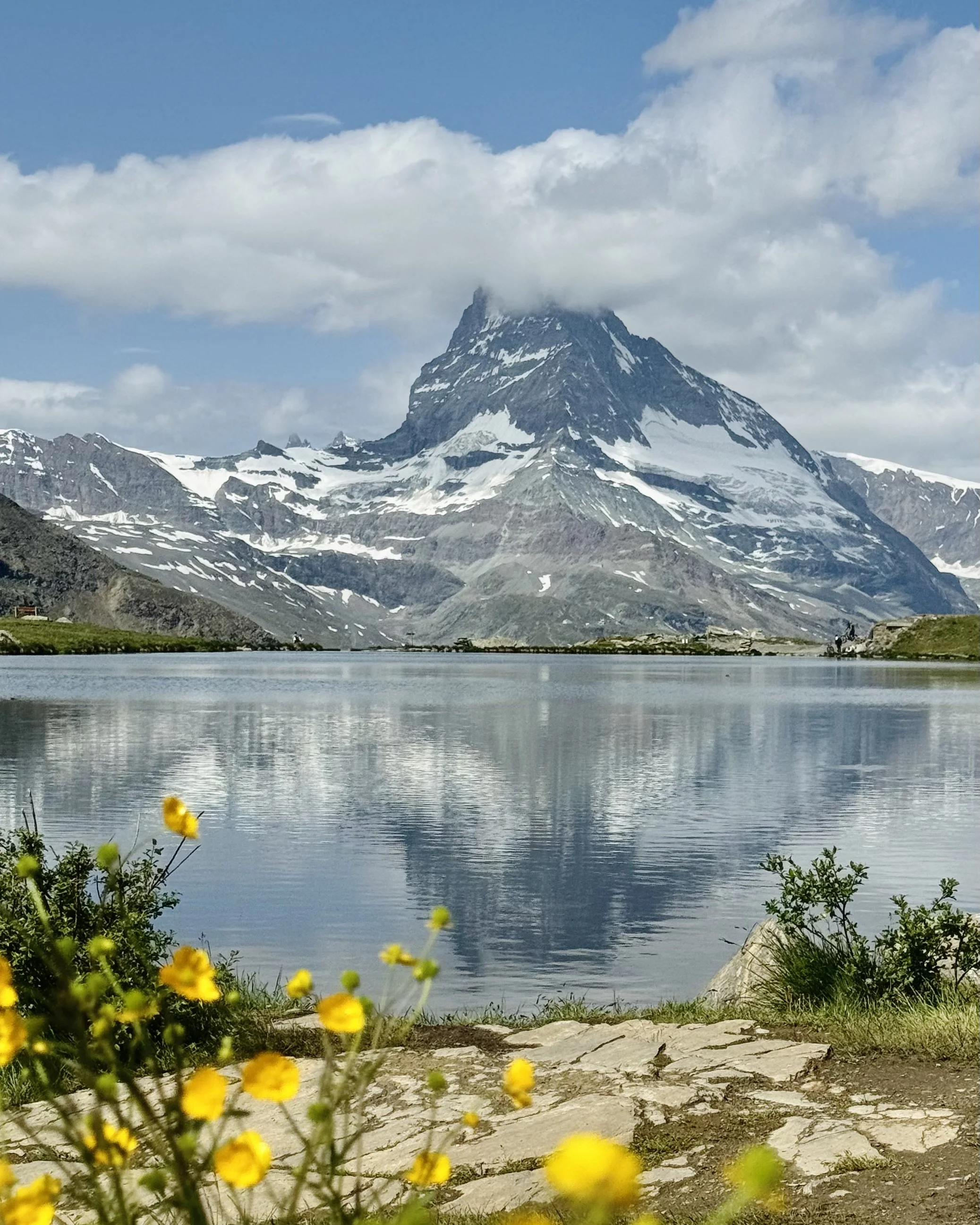
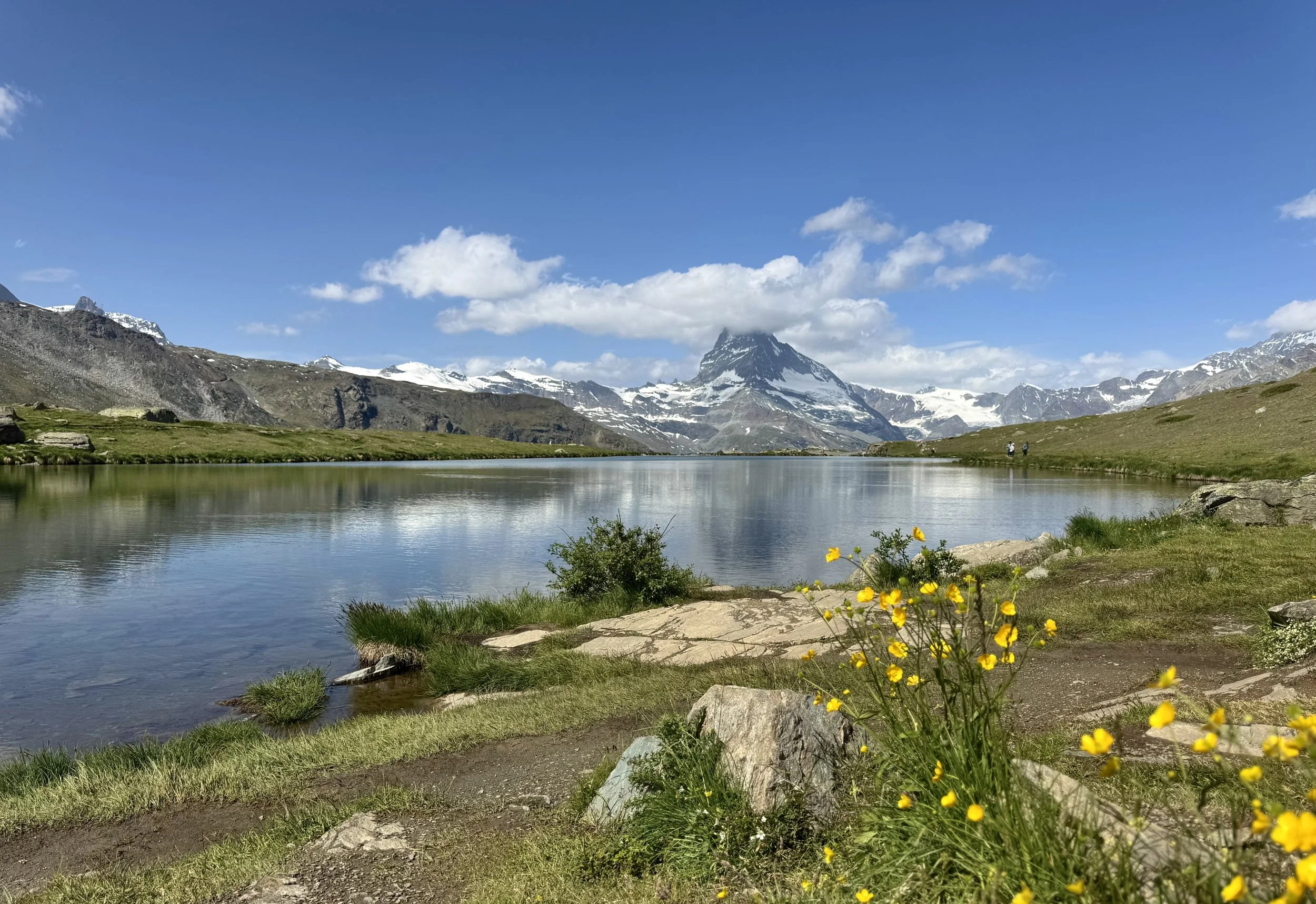
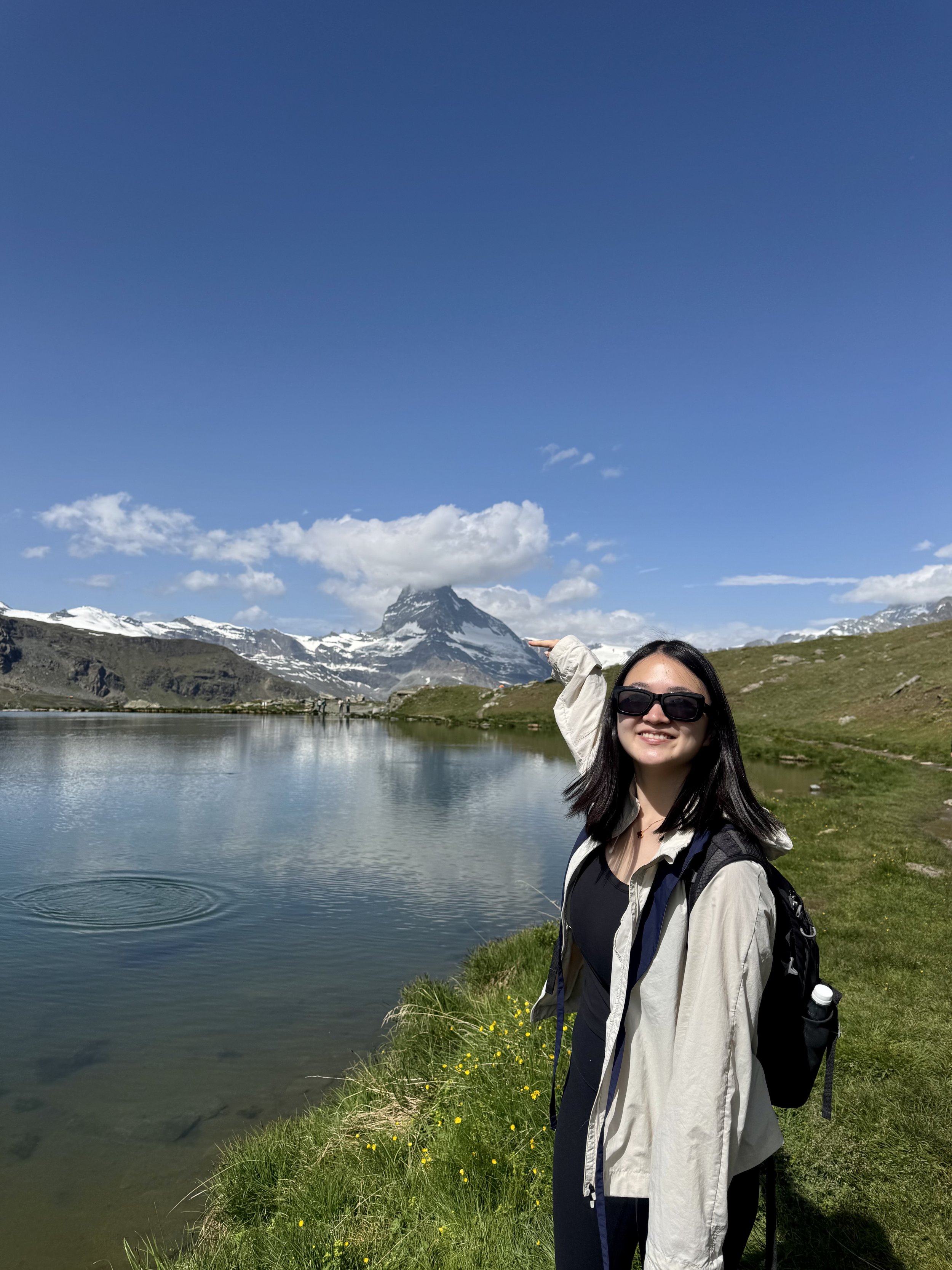
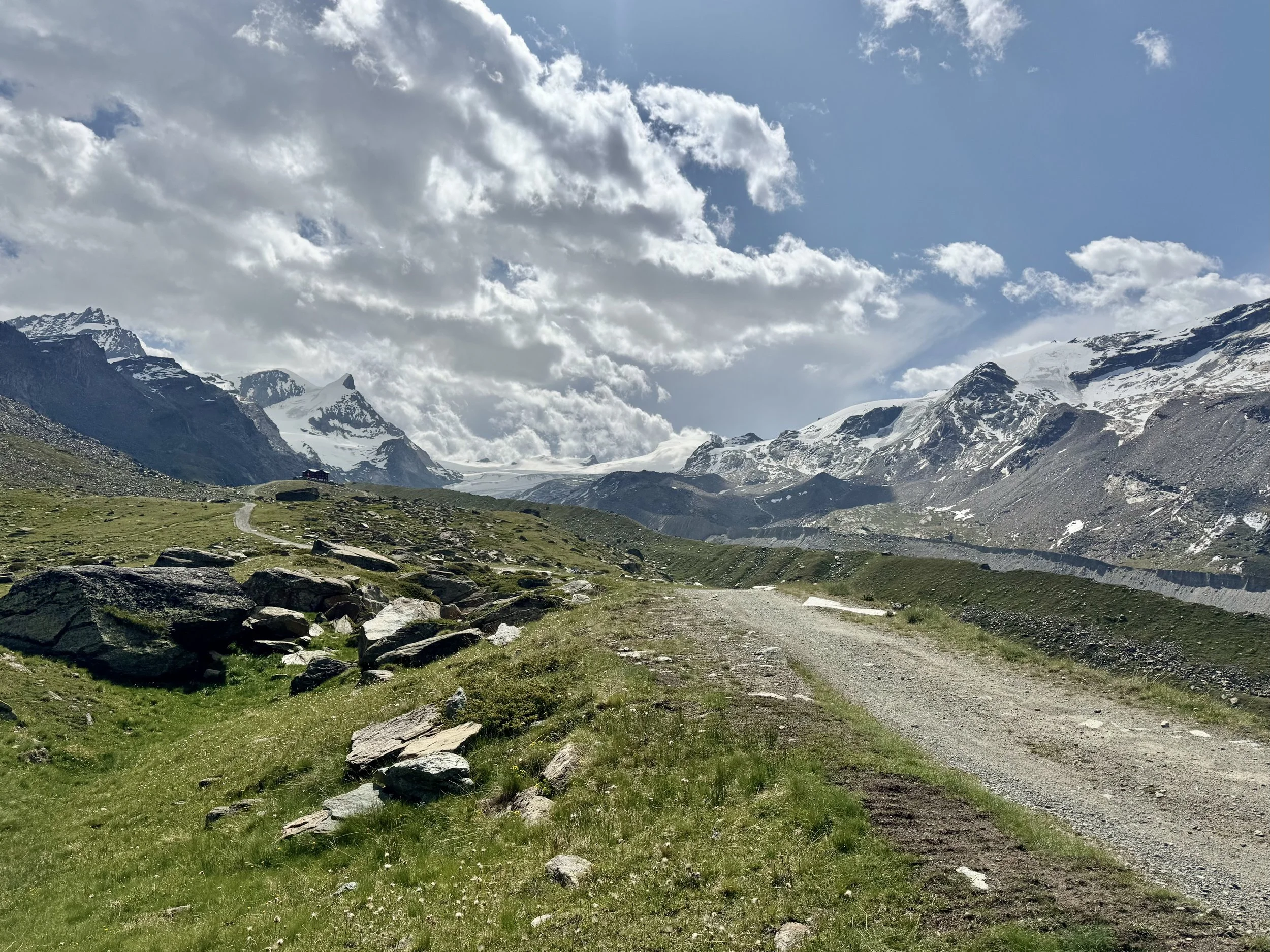
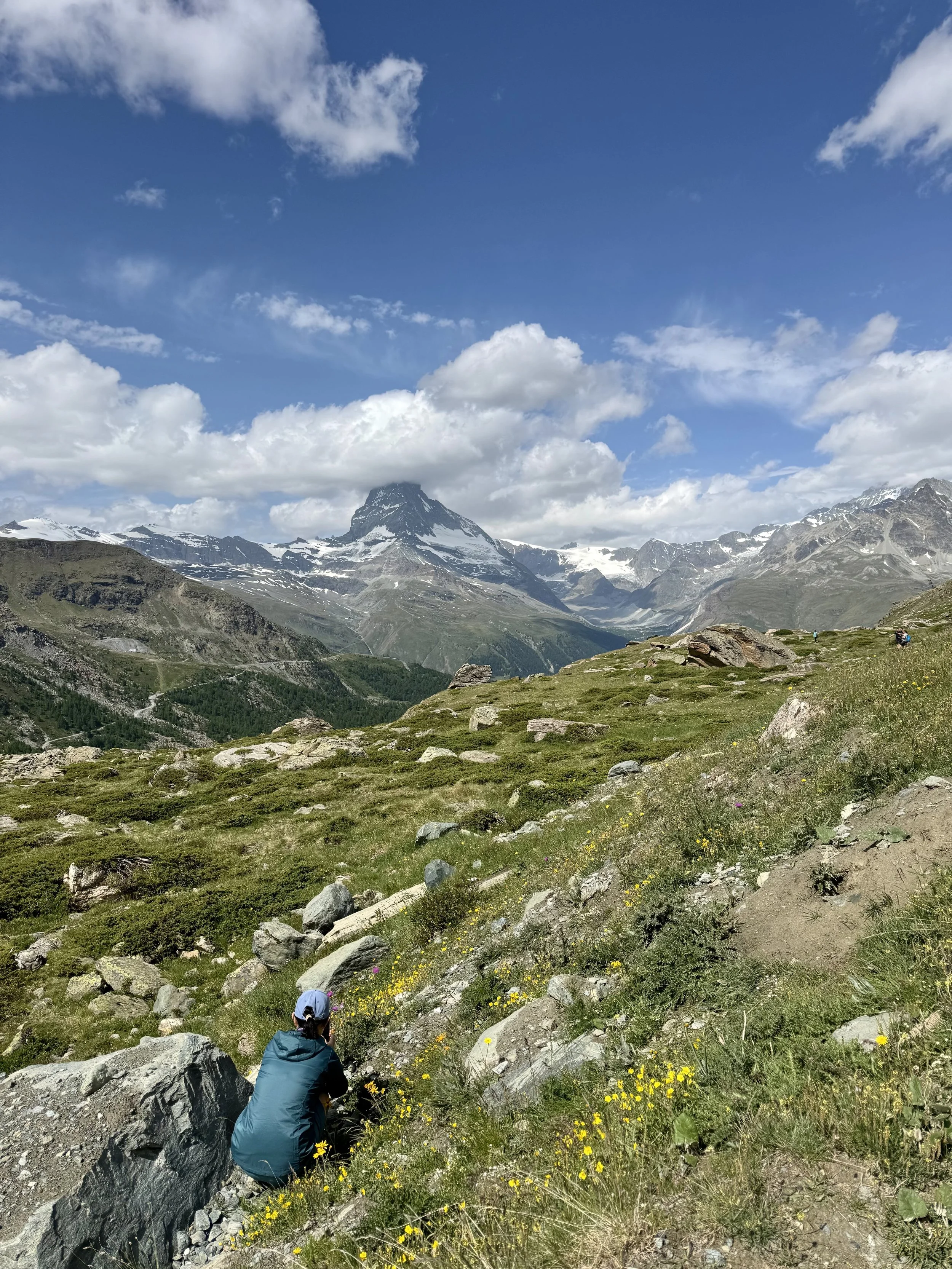
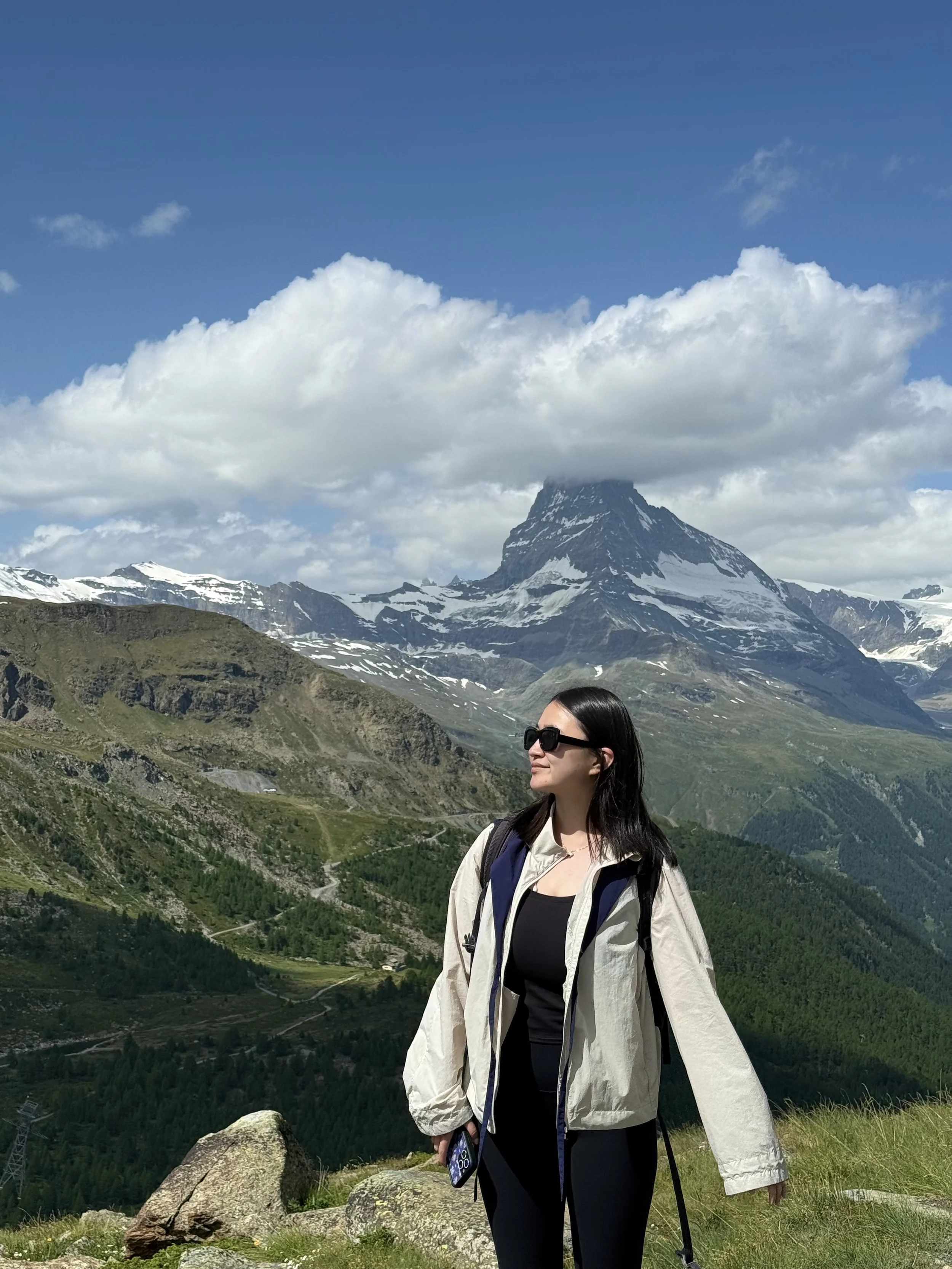
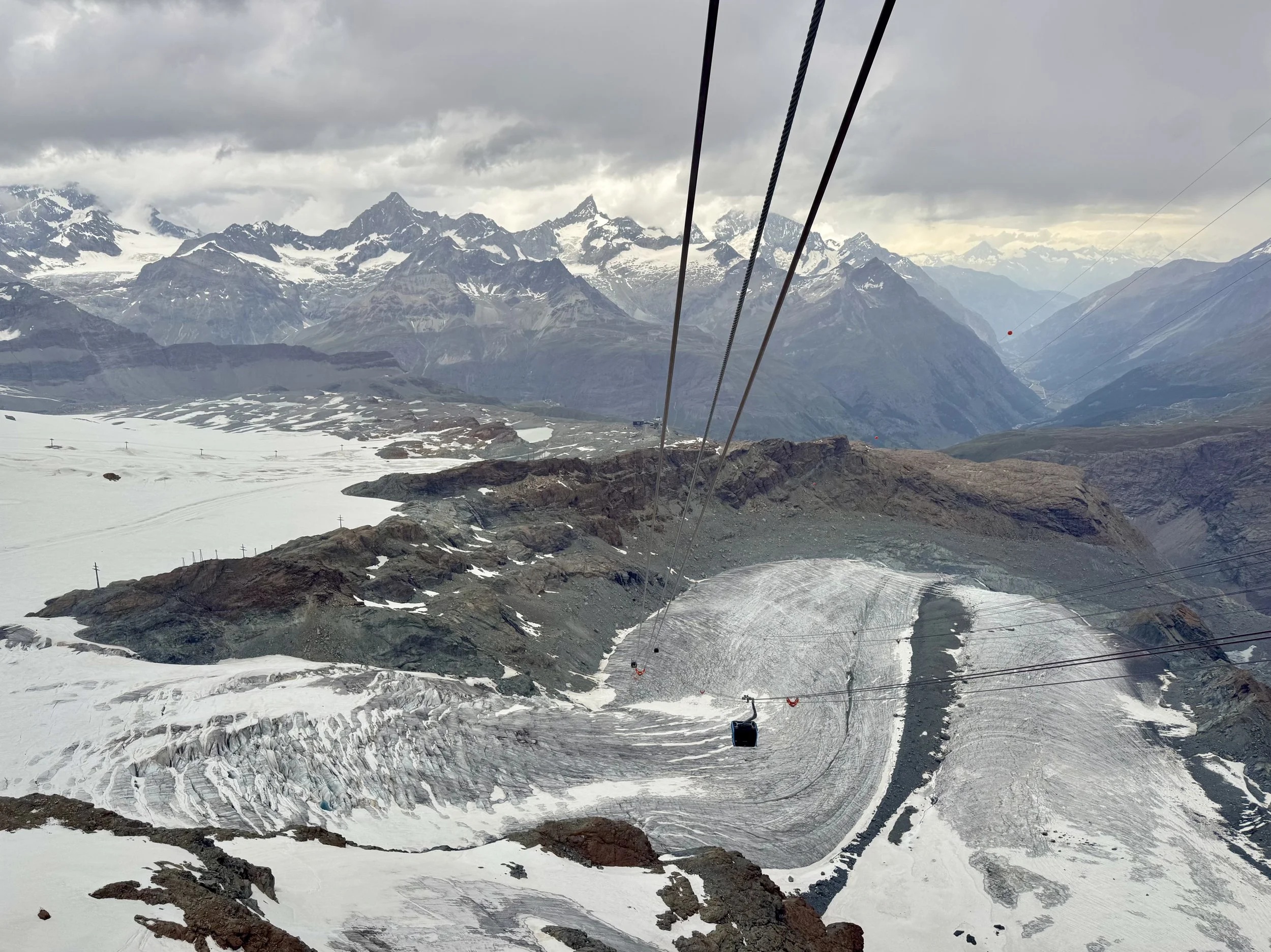
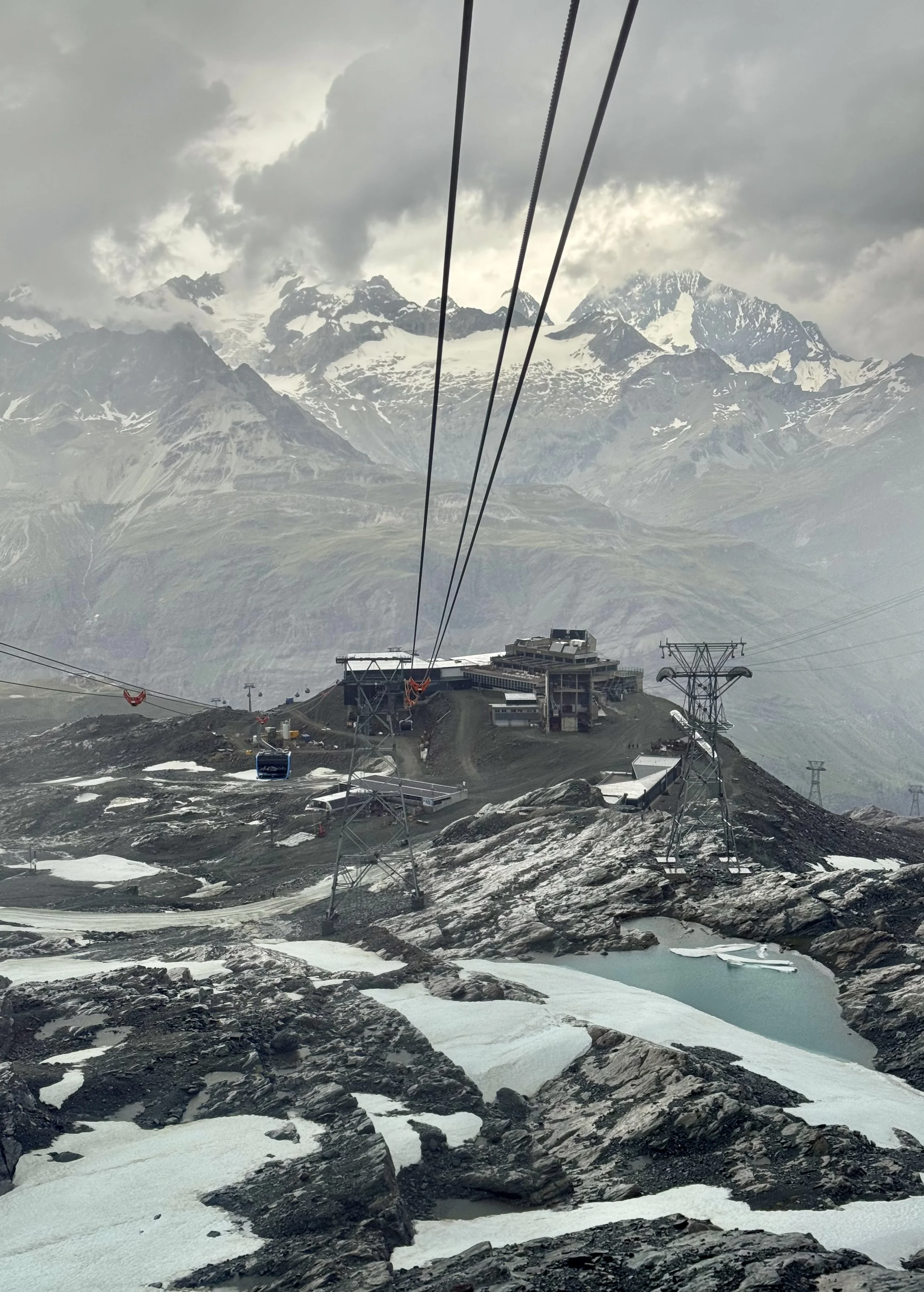
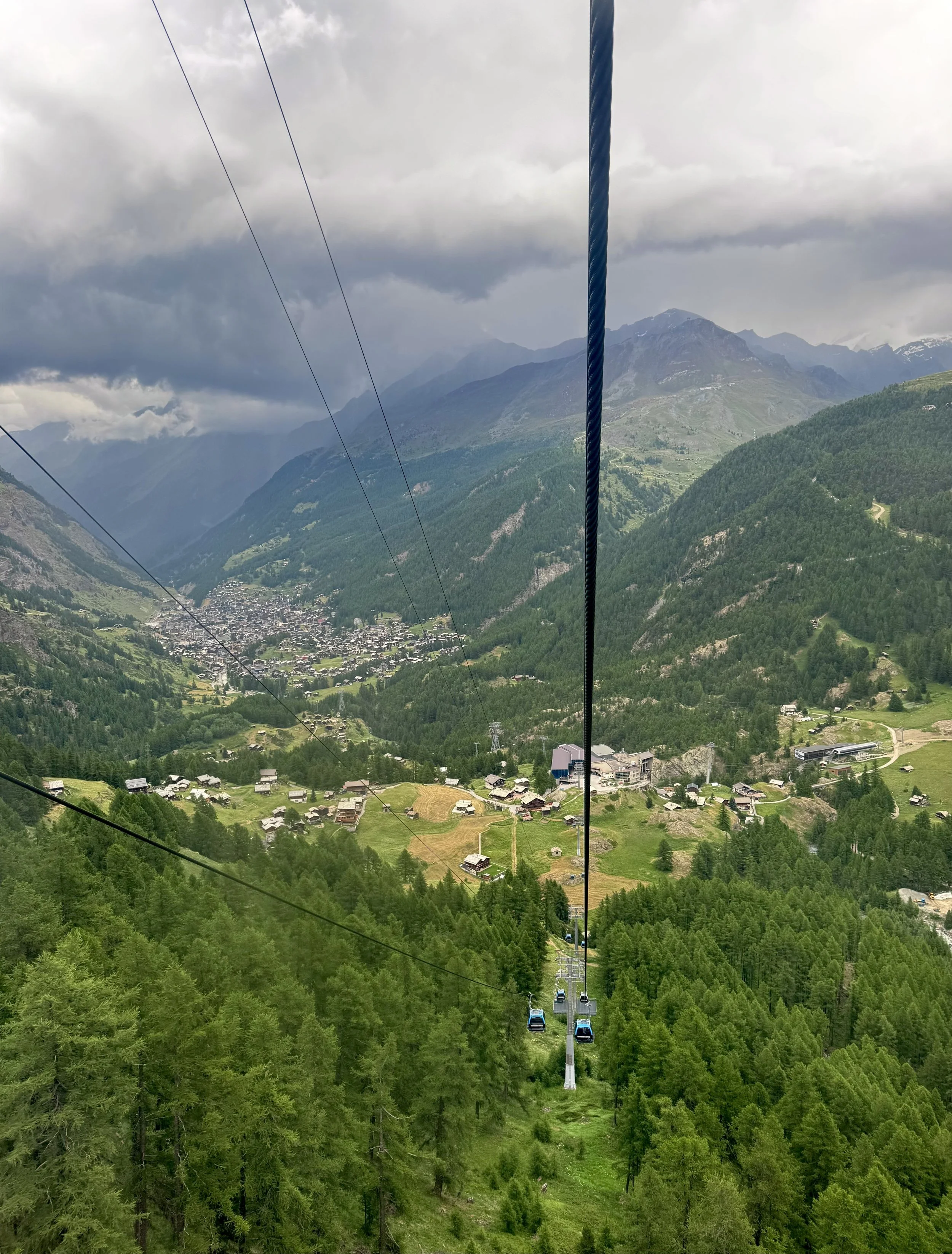
After finding our way to Zermatt’s cable car station, we continued to Matterhorn Glacier Paradise, Europe’s highest mountain station. The “Matterhorn Express” cable car allows you to exit at a few optional intermediate stations, but you can stay seated and just make one switch at the Trockener Steg station. A larger cable car then takes you to the summit. We took some photos by the small lake outside the Trockener Steg station, which felt like an otherworldly scene with the snow — far removed from the verdant vale of Zermatt below.
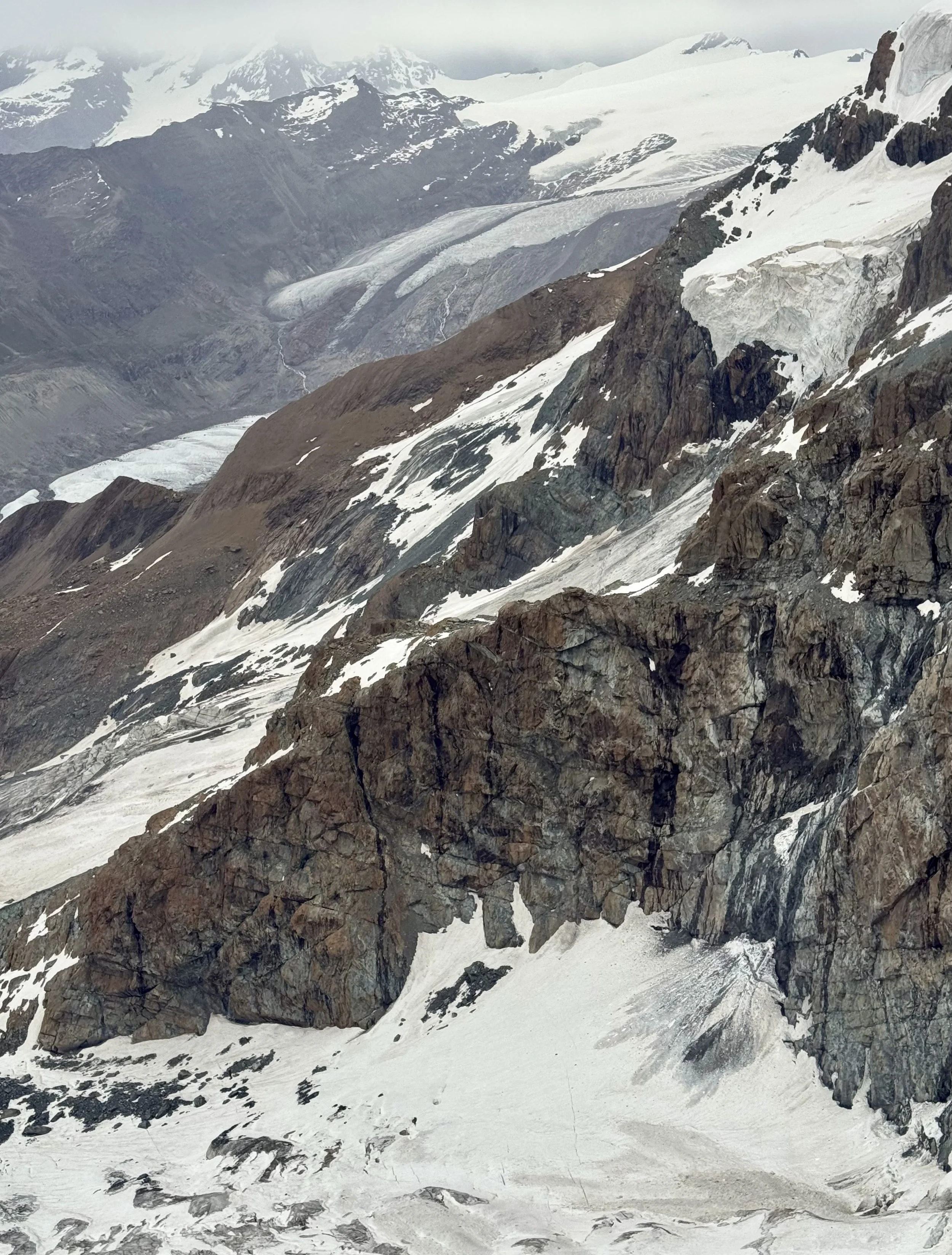
The view of the glacier from the larger cable car was striking: a vast expanse of ancient ice, marked with crevasses and tinged blue in places where the ice was most compressed. Layers upon layers of mountains came into view. Unlike many of Switzerland’s more inviting landscapes, the Glacier Paradise feels harsh, cold, unforgiving. In the summer, the mountains aren’t totally blanketed in snow, so you can see more interesting patterns that have formed in the ice and rock. It did start to snow heavily as we reached the top, so we grabbed a hearty lunch at their restaurant and tried to wait it out. On a clear day, you can step out onto their 360-degree viewing platform and look out upon 14 glaciers and 38 four-thousanders in Switzerland, Italy, and France — but when we visited, there was hardly any visibility at all. On the way back, our smaller cable car stopped a few times and just swayed in the wind and rain. If it weren’t for the fact that a Glacier Paradise staff member happened to be riding in our car, this would have been a much more stressful conclusion to the day’s adventures.
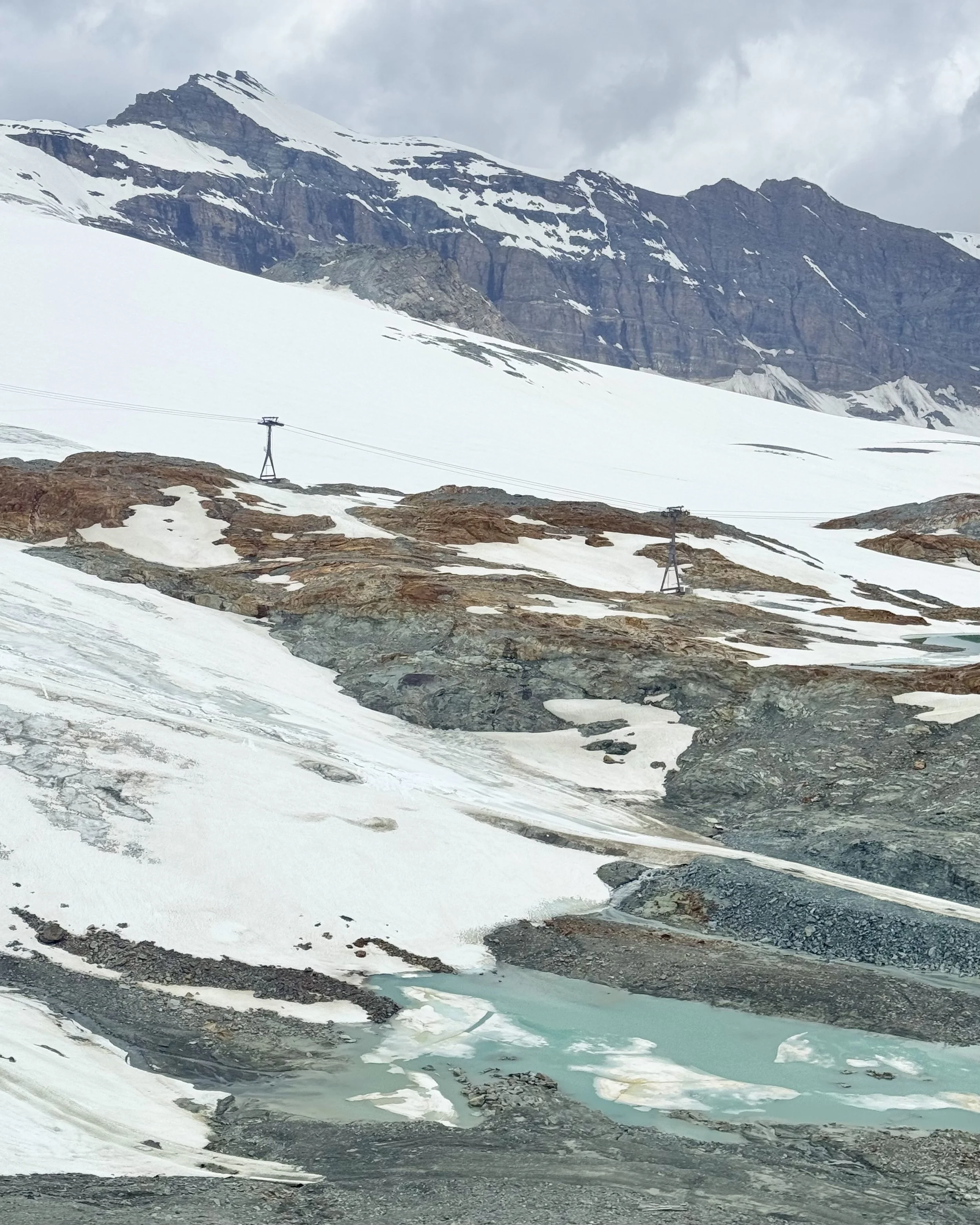
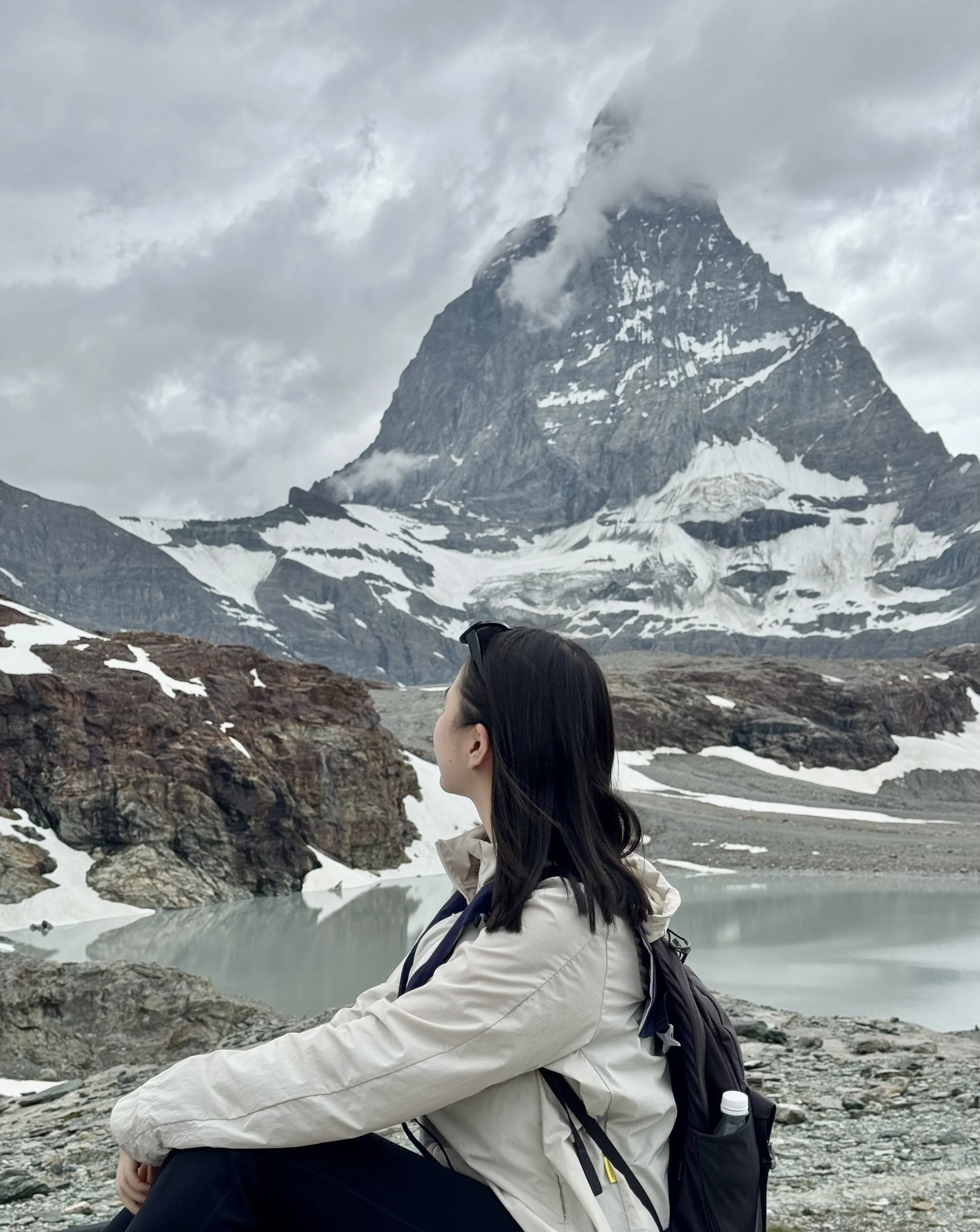
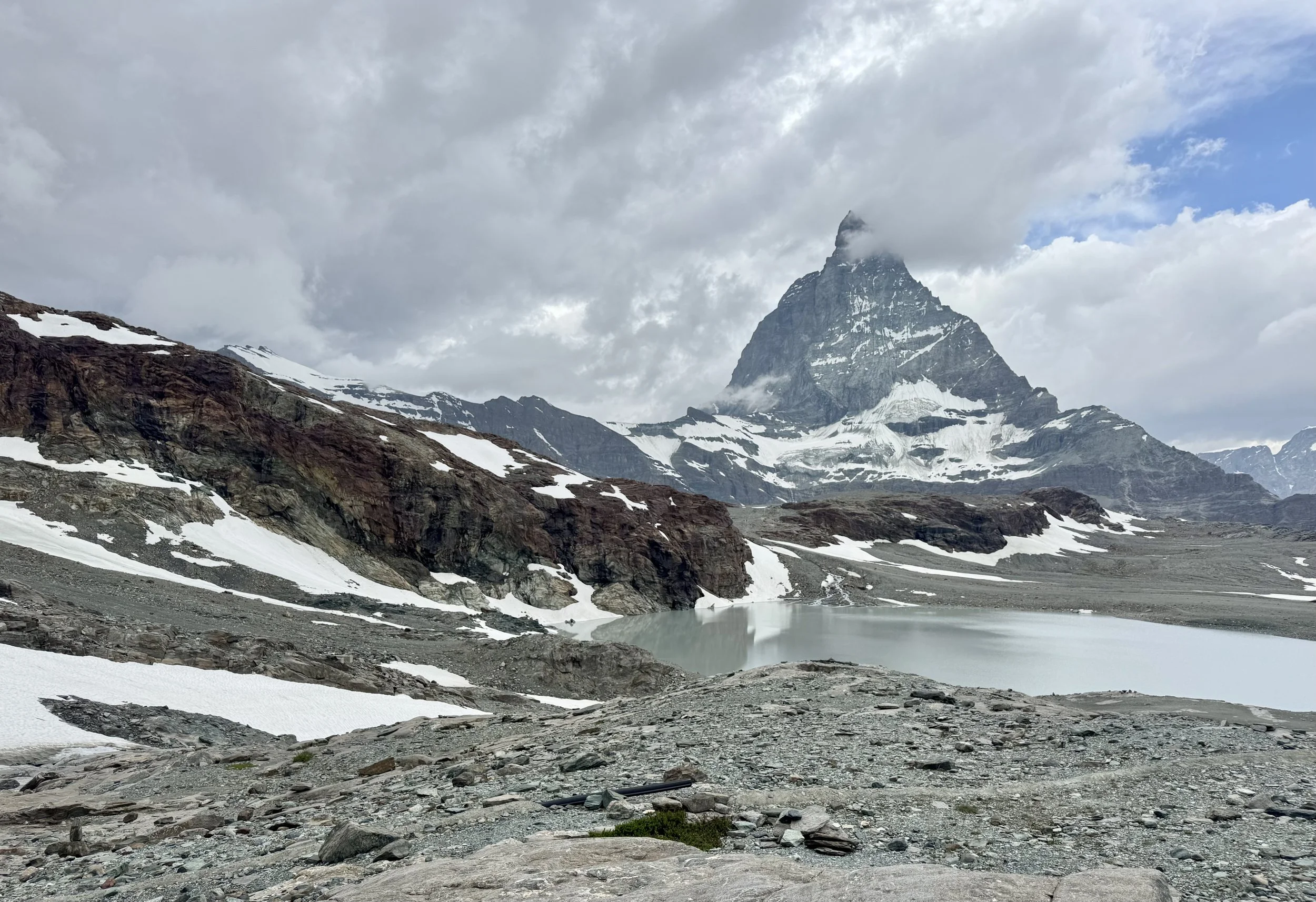
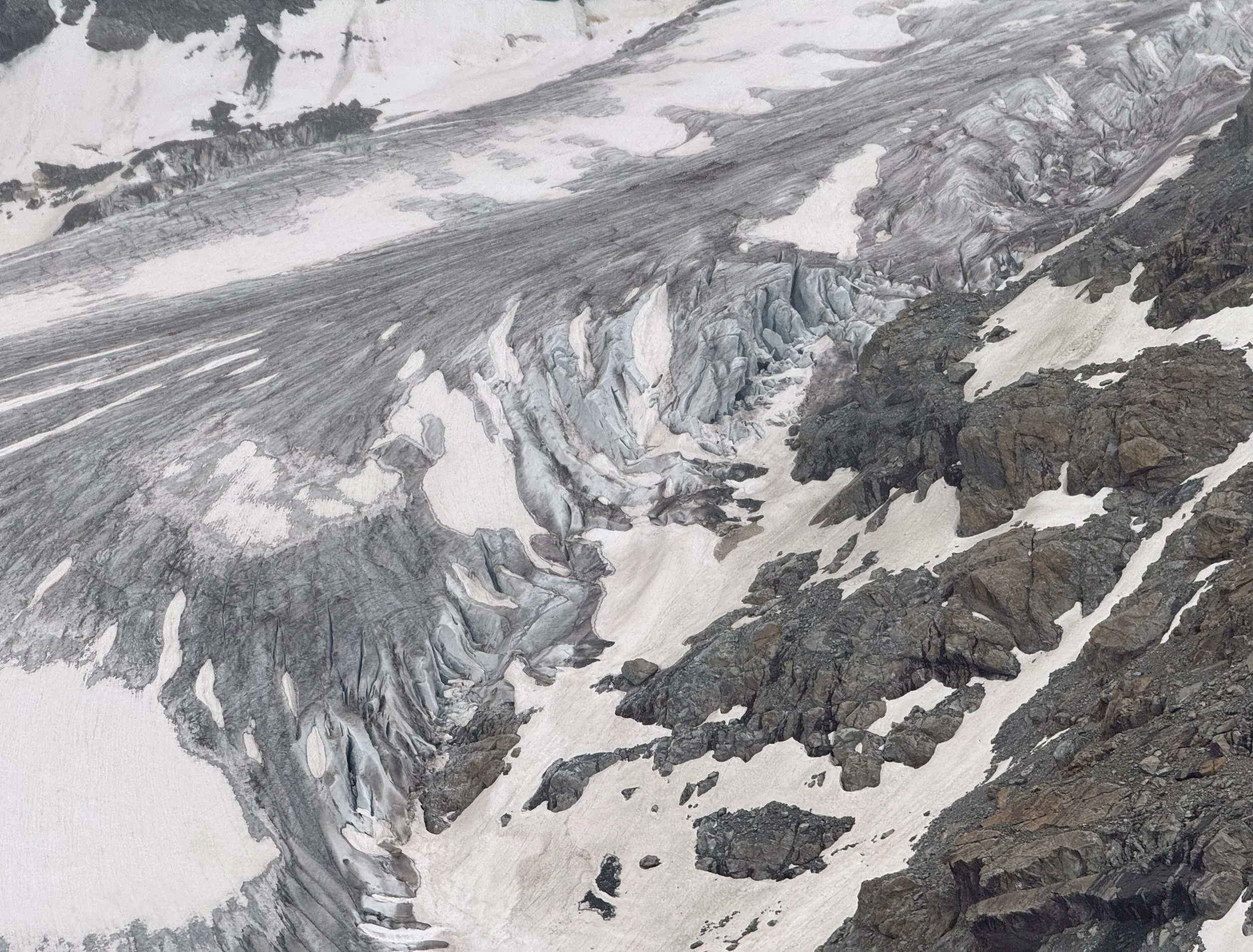
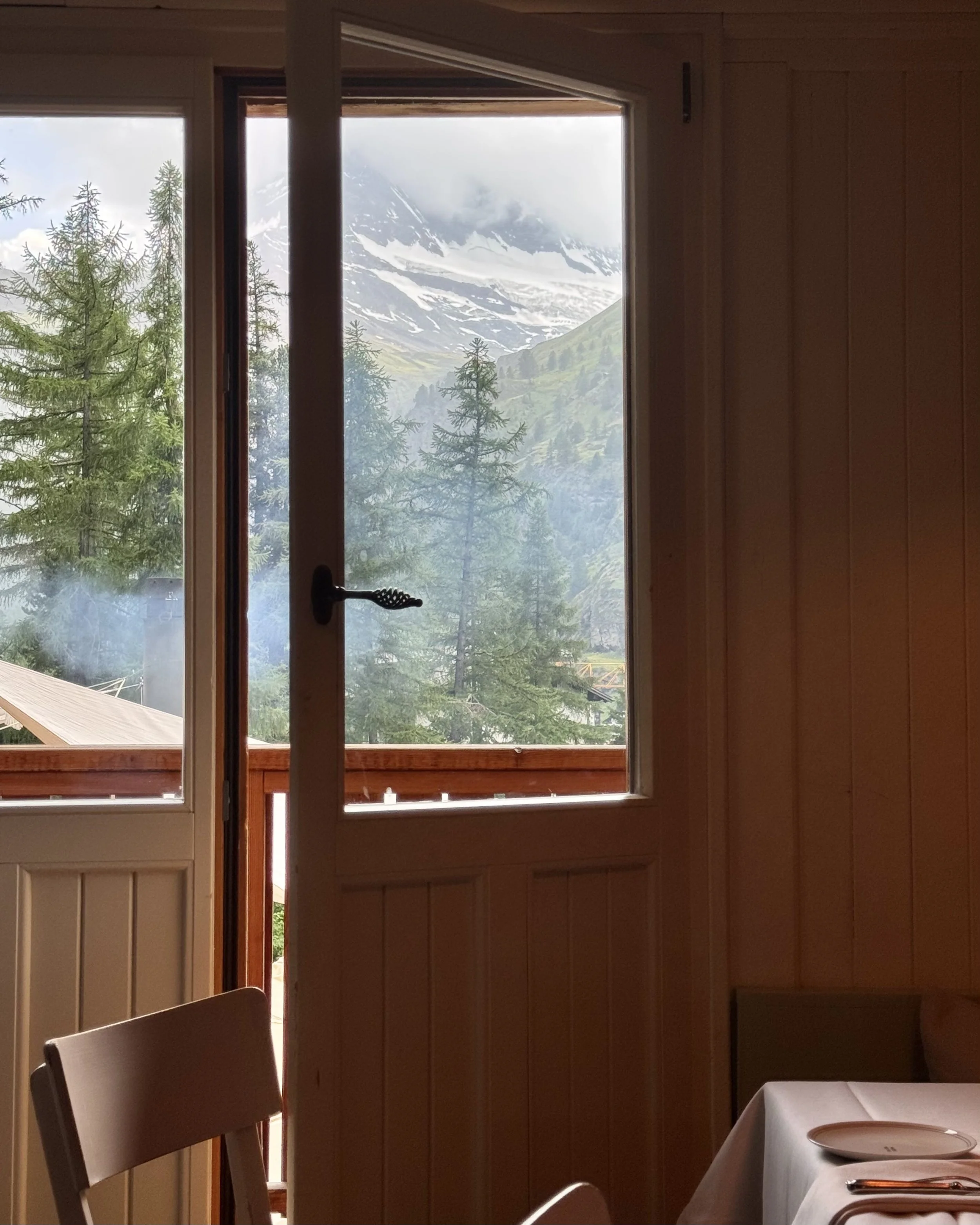
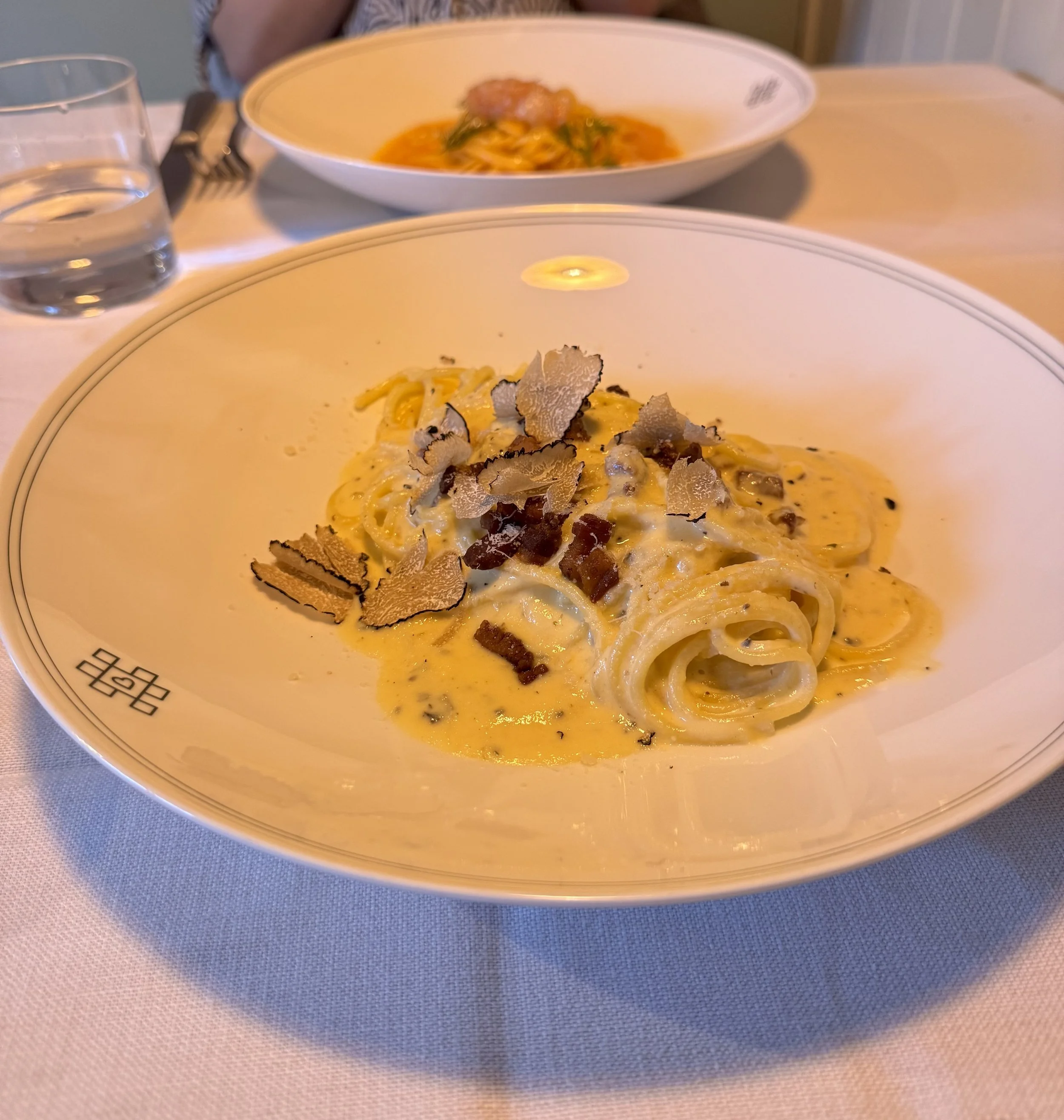
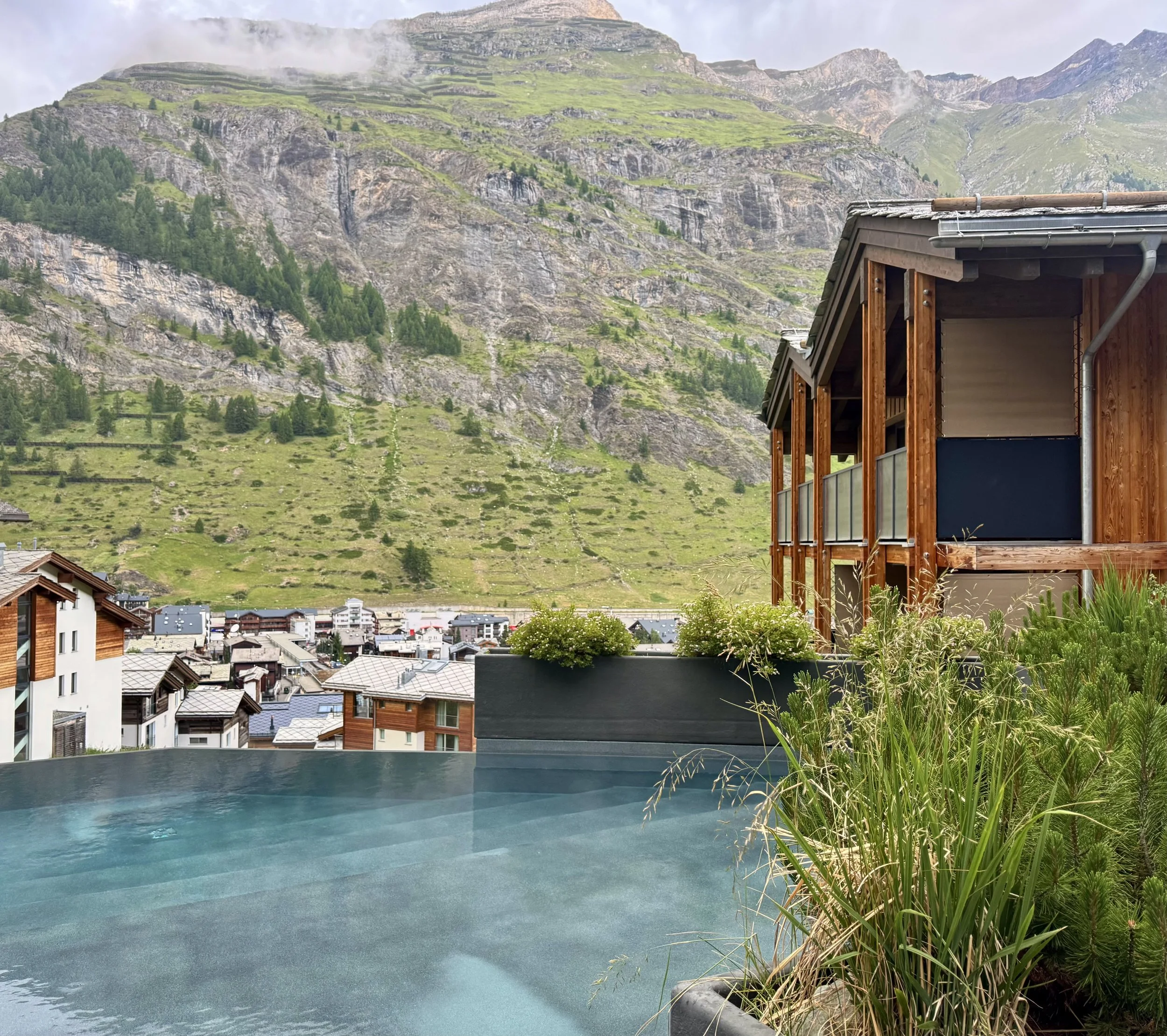
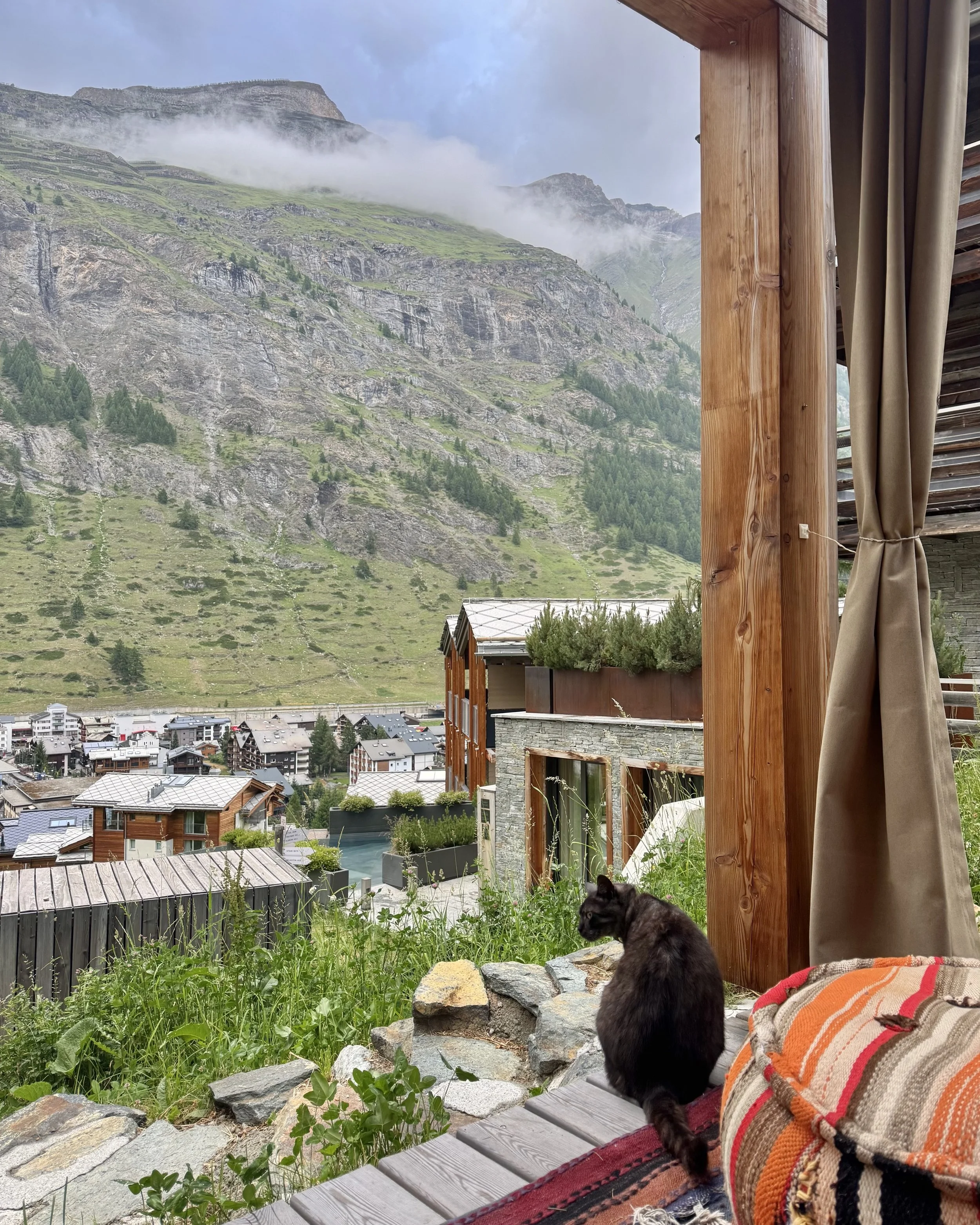
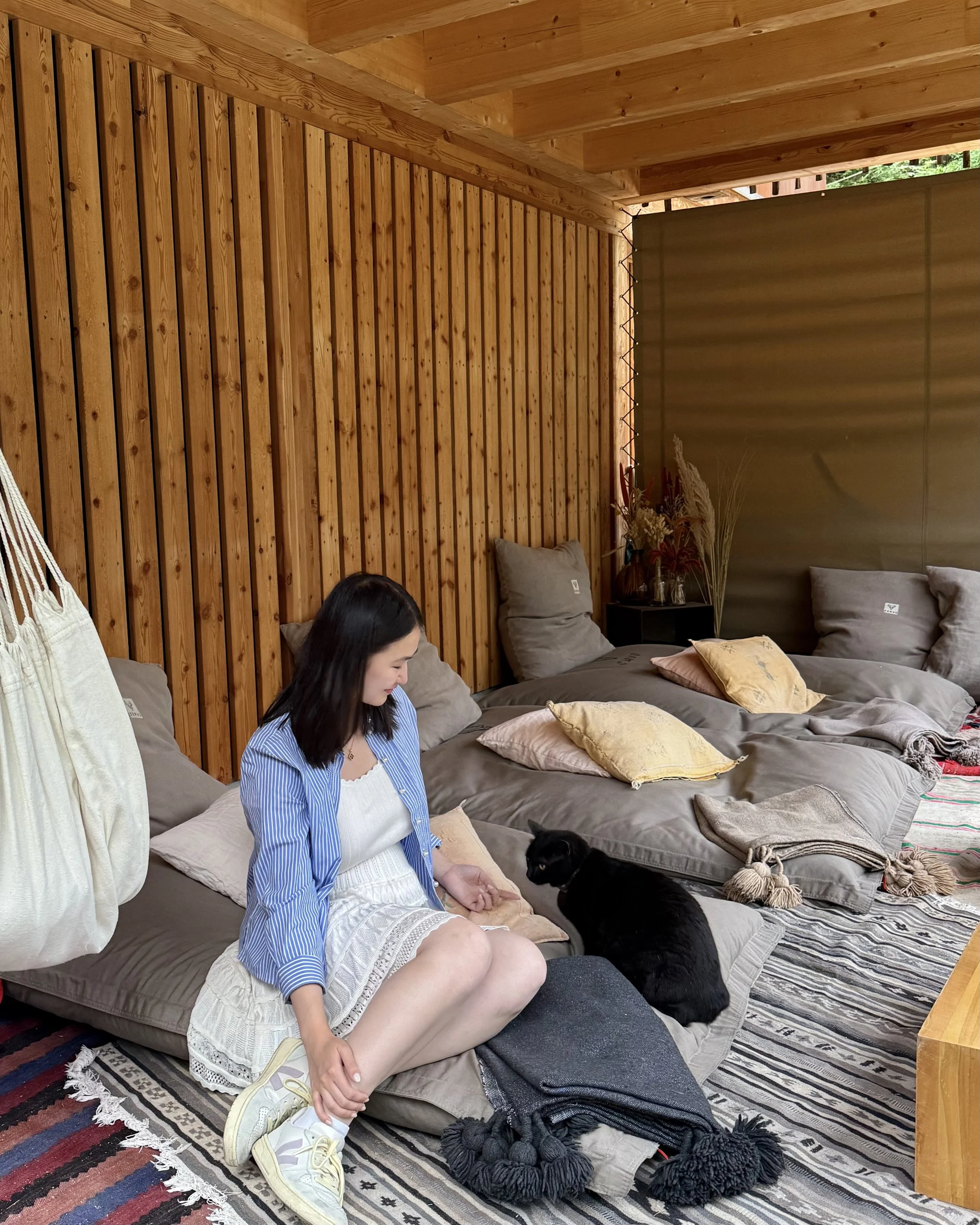
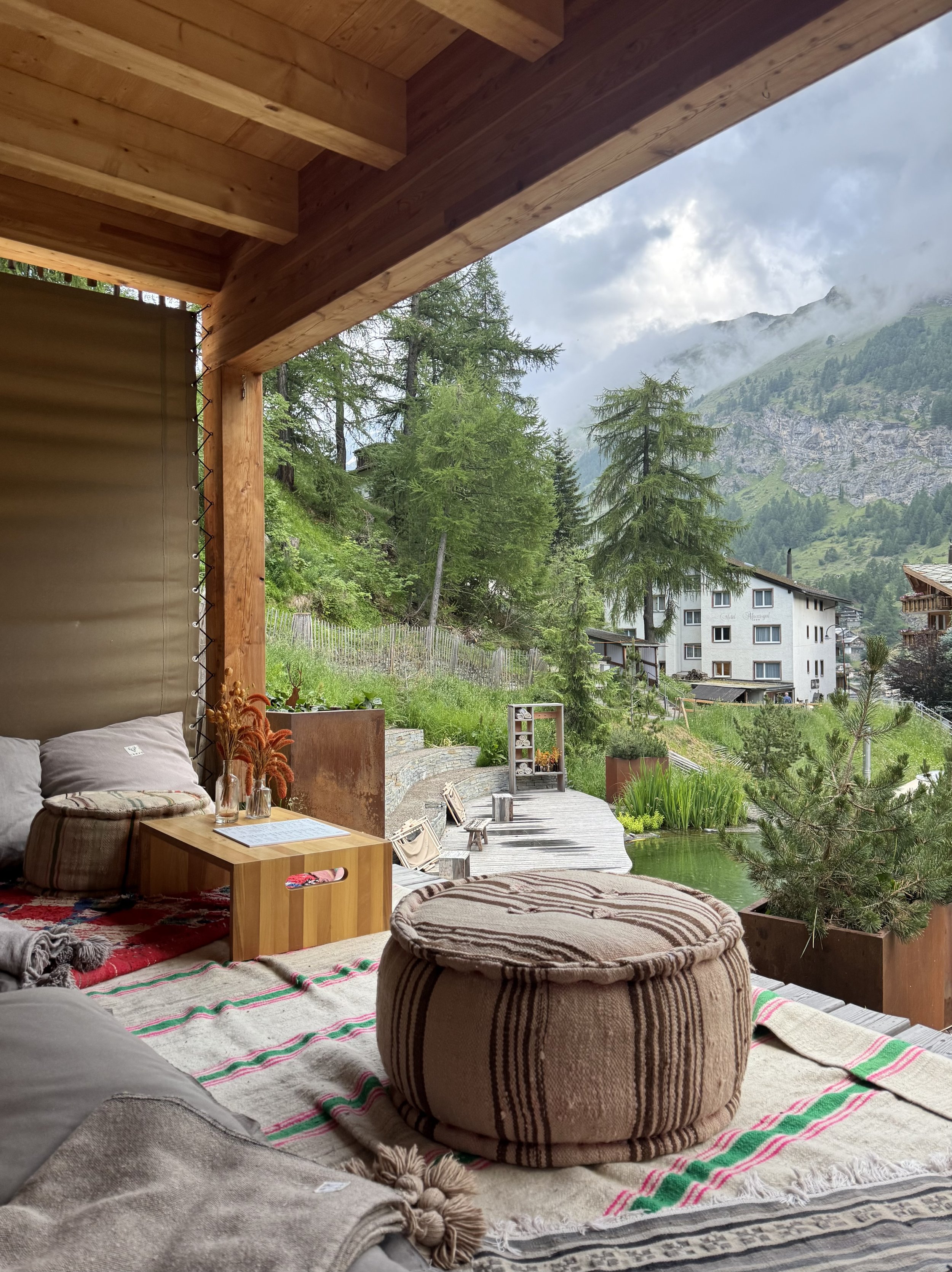
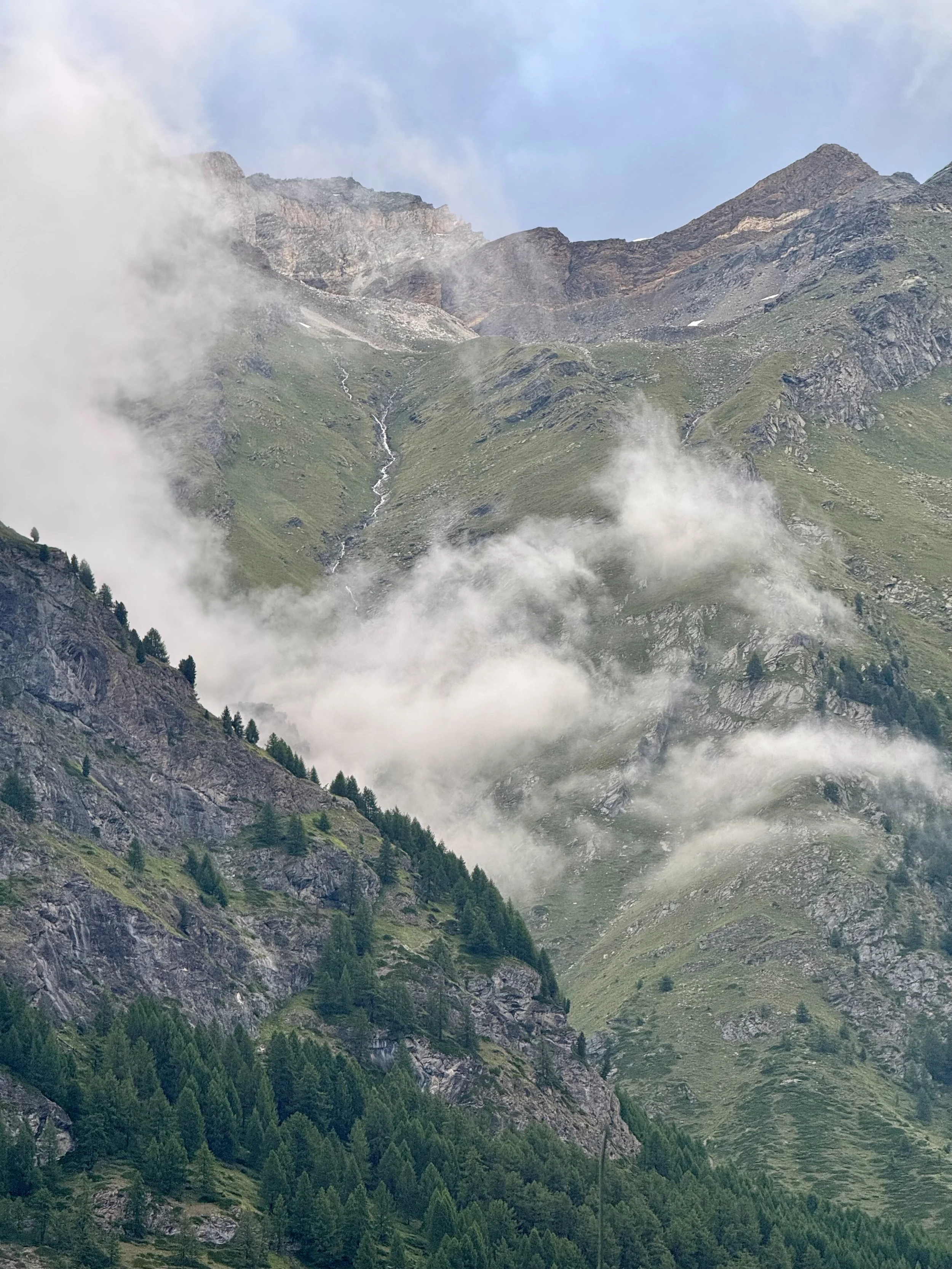
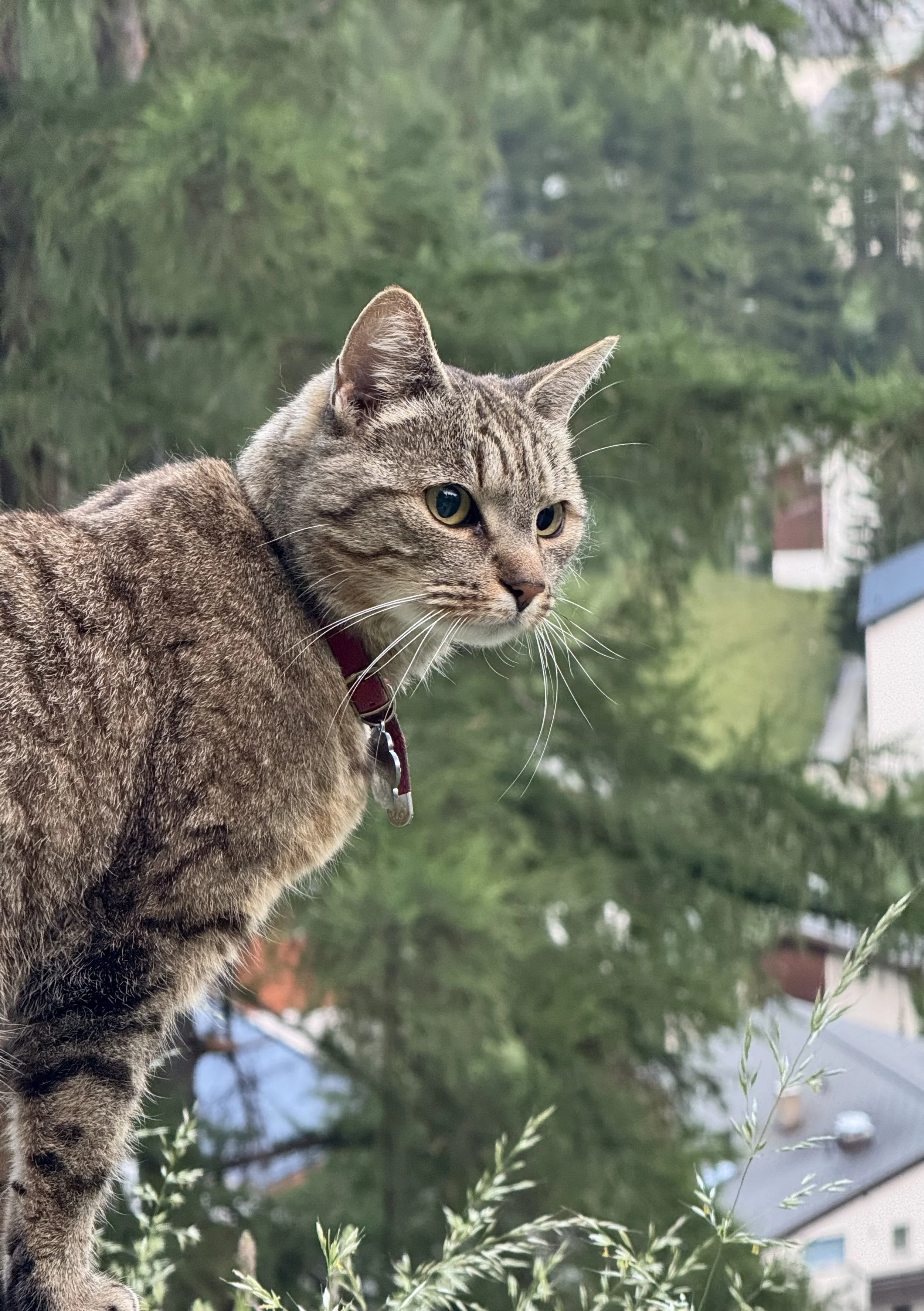
We ran back to the hotel in the rain and went full relaxation mode: hot baths, naps, and a slow dinner at Cervo’s Italian restaurant. We ended the day by befriending the hotel’s cats who were playing around the spa. I was quite honored because cats normally don’t take an immediate liking to me, but one of them kept following us around, disappearing for a bit only to reappear on the path in front of our room.
Day 3: Back to Geneva
We’d kept our eyes peeled for signs of blacknose sheep but hadn’t set out on a real search for them until our last morning in Zermatt. After another splendid breakfast, we walked around the town at its most peaceful. The main street is lined with flower-adorned chalets and ritzy stores selling outdoor gear alongside designer boutiques; when we’d passed through in prior afternoons, it was bustling with activity, but in the morning it was quiet enough that you could hear birds chirping. We kept squinting at the surrounding hills, hoping to hear the jingling sound of bells or sheeps bleating. While blacknose sheep eluded us, we did come across a herd of two-toned goats, called Valais blackneck. (We also saw people paragliding — if I’d seen Crash Landing on You before our trip, I think I’d have been much more tempted to conquer my fear of heights! I was late to watching it, but the show really deserves its 100% on Rotten Tomatoes.)
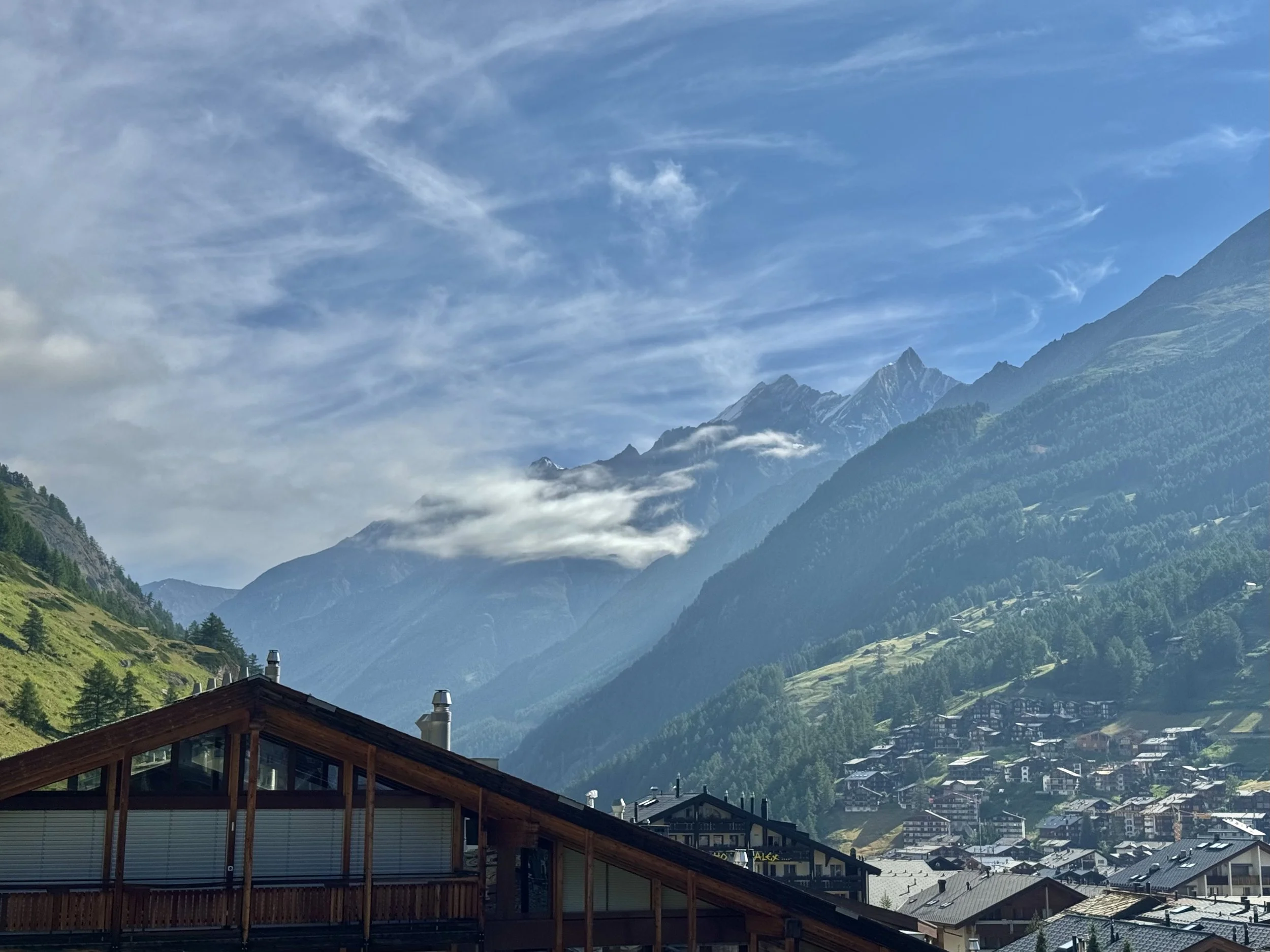
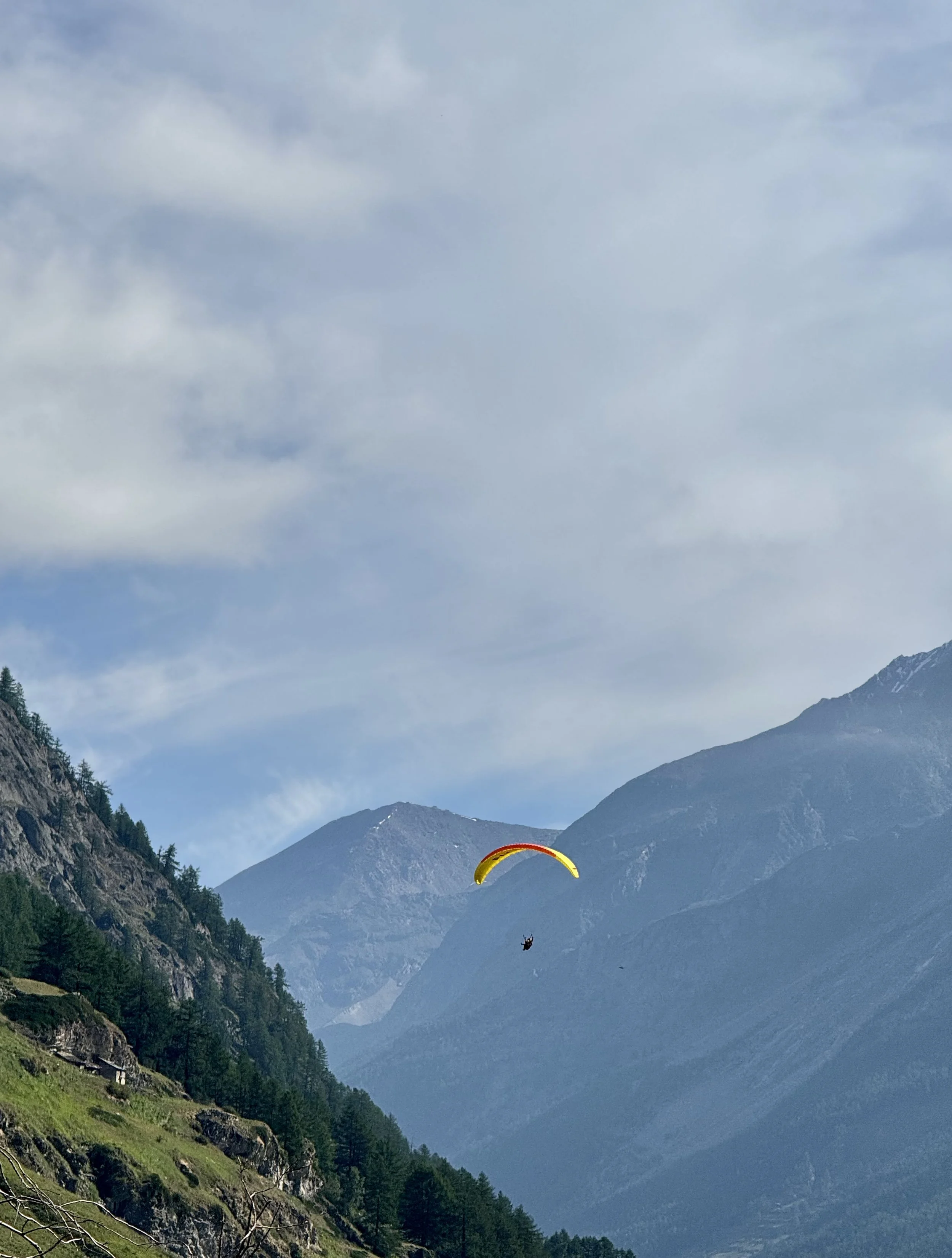
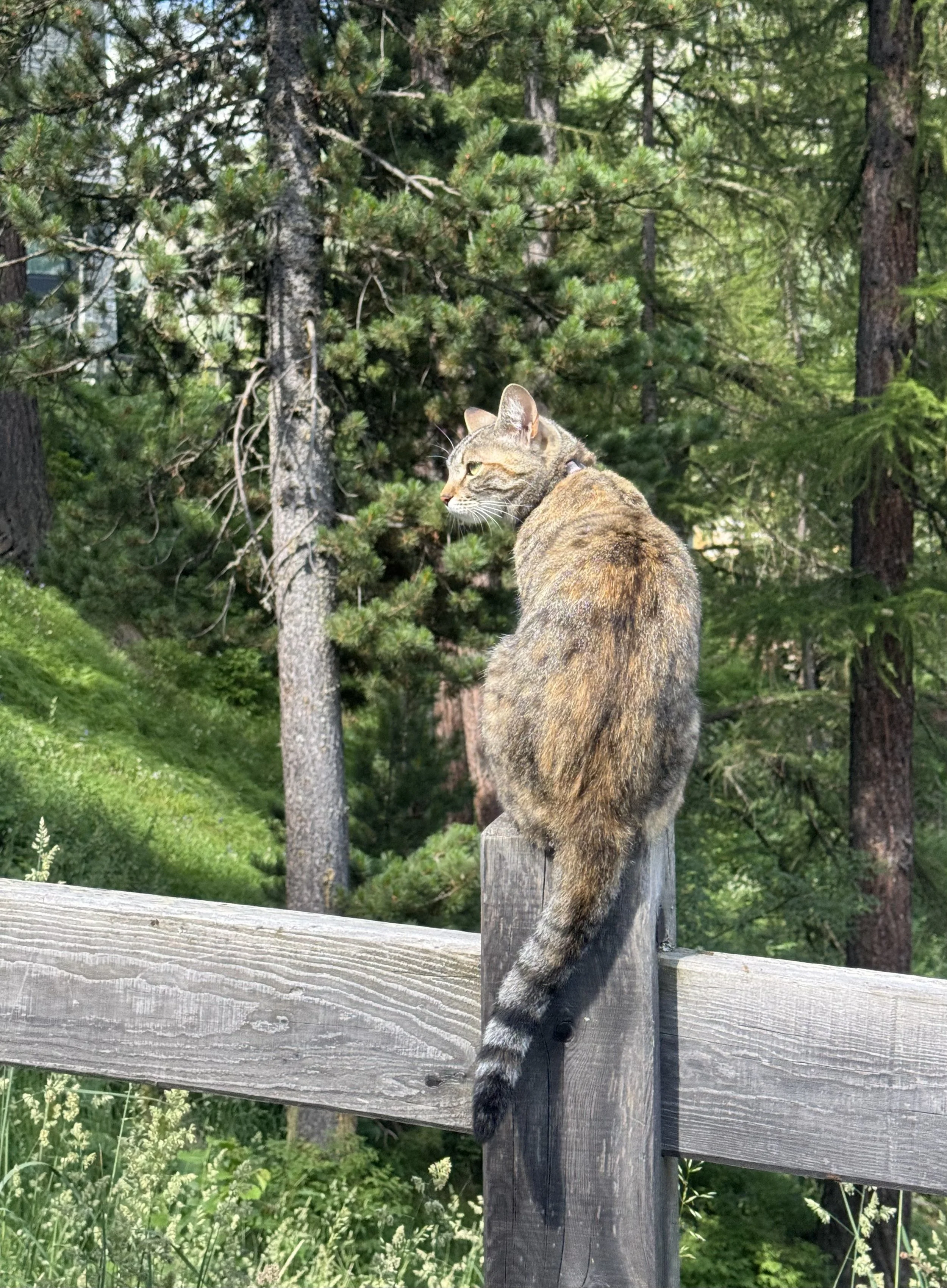
We caught our train back to Visp, then took another long, scenic ride from Visp to Geneva. One of the things I most appreciate about Switzerland after this trip is its infrastructure. There are countless stunning mountain-and-lake destinations around the world, but many require arduous journeys, or at the very least, are only reachable by car. In the U.S. it would be approximately impossible to travel from a major city to pristine, world-class hiking areas like Oeschinensee or Zermatt using only public transit (I love a day trip from Grand Central to Cold Springs as much as the next city girl, but it would simply be insulting to compare Little Stony Point to the Matterhorn). In contrast, we didn’t even consider renting a car for this trip; the train system made it genuinely effortless to head out into nature. In my childhood Heidi dreams, I’d pictured the Alps as a haven completely removed from city life, but now I’m embracing abundance mindset: why shouldn’t we imagine the possibility of building access to both?
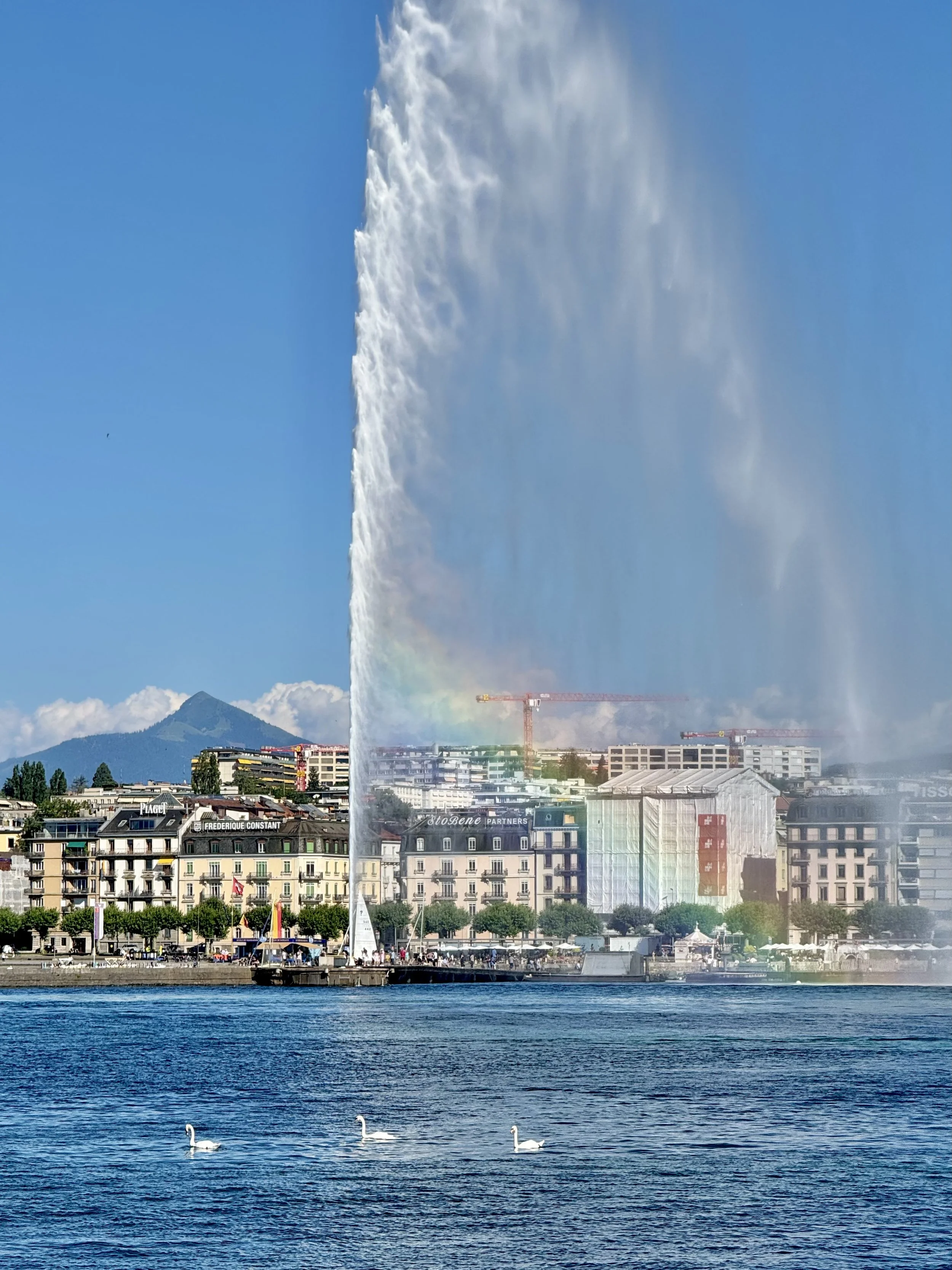
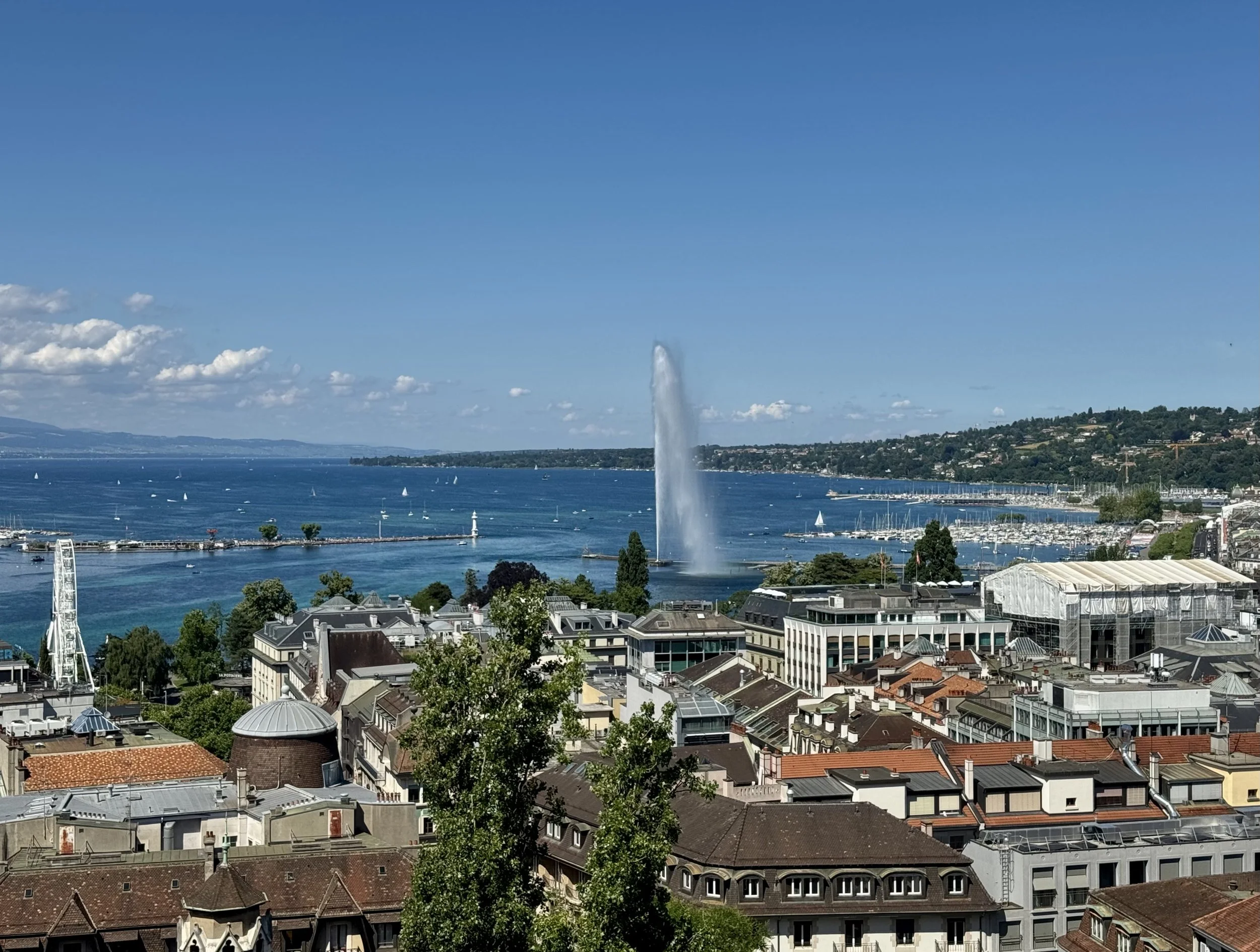
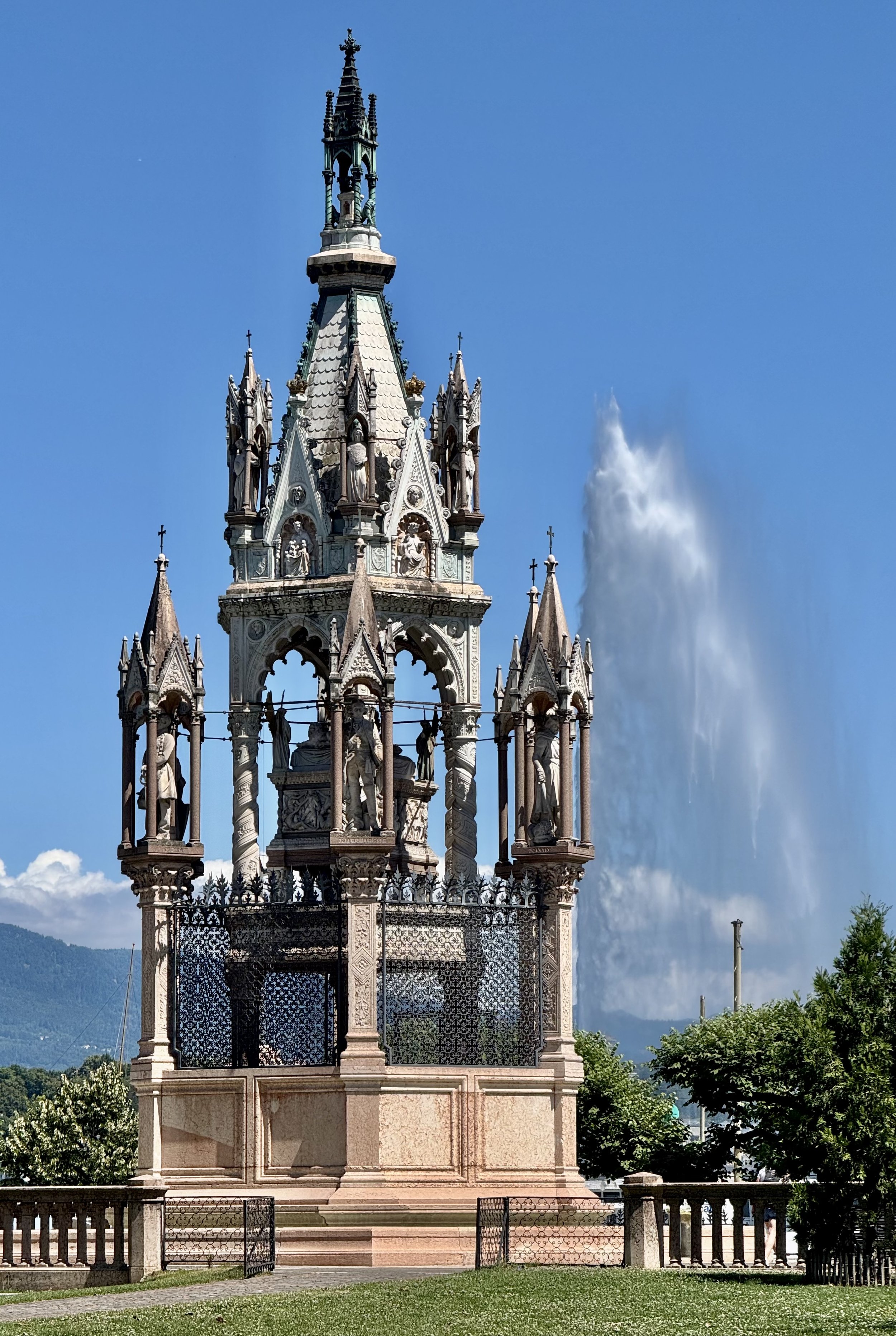
We only had half a day in Geneva, but ever the maximizers, we squeezed a lot in. First, of course, we visited their landmark Jet d'Eau. This is the funniest set of back-to-back Google reviews I’ve ever seen:
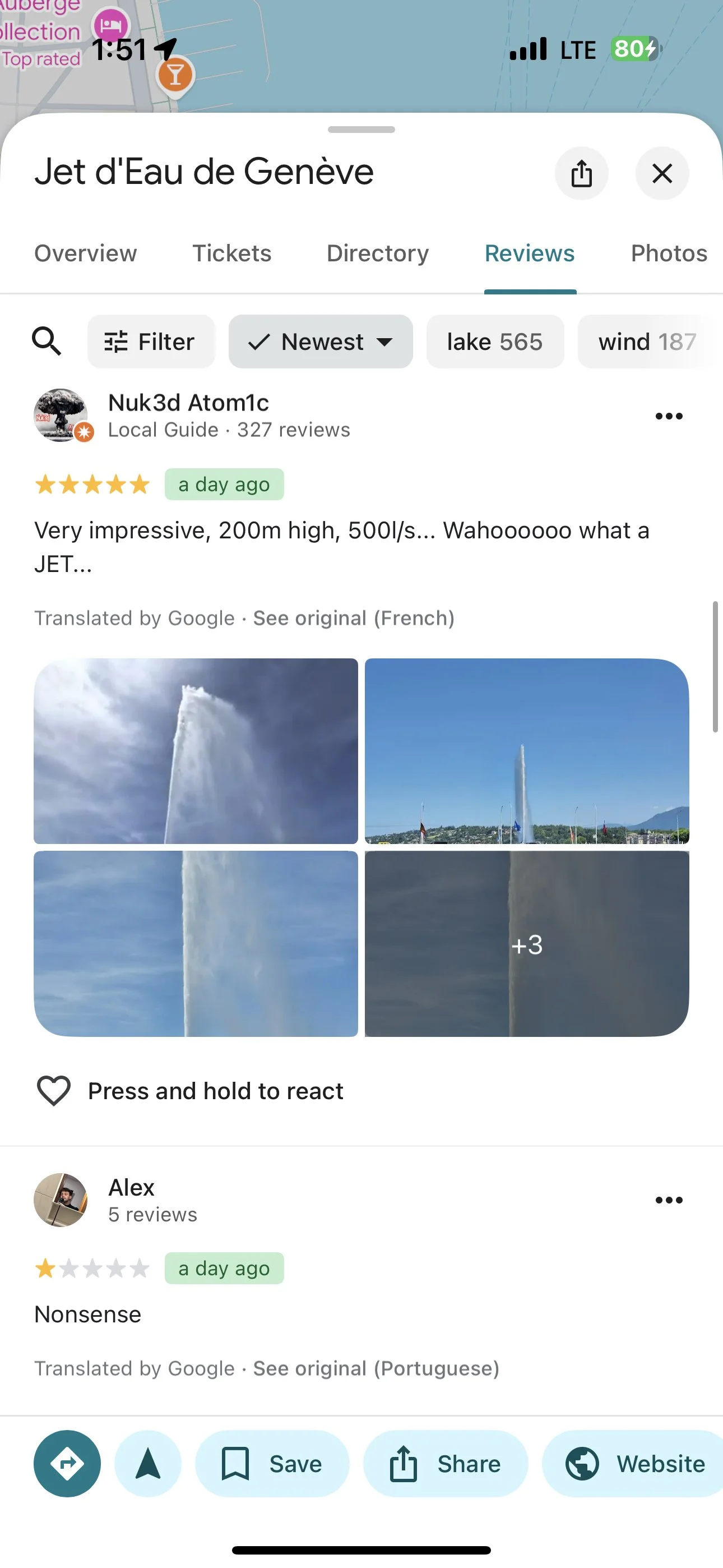
Wahoooooo what a JET… Nonsense.
The rest of our limited hours were spent on less controversial activities, covering many of Geneva’s typical tourist attractions:
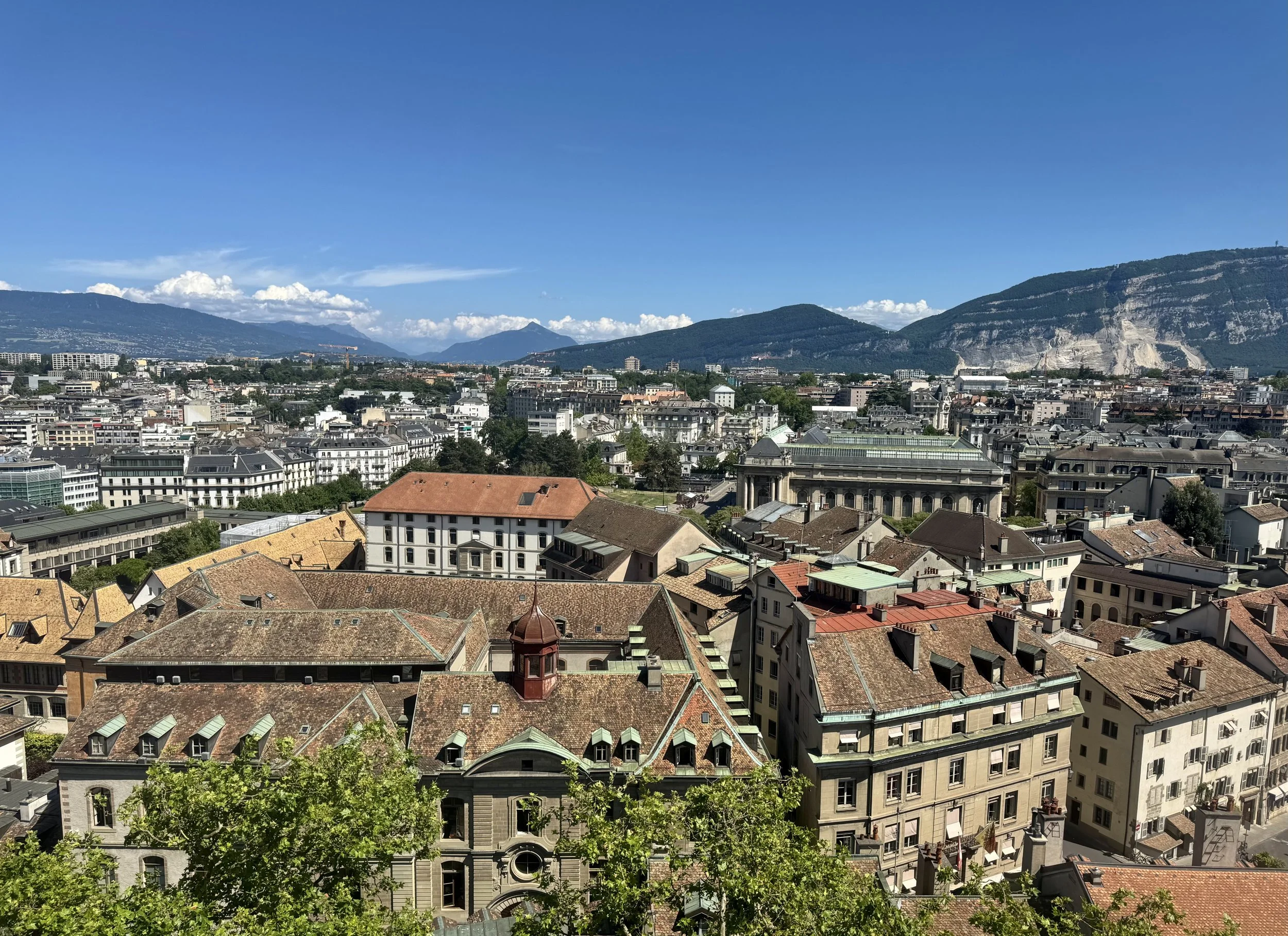
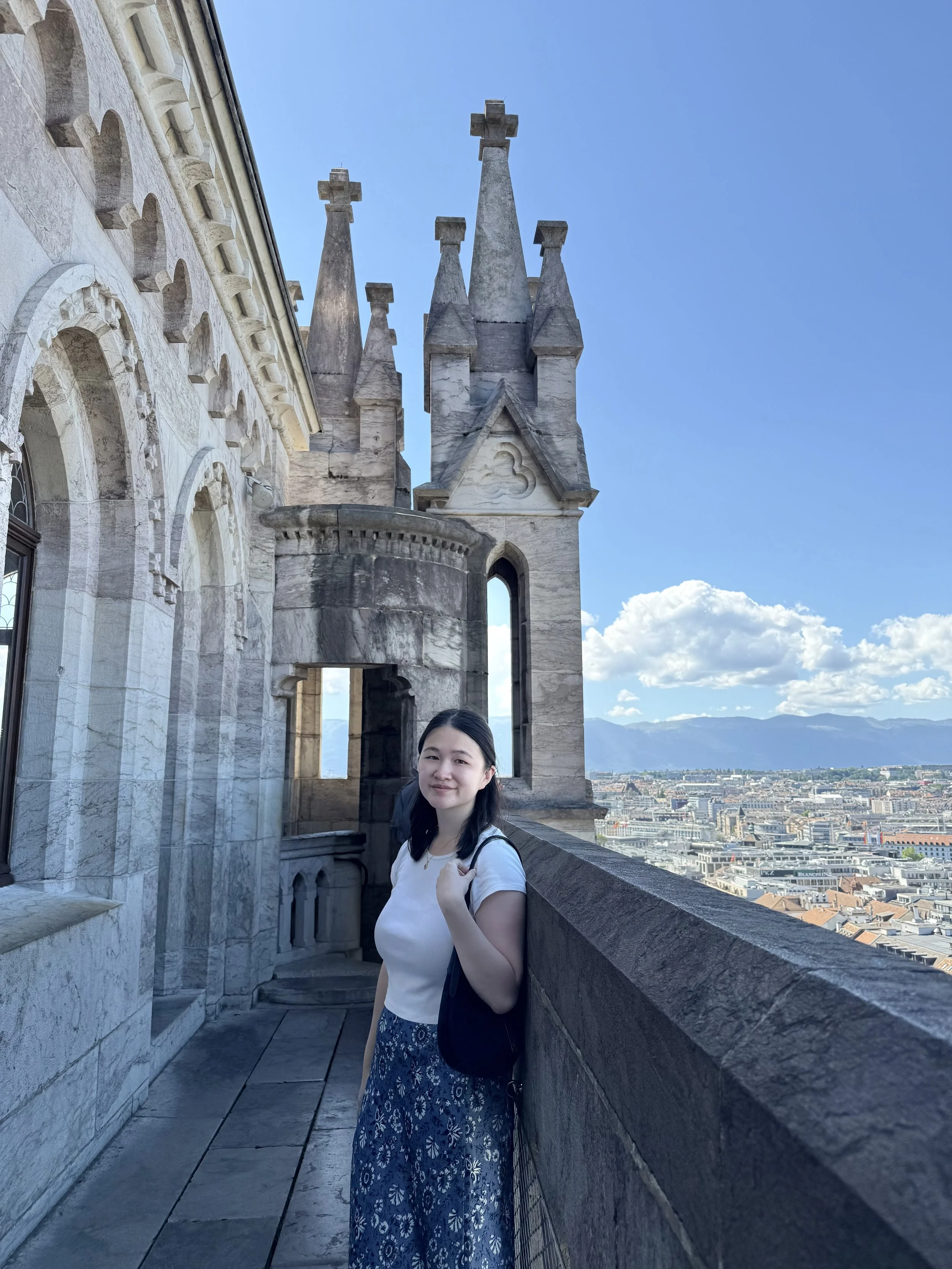
Climbed the tower of the Cathédrale Saint-Pierre, which offers 360-degree panoramic views of the city (there are two towers; the first view is more restricted than the other, so just keep going up!)
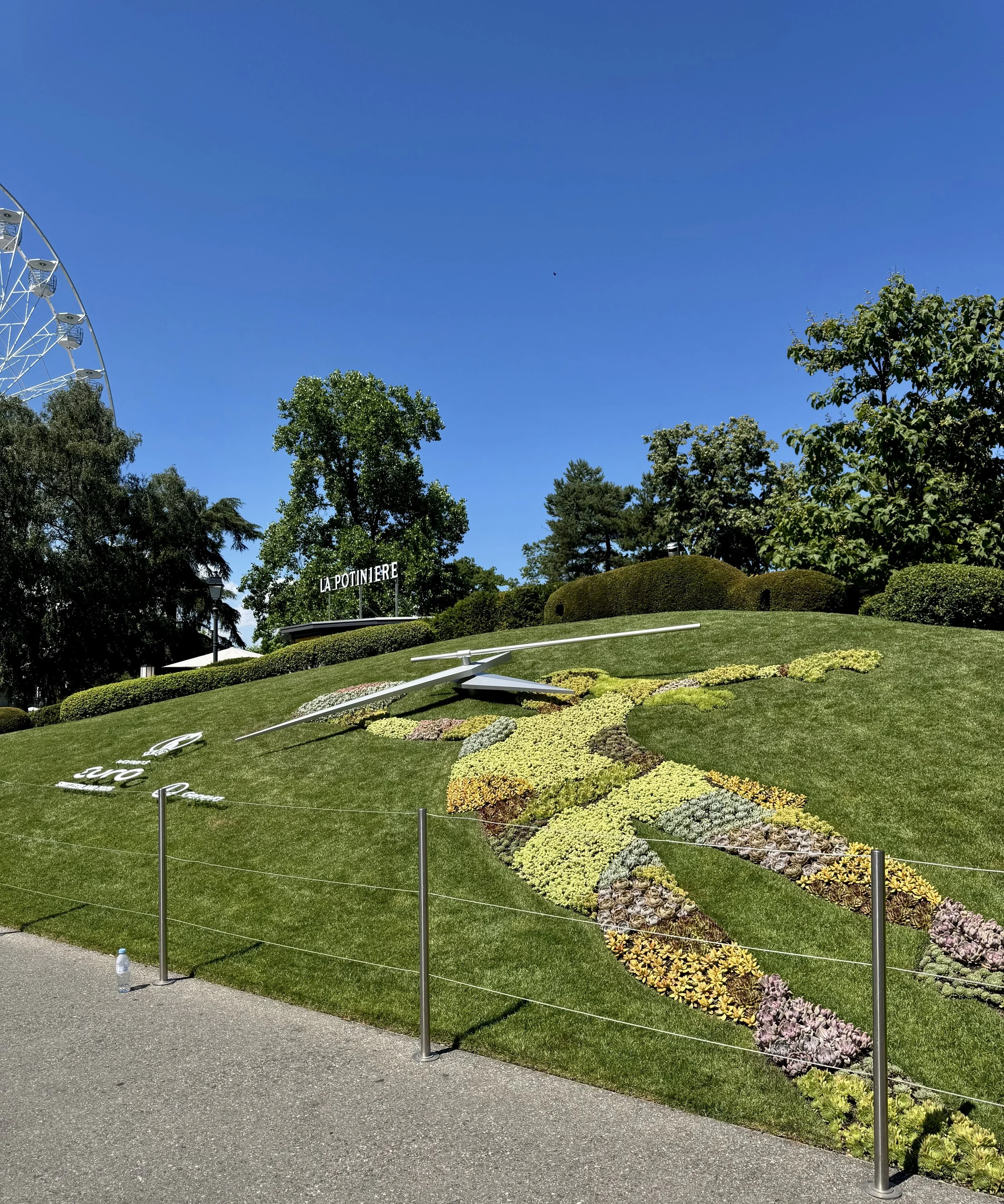
Visited the flower clock, L'Horloge Fleurie, which is updated four to five times a year; at the time, it was decorated to celebrate the Women’s Euro 2025 football tournament
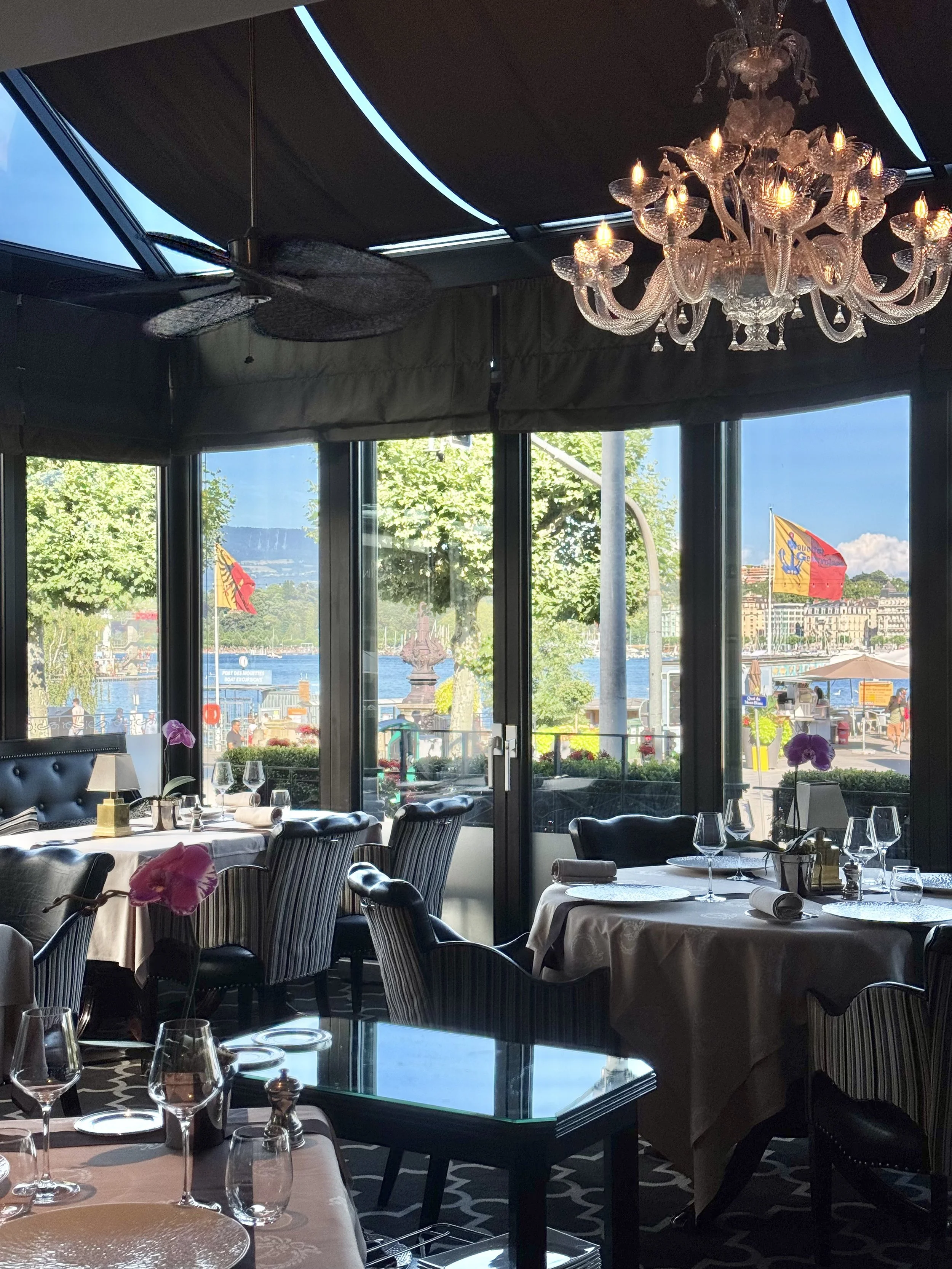
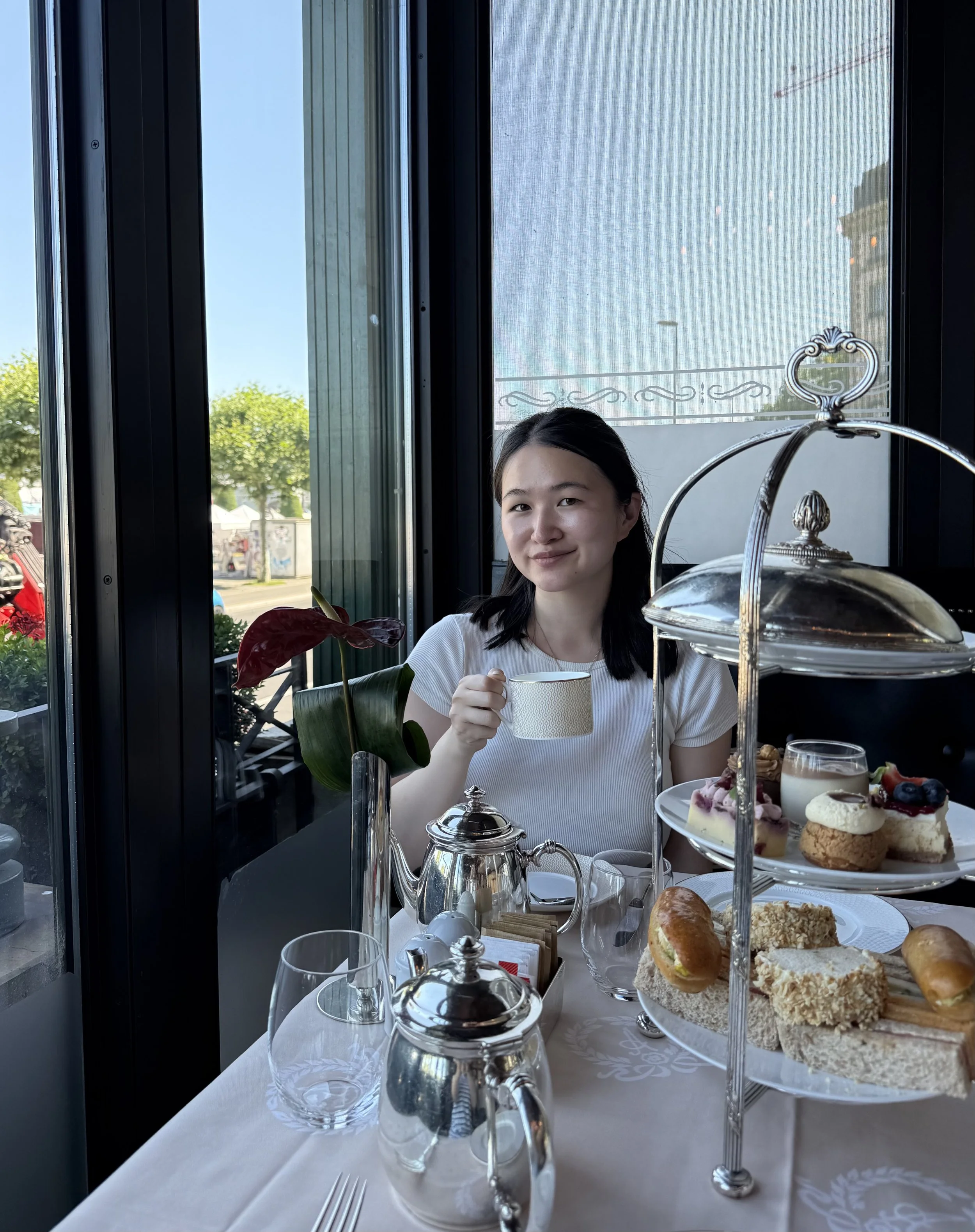
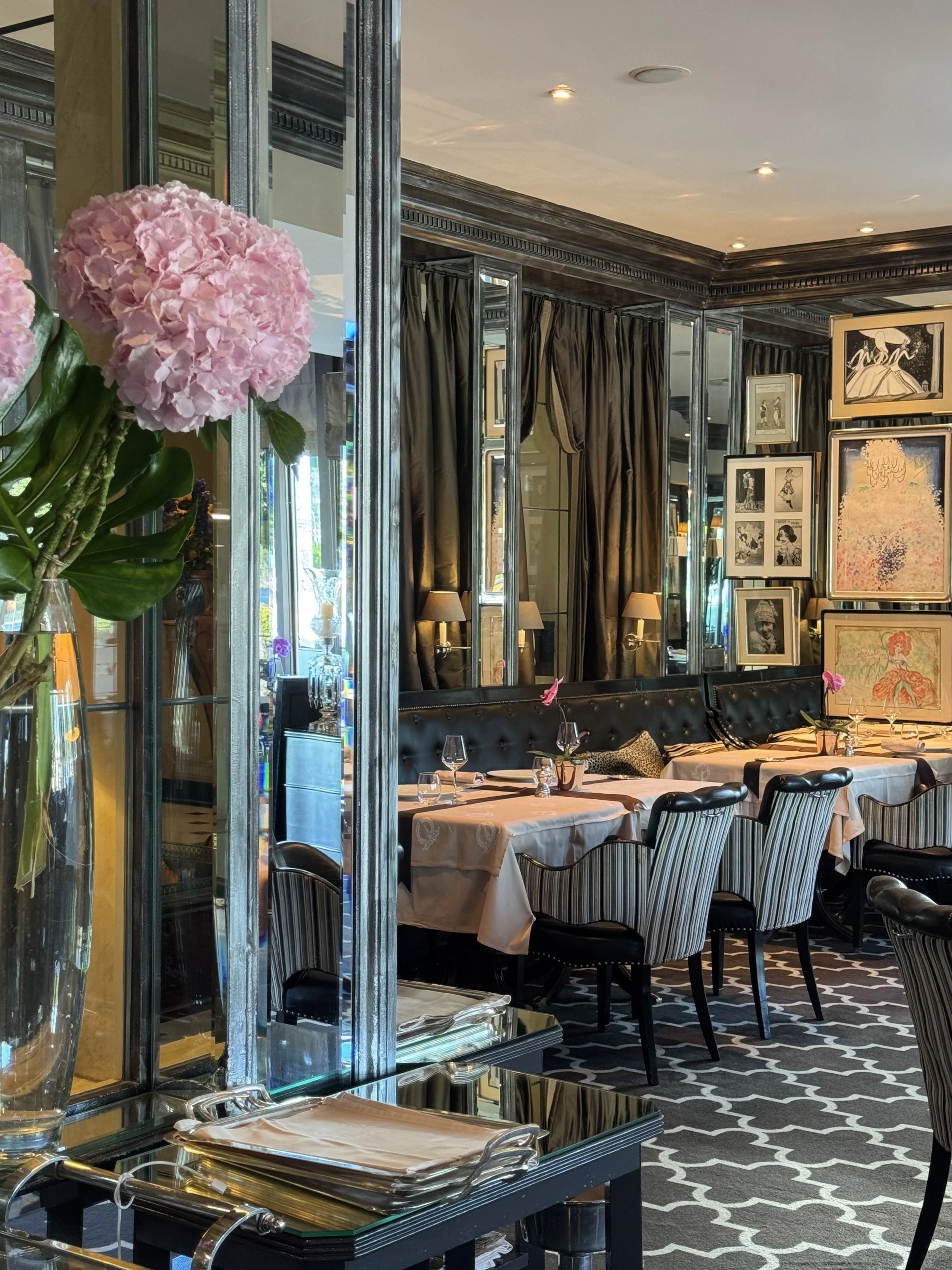
Sipped afternoon tea and nibbled on scones at the Hotel d'Angleterre to escape the heat
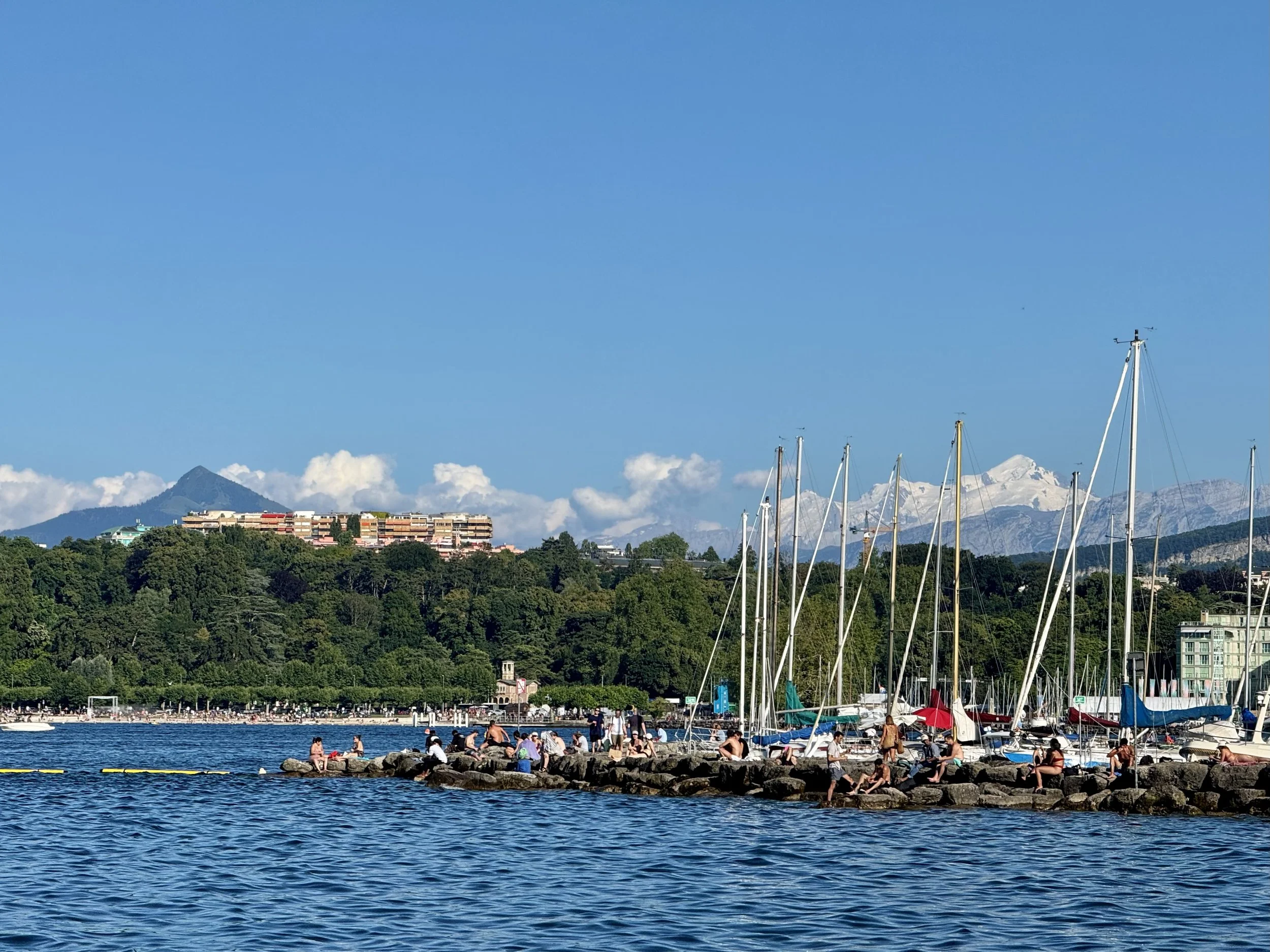
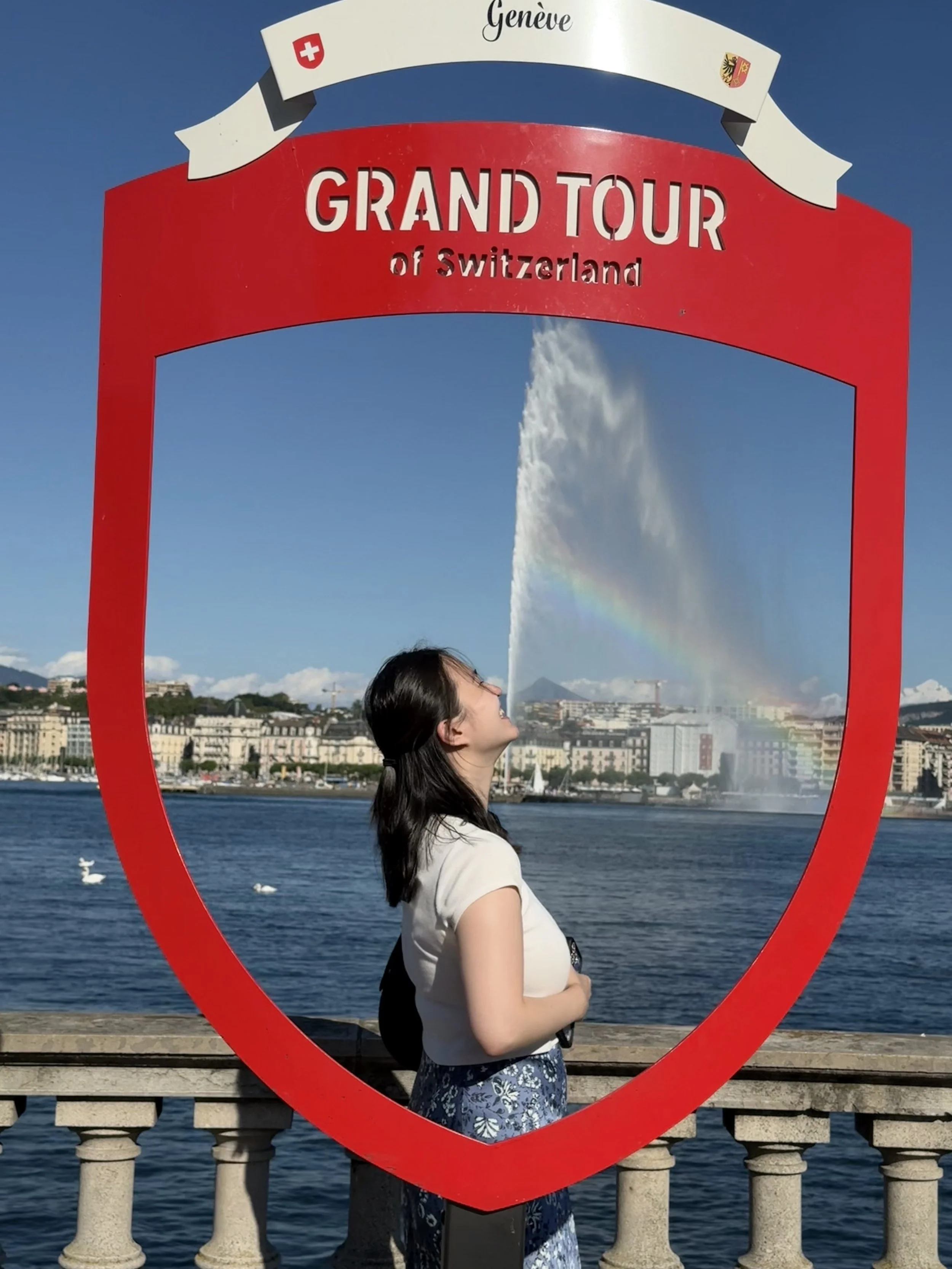
Walked along the lake, with a view of the popular Bain des Pâquis outdoor baths, a photo opp at Geneva’s Grand Tour of Switzerland photo spot (somehow, this was the only Grand Tour sign we came across on our trip, though there are also signs in Lavaux, Basel, Spiez, Thun, and Lucerne), and a brief interlude in the lakeside Parc Mon Repos
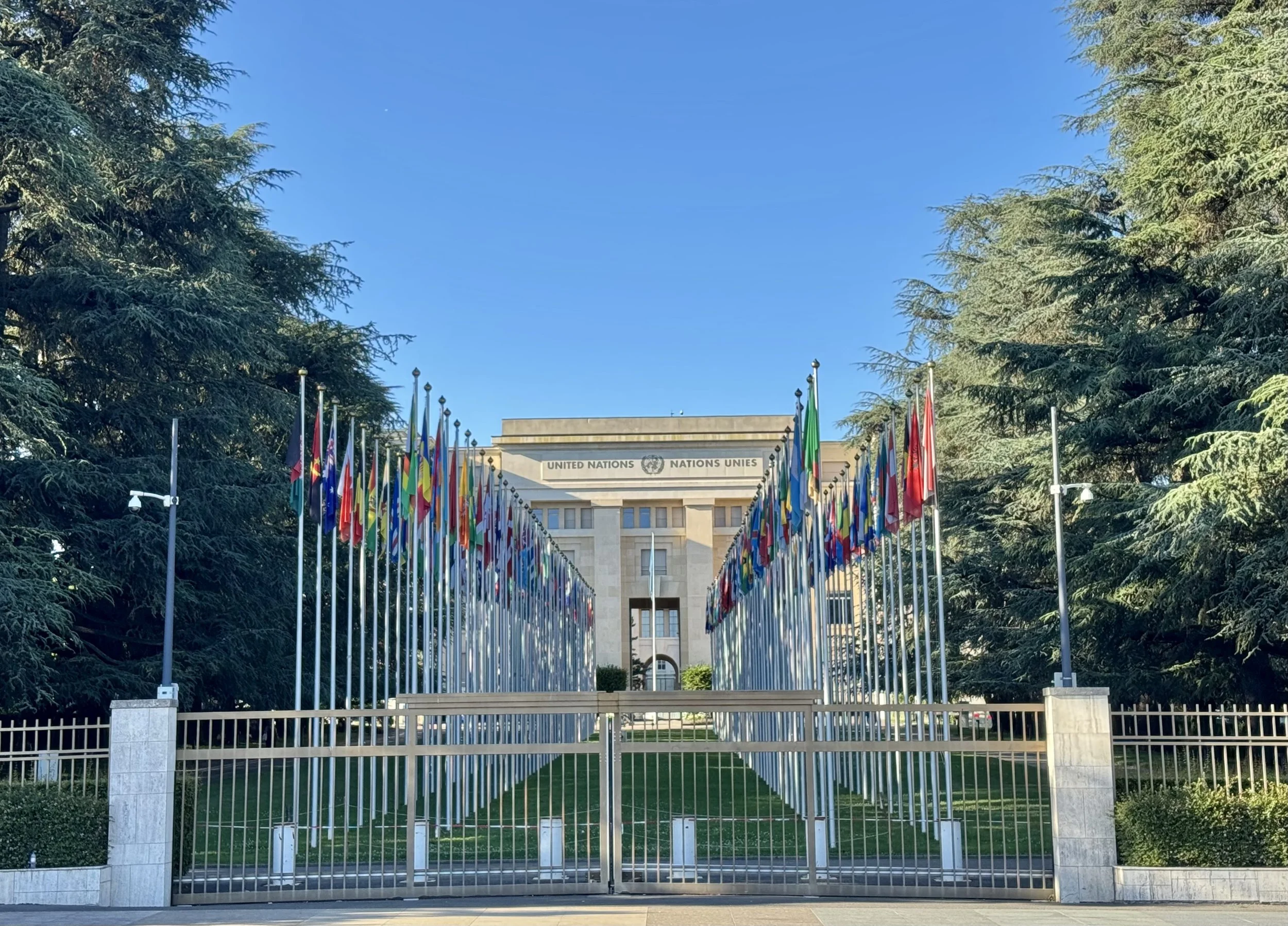
Stopped by the United Nations’ Palace of Nations and saw the Broken Chair sculpture, which urges nations to ban anti-personnel mines and cluster munitions to protect civilians from explosive weapons
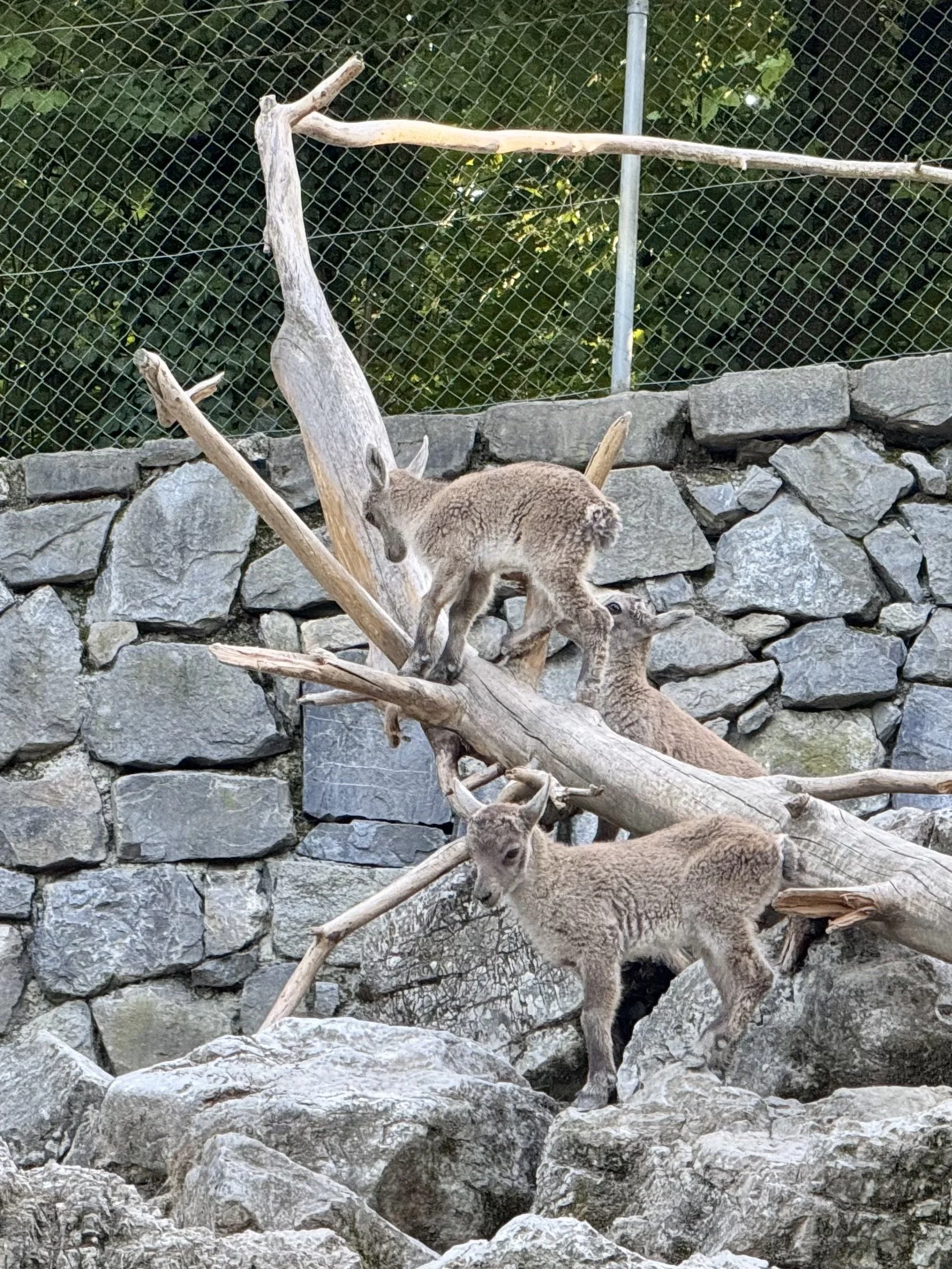
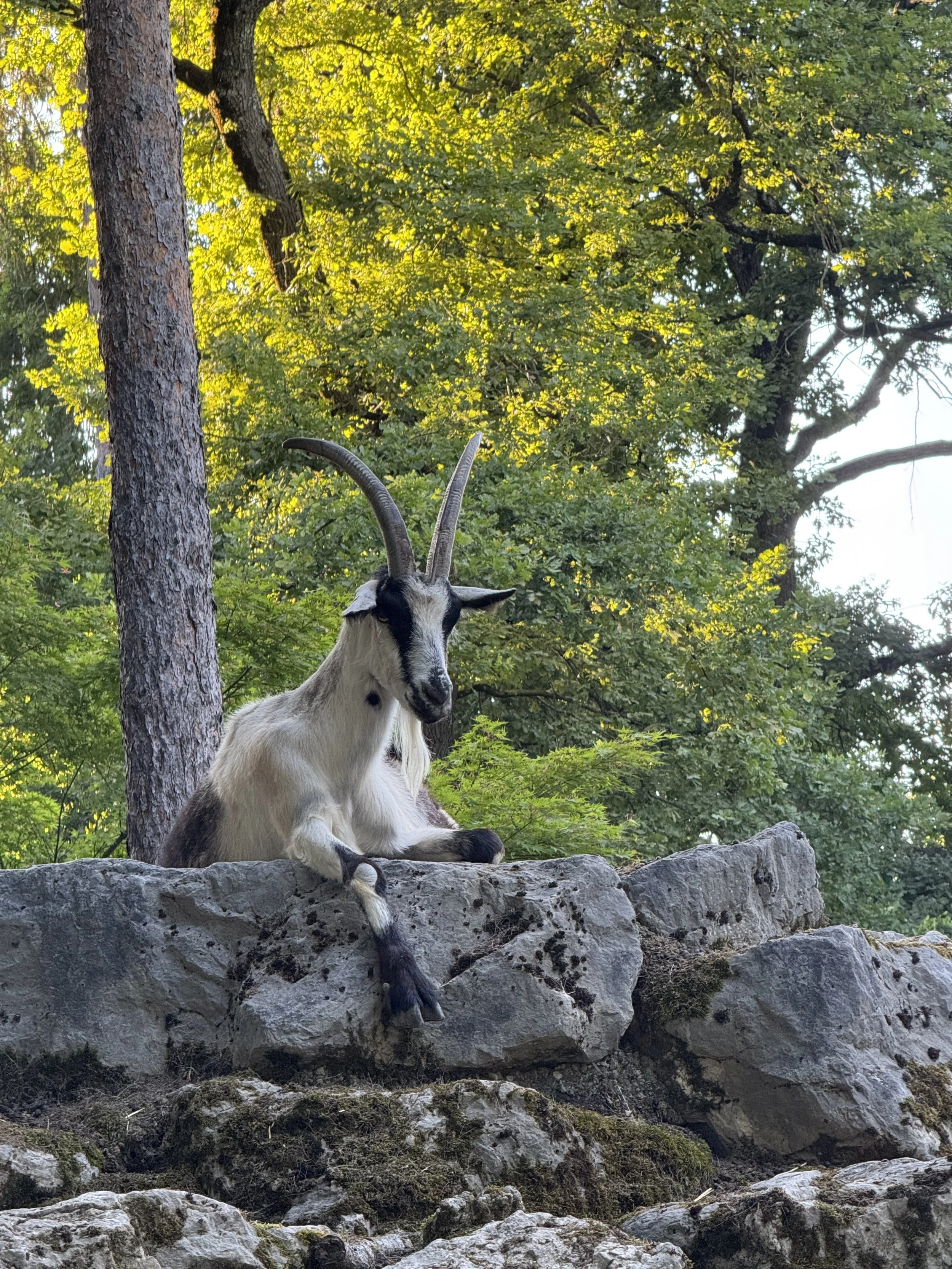
Trekked across the Arve River to the Bois de la Bâtie, a wooded nature park with a small public zoo (the internet told me that there were blacknose sheep there, so I had to try… while there weren’t any sheep, we saw lots of other cute animals until we were shooed away by some aggressive peacocks)
Watched the sun set back by the impressive, nonsensical Jet d'Eau
… we did all of this between 3 to 9pm. What a way to end a trip filled with so many of the things I love: art, food and wine, long walks and public transit, and daily doses of beautiful nature. Remarkable from start to finish — after so many years of dreaming about Switzerland, it still managed to exceed my every expectation.
I finished writing this more than seven months after the trip actually happened. In the meantime, I’ve accumulated a daunting backlog of still-to-be-started travel journals, like completing the remainder of my 2023 (!) spring break itinerary, recounting 2024’s Christmas on a Danube river cruise, and writing about my first ever solo trip, taken in December 2025 to Iceland. What’s the point of this time-consuming documentation? Who do I even write for? My first entry was a much quicker endeavor because it was essentially an annotated itinerary, but as I’ve written more of these, I’ve found it enriching to do more research beyond what I knew or observed in the moment, chasing down and digging into threads of curiosity and reflection. Each post has gotten longer and more thematically scattered as a result.
The goal isn’t purely to learn more about the places I’ve visited nor is it content generation. Writing publicly has been a good prompt for pulling out ideas and sharing links that I think others could find interesting, but I often decide to add content just because I expect it to be interesting to my future self. For example, I wasn’t sure whether to include my spiel on pescatarianism (I’m not trying to virtue signal and writing about it felt like it necessitated explanation that distracted from the point of the post, aka recounting my time in Switzerland — here I go explaining again), but as my own primary audience, I want my journals to reflect my life. I’d like to be able to look back in a decade and know what I paid attention to, the questions and issues that weighed on my mind, and what I wanted to remember. For me, 2025 was a year of immense gratitude, internal scrutiny and musings on goodness (moral, aesthetic, and otherwise), and change.
Documenting my travels is a chance to revisit the many wonderful things I’ve been lucky enough to see and let those experiences linger. Eight days make up only a fraction of a year — how many weeks of our lives do we really remember? — but through writing, each memory remains more vivid to me. I hope to write more* in 2026. These journals take time to compose, but I’ll cherish them for years to come.
*Perhaps I’ll try abbreviated posts for my earlier trips. The presence of footnotes is a sure sign that I could reel in my rambling!